Menu

New reference web portal on health research in Europe

The EU-funded CommHERE project launches Horizonhealth.eu

The Horizon Health web portal (www.horizonhealth.eu) has been officially launched today by Professor Anne Glover, Chief Scientific Advisor, European Commission, in the presence of the communication representatives of leading research institutions in Europe. The Horizon Health web portal aims to become a valuable online resource for journalists and interested citizens looking for accurate, up-to-date, and attractive information on health research funded by the EU.

”Research not communicated is research not done,” states Professor Anne Glover.”The European Commission is supporting many forward-thinking and cutting-edge research projects that need to be shared with European citizens. The web portal set-up by the CommHERE project is an important milestone that should enable the dissemination of key health-related research results on a European level.”

Studies show that European citizens are interested in learning more about science and medical developments, directly from the researchers [Eurobarometer 2010]. The Horizon Health web portal will help mediate a dialogue: introducing leading scientists and their projects in an attractive and accessible way, and featuring striking images that convey the interest and fascination that drive the research teams. More options and functionalities, such as videos, illustrations and webinars will be added over time to enable a direct interaction and more in-depth understanding.

“The launch of HorizonHealth.eu is a crucial step forward for the CommHERE project,” explains Dr Ulla Bredberg from the Karolinska Institutet, who coordinates the project. “From working on local levels at the CommHERE partner institutions, we now open up and invite all EU health research projects to participate in our communication network.”

The CommHERE project is one of the first communication projects to receive funding from the EU within the 7th Framework Programme on Health. It aims to improve communication on the outcome of EU-funded health research projects, mainly towards the media and the general public, in all of Europe and beyond.

site horizonhealth

COMBACTE: A new step in the fight against resistance to antibiotics

Antimicrobial resistance represents is a growing problem in public health due the increasing rarity of antibiotics capable of combating resistant bacteria. The COMBACTE project, that has just obtained 195 million euros worth of finance from the Innovative Medicines Initiative (IMI), aims to work to develop new antibiotics and introduce a successful clinical trials platform combining private and public research. 

Developing innovative clinical trials for antibiotics

The COMBACTE (Combatting Bacterial Resistance in Europe) project, resulting from the sixth Call for proposals issued by the IMI, is one of the projects that is part of the “New Drugs For Bad Bugs” (ND4BB) programme. It is the result of the initial association between industry and two academic consortia, the Eu-ACT and INCRAID, run respectively by Marc Bonten of the University of Utrecht and Bruno François of Limoges University Hospital, both being responsible for overall project coordination along with representatives of the EFPIA, Scott White (GlaxoSmithKline) and Seamus O’Brien (Astra Zeneca).

The project will last for seven years and will bring together about 20 partners from all overEurope. It is designed to generate innovative trials to facilitate the registration of new anti-bacterial agents, mainly through the creation of a network of experienced investigators. It will also design and validate tests to support the diagnosis of patients, identify the most suitable treatments and monitor the treatment response.

Much of the project will be devoted to performing clinical trials of anti-infectious medication currently being developed by the pharmaceutical companies involved in the programme. The first antibiotic to be subjected to clinical trials under the COMBACTE programme has been developed by GlaxoSmithKline’s laboratories.

For these purposes, the total budget for the COMBACTE project amounts to nearly 195 million euros, a scale of finance hitherto unequalled in private-public clinical research.

French partners in the European COMBACTE Project

Of the various partners, several French entities are involved in the COMBACTE project.

Dr Bruno François, under the aegis of Limoges University Hospital, will be responsible for coordinating the clinical trials in collaboration with all the European investigator centres and the GSK Group and GSK France (GSK Medical Management France) Research Groups. Dr François will also participate in the overall project management.

INSERM and its Midi-Pyrénées/Limousin directorate headed by Armelle Barelli will be responsible for budget management for all the project’s clinical trials.

ECRIN (European Clinical Research Infrastructures Network) coordinated by INSERM and headed by Professor Jacques Demotes, is an infrastructure whose purpose is to facilitate the setting up of international trials in Europe. ECRIN will be responsible for the management of the project’s clinical trials through its European partners, ensuring coordination between the various national networks.

Dr Laurent Abel (INSERM U980 “Human genetics of infectious diseases”), another French member of the consortium, will participate in the identification in humans of genetic markers affecting the  susceptibility/resistance to bacterial infection and the response to their treatment, along with the other  partners.

Two French networks will also participate in clinical trials  for the COMBACTE project, the Réseau National de Recherche Clinique en Infectiologie (RENARCI) coordinated by Professor Bruno Hoen (Besançon University Hospital), with the support of the Institut Thématique Multi-Organismes “Microbiologie et Maladies Infectieuses” (IMMI) directed by Professor Jean-François Delfraissy, and the CRICS (Clinical Research in Intensive Care and Sepsis) network, headed by Dr Bruno François and Professor Pierre-François Dequin at the Tours University Hospital.  The Groupe pour la Recherche et l’Enseignement en Pneumo-Infectiologie (a Working Party emanating from the Société de Pneumologie de Langue Française) coordinated by Professor Anne Bergeron at the AP-HP Saint-Louis with the collaboration of Dr Muriel Fartoukh at the APHP Tenon will be associated with the CRICS network.

COMBACTE, a unique excellence project with international visibility

COMBACTE is the European public/private partnership set up for the development of drugs.

The development of new antibiotics represents a challenge that justifies the association of several of the major players. By bringing together experts in the various fields (research bodies, universities, hospitals and the pharmaceutical industries) specialising in microbiology, epidemiology, the development of drugs and clinical trials, the aim of COMBACTE is to improve and accelerate the development of antibiotics.

Unique in its scale, ambitious, with benefits that can be expected for patients, public health and research in Europe, COMBACTE has the potential to become the leading light in Europe in the antimicrobial drug development.

The fight against anti-microbial resistance –  the “New Drugs For Bad Bugs” programme

Antimicrobial resistance represents a serious and growing world threat to human and animal health. According to the World Health Organization, “resistance to antibiotics is about to become a public health emergency of yet unknown proportions”. In Europe, resistance to antibiotics is responsible for more than 25,000 deaths annually and the cost of treatment is estimated at 1.5 billion euros annually. New forms of resistance emerge every day, leaving clinicians increasingly devoid of solutions to fight infections. Despite the recognised need to develop new antibiotic weapons, only two new classes of medication have entered the market in the last thirty years.

In November 2011, the European Commission, as part of its Action Plan to combat the increasing threat of antimicrobial resistance, called for “unprecedented collaborate research and development effort to bring new antibiotics to patients” including the launch of the sixth IMI Call for proposals in May 2012 as part of the programme entitled “ New Drugs For Bad Bugs”.

IMI : a unique public-private partnership programme

IMI (Innovative Medicines Initiative) is a unique European public-private partnership between the European Commission and the EFPIA (European Federation of Pharmaceutical Industries and Associations), each contributing one billion euros to finance various projects through issuing tenders.

The aim of the IMI is to propose a coordinated approach to promote the development of safer and more effective treatments for patients by encouraging collaboration between various academic and industrial partners, the public authorities and patient associations and by increasing European competitiveness.

The research leading to these results has received support from the Innovative Medicines Initiative Joint Undertaking (www.imi.europa.eu) under Grant Agreement n°115523, resources of which are composed of financial contribution from the European Union’s Seventh Framework Programme (FP7/2007-2013) and EFPIA companies’ in kind contribution.

HOMAGE – Overcoming Heart Failure, an European challenge

The HOMAGE (Heart OMics in AGEing) project, coordinated by the French National Institute of Health and Medical Research (INSERM), has been awarded a grant by the European Commission for a 6 year period. The project aims to identify and validate specific biomarkers of heart failure in order to prevent the development of the disease affecting elderly population. 17 research groups from 10 countries will collaborate to investigate new ways of preventing heart failure. The project will use an innovative ‘omic-based’ approach which investigating simultaneously a huge amount of genes, proteins and metabolites.

The 17 partners will meet at Nancy on February 22nd for the kick off meeting of HOMAGE.

Professor Faiez Zannad, Head of the Centre d’Investigation Clinique Pierre Drouin Inserm U9501 and Inserm Unit 1116 based in Nancy, is the project coordinator.  The 12 million euros grant of the European Commission will be dedicated to the HOMAGE consortium for research on heart failure, a serious illness altering myocardial activity which affects more than 6.5 million persons in Europe. Indeed, the prevalence of heart failure is increasing worldwide due to an ageing population as well as a rising trend of risk factors for heart disease such as diabetes, obesity and hypertension.

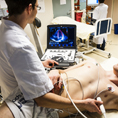
Heart failure is a major cause of mortality and morbidity in the world and remains the most frequent cause of hospitalization for patients over 65 years old.

The costs related to heart failure have been estimated around 1.5 billion euros per year in France[1].

Photo : ©Serimedis/Inserm

Despite important progress in the treatment including new drugs, new medical devices and innovative disease management programmes, the diagnosis of heart failure is often difficult in older adults with co-morbidities. Screening tests are usually based on blood pressure, glycaemic and cholesterol control. Although they are useful to detect high risk patients, they are limited regarding their sensitivity and specificity. During the past decade, promising biomarkers such as natriuretic peptides have been identified to diagnose heart failure, but their predictive value remains relatively poor. The HOMAGE consortium is willing to validate more specific and more sensitive biomarkers which should facilitate an early detection of the disease in patients at risk.

To achieve this goal, the consortium agreed on the use of an ‘omic-based’ approach. This approach aims to validate promising biomarker candidates by crossing a large volume of data (genomics, proteomics, miRNomics, transcriptomics and metabolomics). This would permit scientists to understand new pathophysiological mechanisms, signaling pathways and identify new therapeutic targets to prevent heart failure.

The HOMAGE consortium will manage cohorts for a total of 30 000 patients. The European researchers will firstly identify biomarker candidates in blood and study their predictive value for heart failure and common co-morbidities associated with ageing (renal impairment, cognitive disorders…). Subsequently, HOMAGE will lead a clinical trial to look for novel treatments of heart failure that can be targeted specifically to those patients at risk.

This trial will allow identifying patients’ omics based biomarker profiles most likely to predict response to treatment with the better benefit/risk ratio, an attempt into personalized medicine.


[1] Fédération Française de Cardiologie

The 17 partners of HOMAGE project : www.homage-hf.eu (en ligne le 21 février)

Inserm, France : https://www.inserm.fr/

Inserm U942/ Biomarqueurs et maladies cardiaques, France

Inserm UMR 1048/ Equipe 7, France

Inserm U744/ Recherche des Déterminants Moléculaires des Maladies Cardiovasculaires, France

Inserm Transfert, France : https://www.inserm-transfert.fr/

European Drug Development Hub, France : https://www.fondationtransplantation.org

ACS Biomarker, Pays-Bas : https://acsbiomarker.com/

Randox Testing Service, Royaume-Uni : https://www.randoxtestingservices.com/

Medical University of Graz, Autriche : https://www.meduni-graz.at/en/

University of Manchester, Royaume-Uni : www.manchester.ac.uk

Fundación para la Investigación Médica Aplicada, Espagne : www.cima.es

University College Dublin, Irlande : www.ucd.ie

University of Hull, Royaume-Uni : www.hull.ac.uk

Maastricht University, Pays-Bas : https://www.maastrichtuniversity.nl/

Istituto di Ricerche Farmacologiche ‘Mario Negri’, Italie : https://www.marionegri.it/mn/en/

Hannover Medical School, Allemagne : https://www.mh-hannover.de

University of Leuven, Belgique : www.kuleuven.be/english/

London School of Hygiene, Royaume-Uni : https://www.lshtm.ac.uk/

Emory University, Etats Unis : https://www.emory.edu

University of Glasgow, Royaume-Uni : https://www.gla.ac.uk/

Collaborative institutions:

The Trustees of Boston University, National Heart, Lung, and Blood Institute’s Framingham Heart Study, Etats Unis

Imperial College, Royaume-Uni

Steno Diabetes Center (Novo Nordisk), Danemark

Treatrush (TreatRetUsher): combating Usher Syndrome blindness – European collaboration in the service of a rare disease

On the occasion of International Rare Disease Day: 28 February 2013

How has research into Usher Syndrome – a particularly debilitating hereditary disease that damages the two main senses, hearing and sight – overcome a major hurdle in understanding the mechanisms causing pigmentary retinopathy? How has it managed to improve clinical diagnosis and develop molecular diagnosis? How has it prepared gene therapy tests for the retinopathy aspect of the syndrome? Scientists who have joined forces in the European TREATRUSH (TreatRetUsher) project have been reporting progress. Twelve partners in seven countries came together to form this network, financed by the European Commission and coordinated by the Pierre and Marie Curie University (UPMC). In France, it brings together researchers from the Collège de France, INSERM, the Institut Pasteur, the CNRS and the UPMC, working at the Institut de la Vision and the Institut Pasteur, as well as clinicians from the XV-XX Hospital and the Armand-Trousseau Hospital.

Usher Syndrome is a hereditary disease attacking hearing and sight. It affects about one person in 10,000. It is the main cause of deafness associated with a loss of vision in young people. The three clinical types of the syndrome, USH1, USH2 and USH3, are distinguished by the severity of hearing loss, early onset of retinitis pigmentosa and the presence or otherwise of a vestibular (inner ear) attack that translates into difficulties with balance. In each of these aspects of the disease the USH1 form is the most incapacitating.

Going beyond the major advances previously achieved in identifying the genes responsible for the syndrome and understanding the pathogenesis of the damage done to hearing by the syndrome, the Treatrush project has set itself the aim of improving diagnosis, understanding the cellular and molecular mechanisms behind retinopathy and preparing gene therapy trials.

  • Responding to the imperative of early diagnosis. 

A reduction in vision only manifests years after the loss of hearing, so the absence of early diagnosis of the syndrome can cause parents to make the wrong choice, and cause their children to learn sign language as young as possible, rejecting early cochlear implantation. Consequently, the European Consortium’s ENT specialists and ophthalmologists have jointly drawn up clinical investigation protocols that should result in a diagnosis being available for children under one year old. At the same time, a robust and swift molecular diagnosis of all forms of the syndrome has been developed. An initial study[1] enabled the detection of mutations in 54 patients. It was supplemented by the introduction of a new method[2] that now makes it possible to analyse a cohort of more than 350 patients recruited throughout Europe (France, Germany, Italy, Slovenia, Spain).

  • Clarifying the physio-pathological mechanisms that cause retinopathy.

While mutant mice in which there are defective Usher-1 genes are profoundly deaf, they do not present with retinopathy. Consequently, the defective mechanisms causing retinopathy in those suffering from the syndrome were totally unknown. Three years ago, teams headed by Professor Christine Petit, co-ordinator of the Treatrush Project, and Professor José-Alain Sahel, attempted to understand the physio-pathological mechanisms causing retinitis pigmentosa in patients suffering from Usher Syndrome, by using other animal models[3]. They were successful and thus laid the foundation for discovering a new type of mechanism that causes pigmentary retinopathy, one that also involves the structures of photoreceptors, an aspect hitherto neglected, the role of which is still unknown. This data is essential for the creation of any protocol designed to improve treatment.

Project teams in Italy, France and the United States are currently working to develop gene therapy via viral vectors associated with the adenovirus (AAV) capable of effectively transferring tiny therapeutic genes into retinal photoreceptors with the aim of preventing their degeneration. These vectors have already proven their worth in other forms of retinitis. They are currently being tested on animals to identify some of the Usher genes.

The advances achieved in curing this rare illness open the way to an understanding and treatment of commoner causes of deterioration in vision and hearing. As Christine Petit and José-Alain Sahel explain, “frequent disorders are of a more complex origin and are thus harder to study than rare monogenic diseases. Yet many of the contributing factors should belong to the same elementary mechanisms as those which, when defective, lead to a particular, rarer disease. As proof, take the example of the USH1 Syndrome. The molecules encoded by these genes lie at the heart of the auditory transduction machinery, machinery that converts a sound signal into an electric signal in the auditory sensory cells. It is self-evident that in cases of frequent damage to hearing, regardless of origin, this machinery is also the target of deficiency. A constellation of rare diseases should thus contribute to creating the model for the pathogenic processes occurring in a common disease”. 

The Usher Syndrome, an attack of the two main senses – hearing and sight

This syndrome is a hereditary sensory disability and the main cause of combined loss of hearing and blindness. It is responsible for 3% to 6% of infant deafness and about 50% of cases of severe deafness associated with adult blindness. Deafness is generally congenital, while the clinical  manifestations of retinitis pigmentosa occur slightly later in life. This syndrome has been divided into three sub-types, USH1, USH2 and USH3; the USH1 form is the most serious. In children suffering from the USH1 form, damage to sight is frequently not discovered until around the age of eight or ten. This late diagnosis makes it very hard to provide the appropriate medical treatment.

Important scientific progress was made by geneticists and hearing physiologists about fifteen years ago, when they identified the ten genes responsible and the discovery of deficient cellular and molecular mechanisms explained the loss of hearing caused by the syndrome. Conversely, the pathogenesis of retinitis pigmentosa in the syndrome remained unknown. A major advance occurred recently in understanding the damage caused to the retina, as part of the European Treatrush Project, through research conducted by teams headed by Professors Christine Petit and José-Alain Sahel. The patient exploration protocols were improved and standardised to allow for early diagnosis. A new molecular diagnostic tool was developed and more than 400 patients from various European countries were tested. In 1995, Professor Christine Petit’s laboratory identified the first gene causing the USH1 Syndrome. This is the gene that encodes VIIa myosin and is responsible for most cases of USH1. It is precisely in this form of the syndrome that a gene therapy retinopathy trial will soon be conducted by Professor José-Alain Sahel.

TREATRUSH – Combatting blindness caused by the Usher Syndrome

The aim of TREATRUSH is to treat and combat blindness caused by the Usher Syndrome. https://www.treatrush.eu

The project began in February 2010 and lasted for four years, the total budget of about 6 million euros being funded by the European Union (PC7). The project involves twelve partners based in seven countries:

Université Pierre and Marie Curie (UPMC), Paris, France: https://www.upmc.fr/

Institut National de la Santé et de la Recherche Médicale (Inserm), Paris, France : www.inserm.fr/

Eberhard Karl University of Tübingen  (EKUT), Tübingen, Germany: https://www.uni-tuebingen.de/en

Medical Research Council (MRC), Oxford, UK: https://www.mrc.ac.uk

Fondazione Telethon (FTELE.IGM), Naples, Italy: https://www.telethon.it/

Amsterdam Molecular Therapeutics (AMT), Amsterdam, Netherlands: https://www.amtbiopharma.com/

Novartis Forschungsstiftung, Zweigniederlassung Friedrich Miescher-Institut for Biomedical Research, Basle, Switzerland: https://www.fmi.ch/

Faun Foundation (FAUN), Nuremberg, Germany

The Trustees of the University of Pennsylvania (UPENN), Philadelphia, USA : https://www.upenn.edu/

Institut de la Vision-Fondation Voir et Entendre, Paris, France: https://www.institut-vision.org    https://www.fondave.org/

Johannes Gutenberg University of Mainz, Mainz, Germany: https://www.uni-mainz.de/eng/

Massachusetts Eye and Ear Infirmary, Bos


[1] Bonnet C, Grati M, Marlin S, Levilliers J, Hardelin JP, Parodi M, Niasme-Grare M, Zelenika D, Délépine M, Feldmann D, Jonard L, El-Amraoui A, Weil D, Delobel B, Vincent C, Dollfus H, Eliot MM, David A, Calais C, Vigneron J, Montaut-Verient B, Bonneau D, Dubin J, Thauvin C, Duvillard A, Francannet C, Mom T, Lacombe D, Duriez F, Drouin-Garraud V, Thuillier-Obstoy MF, Sigaudy S, Frances AM, Collignon P, Challe G, Couderc R, Lathrop M, Sahel JA, Weissenbach J, Petit C, Denoyelle F. (2011) Complete exon sequencing of all known Usher syndrome genes greatly improves molecular diagnosis. Orphanet J Rare Dis. 6:21.

[2] Fakin A, Jarc-Vidmar M, Glavač D, Bonnet C, Petit C, Hawlina M. (2012) Fundus autofluorescence and optical coherence tomography in relation to visual function in Usher syndrome type 1 and 2. Vision Res. 75: 60-70.

[3] Sahly I, Dufour E, Schietroma C, Michel V, Bahloul A, Perfettini I, Pepermans E, Estivalet A, Carette D, Aghaie A, Ebermann I, Lelli A, Iribarne M, Hardelin JP, Weil D, Sahel JA, El-Amraoui A, Petit C. (2012) Localization of Usher 1 proteins to the photoreceptor calyceal processes, which are absent from mice. J Cell Biol. 15;199(2):381-99.

Le Human Brain Project gagne la compétition du plus grand fonds scientifique européen

Regenerative medicine: clinical trials launched for the treatment of delayed union fractures

50% of fractures do not heal alone and require surgical bone grafting; this figure equates to around one million patients in Europe. The REBORNE project (Regenerating Bone Defects using New biomedical Engineering approaches), funded by the European Commission and coordinated by Inserm, has just received the green light from the French Medicinal Agency ANSM to begin orthopaedic surgery clinical trials. The clinical trials aim to repair bones using adult stem cells combined with biomaterials. It will be conducted in France in the Créteil University Hospital Centre and the Regional University Hospital Centre in Tours, in collaboration with the French Blood Establishment.

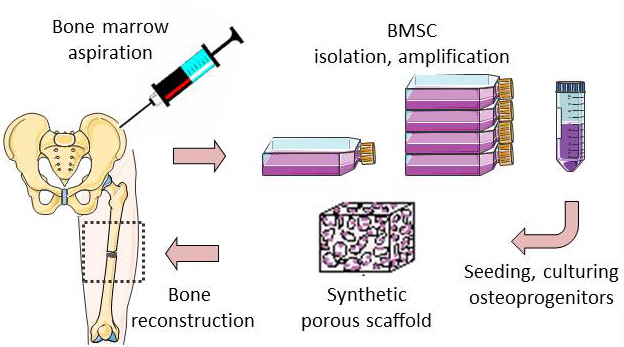
The REBORNE project began three years ago and its originality lies in using mesenchymal stem cells (MSC), found in bone marrow, to help heal fractures. Adult stem cells are amplified in culture, then are associated with biomaterial before being implanted on the fracture. Promising pre-clinical trials have now paved the way for the launch of these new clinical trials.

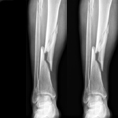
Following trauma (fall or road accident), there is a high incidence of delayed union or non-union in tibia, femur or humerus bones requiring a surgical apposition of an autologous bone graft (patient’s own bone). However, the bone graft available is limited and complications are often observed at the second surgical site.

The partners of the European project REBORNE propose an alternative treatment using autologous mesenchymal stem cells associated with a synthetic bone substitute.

© P. Layrolle, Inserm

Thanks to a bone marrow aspiration under local anaesthesia, the mesenchymal stem cells are isolated and amplified in culture for 21 days. During the surgical intervention stem cells are associated with biphasic calcium phosphate ceramic granules and implanted at the site of the fracture. In this way, the biomaterial is used as “scaffolding” and encourages stem cell proliferation. The stem cells are then differentiated into bone cells and regenerate the bone tissue around the fracture.

© P. Layrolle, Inserm

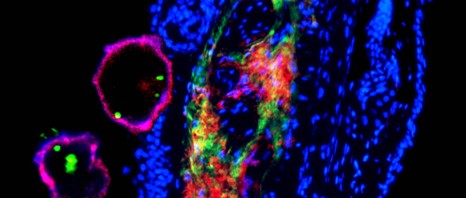
Bone formation (in green) and bone barrow formation (in red) further to a mixture of human stem cells and biomaterial granules (grey/white) being implanted at a subcutaneous site in nude mice. This histological section shows osteoinduction by the cell/biomaterial mix with the formation of around 41% of bone tissue four weeks after implantation.

The French Medicinal Agency ANSM gave its green light on 3 January 2013 so that these Inserm-sponsored trials can now begin in France, with seven patients receiving treatment in the Créteil University Hospital Centre and the Regional University Hospital Centre in Tours. Ultimately, thirty patients will be included in France, Spain, Germany and Italy to be part of this multi-centre European study.

“The objective of this trial is to show that biomaterials and stem cells are safe and are at least equivalent to standard treatments, without their disadvantages. This surgery is less invasive and preserves the patients’ bone stock. For these reasons, it is preferable to bone grafts in terms of triggering bone healing”.

 explains Pierre Layrolle, director of Research, Inserm and coordinator of REBORNE.

For further information:

REBORNE – Regenerating Bone Defects using New biomedical Engineering approaches

The objective of REBORNE is to develop new biomaterials that stimulate bone tissue formation with a view to correcting bone regeneration defects in orthopaedic and maxillofacial surgery. Biomaterials, combined with the use of stem cells, are interesting alternatives to biological grafts.

The REBORNE project kicked-off in January 2010 and will run for five years using an overall budget of roughly 12 million Euros provided by the European Union (PC7). The project involves 24 partners, based in eight European countries: https://www.reborne.org/presentation.html

Auto-immune disease: the viral route is confirmed

Why would our immune system turn against our own cells? This is the question that the combined Inserm/CNRS/ Pierre and Marie Curie University/Association Institut de Myologie  have strived to answer in their “Therapies for diseases of striated muscle”, concentrating in particular on the auto-immune disease known as myasthenia gravis. Through the project known as FIGHT-MG (Fight Myasthenia Gravis), financed by the European Commission and coordinated by Inserm, Sonia Berrih-Aknin and Rozen Le Panse have contributed proof of the concept that a molecule imitating a virus may trigger an inappropriate immune response, causing muscular function to deteriorate. These results have been published in Annals of Neurology, accessible on line.

Myasthenia, a rare auto-immune disease

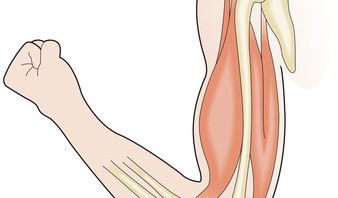
Myasthenia gravis is a rare auto-immune disease (5,000 to 6,000 patients in France) that produces muscular weakness and exhaustion. It generally affects the facial muscles first, and may then become generalised through the muscles of the limbs or the respiratory muscles, causing respiratory distress.

This is due to the production of circulating auto-antibodies that block the acetylcholine receptors (RACh), these neurotransmitters being necessary for transmitting the motor nerve signal to the neuro-muscular junction.

Could a viral infection be the origin of myasthenia?

Myasthenia is a multi-factorial disease in which environmental factors seem to play a key triggering role. Viral infections are suspected but it is hard to prove the role of a virus in triggering the condition. In fact, diagnosis of myasthenia is often made months, or even years, after the actual start of the illness when the virus is no longer detectable, even though the signature left by the virus is visible long after the infection.

Proof of the concept of a viral origin contributed by researchers

Under the European FIGHT-MG project, the team of researchers managed to decode the trigger for the illness by using a molecule that mimics the RNA double viral strand (Poly(I:C)).

To do this, they concentrated on the organ that plays a central role in the disease – the thymus. It is in this gland located in the thorax that the T-lymphocytes mature, these being the key players in immune response that are normally programmed to avoid the development of any auto-immunity.

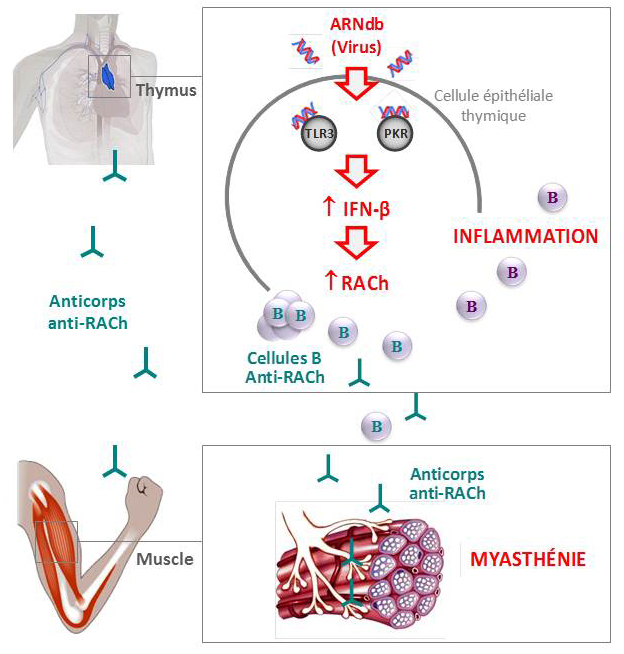
The researchers were thus able to show in vitro that the Poly(I:C) was capable of specifically inducing an over-expression of RACh through thymal epithelial cells, while activating three proteins (the “toll-like” receptor 3 (TLR3), the protein kinase R (PKR) and interferon-beta (IFN-â)); it is this last that produces inflammation in the thymus.

At the same time, they analysed pathological thymus glands of myasthenia sufferers in whom they observed over-expression of these same three proteins in the immune system, characteristic of a viral infection.

Finally, the researchers also managed to identify the same molecular changes in the thymus glands of mice, after they had been injected with Poly(I:C). After a prolonged injection period, they also observed a proliferation in the mice of B anti-RACh cells, the presence of auto-antibodies blocking the RACh receptors and clinical signs synonymous with the muscular weakness found in myasthenia.

These original results show that molecules that mimic a viral infection are capable of inducing myasthenia in the mouse, something that had never been demonstrated before.

This set of papers published in the Annals of Neurology provides proof of the concept that a viral infection can cause inflammation of the thymus and lead to the development of auto-immune myasthenia.

The next stages of the research will consist in determining which exogenous virus this may be or whether it is a case of the abnormal activation of an anti-viral response by endogenous molecules.

© Inserm / R. Le Panse 

The introduction of a double strand of RNA (Poly(I:C) into the thymal epithelial cell induces the over-expression of the acetylcholine receptors (RACh), via the activation of the “toll-like” receptor 3 (TLR3) and the protein kinase R (PKR),  as well as the production of interferon-beta (IFN-β)). These changes in the thymus gland cause the formation of B anti-RACh cells and the production of circulating auto-antibodies that block the acetylcholine receptors present in the neuromuscular junction.

FIGHT-MG (Fighting Myasthenia Gravis) – a European collaboration making giant leaps forward

The FIGHT-MG project seeks to determine the genetic and environmental risk factors associated with the occurrence of the illness and its development. The project aims also to identify the key immunological molecules associated with its appearance, and to study the pathogenic mechanisms at the neuromuscular junction, establish new diagnostic tests, as well as new treatments (cellular treatments, immuno-regulatory treatments, immuno-absorption of pathogenic auto-antibodies and other pharmacological treatments).

“When one is working on a rare disease, it is essential to work through networking, so as to be able to share our facilities and resources to promote fundamental and clinical research. It is also crucial to communicate permanently with patient associations. It is this combination that enables us to take giant steps in the treatment of rare conditions,” explains Sonia Berrih-Aknin.

FIGHT-MG : https://www.fight-mg.eu/ 

FIGHT-MG started in December 2009 and will last for four years, with a total budget of about six million euros funded by the European Union (FP7). The project involves 12 partners based in seven European countries:

The 12 partners:

Inserm (coordinator), France
Hellenic Pasteur Institute (HPI), Greece
Open University of Israel (OUI), Israel
Fondazione Istituto Neurologico “Carlo Besta” (INNCB), Italy
Oslo University Hospital (OUS), Norway
Hadassah Hebrew University Medical Center (HMO), Israel
Israel Institute of Technology (TECHNION), Israel
University of Paris 6 Pierre and Marie Curie (UPMC), France
University of Basel (UNIBAS), Switzerland
ProteoSys (PSY), Germany
Genopolis Consortium for Functional Genomics (GENOPOLIS), Italy
INSERM TRANSFERT SA (IT), France

The “Myasthenia” team

The “Myasthenia” team, headed by Sonia Berrih-Aknin joined the Institute of Myology directed by Professor T. Voit, just over a year ago in order to get closer to the reference centre for neuromuscular diseases run by Prof B. Eymard, at the Pitié-Salpêtrière Hospital in Paris. The Institute of Myology is an international center of expertise on the muscle and its diseases, a member of the Institute of Biotherapy of rare diseases created by the AFM-Telethon. The Sonia Berrih-Aknin’s team is interested in the etiological and physio-pathological mechanisms of myasthenia and innovative treatments that could improve patients’ quality of life.

Even though winning a European project is very competitive, this team has exceptionally been granted three other projects since 2001, and was responsible for their coordination. Sonia Berrih-Aknin was the coordinator of the “Mechanisms of Myasthenia” project (2001-2005) under FP5, the MYASTAID (2006-2010) project under  le cadre du FP6, as well as the Euromyasthenia Project (2006-2009) through the European Public Health  Directorate. These projects brought a total of more than fifty teams of clinicians, researchers and associations of sufferers in Europe.


METACARDIS: a European project that deciphers the genes of the gut microbiota responsible for cardiometabolic diseases

METACARDIS (Metagenomics in Cardiometabolic Diseases) is a European project coordinated by Inserm that aims to study the role of the gut microbiota in the development of cardiometabolic diseases (CMDs). Thanks to the support of the European Commission, fourteen partners in six European countries will work together over a five-year period to translate the results obtained with novel CMD diagnosis and treatment methods and pave the way for personalised medicine in CMDs. Researchers and clinicians from the Institute of Cardiometabolism and Nutrition (ICAN) will also be involved in the METACARDIS project.

The aim of the METACARDIS project is to develop and implement personalised treatments for patients with CMDs in order to meet an urgent need for improved patient care and relieve the socioeconomic burden on the health care system. CMDs – which comprise cardiovascular diseases, metabolic diseases and obesity – are a major cause of mortality and morbidity around the world. Their socioeconomic cost is substantial; it is estimated that they alone cost the EU economy more than €192 billion a year (57% due to direct treatments, 21% due to production losses and 22% due to indirect treatments[1]).

The aim of METACARDIS is to study the impact of changes in the gut microbiota on the onset and progression of CMDs and their associated conditions. These conditions manifest in highly different ways and in all likelihood are interlinked by initial common channels and dysfunctions. As a result, it is essential to thoroughly understand the physiopathological mechanisms involved, make detailed early diagnoses and deliver treatments that are tailored to each disease. In other words:

  • Find novel shared biological targets and channels that play in role in the progression of CMDs.
  • Validate the gut microbiota targets and biomarkers.
  • Refine the analysis of patients’ clinical profiles through molecular phenotyping.
  • Develop new systems (software) for the integration of environmental data and of patients’ clinical and biological information.

METACARDIS is the first systemic study designed to correlate the gut microbiota with CMD in people.

It brings together groups of European researchers from various disciplines with biotech and industry experts. The teams will have access to state-of-the-art technologies to accelerate the development of novel preventive and therapeutic strategies for CMDs. Amongst these teams are those directed by Karine Clément and Dominique Gauguier of the Cordeliers Research Centre (Inserm Unit 872) and of the university hospital and research complex ICAN, by Serge Hercberg of the Nutritional Epidemiology unit (Inserm Unit 557) and by Hervé Blottière, Joel Dore and Dusko Ehrlich at INRA (France’s National Institute of Agricultural Research).

The preliminary studies forming the basis of the METACARDIS project

Work conducted in recent years to characterise the genome of the gut microbiota, i.e. the entire genome of the bacteria in the intestine, has opened up new opportunities in in-depth understanding of the possible channels shared by the various conditions that comprise CMDs.

In oncology, biological signatures that make it possible to predict the characteristics of tumours have been identified. Likewise, research has shown that gene expression models of the gut microbiota vary from one cardiometabolic condition to another. Obese patients presenting insulin resistance, inflammatory syndrome, dyslipidaemia and/or glucose dysregulation are characterised by an alteration in the diversity and composition of their gut microbiota. Some species of gut bacteria have even been found to be associated with coronary vascular diseases. Imbalances in gut intestinal flora therefore may play a role in the development of cardiometabolic conditions.

Patients included in the project in late 2012

Once the METACARDIS project begins in late 2012, its teams will conduct a first series of studies on an already established patient cohort (MetaHIT and Micro-Obes projects; > 200 subjects). This cohort will provide the teams with immediate access to a wide range of clinical, medical and environmental data as well as biological specimens. The teams will thus be able to conduct initial research on CMD biomarkers by means of a metabolomic approach and metagenomic profiling. A second patient cohort with CMDs at various stages will be set up during the project in three countries (France, Denmark, Germany). Enrolment is scheduled to end in mid-2015. More than 2000 patients, nearly half of the cohort, will come from the Heart and Metabolism Centre of Pitié-Salpêtrière Hospital.

Information on the patients’ lifestyle (nutrition, physical activity and psychosocial factors) will be integrated with their clinical and biological data in order to evaluate how they influence the gut microbiota and the progression of associated diseases. This data will be combined with interventional studies that are recognised to reduce the risks of CMDs.

To find out more


[1] Leal J. et al, 2012, Economic Costs In: European Cardiovascular Disease Statistics

(French) L’action du vaccin, dépendante de son mode d’administration : nouvelles pistes

Optimizing the care of very preterm infants: A collective European initiative

“Effective Perinatal Intensive Care in Europe: translating knowledge into evidence-based practice”, is the theme that will bring together the 12 institutions taking part in the EPICE project – Effective Perinatal Intensive Care in Europe – a European project funded by the EU 7th Framework Program “Health”, coordinated by Inserm. This meeting organised in Paris from the 25th to the 27th of October, will be the opportunity to mark the end of inclusions for a cohort of over 8000 very preterm infants and to provide feedback on preliminary results of the project, launched in 2011.

Changing practices in obstetric and neonatal units

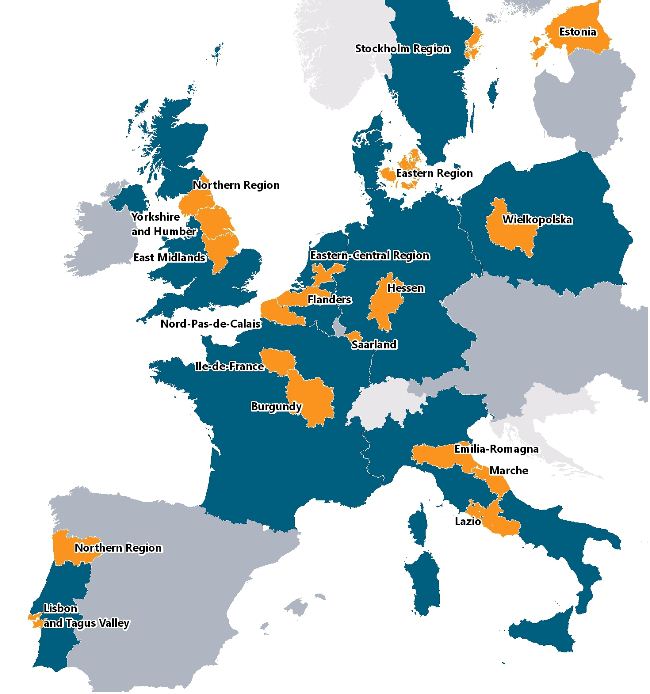
The EPICE project, set up 18 months ago, collects data from 19 European regions (shown in orange on the map) in order to identify the factors that promote the use of evidence-based medicine in the care of very preterm infants.

 “The need to set up a European research project arose from the observation that mortality and morbidity rates for very preterm infants can vary by a factor greater than two between European regions”, states Jennifer Zeitlin, coordinator of the EPICE project and Researcher at Inserm (Unit 953 “Epidemiological Research Unit on Perinatal Health and Women’s and Children’s Health”).

Very preterm infants born before 32 weeks of gestation (the 8th month of pregnancy) represent between 1 and 2% of all births. They have a higher risk of mortality and long term neurological and developmental impairments than full term infants.

The EPICE project thus aims to improve the survival and long-term health of these children by ensuring that medical knowledge is translated into effective care. The project results will provide scientific knowledge on which to base intervention strategies to improve the use of evidence based medicine. It will also build a methodological and conceptual framework for future scientific work on the effectiveness of intervention strategies.

Promoting evidence-based medicine

The development of evidence-based clinical-practice guidelines is one of the most promising and cost-effective tools for improving the quality of care The EPICE project researchers are studying a large range of interventions, in order to identify the factors that promote their dissemination in everyday clinical practice.

“The aim is to learn from the experiences of high performing neonatal units in Europe and to use what we learn to improve the care offered to very preterm infants”

explains Jennifer Zeitlin.

19 medical interventions have been selected based on their clinical importance, the solidity of the evidence base and the feasibility of collecting data. These interventions concern such aspects as:

– The use of antenatal corticosteroids to promote lung maturation prior to a very preterm delivery,

– The transfer of pregnant women before delivery to specialised centres with a neonatal intensive care unit (level III units),

– The restriction of post-natal corticosteroid use,

– Promotion of breastfeeding.

Since March 2011, two epidemiological studies have been running in parallel: the first is a cohort study of more than 8000 very preterm infants (between 180 and 1500 depending on the country); the second focuses on the maternity hospitals and neonatal units that care for these infants.

– The cohort study will provide data about the care of very preterm infants and their health from birth to discharge home. These data will be completed with information about health and development at 2 years of age by means of a questionnaire sent to the family.

– Questionnaires given to the medical teams of 261 maternity hospitals and neonatal units collect data on the characteristics of the units, their organization and protocols for use of selected medical interventions and procedures.

The project’s multidisciplinary team has expertise in obstetrics, neonatal medicine, epidemiology and health services research. By grouping and reinforcing national research initiatives, this project enhances cooperation and excellence in Europe.

Why is “evidence-based medecine” necessary?

Evidence-based medecine improves the quality of health care. It is defined by the solidity of the evidence proving the beneficial effects of a practice, its advantages and any risks involved in the treatment. It helps health professionals to select treatments and practices already proven to be effective.

For further information:

EPICE www.epiceproject.eu

“Effective Perinatal Intensive Care in Europe: translating knowledge into evidence-based practice”

The EPICE project is dedicated to the medical care of very preterm infants born before 32 weeks of gestation, in eleven European countries. The aim of the project is to assess practices in order to improve health care for this population of high risk babies.

The EPICE project was launched in 2011 and has been supported by the European Union (FP7) for five years. It is coordinated by Inserm, just like 27 other European “health” projects. The project involves 12 partners and 6 associate partners, based in 11 European countries.

The 12 partners:

Inserm (coordinator), France

SPE, Belgium

Hvidore Hospital, Denmark

Universitas Tartuensis, Estonia

Philipps Universität Marburg, Germany

Bambino Gesu Ospedale Pediatrico, Italy

Laziosanita Agenzia Di Sanita Pubblica, Italy

Radboud University Nijmegen Medical Centre, the Netherlands

Poznan University of Medical Sciences, Poland

U.Porto, Portugal

University of Leicester, United Kingdom

Karolinska Institutet, Sweden

EPICE in France

The EPICE project in France is part of a national study entitled EPIPAGE 2 (an epidemiological study on very preterm babies). It is a cohort study of very preterm infants, launched in 2011 in the 22 regions of mainland France and the French overseas departments. The study will monitor over 6000 premature children up to the age of 11 to 12. Three regions in France: Ile-de-France, Nord-Pas-de-Calais and Bourgogne participate in EPICE project.

The EPIPAGE 2 project is managed by the Inserm unit 953 (“Epidemiological research into perinatal health and the health of women and infants”), in collaboration with team 2, from UMRS 1027, directed by Dr Catherine Arnaud (Perinatal epidemiology, handicap of child and health of adolescents.

For further information on this study: www.epipage2.inserm.fr (Head of studies: Pierre-Yves Ancel, Inserm U953)

Inserm 

Founded in 1964, the French National Health and Medical Research Institute (Inserm) is a public science and technology institute, jointly supervised by the French Ministry of Higher Education and Research and the Ministry of Health.

The mission of its scientists is to study all diseases, from the most common to the most rare, through their work in biological, medical and public health research.

With a budget of 905 million euros in 2011, Inserm supports more than 300 laboratories across France. In total, the teams include nearly 13,000 researchers, engineers, technicians and administrative staff, etc.

Inserm is a member of the National Alliance for Life and Health Sciences, founded in April 2009 with CNRS, Inserm, the CEA, INRA, INRIA, the IRD, the Pasteur Institute, the Conference of University Presidents – Conférence des Présidents d’Université (CPU) and the Conference of Chairmen of The Regional and University Hospital Centres – Conférence des directeurs généraux de centres hospitaliers régionaux et universitaires. This alliance forms part of the policy to reform the research system by better coordinating the parts played by those involved and by strengthening the position of French research in this field through a concerted plan.

Inserm is Europe’s leading European project instigator, with 28 projects coordinated by the Institute as part of the FP7 scheme.

Job strain and coronary heart disease linked

The most recent studies on the connection between ischemic cardiovascular disease and job strain have been affected by many types of bias, such as the methodology used, the definition of stress and the number of cases studied. This has led to different risk values. To find out more, French researchers at Inserm and Université Versailles Saint Quentin joined a large European consortium called IPD-WORK Consortium, which brings together thirteen cohorts in Europe. Following a far-reaching analysis of nearly 200,000 people in Europe, researchers have now confirmed that job strain and cardiovascular accidents are related. Studies show that the risk of heart attack is 23% higher in persons exposed to stress than in those who are not. Stress prevention could reduce this risk.

Result published in The Lancet on Friday September 14, 2012

In recent years, studies have investigated the role played by various psychological factors (including personality, cognition and stress) in cardiovascular diseases. The main focus has been on psychological stress, especially job strain, which combines high demand in the workplace with low control. It emerged from earlier studies that job strain could multiply the risk of coronary events by two. Other research suggests a much slighter risk. The European IPD-WORK Consortium (Individual-Participant-Data Meta-analysis in Working Populations) was set up in 2008 to investigate this topic further.

Study of 13 cohorts totalling nearly 200,000 participants

The consortium brings together thirteen European cohorts, including the French GAZEL cohort, which is made up of 20,000 EDF-GDF employees who have been monitored since 1989. Inserm researchers Marcel Goldberg, Archana Singh Manoux and Marie Zins, from Inserm unit 1018 “Research Centre for Epidemiology and Public Health” and Université Versailles Saint Quentin, have contributed to the most extensive analysis ever carried out on the relation between job strain and the onset of coronary events.

The specific feature of this analysis is that it incorporates the personal data of 193,473 participants in the European cohorts, thus allowing research teams to pinpoint the relation between job strain and risks over a large number of cases.

Seven national cohorts set up between 1985 and 2006 were studied. The countries concerned were Belgium, Denmark, Finland, France, Netherlands, Switzerland and the United Kingdom.

The study population had an average age of 42.3 years, with as many women as men. Questionnaires focusing on work-related psychosocial aspects were used to assess job strain. Among the points considered were job demand, the excessive workloads of some individuals, the conflicting demands made of them and the limited amount of time in which they were expected to complete their tasks.

The proportion of individuals exposed to job strain ranged from 12.5% to 22.3% according to previous studies. It represented 15.3% of this large study population.

At the same time, researchers identified 2,358 coronary events among the 200,000 individuals over an average monitoring period of seven years.

The importance of stress prevention

After analysing the data,

the results obtained from the 13 European cohorts show that the risk of heart attack is 23% higher in persons exposed to stress at work than in those who are not”

explains Marcel Goldberg, a professor at Université de Versailles Saint Quentin and researcher at Inserm.

The results are practically the same after allowing for the participants’ lifestyles, age, gender, socioeconomic status and geographical distribution.

Taking the population as a whole (stressed and unstressed), the researchers consider that job strain can lead to a slight, but not negligible, increase in the risk of heart attack: “In our study, 3.4% of the heart attacks reported among the 200,000 individuals can be explained by job strain. Of the 100,000 to 120,000 heart attacks occurring in France every year, that would represent roughly 3,400 to 4,000 accidents attributable to this risk factor,” Marcel Goldberg explains.

The European research team suggests reducing this risk by stepping up measures to prevent work-related stress. Preventive measures in this area could also positively affect other risk factors, such as tobacco and alcohol consumption, which recent studies have shown to be partly stress-related.

fermer