Sorry, this article is only available in French.
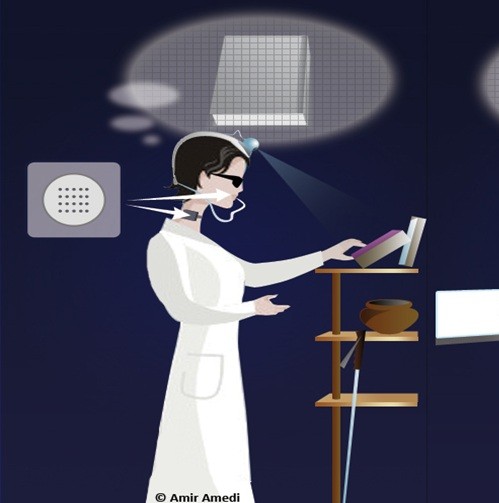
A "sonar vision" system enabling the congenitally blind to perceive the shape of a face, a house, and even letters and words is being developed by a team at Jerusalem’s Hebrew University.
Le vendredi 16 Novembre, les laboratoires Inserm de Bordeaux, Caen, Grenoble, Montpellier, Nantes, Paris, Rennes, Toulouse et les laboratoires CNRS universitaires et hospitalo-universitaires de Marseille ayant reçu le soutien de la Fondation ARSEP, ouvrent leurs portes aux personnes malades et à leur famille.
Le médecin et chercheur japonais, Shinya Yamanaka, récompensé par le Prix Nobel le 8 octobre dernier pour ses travaux sur les cellules IPS (Induced Pluripotent Stem cells), a visité, ce jour, le laboratoire I-Stem (Institut des cellules souches pour le traitement et l'étude des maladies monogéniques).
A team of researchers from Strasbourg, directed by Luc Dupuis (Inserm unit 692 “molecular signalling and neurodegeneration”), have recently discovered the origin of spasms - a disabling symptom of amyotrophic lateral sclerosis.