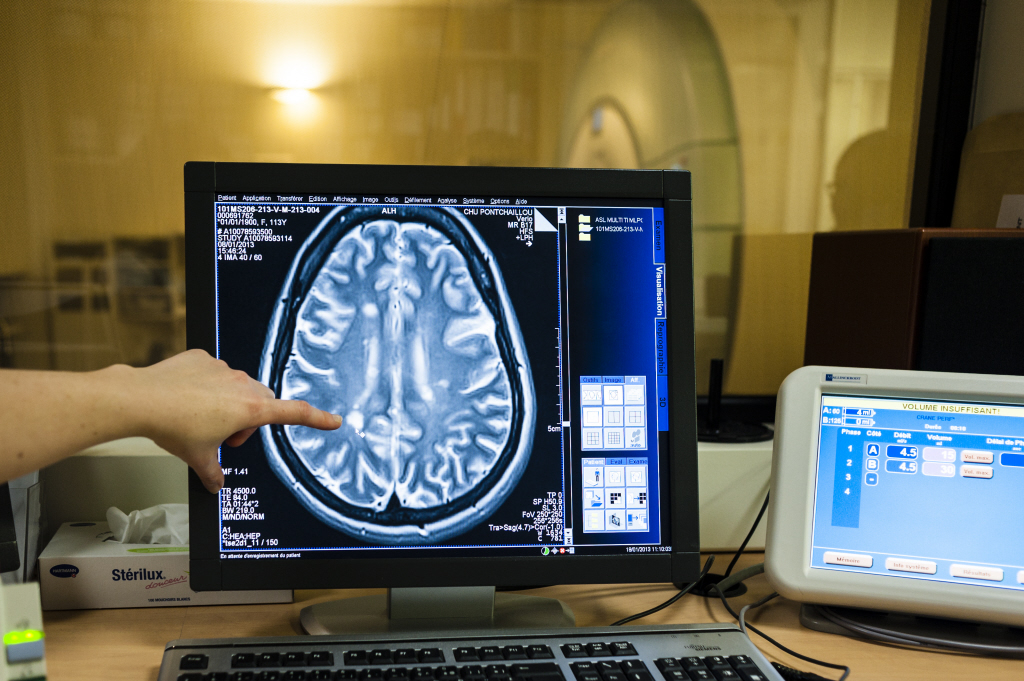
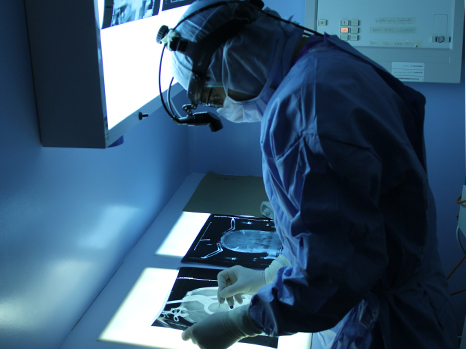
Under normal conditions and because it cannot store oxygen, the brain cannot withstand being deprived of oxygen for more than a few minutes without risking serious consequences. After an accident (cranial trauma or stroke), emergency teams therefore try to restore cerebral oxygenation as quickly as possible. The faster and more precisely physicians work, the greater the chances of recovery. A multi-disciplinary team at the Grenoble Institute of Neuroscience (GIN,...
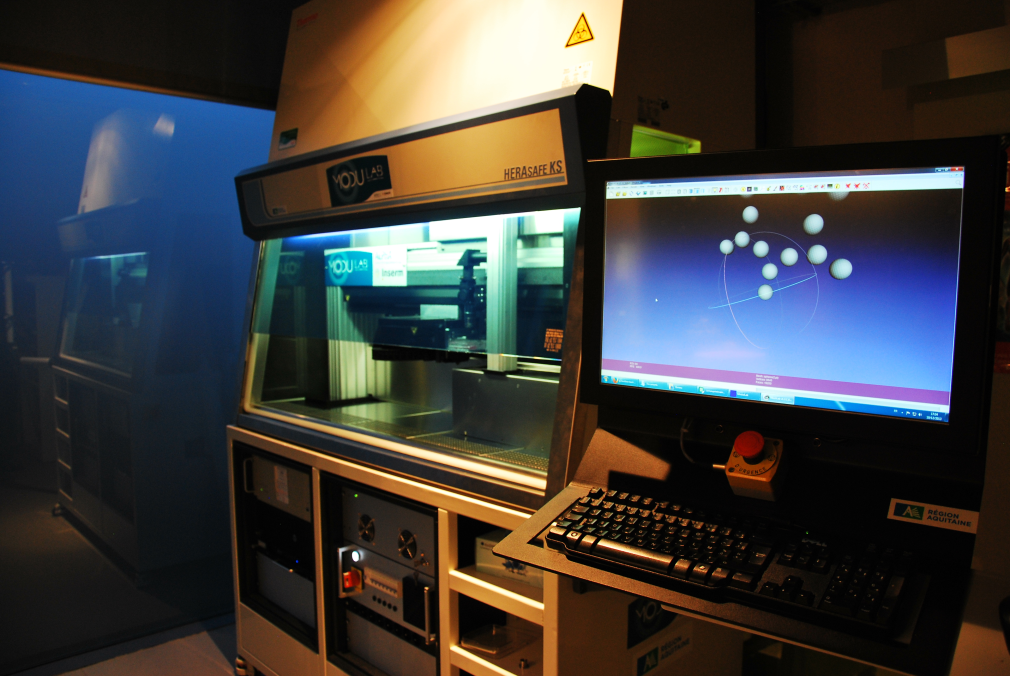
One of the goals of the laboratory is to develop laser and microfabrication technologies with the aim of printing tissues in vitro and in vivo. The researchers in the laboratory were pioneers in Europe, developing laser-assisted bioprinting from 2005. This Inserm/University of Bordeaux joint research unit is one of a very few worldwide to use this process. The objective of Fabien Guillemot’s team is therefore not only to position...
A team led by Ludwik Leibler from the Laboratoire Matière Molle et Chimie (CNRS/ESPCI Paris Tech) and Didier Letourneur from the Laboratoire Recherche Vasculaire Translationnelle (INSERM/Universités Paris Diderot and Paris 13), has just demonstrated that the principle of adhesion by aqueous solutions of nanoparticles can be used in vivo to repair soft-tissue organs and tissues.
A team of French researchers, led by Dr. Anna Buj-Bello (Genethon/Inserm) and teams at the University of Washington and Harvard Medical School in the United States, have demonstrated the efficacy of gene therapy in models of myotubular myopathy, an extremely severe neuromuscular disease in children.
A French and English team (AP-HP, Inserm, UPEC, CEA/Mircen, Oxford Biomedica, Cambridge University) has conducted a clinical phase 1/2 gene therapy study among patients suffering from an evolved form of Parkinson’s disease. Fifteen patients were able to benefit from this new treatment, which involves injecting a vector expressing the genes of three enzymes that are essential for the biosynthesis of dopamine, which is lacking in Parkinson’s disease. Thanks to...
An international study conducted on mice and coordinated by researchers from Inserm, CNRS and Université Paris-Sud[1] has paved the way towards personalized chronotherapy treatments. In an article published in the journal Cancer Research, the team has shown that the timing of optimal tolerance to irinotecan, a widely used anti-cancer drug, varies by 8 hours depending on the sex and genetic background of mice. They then developed a mathematical model...
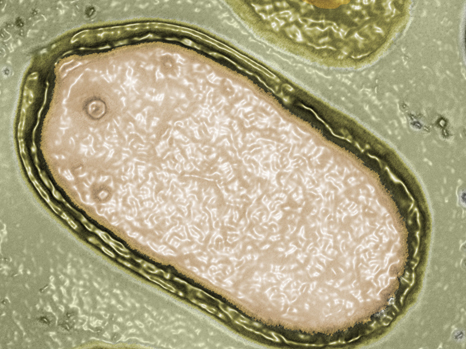
Researchers at IGS, the genomic and structural information laboratory (CNRS/Aix-Marseille University), working in association with the large-scale biology laboratory (CEA/Inserm/Grenoble Alpes University) have just discovered two giant viruses which, in terms of number of genes, are comparable to certain eukaryotes, microorganisms with nucleated cells.
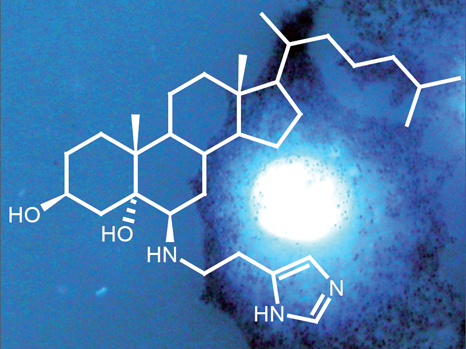
Although excessive quantities of cholesterol in the body are known to have adverse effects on health, researchers might polish up its reputation via one of its derivatives.
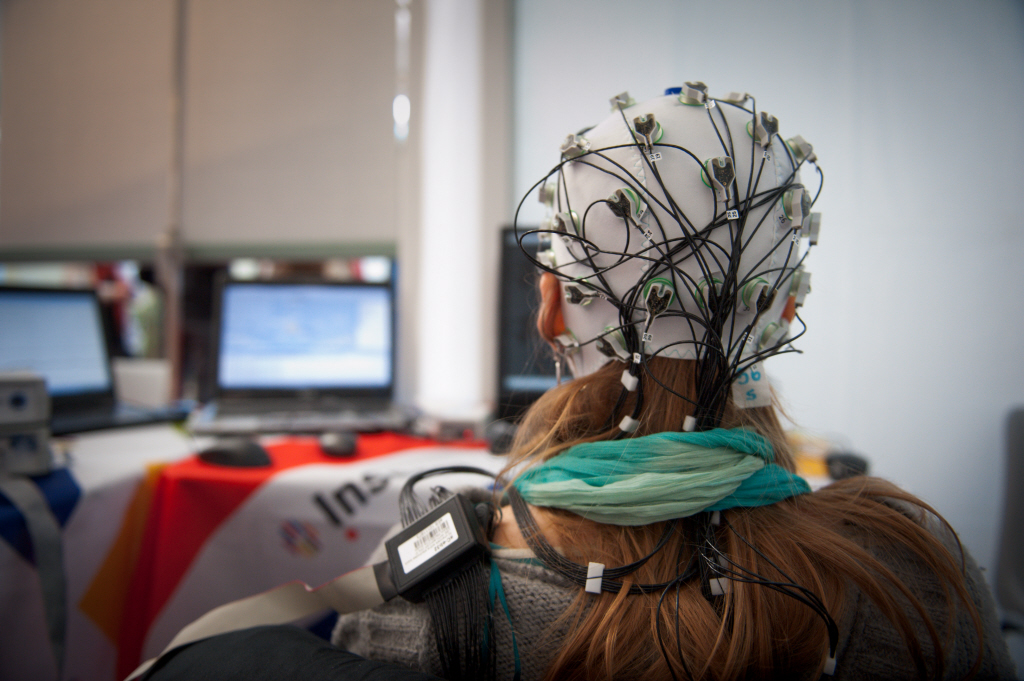
Researchers have designed a system for sensing brain activity that is 100% biocompatible and made of organic matter. The medium, which is only a few microns thick, is as thin and flexible as cellophane, and yet very tough. The model was tested on an animal suffering from epilepsy. The quality of the brain signal recorded was 10 times better than the traditional brain activity recording systems
The immature brain of a premature infant is capable, at the age of three months pre-term, of distinguishing syllables uttered by male and female voices. These results obtained by INSERM researchers at the University of Picardy Jules Verne and the CEA’s NeuroSpin Imaging Centre, were published in the PNAS journal dated 25 February 2013. They highlight the very early sophisticated organisation of the regions of the brain involved in...
Imagine, in this hybrid operating theatre, surgeons, physicians and engineers surrounded by control screens, using enhanced and roboticised reality systems, enabling interventions that are even more accurate and safe. At the Signal and Image Processing Laboratory (University of Rennes 1 / Inserm), researchers, engineers and doctors at the Rennes CHU Cardio-pneumological Centre have been working together to bring the TherA-Image platform into existence.