Menu

10 Principles for Fighting Climate Change

Photo by Aaron Burden on Unsplash

Since the COP 22, health has been a central topic of discussion. It is within this context, and on the day before the One planet Summit to be held tomorrow in Paris, that 10 principles for protecting respiratory health from climate change were proposed by an ad hoc workgroup from the Environment and Health Committee of the European Respiratory Society. Those principles have just been published in European Respiratory Journal: https://erj.ersjournals.com/content/50/6/1701912

Isabella Annesi-Maesano, INSERM Research Director, is a co-author of this article.


  1. Climate change is real. The first principle reasserts that climate change and global warming are real[i], which is a precondition to any defensive actions against climate change.
  2. Health and the environment are inextricably linked to climate change. Despite this, political action and investments currently underway are not yet enough to confront these challenges on the worldwide scale.
  3. Climate change has a direct effect on respiratory health. Cold temperatures, rising temperatures, humidity, variations in atmospheric pressure, storms, flooding, and other phenomena are a serious threat to respiratory health[ii].
  4. Climate change also has an indirect effect on respiratory health. Climate change can also trigger heightened exposure to other respiratory illness risk factors, for example atmospheric pollution, pollen, and infectious agents, and this can cause them to develop and become worse more quickly[iii] [iv].
  5. Few data are available. Yet understanding these phenomena better would make it possible to carry out risk simulations and better organize prevention.
  6. The impact on health is not the same for everyone. Certain populations are at greater risk since they are more vulnerable. For example, 30% of the world’s population is threatened by “deadly heat waves.” The impact is felt even more intensely by those who suffer from respiratory illnesses or who are predisposed to them. [v]
  7. The challenge is to change. The anthropic greenhouse gas emissions responsible for global warming and climate change can be primarily attributed to humans (population size, economic activities, lifestyle, energy consumption, soil use methods). Fighting climate change requires a combination of reduction measures to treat the causes and adaptation measures to treat the impact.
  8. Reduction (mitigation). Climate change can be mitigated by drastically reducing greenhouse gas (GHG) concentrations or, at the very least, stabilizing them in the atmosphere at a level that prevents all dangerous anthropic disturbance to the climate system. This can be achieved by reducing GHG emissions and pollutants. This includes the action of atmospheric pollutants with a short lifespan in order to reduce the greenhouse effects in the short term, which involves the protection and improvement of GHG sinks and reserves (e.g., forests and soil).
  9. Local action plans can be made to protect health in the event of a heat wave or excessively cold temperatures, to deploy specialized emergency medical services, to improve the monitoring and supervision of climate-sensitive illnesses, and to sanitize drinking water. The “polluters pay” concept must no longer be accepted, as less harmful alternatives are an option.
  10. Action must be taken now. And it must be taken by governments and nations. In Europe, the following must be done (among others):
  • invest in green fuels and technologies
  • take political measures to reduce Diesel emissions
  • adopt and apply the WHO air quality standards as EU limits
  • prosecute those who violate EU legislation

Conclusion

Healthcare professionals have a duty to contribute to the application of these principles.

[i] . Climate change is happening now[i]. The rise in global average temperatures is quite clear. The deviation from the average for the period of reference, ranging from 1961 to 1990, has almost always been positive since the early 1980s. The decade from 2001 to 2010 was 0.21°C warmer than the decade from 1991 to 2000, and is 0.48°C higher than the 1961-1990 average. 2016 was the warmest year (by 1.2° Celsius) on the planet since temperatures began being recorded in 1880, marking the third consecutive annual heat record according to the National Oceanic and Atmospheric Administration (NOAA). The land and ocean surface temperature was 0.94ºC higher than the twentieth-century average of 13.9ºC, which was 0.9ºC higher than the previous record for 2015, according to NOAA. Land surface temperatures alone were 1.43ºC higher than the twentieth-century average, and ocean surface temperatures were 0.75ºC higher (or 0.1 point higher than the 2015 record). Rising temperatures and the resulting extreme weather (flooding, heat waves, storms) are caused by the increase in carbon dioxide (CO2) and other greenhouse gases (methane, nitrous oxide, fluorocarbons) in the atmosphere due to human activity.

[ii] Climate change and respiratory diseases ERR 2014 23

[iii] Mendell MJ, Mirer AG, Cheung K, et al. Respiratory and allergic health effects of dampness, mold, and dampness related agents: a review of the epidemiologic evidence. Environ Health Perspect 2011; 119: 748–756.

[iv] Ayres JG, Forberg B, Annesi-Maesano I, et al. Climate change and respiratory disease: European Respiratory Society statement. Eur Respir J 2009; 34: 295–302

[v] Annesi-Maesano I.UN Climate Change Conferences: COP21 a lost opportunity for asthma and allergies and preparing for COP22. J Allergy Clin Immnol 2016;138:57-8

December 1, 2017: World AIDS Day

Friday December 1, 2017, is World AIDS Day.

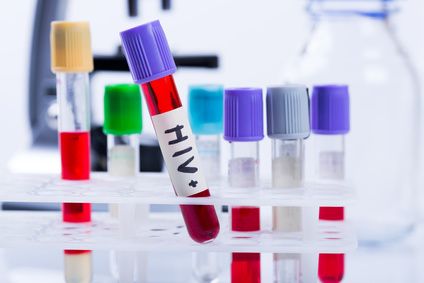
Introduced by the World Health Organization in 1988 and observed in many countries each year since, this day aims to inform and raise awareness of the prevention, treatment and management of human immunodeficiency virus (HIV)/AIDS.

AIDS is a scourge that affects the world’s poorest countries and populations most particularly. In 2015, 37 million people[1] were living with HIV.

Big Killers: AIDS

Actively involved in research relating to the virus, Inserm researchers are mobilized all year round to find new strategies for its prevention, diagnosis and treatment.

Earlier this year, France hosted the 9th IAS Conference on HIV Science biennial gathering of the International AIDS Society. Inserm was one of the partners involved.

To find out more about recent INSERM/ANRS news on this topic:

[1] Source: WHO

Tuesday, October 10, 2017, is National “Dys” Day (dyslexia, dysphasia, dysorthographia, etc.)

©Inserm

The 11th edition of National “Dys” Day will be held on Tuesday, October 10, 2017. Created by the Fédération Française des DYS, it mobilizes parents who are members of associations together with professionals from across France. The various learning disabilities that begin with “dys”, and which are now better understood by the general public, affect around 6 million people in France [1](METTRE CHIFFRE). An event is held in Paris each year, attended by around 10,000 people. This year, it will take place on Saturday, October 14, 2017, from 9 a.m. to 6 p.m., at Université Paris 8.

There are five main learning disabilities: dyslexia, dyspraxia, dyscalculia, dysphasia, and the attention disorders. Dyslexia, dyspraxia and dysphasia are the most common. In cases in which these difficulties persist, solutions can be envisaged to improve and/or compensate the impaired functions.

* Dyslexia

Dyslexia is the poor association between graphemes (written characters) and phonemes (sounds). It also involves the inability to quickly grasp a word in its entirety, meaning that the person deconstructs the words slowly and makes mistakes. That is why dyslexia is very often confused with dysorthographia.

In 2015, Inserm showcased a solution proposed by an Inserm team, which involves correcting dyslexia with the help of music. Since music and language are processed in the same part of the brain, a relationship has been established.

To learn more, consult our article : “Corriger la dyslexie en rythme” [Correcting dyslexia in rhythm (in French)]

One cause of dyslexia could be a visual attention disorder. A team of Inserm researchers is studying this hypothesis, which has been partially confirmed.

To learn more, consult our article : “La dyslexie pourrait être liée à un problème d’attention” [Dyslexia could also be related to an attention disorder (in French)]

Read our press release : “Une seule anomalie à l’origine des trois manifestations principales de la dyslexie” [Just one abnormality responsible for the three main signs of dyslexia (in French)]

* Dyspraxia

Dyspraxia is the difficulty to program, plan and coordinate complex movements, which prevent sufferers from automatizing a large number of voluntary movements, such as writing, and thus leading to dysgraphia.

Caroline Huron, researcher at Inserm Unit 992 Cognitive Neuroimaging, is also president of the association Cartable Fantastique, founded in 2010. This association combines the expertise of researchers in cognitive sciences with that of teachers to facilitate the schooling of children with dyspraxia. As part of a partnership with the French Ministry of National Education, a bank of language study exercises, Les Fantastiques Exercices, intended for elementary school pupils, has been made available to everyone. These exercises have been created in a digital format to meet the specific needs of dyspraxic pupils and then adapted on paper for the other members of the class, so that everyone can do the same exercise at the same time.

* Dysphasia

Dysphasia represents a verbal language development disorder, i.e. difficulty with verbal expression (indistinct words, syntax disorders, poorly constructed words…). Dyslexia very often appears in the wake of this disorder.

For more information, consult our report : “Troubles des apprentissages : les troubles “dys”” [Learning disabilities: the various “dys’s” (in French)]


[1]Source: www.ffdys.com

2017 Nobel Prize in Medicine

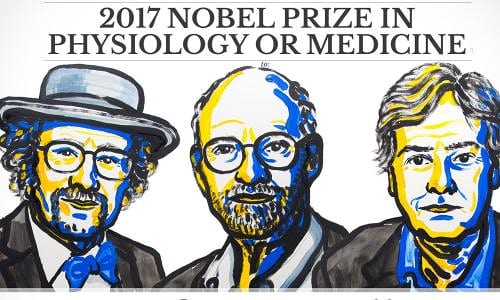
On Monday, October 2, three Americans, Jeffrey C. HallMichael Rosbash and Michael W. Young, were awarded the 2017 Nobel Prize in Physiology or Medicine for their research on the control of circadian rhythms.

A field which is also being studied by researchers from Inserm:

Claude Gronfier, Inserm researcher and chronobiologist, Stem-cell and Brain Research Institute, Lyon

Howard Cooper, Research Director, Stem-cell and Brain Research Institute, Lyon

Joëlle Adrien, Inserm Research Director, Brain & Spine Institute, Paris

Franck Delaunay, Inserm Researcher, Institute of Biology Valrose

Press releases:

Dimly lit working environments: correcting your body clock is possible!

Men and women have different clocks…


Further reading:

  • Health and Research From A-Z:Chronobiologie, les 24 heures chrono de l’organisme” [Chronobiology, the body’s 24-hour clock (in French)]
  • Watch the POM Bio à croquer video (in French) on Light and rhythms: Researchers are beginning to discover how the blue light emitted by LEDs, computer screens and smartphones impacts our health. This light affects a specific region of the brain responsible for regulating our biological rhythms, explains Claude Gronfier, chronobiologist at Laboratory U846 “Stem-cell and Brain Research Institute”.
  • Watch the POM Bio à croquer video (in French) on Sleep and metabolism: Sleep is not just for rest. It is essential for the proper functioning of the immune, hormone and cardiovascular systems, among others. Adolescents often present a large sleep debt. What are the effects on their health? Explanations with Claude Gronfier, chronobiologist at Laboratory U846 “Stem-cell and Brain Research Institute”.

9th IAS Conference on HIV

© Fotolia

From July 23 to 26, 2017, the Ninth IAS Conference on HIV Science, of which Inserm is a partner, will be held at the Palais des Congrès in Paris. For this edition, the International AIDS Society (IAS) has teamed up with ANRS, the autonomous agency of Inserm, to coordinate and fund research on HIV/AIDS and hepatitis.

The program will cover innovative approaches to HIV prevention, treatment and care. Various speakers, including Inserm researchers, will highlight the various advances in vaccines, new therapeutic approaches and prevention of HIV and hepatitis.

Yves Lévy, Inserm Chairman and CEO, will speak at the inaugural conference on Monday, July 24 on “Exploiting the immune system to prevent and control HIV infection”.

The scientific results of several Inserm researchers, including Dominique Costagliola, Patrizia Carrieri, Guillemette Antoni and Marie Jauffret-Roustide, will be presented at this conference.

Access the program for IAS 2017

The Imminent Return of Astronaut Thomas Pesquet

© Inserm/Delapierre Patrick

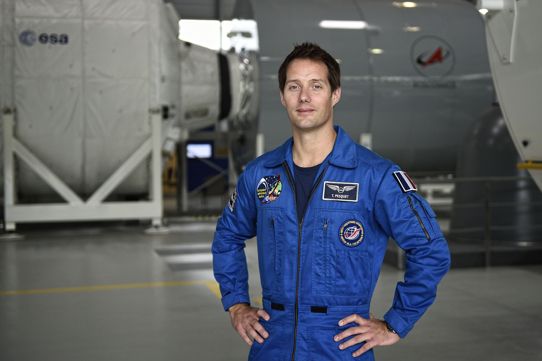
After 6 months of life in space as part of the Proxima mission, French ESA astronaut Thomas Pesquet will land on Friday, June 2, 2017, in the middle of the afternoon (4:08 p.m. Paris time), aboard the Soyuz capsule which is expected to touch down in the Kazakhstani steppes.

On the station, he carried out scientific experiments developed by the research team from Inserm Unit 1093 “Cognition, action and sensorimotor plasticity” (Inserm/Université de Bourgogne).

The perception of spatial markers among astronauts in zero gravity, space adaptation syndrome through study of the inner ear and cognitive function, biological risks and individual susceptibility to radiation in space, together with the determination of energy needs during spaceflight are some of the themes explored by Inserm researchers.

Once the French astronaut returns to earth, Inserm researchers will be able to study accelerated aging and potential bone changes related to spaceflight.

For news on this subject:

Read the press release “Minimum effort for maximum effect“, published on December 2, 2016.

Read the press release “Décollage de l’astronaute Thomas Pesquet pour l’ISS (Astronaut Thomas Pesquet takes off for the ISS)“, published on November 15, 2016 (only available in French)

Chocolate, a rich source of antioxydants

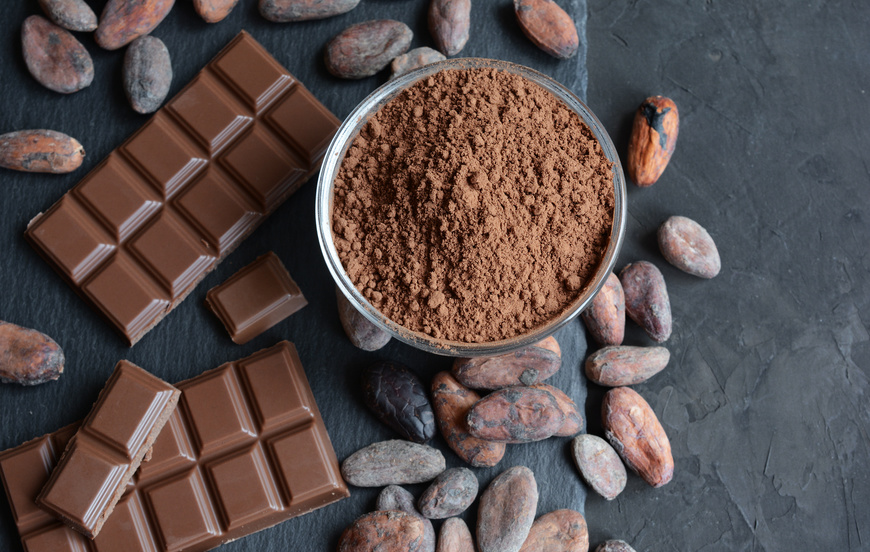
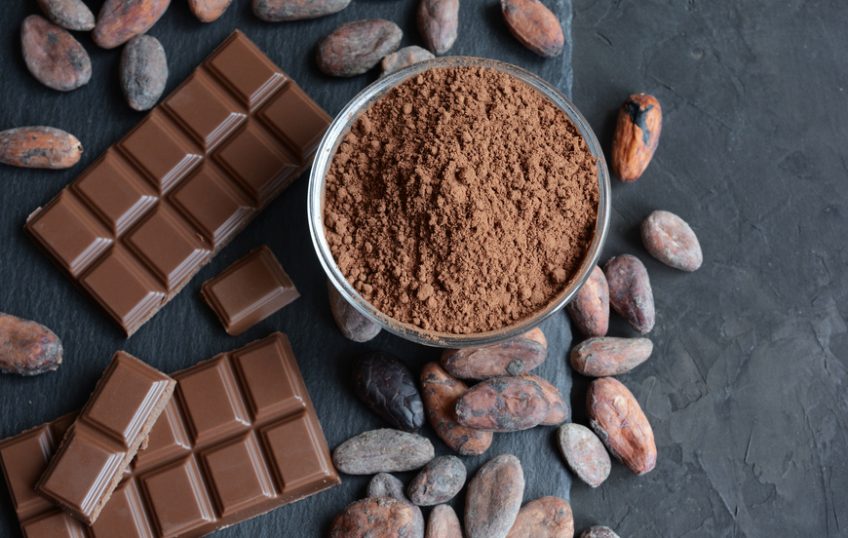
Cacao beans, cacao powder and chocolate

© Fotolia

For children as well as adults, Easter is synonymous with chocolate. Known for its antioxydant qualities, among other things dark chocolate reduces the risk of diabetes and cell ageing. A good reason to make the most of it !

Chocolate is a food which is classed as one of the best sources of antioxydants which help to fight against free radicals. These highly reactive compounds, are continuously produced as we breathe.  In small quantities, free radicals maintain the cellular function of our bodies but in too great a quantity they become harmful and damage our organs and tissues, such as the skin. Exposure to oxidative stress (pollution, tobacco, UV, etc.) aggravates this phenomenon. They are also associated with several disorders such as cataracts, arthritis, cardiovascular disease and cancers.

Chocolate, like coffee, is rich in antioxydants which neutralise free radicals and reduce their harmfulness.  . In its natural state, the cocoa bean contains 8% antioxydants, but the lower chocolate is in cocoa solids, the lower the quantity of antioxydants.  It is therefore necessary to favour “dark” chocolate, with higher cocoa content. Even if the benefits of cocoa have not been studied much, several studies have highlighted the positive effects of chocolate in cardiovascular terms. For example, it was shown that moderate consumption of chocolate by people who survived heart attack helped to reduce the risk of death by 70%. 

Patrizia Carrieri, Inserm research engineer in the area of HIV and viral hepatitis, is studying the effects of the consumption of substances such as alcohol, coffee and chocolate on the health of patients in the ANRS HEPAVIH (the French national prospective cohort of patients co-infected with HIV and HCV) cohort. She says that “in people suffering from HIV and hepatitis C, the daily consumption  of  chocolate is associated with improved liver function”. 

On the other hand chocolate is very calorific, so it must not be abused.

Moving to summer time: how does it impact our health?

Heure d't la craie sur ardoise

©Fotolia

During the last weekend in March we moved to summer time.

During the night of Saturday into Sunday, we put our clocks forward one hour.

Does this change in the hour, whose benefit lies mainly in energy savings, have an impact on our health? Does it disturb our biological clock and the quality of our sleep?

Claude Gronfier, a neurobiologist and researcher at Inserm (Unit 1208), has shown that the biological functions of the body are regulated by the circadian rhythm, a cycle of 24 hours which is endogenous (altered by the body).

Read the information pack “Chronobiology, the body’s 24 hour clock”

Get the latest on sleep:

“Lack of sleep causes brain impairment in adolescents,” published on 8 March 2017.

 “Sleep at the bedside of immunity,” published on 27 April 2016.

See the information file “Sleeps and its disturbance” on the Inserm website.

13–19 March: Brain Awareness Week

capture_decran_2017-01-27_a_15-12-06

© Institut de la vision

The 19th edition of Brain Awareness Week, coordinated by the French Society for Neuroscience, will take place from 13 to 19 March 2017, in France and 62 other countries. During the many events, the general public is invited to come and meet the researchers in order to gain a better understanding of the workings of the brain and find out about advances in research.

Researchers from research organisations, including Inserm, neuroscience institutes and the teaching hospitals, are coming together to participate in 400 free events in 32 towns and cities in France.

“It is an opportunity for many researchers, physicians and students – all volunteers – to meet the public and let it share the advances in research and neuroscience, and to present the challenges and implications of these advances for our society,” says Jean-Antoine Girault, President of the French Society for Neuroscience.

Brain Awareness Week will open with an inaugural lecture given by Jean-Antoine Girault, President of the French Society for Neuroscience, titled À la recherche des traces de la memoire dans le cerveau” (In search of traces of memory in the brain), Monday 13 March at 6:30 pm, at the Brain and Spine Institute, Paris.

See the programme for Brain Awareness Week at www.semaineducerveau.fr/2017  (https://semaineducerveau.fr/2017/France.php)

Inserm researchers remain strongly committed to advancing neuroscience research. Here are some examples of research done by Inserm on this theme, available at the Press Room :

“Lack of sleep causes brain impairment in adolescents,” published on 8 March 2017

“Multiple sclerosis: Mission Regeneration!” published on 23 February 2017.

“Identification of one of the keys allowing entry of Zika virus into brain cells,” published on 10 January 2017.

“Sommeil paradoxal: ces neurones qui nous paralysent” (REM sleep, the neurons that paralyse us), published on 13 December 2016.

28 February 2017: International Rare Disease Day

logo-maladies-rares-anglais

© rarediseaseday.org

The 28 February 2017 marks the 10th edition of World Rare Disease Day, with the slogan “Join us in making the voice of rare diseases heard.” While there are 7,000 known rare diseases, 80% of them genetic in origin, new rare diseases are regularly discovered.

According to the definition used in Europe, a disease is called “rare” if affects fewer than 1 person in 2,000.

Of the 25 million Europeans affected, over 3 million French people are directly concerned, or 4.5% of the population, although each condition affects fewer than 30,000 people in France.

Often chronic and progressive in nature, they affect patient quality of life, causing motor, sensory or intellectual impairment in 50% of cases, and a total loss of autonomy in 9% of cases.

Coordinated by Inserm, and a member of the Rare Disease Platform, Orphanet is the portal of reference on rare diseases and orphan drugs, offering open access to many services to enable patients to understand their disease and its consequences, and guide them through their care pathway by identifying diagnostic laboratories and centres of reference. By facilitating access to patient associations, it also helps them to overcome their isolation.

Inserm researchers remain committed to advancing research, on both improvement of patient care and the efficiency of existing therapies. Some examples of research carried out by Inserm on this theme are available at the Press Room :

Rituximab effective in the treatment of membranous glomerulonephritis, published on 7 October 2016.

Long term correction of hyperbilirubinemia in animal models of Crigler-Najjar syndrome after AAV vector-mediated liver gene transfer, published on 21 July 2016.

An effective drug for myoclonus-dystonia, a rare disease of the nervous system, published on 8 April 2016.

The origin of heart dysfunctions in myotonic dystrophy identified, published on 19 April 2016.

Yes, the time change has physiological effects

The Black Sun©Fotolia

On the night of Saturday 29 October to Sunday 30 October 2016, at 3 am it will be 2 am. This time change is not without effects on human physiology and health. When, in April 1784, Benjamin Franklin wrote in the Journal de Paris that getting up an hour earlier in winter would reduce the consumption of candles and reduce pollution, he was right. When he claimed that the new schedule would be difficult to endure for only two or three days because “Only the first step costs,” he was wrong.

The scientific literature shows that the time change can lead to sleep and alertness problems, road accidents, depression, suicide, and myocardial infarction.

The transition is more disruptive in winter for those who go to bed early. For Claude Gronfier, Inserm Researcher, “Among other things, the time change causes problems with sleep and attention. Children and older people are particularly affected, and take around a week to adapt to the new schedules.”

To find out all about the change in time, its history, its impact on health and how that works, contact Claude Gronfier.

fermer