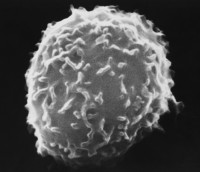
Regulatory T cells (Treg) are a sub-population of immune cells that prevent each individual from triggering immune reactions against his/her own organs. In the context of some illnesses, these mechanisms may be defective: in this case, the term “auto-immune reactions” is applied. In this new research, published in the Science review, the team of researchers […]
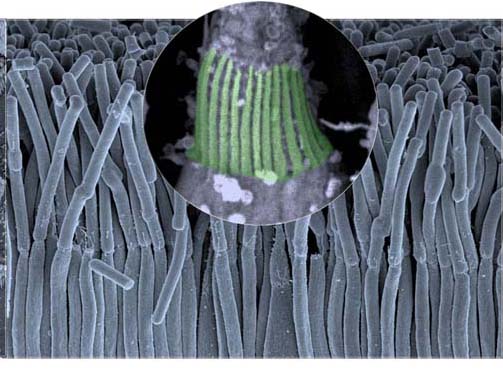
Researchers from the Institut Pasteur, the Institut de la Vision, Inserm and the Université Pierre et Marie Curie have shed light on the origin of blindness that occurs in Usher I (the most common cause of deafness-blindness in humans). The scientists also demonstrated why the rat, the only animal model available today for this illness, […]
Efforts from four research teams in France (team led by Giovanni Stévanin, Inserm unit 975 “Centre of research into neuroscience at the Pitié-Salpêtrière”), theUS,Taiwanand theNetherlands, have identified the gene responsible for a hereditary neurological disorder affecting the cerebellum: type SCA22 spinocerebellar ataxia. Almost ten years of work had previously not resulted in identifying the genes […]
Excess body weight (overweight and obesity) currently concerns nearly one in two French adults. It is associated with an increased risk of several primary cancers, including postmenopausal breast cancer. Researchers at an Inra-Inserm-Cnam-Université Paris 13 joint research unit, part of NACRe(1), worked with a team from Imperial College London to carry out the first systematic […]
Retinoblastoma is the most common eye tumor in children, with an occurrence rate of one for every 15 to 20,000 births. Even today, little is known about the risk factors for this cancer. Recent studies have suggested an increased risk of retinoblastoma in children conceived using in vitro fertilization (IVF), but these results were contradicted […]
One of the major challenges of modern neuroscience is to define the complex pattern of neural connections that underlie cognition and behaviour. Brain connections have been investigated extensively in many animal species, including monkeys. Until recently, however, we have been unable to verify their existence in humans or identify possible tracts that are unique to […]