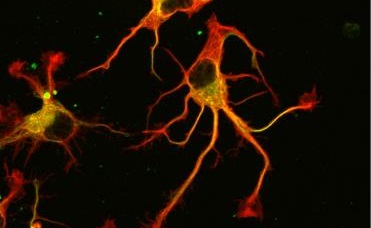
Des chercheurs de l’Inserm et de l’Université de Lille, ont découvert que le plus fréquent des troubles de la fertilité féminine - le syndrome des ovaires polykystiques (SOPK) - serait causé par la surexcitation de neurones cérébraux. La coupable : une hormone produite par les ovaires, appelée « Hormone anti-müllerienne» (AMH), suproduite chez les femmes souffrant d’un SOPK. Les travaux de l’équipe chez la souris montrent l’importance de l’exposition in...
Living beings are able to integrate and identify relevant sensory information, such as smells, sounds or light, in order to regulate how they behave in the presence of potential danger. This is called context discrimination. Inserm researchers based at Neurocentre Magendie in Bordeaux have recently discovered which neurons are implicated in this phenomenon and where they are located. Good news for sufferers of post-traumatic stress disorder in whom context...
Des chercheurs ont mis en évidence le mécanisme responsable de l'installation et du maintien de la douleur chronique et proposent un prototype de traitement innovant avec un effet thérapeutique immédiat et durable.
Drug addiction behaviors and vulnerability to relapse are linked to our brain’s ability to produce new neurons. This is the finding of Inserm researchers from Neurocentre Magendie at the University of Bordeaux, after observing the behavior of mice taught to self-administer cocaine. Their results, to be published in Molecular Psychiatry, show a link between the deficient production of new neurons in the hippocampus and addiction to drugs.
The INSIGHT-preAD study, directed by Prof. Bruno Dubois, is being carried out by teams from Inserm, CNRS and Université Sorbonne at the Brain and Spine Institute (ICM) and the Memory and Alzheimer’s Disease Institute (IM2A) at AP-HP Pitié-Salpêtrière Hospital in Paris, in collaboration with the MEMENTO cohort. It aims at identifying factors underlying Alzheimer’s disease development in healthy subjects over 70 with no existing cognitive disorders. Sponsored by...
A team of Inserm researchers led by Howard Cooper (Inserm Unit 1208 "Stem Cell and Brain Institute") in collaboration with their colleagues in the U.S. have for the first time established a reference map of gene expression, by organ and time of day. A mammoth task that began a decade ago and has required two years of analysis. These results, published in Science, show just how important it is...
Could we have been wrong over the past 70 years in thinking that certain regions of the brain are insensitive to pain? This is what the findings of a team of researchers from Inserm, Nice University Hospital, Université Côte d’Azur and St Anne Hospital in Paris would suggest. By collecting observations of brief painful events occurring during brain surgery in awake patients, they found that certain structures – hitherto...
A study sponsored by the AP-HP has shown for the first time that asymptomatic individuals who carry the c9orf72 mutation, which means they are at risk of developing frontotemporal degeneration (FTD) or amyotrophic lateral sclerosis (ALS), experience cognitive, anatomical, and structural changes very early on, before age 40.The ability to identify these markers before disease symptoms appear is a major discovery, as such markers are crucial in developing therapeutic...
And what if meditation enhanced the aging process? This is suggested by the results of a pilot study, conducted by Inserm researchers based in Caen and Lyon. 73 individuals, with an average age of 65 years, underwent brain imaging tests. Among these individuals, "meditation experts" (with 15,000 to 30,000 hours of meditation to their name) showed significant differences in certain regions of the brain. By reducing stress, anxiety, negative emotions and sleep...
Our brains are constantly bombarded with sensory information. Far from being overloaded, the brain is an expert in managing this stream of information. Researchers from Neurospin (CEA/Inserm) have discovered how the brain incorporates and filters information.
After 40 years of research, researchers at the CEA, the CNRS, the University of Grenoble-Alps, the University of Montpellier and the Inserm have finally identified the enzyme responsible for the tubulin cycle. Surprisingly, it is not one enzyme but two which control the cycle of this essential component of the cytoskeletal structure. This work opens up new prospects for the improved understanding of the role of tubulin, changes in...