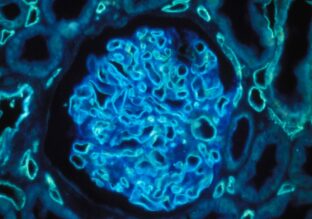
Des équipes de deux centres majeurs de transplantation rénale de l’AP-HP (à l’hôpital Necker-Enfants malades et à l’hôpital Saint-Louis) et de l’Université de Paris, ont coordonné, au sein du « Centre d’expertise de la transplantation d’organe » de l’unité Inserm 970 dirigé par le Pr Alexandre Loupy, une étude internationale ayant permis d’élaborer et de valider iBox, le premier algorithme universel de prédiction du risque de perte de rein...
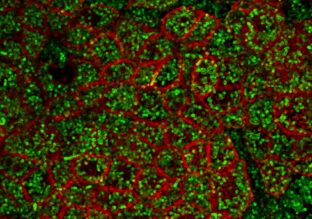
Alors que les méthodes d’apprentissage automatique sont utilisées dans de nombreux domaines, y compris la santé humaine, leur application au monde du vivant est peu explorée à l’échelle moléculaire. Des chercheurs de l’Inra et de l’Inserm, viennent de réaliser un premier pas dans cette direction en créant un réseau neuronal simple dans un extrait cellulaire de bactérie Escherichia coli.
Over the last few years, Inserm has become a world leader in the field of sport and health research. Here we provide an overview of recent work at the Institute to mark the Sport Unlimitech festival for sport and innovation, which is being held in Lyon from September 19-21, 2019, in partnership with Inserm.
Inserm Research Director Alain Eychène is taking the helm at the French National Cancer Institute’s Research and Innovation division. In this new role, he will also head the Aviesan Multi-Organization Institute (ITMO) for cancer and will manage Inserm’s Cancer institute.
un nouveau travail publié dans the journal of gerontology
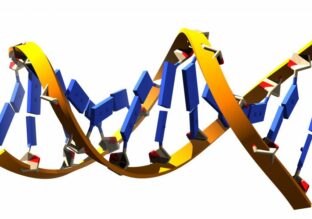
Les recherches sur l’origine génétique des troubles du spectre de l’autisme (TSA) se sont significativement développées ces dernières années. Cependant, de nombreux patients concernés n’en bénéficient pas encore systématiquement. Une étude met en évidence l’intérêt d’étendre le dépistage génétique à un nombre plus important de patients souffrant de TSA avec déficit intellectuel.
Hypoallergenic formulas are recommended for infants who are not exclusively breastfed and who are at risk of developing allergies. While it is assumed that such formulas reduce the development of allergies later in life, it is unclear whether this claim is true. A team of INRA and INSERM researchers have shown that the consumption of partially hydrolysed (hypoallergenic) formulas was not associated with a reduced risk of developing allergies,...
A research group led by Matteo Serino, Inserm researcher at the Digestive Health Research Institute (Inserm/Inra/ENVT/UT3 Paul Sabatier), has recently shown three plant extracts to have prebiotic effects in obese/diabetic mice, with a shorter duration of treatment and at lower doses to the prebiotics currently in use.
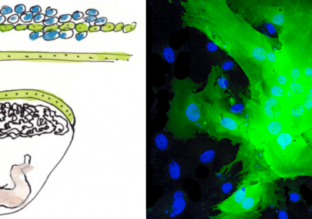
Des chercheurs ont identifié un nouveau mécanisme cellulaire qui altère la formation du placenta et pourrait ainsi provoquer des complications graves pendant la grossesse. Il est lié à la production d’interféron, une molécule qui est produite en réponse à certaines infections, notamment virales.
Anaphylactic shock, an exacerbated allergic reaction that can prove fatal, is sometimes caused by the use of drugs during surgery. In most of these extreme reactions, evidence can be provided that patients have anti-drug antibodies of the IgE class. In 10 to 20% of anaphylactic cases evidence for the involvement of anti-drug IgE is lacking. Anti-drug IgE enable activation of mast cells and basophils that release histamine, a potent...