On the 9th International Rare Disease Day, which will be held on 29 February next, many events will be organised in over 80 countries to raise awareness among the general public, health professionals and politicians about the characteristics of these diseases, their impacts and the means to manage and treat them.
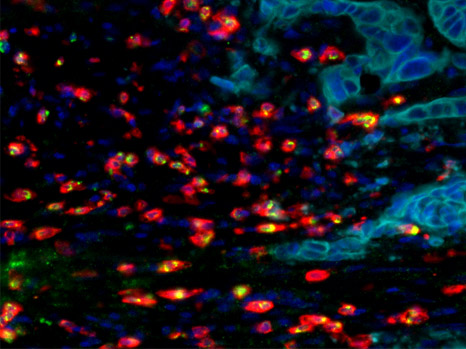
The researchers from Unit 1138, “Integrative Cancer Immunology,” (Inserm, Pierre and Marie Curie and Paris Descartes Universities) have analysed the tumours from 838 patients with colorectal cancer, in order to identify markers for their metastatic potential. The genomic characteristics of the cancer cells seem to have little relevance. Conversely, lymphatic vascularisation around the tumour and the intensity of the patient’s immune response appear to be crucial, and might be...
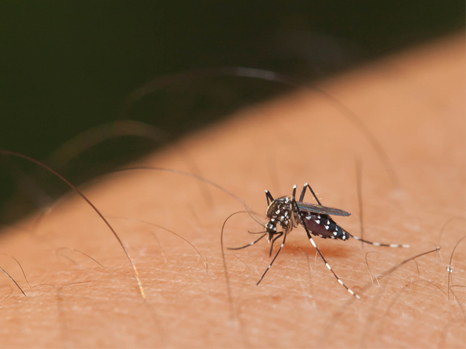
Yves Lévy, President of Aviesan, the French National Alliance for Life Sciences and Health, met with his partners on 18 February 2016, at the headquarters of the French National Institute of Health and Medical Research (Inserm), to deal with the research issues raised by the emergence and spread of the Zika virus. The French Ministries of Research, Health and Foreign Affairs were represented, together with ANSM (French National Agency...
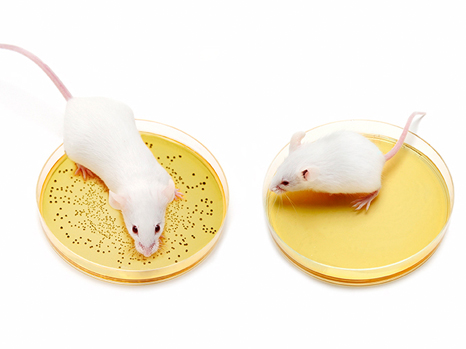
The intestinal microbiota is necessary to ensure optimum postnatal growth and contributes to determining the size of adult individuals, notably in the event of undernutrition. The key element in this relationship is Insulin-like Growth Factor-1 (IGF-1), whose production and activity are in part controlled by the microbiota. This has recently been demonstrated in mice by scientists at the Institut de Génomique Fonctionnelle de Lyon (CNRS/ENS Lyon/Université Claude Bernard...
Why not fight the influenza virus by blocking the cellular machinery it uses for replication? Researchers from Inserm (Unit 1100, “Respiratory Pathologies: Proteolysis and Aerosoltherapy”), Institut Pasteur and the HKU-Pasteur Research Pole in Hong Kong tested this hypothesis by specifically targeting the calpains, proteases involved in inflammatory mechanisms. Their results, obtained in animals, show that inhibiting these enzymes can not only reduce the symptoms of the disease, but also...
A team of researchers (AP-HP, AVENIR-ATIP–Inserm team[1], INRA[2], UPMC[3]) led by Dr Harry Sokol, from the Department of Gastroenterology and Nutrition, Saint Antoine Hospital, AP-HP, used a high-throughput sequencing method to show an imbalance in the fungal microbiota of patients with inflammatory bowel disease (IBD), with variations according to the type of disease and topography of lesions. The fungal component (made up of moulds and yeasts) of the microbiota...
Despite the concern of an explosion of dementia cases in an aging population over the next few decades, a new study, based on data from the Framingham Heart Study (FHS), suggests that the rate of new cases of dementia actually may be decreasing.
Odorology is a technique that uses specially-trained dogs to identify human scent. It is used in police investigations to establish that an individual has been at the scene of a crime. However, there is no international norm on how these dogs are trained. At the Centre de recherche en neurosciences de Lyon (CNRS/Université Claude Bernard Lyon 1/Inserm), researchers specializing in scents and their memorization have analyzed data, provided since...
As the cause of 17.5 million deaths in 2012, cardiovascular diseases are the leading cause of mortality worldwide.[1] In France they are the second leading cause of mortality in men, and the leading cause in women.
In spring 2016, a new phase in the Elfe Child Cohort Study will take place in French nursery schools, with participation by middle-year teaching staff. Its objective: to collect information on early learning by children of approximately 5 years of age. It will hence be possible to analyse the manner in which children enter the various areas of learning provided by nursery schools, taking living conditions, family structures, and...
Researchers at Unit 1018 “Centre for Research in Epidemiology and Population Health” (Inserm/Paris-Sud University) at Gustave Roussy have focused on the proportion of breast cancers attributable to various risk factors. The analysis, conducted among 67,634 women in the French E3N cohort, shows that postmenopausal breast cancers are more often attributable to “behavioural” factors, such as an unhealthy diet, excess weight and alcohol consumption than “non-behavioural” factors. These data suggest...