Menu

Multi-drug resistant TB

© Nadine Caillat-Vigneron, Inserm

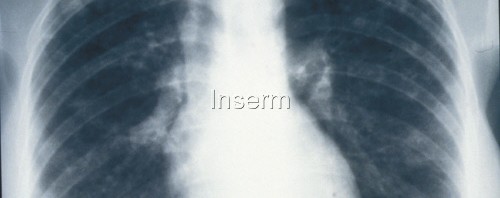
At a time when the increase in the number of cases of drug-resistant tuberculosis in France is becoming “preoccupying on a public health scale” according to the French General Health Administration (DGS), Inserm is publishing the results of its latest research into tuberculosis.

Tuberculosis: the discovery of a molecule in the immune system that is vital in fighting mycobacteria

New hope in the fight against tuberculosis: an attenuated strain of mycobacterium tuberculosis  has been found to offer better protection than the BCG in mice

Retracing the history of the development and the emergence of tuberculosis

To find out more about multi-drug resistant bacteria:

Development of two tests for rapid diagnosis of resistance to antibiotics

A mercaptan gas leak at Rouen; the effects could be smelled as far as Paris

© Fotolia

The foul smell that reached as far as Parisduring the night from Monday into Tuesday was caused by a leak in the Lubriziol chemical plant in Rouen. The leak released mercaptan, an olfactory marker of the type used to give a smell to natural gas supplies.

Michel Aubier from Inserm research unit U700 “Physiopathology and epidemiology of respiratory insufficiency”, or Isabella Annesi-Maesano from Inserm unit EPAR-UMR-S 707 Inserm/UPMC can give you more details about the toxicity of mercaptan

The gastroenteritis epidemic threshold has been surpassed

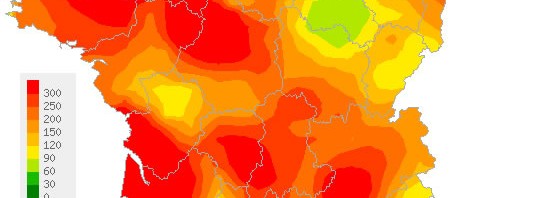
According to the Inserm Sentinels network, in mainlandFrance last week, the number of cases of acute diarrhoea treated by family physicians was estimated at 380 cases for every 100,000 inhabitants. A figure on the increase compared to last week and above the epidemic threshold (282 cases for 100,000 inhabitants). If we go through a second consecutive week above the epidemic threshold, this will confirm that the gastroenteritis epidemic has arrived.

On a national level, the areas with the highest occurrences of cases per 100,000 inhabitants are: Aquitaine (743 100 000 , Picardie (736), Midi-Pyrénées (639), Languedoc-Roussillon (554), Basse-Normandie (479), Limousin (470), Provence-Alpes-Côte-d’Azur (393), Haute-Normandie (375), Bretagne (346), Auvergne (300), Ile-de-France (290), Pays-de-la-Loire (285) and Centre (285). Complete data region by region are given at the end of the bulletin. Among the reported cases, the median age was 32 years (but the age range was 4 months to 98 years). Men represented 47% of cases. The clinical pictures reported by the Sentinel doctors did not show any particular signs of serious problems.

If we look at the forecast model based on historical data, the level of activity of acute diarrhoea should continue to rise and should confirm the gastroenteritis epidemic

The Telethon: to take place on 7 and 8 December 2012 with the help of Inserm researchers

“Oser vaincre” (Dare to win) is the slogan for the Telethon 2012 campaign that will start on December 7 and 8.  Three million people in France are affected by 6,000 different rare diseases. These diseases, mostly genetic and disabling, had remained largely unknown for a long time. The aim of the Telethon is to put these diseases back in the limelight, to provide good quality care for those who suffer from them, to provide suitable support and obtain concrete solutions to help them cope with the diseases by actively supporting research.

Several Inserm researchers are currently working on these rare diseases.Some of them will take part in the 30-hour live Telethon programme and will present the results of their research. They will be available to answer any questions you want to ask between now and Friday.

The personalities below will take part in the Telethon:


Marisol Corral Debrinsky and José-Alain Sahel from theInstituteofVision
Marc Peschanski and Xavier Nissan from Istem
Marina Cavazzana and Alain Fischer
Martine Barkats, Thomas Voit and Laurent Servais from theInstituteofMyology
Nicolas Lévy
Philippe Moullier and Guylène Le Meur

The press releases from these teams are available.

Identification of a recurrent chromosomal anomaly in neural cells derived from pluripotent stem cells (ES and iPS).

The cause of blindness has been identified for certain forms of deaf/blind disorders

On 6 December 2012, Patrizia Paterlini Bréchot’s team published an article demonstrating that it was possible to obtain a prenatal diagnosis of genetic diseases from a simple blood sample.

Phone or drive? Soon you’ll have to make the choice

The French Minister of Home Affairs, Manuel Valls, set up the new National Road Safety Policy on 27 November.  It is to be chaired by the Socialist Party Deputy of the Bas-Rhin, Mr. Armand Jung. This “road safety parliament” so to speak will be responsible for making suggestions to the Government on how to combat road violence and make road checks in order to assess the actions taken each year. The debate concerning the use of mobile phones while driving will once again come into the spotlight.

After being contacted by the Road Safety and Traffic Delegation in 2011, Inserm decided to work jointly with the French institute for road, transport and network sciences and technologies. They carried out a collective survey named “Phone and Road Safety”, aimed at measuring the effect on road safety of using a phone, or indeed of any other distractions, while driving.

For the first time ever, a group of experts drew up a complete report based on world-wide scientific publications on the risks of accident incurred by using a mobile phone. The report confirmed the dangers of use a phone while driving.

The complete report revealed the following:

  • InFrance, almost fifty percent of drivers use a phone while driving (either a regular mobile, or a hands-free kit).
  • The added risk of suffering material damage or injury by using a phone while driving is 3 times greater than for a driver who does not use the phone.
  • Talking on the phone while driving seriously modifies visual behaviour.
  • Hands-free kits and regular mobiles incur almost the same level of distraction, because having a phone conversation distracts the driver’s attention.
  • InFrance, almost one in ten cases of injury in road accidents involves the use of a phone while driving.
  • There have been very few attempts to perform cost/benefit analyses of prohibiting the use of the phone while driving, and these analyses are all North American.

Find the press pack and the whole report (in french)

14th November World Diabetes Day

©Fotolia

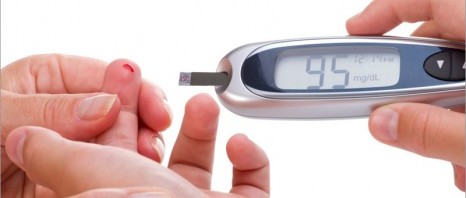
According to the WHO, diabetes affects 347 million people the world over. This chronic disease occurs when the pancreas no longer produces enough insulin (type1 diabetes), or when the body is unable to correctly use the insulin it produces (type 2 diabetes). Those affected by diabetes are obliged to keep to a strict diet, or must take regular exercise.

During the World Diabetes Day organised by the International Diabetes Federation and the WHO on Wednesday 14 November, Inserm presented the data from the latest studies. (Download the press kit)

Chickenpox is on the way back

©Sentinelles

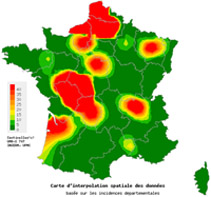
Created over twenty-five years ago, the Sentinel Network is a health watch network that uses data collected from 1300 family physicians based in mainland France. Thanks to the data communicated in real-time by Sentinel physicians, the Network is able to publish a weekly report of the chickenpox, gastroenteritis and influenza epidemics and can forecast the trends for the forthcoming weeks.

To find the newsletters issued by the Sentinel Network epidemiologists

Monday 29 October: World Cardiovascular Disease Day

©Inserm – F.Koulikoff

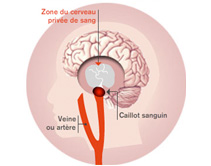
Cardiovascular disease is one of the main causes of death inFrance. 150,000 new cases are detected every year. That’s one every four minutes. Contrary to popular belief, cardiovascular diseases do not only affect the elderly: each year 10,000 to 15,000 persons under the age of 45 are victims of cardiovascular diseases.

See clip showing an ischaemic stroke

The World Cardiovascular Disease Day that will take place on 29 October is an opportunity to make the public aware of how to react when the first symptoms occur: partial paralysis, slurred speech, etc.

For more details, you can contact: Denis VIVIEN, (Inserm unit 919: Serine proteases and physiopathology in the neurovascular unit) and François CHOLLET (Inserm unit 825: Brain imaging and neurobiological handicaps).

Find the latest work on this subject by Inserm researchers

Fluoxetine (Prozac) increases motor recovery following a stroke

Out-of-hospital births and the supply of maternity units in France

Self-medication : a common practice

More and more French people are using self-medication to treat minor health problems (coughs, headaches, etc.). It has become common practice, but has aroused controversy among healthcare professionals, some of whom are concerned about the misuse of medication.

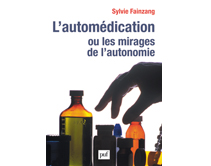
Sylvie Fainzang, an anthropologist, Inserm Research Director and member of Cermes 3 (Centre for Research,  Medicine, Science, Health and Society), carried out a qualitative study of self-medication and published L’automédication ou les mirages de l’autonomie (Self-medication or self delusion?), in which she proposes a new approach to this practice.

©L’automédication ou les mirages de l’autonomie de Sylvie Fainzang -Juin 2012, PUF, Hors collection

Irénise Moulonguet: the new oldest known living person in France

At nearly 112 years of age, Irénise Moulonguet, who was born in Martinique, is the new oldest known living person inFrance.

For more information:

Mr. Jean-Marie Robine, Research Director at Inserm Montpellier and head of the Health and Demography team at the Department of Biostatistics.

©Fotolia

fermer