Menu

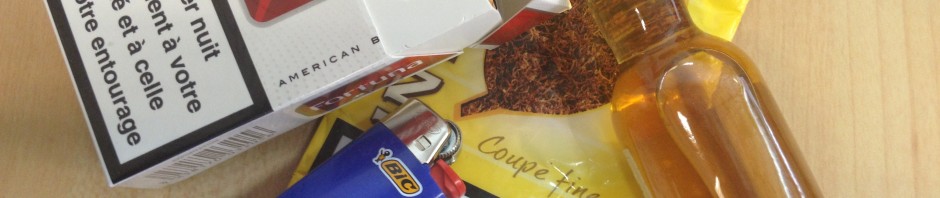
Impact of Tobacco on Mortality

Tobacco kills almost six million people worldwide, whether they are active or passive smokers, and this represents 6% of the world population of women and 12% of the population of men. The association between tobacco and the risk of a specific cancer on the one hand and the global cancer risk on the other hand has been analysed in the EPIC European study (European Prospective Investigation into Cancer and Nutrition).
According to the conclusions of this study, women who smoke an excessive number of cigarettes a day have a higher risk of death if they also drink alcohol to excess than if they drank little or no alcohol.

Contact Inserm researcher: Marie Christine Boutron-Ruault

Download the Weekly Epidemiologic report

Does time affect our mental health?

©Fotolia

Bad weather and rain are at the heart of all discussions. After a long, cold winter and a virtually non-existent start to spring, grey skies predominate in France.

Do these temperature variations impact our mood?

Is it known whether the weather affects our mental health?

What are the effects of light on our health and on human physiology?

To answer your questions, Claude Gronfier, head of Inserm research, studied the effect of light on the circadian biological clock and the non-visual functions (cognition, mood, memory, cardiovascular system, temperature, etc.).

Coronavirus: a second case in France

As the Minister for Social Affairs and Health, Marisol Touraine, stressed during her visit to the Lille CHRU [hospital] on Saturday 11 May, an epidemiological investigation has been launched following confirmation of the first case of infection of a new coronavirus (NCoV) in a patient in France.

A second case of infection by this new virus which is similar to SARS (Severe Acute Respiratory Syndrome) was confirmed in France overnight between Saturday and Sunday by the Ministry of Health.

For more information about the coronavirus NCoV please contact Yazdan Yazdanpanah

Alcohol Consumption by Secondary School Pupils

The Bulletin épidémiologique hebdomadaire (BEH), published on 07 May by The French Institute for Public Health Surveillance (Institut de veille sanitaire – InVS) focused on alcohol consumption by adolescents between the first and last class of secondary school (in 2010 and 2011).

Alcohol is the psychoactive substance that is experimented with earliest in adolescence, often in a family setting. Consequently, 59% of pupils in the first form of secondary school admitted consuming alcohol, and the frequency increases during secondary school years, until it reaches 83% of pupils in the fifth form, then 93% of pupils in the sixth form.

Read the press release produced through the coordination between the study “NutriNet-Santé”, Unité de Recherche en Epidémiologie Nutritionnelle (UREN) (Research on Nutritional Epidemiology) Inserm/INRA/CNAM/University of Paris 13 on the occasion of an article published in the BEH concerning the demographic, socio-economic, dietary, lifestyle and health habits associated with the consumption of alcoholic drinks.

For more information about alcohol consumption among secondary school pupils in France, please contact Emmanuelle Godeau.

The Return of Respiratory Allergies

crédit : ©Fotolia

The arrival of fine weather and milder temperatures marks the return of respiratory allergies.

These allergies consist of unsuitable or excessive immune system reactions of the human body when it comes into contact with a foreign substance known as an allergen. Generally, respiratory allergies take two forms: allergic rhinitis and allergic asthma. Each of these conditions are characterised by very particular symptoms.

People who are allergic should adopt certain reflexes to improve their daily lives and thus reduce the frequency of the symptoms.

For more information about respiratory allergies, please contact Isabella Annesi-Maesano, Inserm research director.

Contraceptive pills cause 2,500 accidents and 20 dead per annum

According to a report published today by the ANSM (The French National Agency for Medicines and Health Products Safety), between 2000 and 2011, the risk of venous  thromboembolism linked to combined oral contraceptives (the pill) is estimated at 2,529 per year, of which 1,751 is attributable to pills of the third  and fourth generation.

The annual number of deaths from pulmonary embolism attributable to use of the pill is estimated at 20 of which six deaths are attributable to pills of the first and second generation and 14 attributable to pills of the third and fourth generation.

For a comment on this report, please contact Nathalie Bajos, Inserm research director on (33) 1 45 21 22 73 rf.mresni@sojab.eilahtan

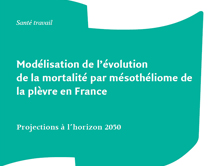
The development of mortality due to pleural mesothelioma in France

The French health watch institute (InVS) worked in partnership with the Inserm unit “Epidemiological Center for Mortality by Medical Causes” to publish the results of models they had produced showing the development of mortality due to pleural mesothelioma in France, based on the latest data available in France. Models had been produced at the end of the nineties. These were brought up to date. This work gave encouraging results, but are to be taken with caution.

Read the report on the InVS site

17th national suicide prevention days

For the 16th National Suicide Prevention Days, if you want to find out more about suicide-related mortality in France, Inserm’s researchers can answer your questions.

[break]Photo:

© Fotolia

Maternal mortality, infant mortality, what are the figures?

Following a foetal death in utero last weekend, the Inserm Press Department has provided figures about maternal, infant and in utero mortality.

The 2010 nationwide perinatal survey , set up notably by Inserm and the DGS, gives a description of the state of health of the children, the health care given and the characteristics of the mothers in 2010 and shows how they have developed since 2003. This report is currently the only source available for estimating mortality (in utero deaths) on a nationwide scale.

According to the figures given in this study, the mortality rate in France is 10 deaths for 1,000 births and is apparently one of the highest in the European Union.
However, mortality and its development cannot be estimated with precision, because the size of the sample used in this study is not suited to events of that frequency.

For more details on this subject :

Béatrice Blondel can provide information about the “Nationwide perinatal survey”.
Marie-Hélène Bouvier-Colle can provide figures about maternal mortality. Eric Jougla, Director of the CépiDC (Epidemiological Centre for Mortality by Medical Causes) can provide a list of death occurring before the age of one year.

World Cancer Day

At the time of the first World Cancer Day in 2008, there were 7.6 million cases of cancer in the world. Now it has become one of the major causes of death the world over (WHO). Each year, this World Cancer Day, organised by the International Union Against Cancer (UICC) is dedicated to prevention, detection and treatment of this disease.

To view the on-line documentary:  Recherche tout s’accélère (Research is stepping up a gear)

You can also consult the latest progress made in cancer research by the Inserm researchers at:  Press releases – Cancer

©Inserm/Arc/INCa

Same-gender parenting and child development

©Fotolia

The systematic literature review was published in 2011: Same-gender parenting and child development: current known facts, co-signed by Guillaume Fond, mentions several therapeutic approaches to the question of same-gender parenting and its effect on children. Is being born into or growing up in a same-gender parent family a disadvantage?

Is the risk of psychopathology or psychological problems higher in this atypical context? (…)

Find the answers to these questions in Homoparentalité et développement de l’enfant (Same-gender parenting and child development: current knowledge), in the attachment to this article.

fermer