Research conducted by Cyrille Delpierre (INSERM Unit 1027 “Epidemiology and Public Health Analyses: Risks, Chronic Illness and Handicaps”) in collaboration with the French Cancer Registers Network assessed the proportion of patients potentially suffering from prostate cancer and currently over-diagnosed or over-treated in France. According to a study performed on 1840 patients, current over-treatment involves a considerable number of patients being treated for a cancerous tumour in what is known...
In the Web 2.0 and “Quantified Self” era, scientists are working to improve traditional data collection methods (face-to-face interviews, telephone interviews or paper questionnaires), which are expensive and time-consuming for study participants. Indeed, recruitment, monitoring and data collection tools need to be adapted to fit the habits of the younger generation. The Internet and smartphones offer numerous options for collecting data on participants’ lifestyle, environment and health, in a...
La dernière enquête ANRS VESPA2 met en lumière les progrès médicaux obtenus pour les personnes vivant avec le VIH en France et les enjeux à privilégier dans une approche renouvelée des stratégies de prise en charge pour tenir compte de l’augmentation des comorbidités et surtout des besoins sociaux de cette population. Cette enquête, réalisée par des chercheurs de l’Inserm (Unités 912, SESSTIM, Marseille et 1018, CESP Villejuif) avec le...
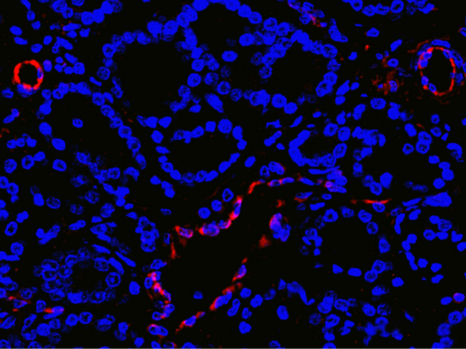
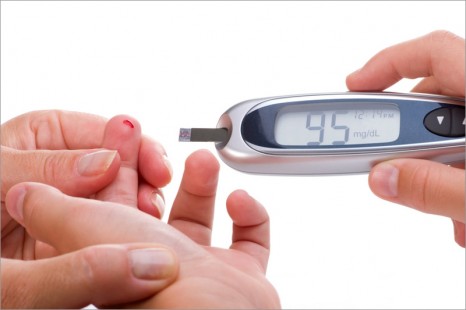
Patrick Collombat, Inserm Research Director and head of the Avenir team at the Institut de Biologie Valrose in Nice, has published new results concerning Type I diabetes. Researchers show that, in mice, the pancreas contains cells capable of being converted into insulin-producing β cells, something that can be done at any age.
The Inserm researchers at unit 1018, "The Epidemiology and Public Health Research Centre", working in collaboration with researchers from England and Finland have demonstrated that it is essential to be vigilant about this and to take it very seriously when people say that they are stressed, particularly if they believe that stress is affecting their health.
Certain food contaminants are suspected of triggering metabolic disorders, or of worsening them, particularly when they accompany a high-fat diet. In order to get a better understanding of these effects, researchers from the Inserm cardiovascular, metabolism, diabetology and nutrition unit introduced a "cocktail" of contaminants mixed with low doses of dioxin, PCB, bisphenol A and phtalates into the feeding of mice that had already been rendered obese by...
According to international scientific publications issued over the last 30 years and analysed by these experts, there appears to be a positive link between occupational exposure to pesticides and certain pathologies in adults: Parkinson’s disease, prostate cancer, hematopoietic cancers (non-Hodgkin’s lymphoma, and multiple myeloma). Furthermore, exposure to pesticides during the prenatal and postnatal periods and in infancy appears to be a particularly risk for the development of the child.
Are teeth the latest victims of bisphenol A? Yes, according to the conclusions of work carried out by the research team led by Ariane Berdal of the Université Paris-Diderot and Sylvie Babajko. The researchers have shown that the teeth of rats treated with low daily doses of BPA could be damaged by this. Analysis of the damage shows numerous characteristics that are common with a recently identified pathology of...
L'Inserm et Universcience vous invitent à la conférence Santé en questions, le mercredi 19 juin, sur la drépanocytose, les voies de la guérison.
Une famille avec de nombreux cancers inexpliqués révèle que certaines prédispositions aux cancers du rein sont liées à des mutations du gène BAP1. Porté sur le chromosome 3, ce gène était déjà connu pour prédisposer à des cancers oculaires (mélanome uvéal) et de la plèvre (mésothéliome). Ces travaux réalisés par Marc-Henri Stern du laboratoire Génétique et Biologie des Cancers (Institut Curie/Inserm U830) en coordination avec le Pr Dominique Stoppa-Lyonnet...
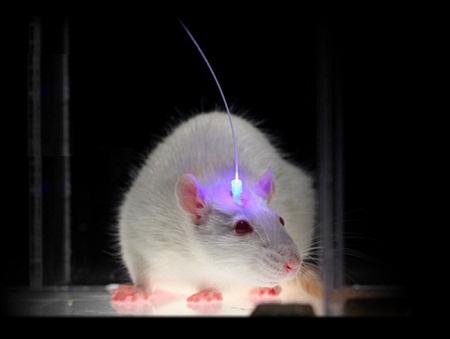
Thanks to work carried out by the Massachusetts Institute of Technology in Boston, Eric Burguière, an Inserm researcher working in the MHI research centre and his co-workers have succeeded in reducing the compulsive behaviour of mice using optogenetics, a technique that combines light stimulation with genetic engineering.