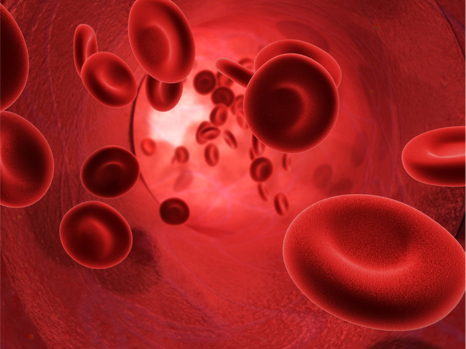
Haemophilia is a hereditary disease characterised by bleeding due to a deficiency of coagulation factors. Haemophilia A is the most widespread form, affecting one in every 5,000 boys born.
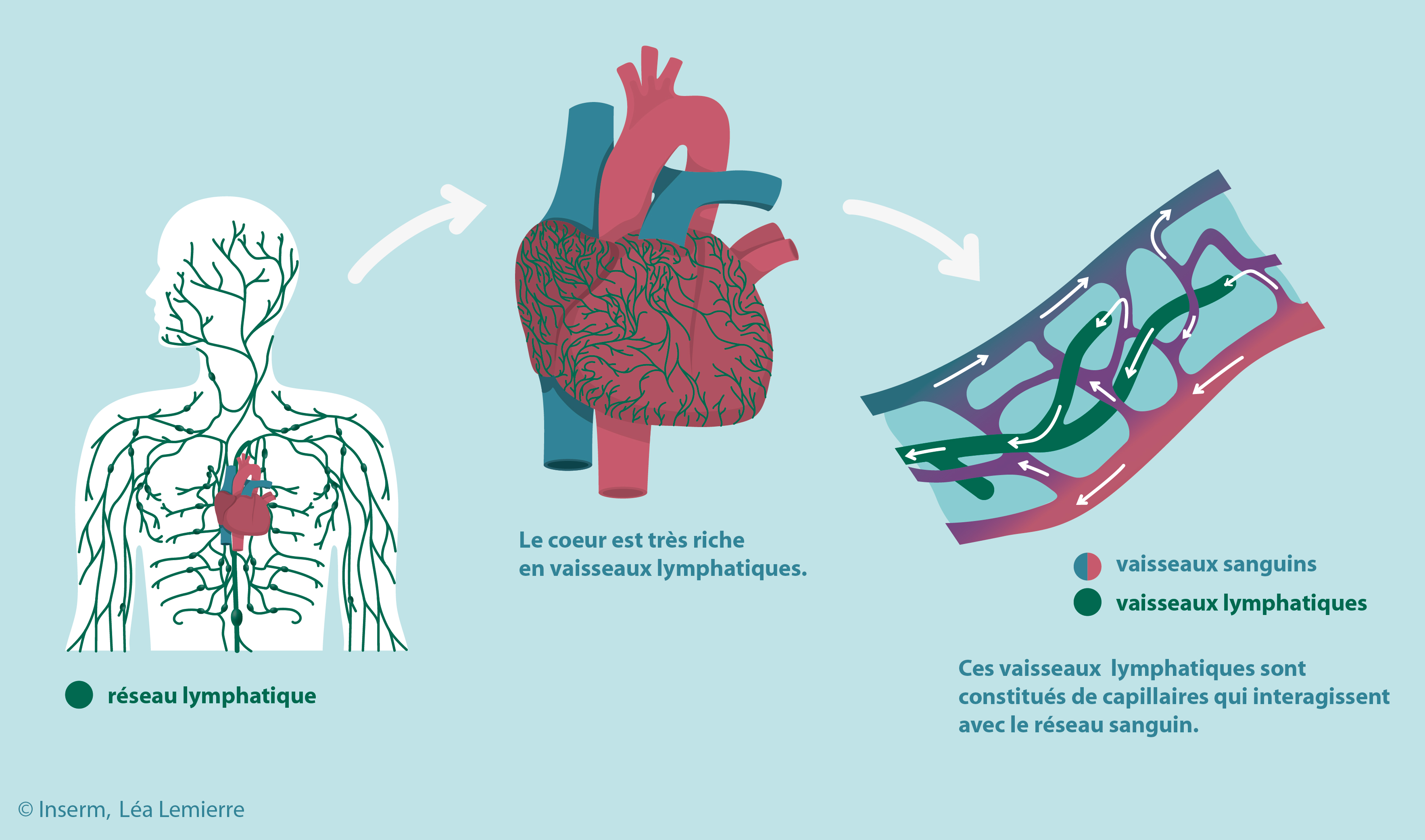
Heart failure affects over one million people in France. Although the blood system is the first to have been explored for the purpose of improving heart function, a study by Inserm has revealed the potential of a secondary system that had previously received scant attention. The researchers[1] analysed the heart lymphatic system in an animal model. They showed that this system was highly impaired following a myocardial infarction. Using...
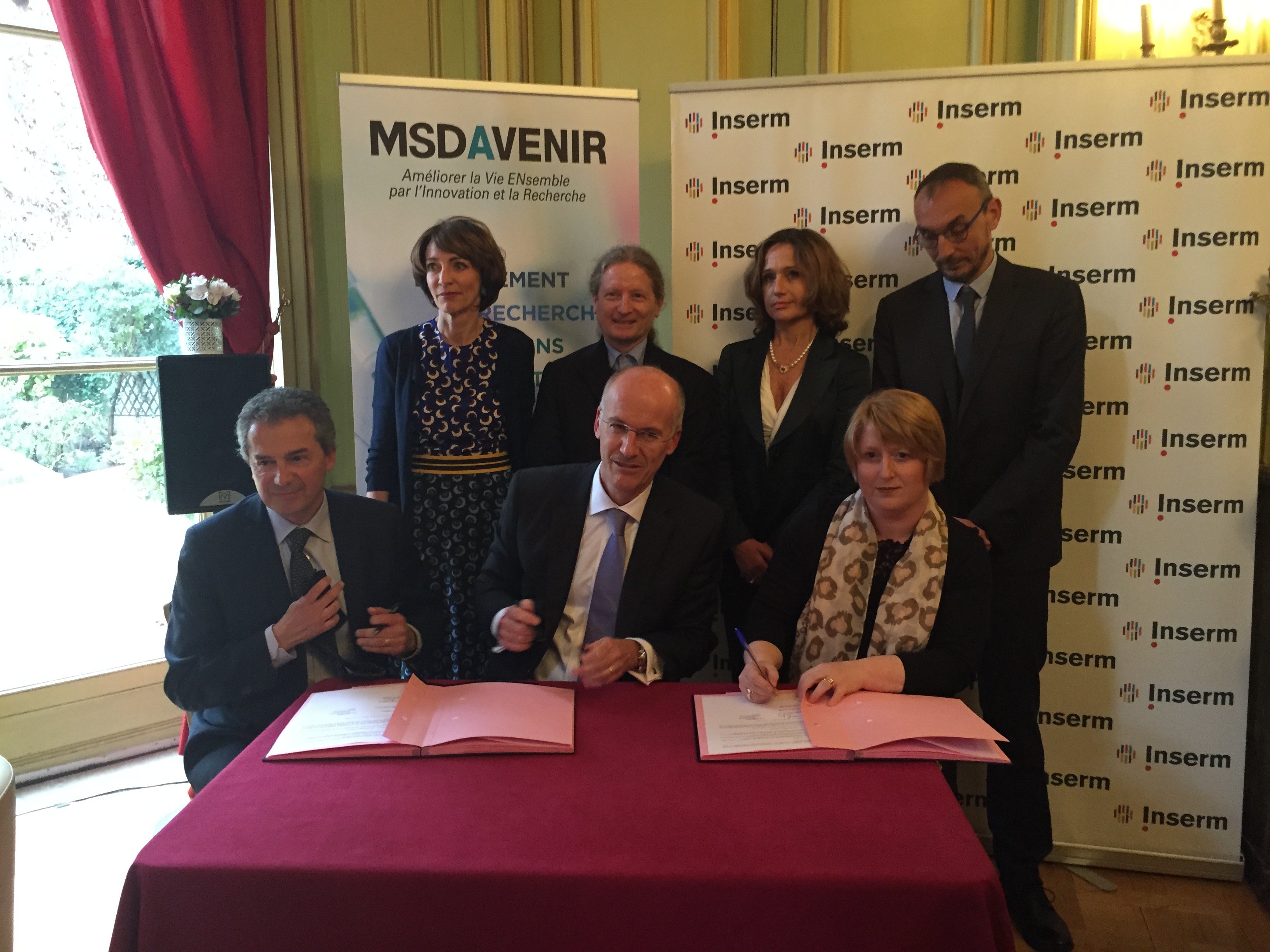
Cyril Schiever, Chairman of the Board of MSDAVENIR, Professor Yves Lévy, Chairman and CEO of Inserm and Pascale Augé, President of the Executive Board of Inserm Transfert, today signed a strategic framework agreement to support French medical research.This event took place under the patronage and in the presence of Marisol Touraine, French Minister for Social Affairs and Health, and Thierry Mandon, Secretary of State for Higher Education and Research.
A team coordinated by Prof. Emmanuel Flamand-Roze from Pitié-Salpêtrière Hospital, AP-HP, has tested, at the clinical investigation centre of the Brain and Spine Institute (Inserm /CNRS/UPMC) , the efficacy of zonisamide, a drug currently used to treat certain forms of epilepsy, in 23 patients with a rare disease of the nervous system, myoclonus-dystonia. The promising results from this trial, which was funded by AP-HP (the Paris Public Hospitals), are...
Transposable elements, also known as “jumping genes” are DNA fragments that can move or copy themselves from one location to another on the chromosomes. They have invaded the genomes of most living organisms, from bacteria to humans, via the plants. When they jump, they bring about complex modifications in genes near which or in which they insert themselves, and can thereby alter or abolish their function. This phenomenon contributes...
Next Saturday, 2 April, is World Autism Awareness Day. This event is aimed at reminding the general public, professionals and politicians of the need to improve the quality of life of people suffering from this disorder.
Next Generation Scientific Innovation with the 3DEXPERIENCE Platform and Strategic Collaboration to Advance Programs in Aging, Cancer, Genomics and Microbiota
This Thursday, 24 March, the Ministry of Agriculture confirmed an isolated case of bovine spongiform encephalopathy (BSE), or mad cow disease, at a farm in Ardennes. The case was detected in a 5-year-old cow sent for rendering, “a method for processing animals that die on farms, and are therefore not intended for human consumption,” states AFP. In France, the last case of bovine spongiform encephalopathy dates back to 2011.
A study financed by the Assistance Publique-Hôpitaux de Paris[1] has been conducted under the direction of Monica Zilbovicius[2] in the Inserm Unit 1000 on a particular region of the brain, the superior temporal sulcus (STS), influencing perception and behaviour of the gaze. This work has shown that transcranial magnetic stimulation (non-invasive and painless) of the STS can selectively and transiently inhibit the subject's gaze into the eyes of the...
Since 2012, to promote dialogue between science and society, Inserm and Universcience has offered « Santé en questions », an annual cycle of citizen conferences. The aim is to provide information about advances in life sciences and healthcare research, but also to allow the public to tell their story and talk to the speakers. These conferences are chaired by a journalist and held by link up between the Cité...
Scientists at the CEA’s Institute of Cellular and Molecular Radiation Biology, in collaboration with INSERM, Université Paris-Sud, and international partners, have demonstrated a connection between the expression of the TRAIL gene, which plays a role in cell death, and the radiosensitivity of certain human T lymphocytes. This research also showed a relationship between three genetic forms of TRAIL and the radiosensitivity of these T lymphocytes. Finally, two of these...