Menu

Inserm and Fondation ARSEP organize the third meeting between researchers and patients

Multiple Sclerosis (MS) is a debilitating neurological disease which affects 80,000 individuals in France. At the moment, there is no known cause or cure. There are only treatments for the disease symptoms. Given the need to keep patients informed of progress in research, Inserm and Fondation ARSEP organise national meetings between researchers and patients every two years.

Last year the 2012 Researcher-Patient Meeting was, for researchers, clinicians and patients alike, an opportune moment for discussion and discovery.

For this 3rd meeting, to be held on Friday 22 November, 9 French research laboratories that have received support from Fondation ARSEP will be opening their doors to individuals with multiple sclerosis and their families. This unique national one-day meeting is based on dialogue and building a space where researchers and patients can share knowledge.

How can myelin be repaired and visualised? What modifications take place at the blood-brain barrier during the illness? What is the current status of viral research or antibody drugs? These are the types of questions that the researchers will try to answer.

List of research laboratories in France :

– Caen – Centre Cyceron
– Dijon – Centre d’investigation clinique/Faculté de médecine
– Grenoble – Institut Albert Bonniot – CHU
– Paris – ENS (Ecole Normale Supérieure) – Institut Cochin et l’ICM (Institut du Cerveau et de la Moelle Épinière)
– Strasbourg – Institut de physique biologique (l’Hôpital civil)
– Toulouse – Centre de Physiopathologie Toulouse-Purpan
– Marseille – Laboratoire CNRS universitaire et hospitalo-universitaire – CHU la Timone

(French) : Fête de la science 2013 : rendez-vous du 17 au 19 octobre 2013 pour « Sciences au Carré(e) »

(French) : Journée mondiale de la maladie d’Alzheimer

When epidemiologists turn to Web 2.0

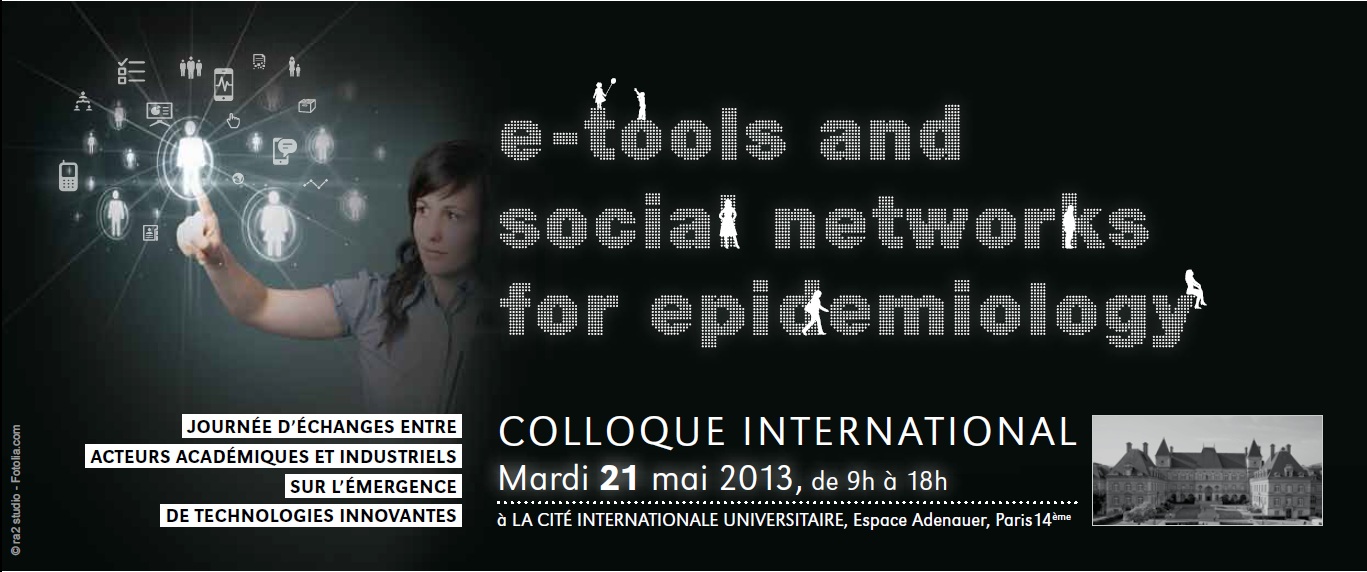
In the Web 2.0 and Quantified Self” era, scientists are working to improve traditional data collection methods (face-to-face interviews, telephone interviews or paper questionnaires), which are expensive and time-consuming for study participants. Indeed, recruitment, monitoring and data collection tools need to be adapted to fit the habits of the younger generation. The Internet and smartphones offer numerous options for collecting data on participants’ lifestyle, environment and health, in a way involving few constraints, and that can even be fun. In May 2013, the INSERM team headed by Françoise Clavel-Chapelon (Unit 1018, Team 9 Nutrition, Hormones and Women’s Health”) organized an international conference entitled “e-tools and social networks for epidemiology” in Paris. The main objective was to present academic research and ICT (Information and Communication Technology) innovations that can improve epidemiological research.

New data acquisition tools

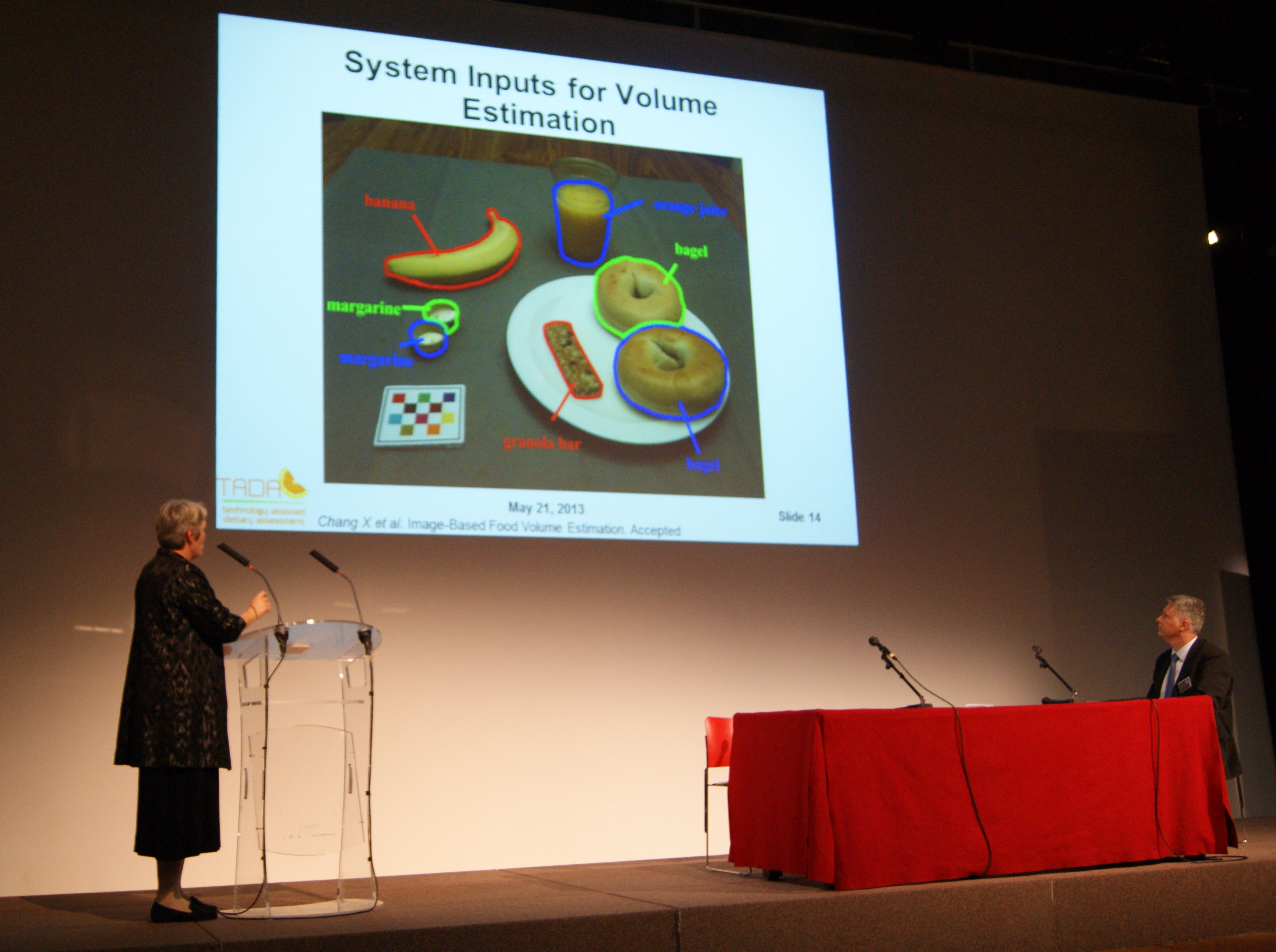
Carol Boushey, from the University of Hawaii, presented her research on TADA (Technology Assisted Dietary Assessment) technology. TADA is a prototype application for smartphones that collects dietary information easily. The process is simple: you just need to take a picture of your plate before and after a meal. The program’s algorithms do the rest, detecting textures and volumes of foods, and reconstitute the exact composition and dietary intakes.

tada

Carol Boushey demonstrating TADA (Technology Assisted Dietary Assessment)

New techniques to record data on physical activity were also presented. Stephen Intille (NortheasternUniversity, Boston) described

the work done by the Mobile Health Research Group on the use of smartphones and detectors to measure health and physical activity data.

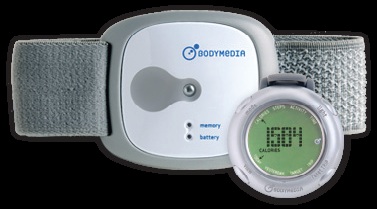
 Suzanne Garland (Royal Women’s Hospital, Melbourne) explained how the SenseWear® Armband is used in the Australian Young Female Health Initiative study. This electronic bracelet collects physiological data (skin temperature, heart rate, etc.) and provides instant information about the number of steps walked, the distance covered, calories burned, sleep cycle, etc.

Furthermore, geolocation techniques are increasingly finding applications in epidemiology. For example, the Veritas tool, presented by Yan Kestens (University of Montreal) based on online cards, can collect spatial information, and the tool presented by John Nuckols (ColoradoStateUniversity) combines recording of geolocation and environmental pollutants data.

Web 2.0 and e-Health

Several talks presented new recruitment techniques, networking, data management and loyalty card schemes run via Internet.

John Wark (Melbourne University) described how Facebook was used to recruit volunteers into the Young Female Health Initiative study.

Finally, several web platforms were presented, such as CleanWEB ePRO®, an integrated electronic management solution for clinical trials, various ad hoc e-health programs rolled out by the BePATIENT company, and the SenseDoc multisensor platform developed by the SPHERE research laboratory (Research Centre of the University of Montreal’s research centre), in collaboration with the RECORD Study team.

capteur

Le SenseWear® Armband de la société BodyMedia®

The major advantages of these web 2.0 platforms are the ability for participants to network, the collection of digital data that can be used very quickly, the connection to e-tools, sensors, smartphone applications that record information automatically, and the ability to obtain individual feedback based on the participant’s profile.

“In addition to saving time and to the improved reliability of data collected through these means, these resources have a fun and interactive component, which is a very important aspect to ensure continued participation of large cohort participants”, explains Françoise Clavel-Chapelon, INSERM Research Director and Principal Investigator of the E3N and E4N cohorts.

This first conference discussed how new tools such as social networks, e-health and spatial technology could have applications in the epidemiological studies of tomorrow. However, before using these innovative methods and tools in epidemiological studies, it is necessary to check their acceptability, reliability and validity. “The E4N cohort (see box below) will offer particularly favourable conditions to carry out this validation and standardization phase”, concludes Guy Fagherazzi, scientific manager of the E4N cohort.

The conference was organised by the INSERM team headed by Françoise Clavel-Chapelon (UMRS 1018, Team 9) who wanted to discuss new ways of collecting epidemiological data for the E4N cohort. The event was run jointly with AFCROs (Association française des CROs), in partnership with Aviesan Santé Publique, the INRIA and three competitive high-tech hubs in the Paris region (Cap Digital, Systematic Paris-Région and Medicen) brought together under the label of “TIC & Santé”. The conference received financial supports from the Mairie de Paris, the Université Paris-Sud and the Ligue contre le Cancer.

E4N: a family cohort

The E4N study is designed to be an extension of the E3N study by following-up the spouses, children and grandchildren of the E3N women. The objective is to better understand the onset of disease, from genetics, family environment and the environment outside the family. This project of a prospective family cohort has been selected by the “Investissements d’Avenir” programme from the ANR (Agence Nationale de la Recherche) for a follow-up over a nine-year period.

For more information: www.e4n.fr

etools

(French) : Santé en questions : la drépanocytose, les voies de la guérison

Handicaps rares, contextes, enjeux et perspectives : une expertise collective de l’Inserm

Hervé Chneiweiss appointed Head of Inserm’s Ethics Committee

Hervé Chneiweiss, a research director at the CNRS, has just been appointed President of the Inserm Ethics Committee. Inserm’s Ethics Committee for medical research and health was set up in 2000 with the aim of playing an active part in the dialogue between Society and the scientific and medical communities. He takes over from Jean-Claude Ameisen, the President of the French National Consultative Ethics Committee (CCNE). 

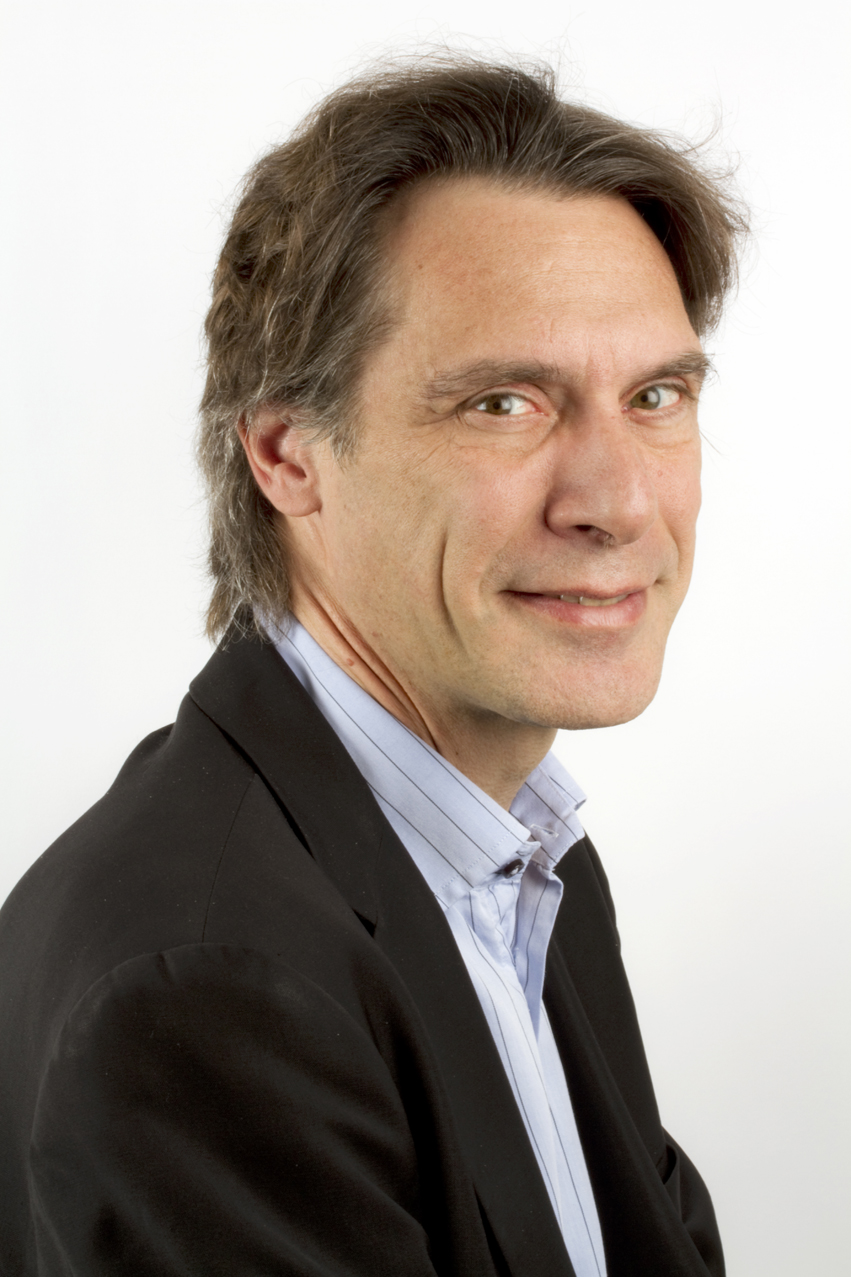
Hervé Chneiweiss

Copyright : Pierre Malaval

Hervé Chneiweiss, medical doctor and scientist, neurologist and neurobiologist, has always integrated the ethical questions posed by progress and research into his clinical and scientific work. From 2000 to 2002, he was a technical consultant for life sciences and bioethics at the Ministry of Research. He has been a member of the Inserm Ethics Committee since 2003 and has contributed to numerous articles published in international scientific reviews and works on bioethics.

He will be President of the Ethics Committee, whose work is to discuss and develop reflection on ethical aspects of practices used for biomedical research; to keep watch and advise in order to prepare the conditions for innovatory research and ensure that all practices are accompanied by ethical principles, particularly as concerns their impacts and consequences; to ensure awareness and guidance in ethical questions and to play a full part in communication between the scientific and medical community, Inserm and Society.

Hervé Chneiweiss is delighted with this

“rewarding mission to create the conditions required for ongoing ethical awareness and discussion within Inserm and to contribute to interfaces between the decision-makers and Society”.

“For Inserm, more than any other institution, it is an absolute necessity to be able to reply to ethical questions posed both by researchers and by all of our fellow citizens. I am delighted that Hervé Chneiweiss has accepted this complex task; we all know the extent to which his ideas have enriched ethical thinking”,

 states André Syrota, Chief Director and President of Inserm.

Hervé Chneiweiss is also Research Director of the “Glial plasticity and brain tumors” research team and is Director of the Paris-Seine Neurosciences Laboratory (Inserm/CNRS/UPMC) at the new Paris-Seine Institute of Biology, that groups together the biology laboratories from the Jussieu campus.

He is working on the biology of a specific population of cells from the nervous system, known as astrocytes. Astrocytes make up half of all brain cells and fulfill numerous functions, from constructing the architecture of the brain to being involved in each phase of communication between neurons. Hervé’s team are making a specific study into the mechanisms that link astyrocytes to the cause and development of brain tumors. By characterizing stem cells within brain tumors, it could be possible to develop new therapeutic strategies to fight cancer.

Editor of the review Médecine/Sciences since 2006, Hervé Chneiweiss is also a member of the Scientific Council of the Parliamentary Office of Scientific and Technological Assessment (OPECST), member of the Scientific Council of the French Foundation for Medical Research (FRM) and of the Institute of Biological Sciences at the CNRS.

He is also co-author of “Bioéthique: Avis de tempêtes” (with Jean-Yves Nau, Alvik, 2003), and author of “Neuroscience et Neuroéthique : des cerveaux libres et heureux” (Alvik 2006) and “L’homme réparé” (Plon 2012).

André Syrota reappointed as Inserm Chairman and CEO

André Syrota has been reappointed by the French government as Chairman and CEO of the National Institute of Health and Medical Research (Inserm), on the recommendation of the Minister for Higher Education and Research, Geneviève Fioraso.

First appointed as Inserm CEO in October 2007, Professor Syrota has been in post as Inserm Chairman and CEO since 2009. He also chairs the French National Alliance for Life and Health Sciences (Aviesan). 

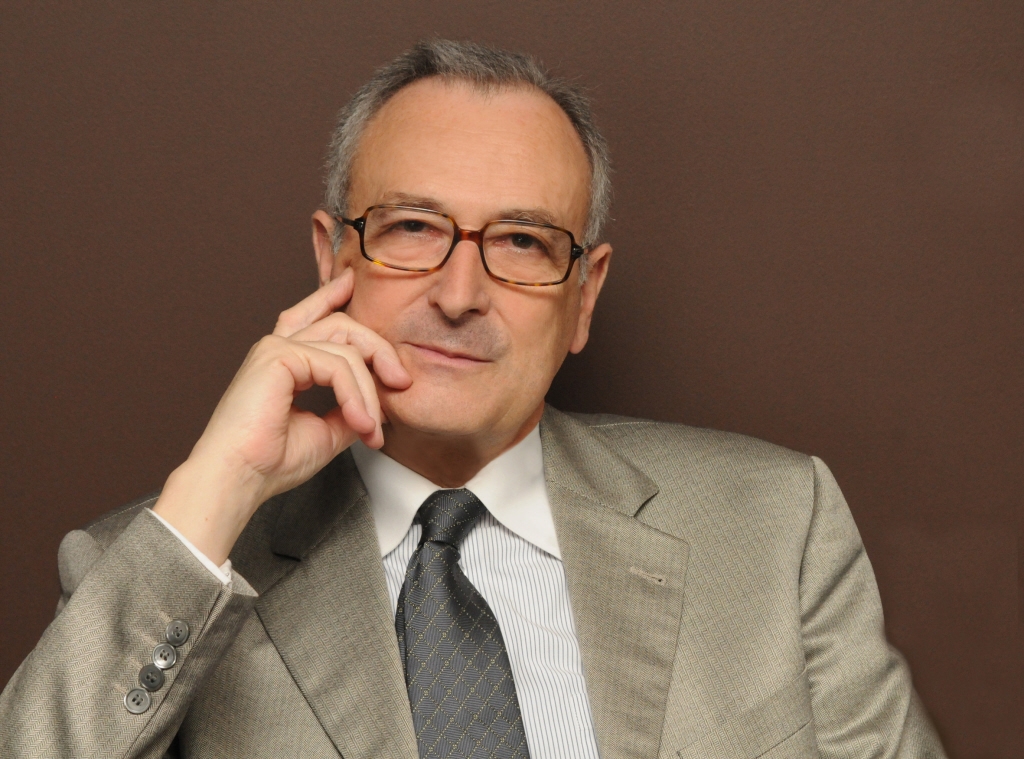
portrait officiel André Syrota
© A Marouani/Inserm

A former Hôpitaux de Paris intern and a medical doctor specializing in nuclear medecine, André Syrota was born in 1946. He is a University Professor and a hospital practitioner at the Université Paris Sud. He was head of department at the CEA Hospitalier Frédéric Joliot in Orsay, and taught biophysics and nuclear medecine at the Paris Sud Faculty of Medicine. Director of Life Sciences at CEA from 1993, Pr. André Syrota was appointed Inserm CEO in October 2007.  He has held the position of Inserm Chairman and CEO since March 2009.

André Syrota is a professor of medicine and a researcher specializing in developing non-invasive functional imaging methods, based on positron emission tomography and nuclear magnetic resonance.

From his first days in office in 2007, André Syrota’s priority has been to forge partnerships with all research organisations and to foster scientific coordination at a national level: a complex task, particularly during crises such as BSE and chikungunya fever. As part of this commitment, Pr. André Syrota was the driving force behind the creation in 2009 of the French National Alliance for Life and Health Sciences (Aviesan) by the main French research organisations, thus ensuring the strategic and programmatic coordination of research into life sciences and health at a national level. Since its creation, Aviesan has set the objectives of enhancing research potential, increasing research visibility on both a national (particularly in terms of industrial players from the health sector) and international level, and ensuring research is more reactive to the emergence of fundamental scientific issues and major public health problems.

At a European level, since October 2011 Pr. André Syrota has also served as Vice-Chairman of Science Europe, an association that brings together 50 funding agencies and research organisations from 23 European countries, all working to promote the European Research Area. Within this framework, Inserm is one of the French organisations awarded the most ERC grants, for both its junior and senior researchers.

At an international level, Inserm has successfully developed a network of associate laboratories in each continent. In this way, in just a few years, Inserm has become the leading European biomedical research organisation. Its influence is apparent from the clear increase in the number of its publications featured in reviews at a national level (42% for fundamental research and 52% in specific fields).

L’Inserm et l’Université Toulouse III – Paul Sabatier renouvellent leur partenariat

L’Inserm et l’Université Toulouse III – Paul Sabatier renouvellent leur partenariat en matière de recherche, de valorisation et de transfert de connaissances en sciences du vivant. 

Se fondant sur les actions et les résultats de la convention précédente, les deux partenaires fixent les modalités de leur collaboration pour les trois  prochaines années.

Le Professeur André Syrota, Président-directeur général de l’Inserm, Bertrand Monthubert, Président de l’Université Toulouse III – Paul Sabatier ont signé le 18 janvier dernier une convention de mixité qui inscrit dans la dynamique leur partenariat pour la conduite des recherches communes. Elle prévoit les modalités de gestion des unités de recherche d’une part et celles de la valorisation des travaux de recherche qui en sont issus d’autre part.  

Dans le contexte des principes définis dans l’accord-cadre du 16 novembre 1998, l’Université Toulouse III – Paul Sabatier et l’Inserm conviennent d’assurer le développement scientifique des unités de recherche communes Inserm/ Université Toulouse III – Paul Sabatier. Pour ces unités existantes ou futures, l’Inserm et l’Université Paul Sabatier s’engagent ainsi à développer les moyens nécessaires afin de :

  • assurer une production scientifique de haut niveau et une continuité entre la recherche biologique et biomédicale cognitive et la recherche médicale, clinique et en santé publique ;
  • veiller à la complémentarité des activités de formation et de recherche et contribuer à la qualité de la formation des étudiants à la recherche et par la recherche ;
  • favoriser la mutualisation des moyens, le développement de plateaux techniques et à la collaboration pour la recherche en sciences de la vie et de la santé ;
  • et enfin développer ensemble des activités de transfert et de valorisation.

Cette convention concerne 7 unités mixtes de recherche et 2 unités mixtes de service, dans lesquelles travaillent plus de 900 personnels (dont 650 chercheurs et enseignants-chercheurs).

De nombreux projets scientifiques au rayonnement international sont portés par ce partenariat entre l’Inserm et l’Université Toulouse III – Paul Sabatier, comme par exemple les implantations du Centre de recherche en cancérologie de Toulouse (CRCT) ou de Stromalab (en partenariat avec l’EFS et le CNRS) au sein de l’Oncopole. L’Europe vient également reconnaître nos équipes mixtes avec un projet porté par Nathalie Vergnolle (CPTP) labellisé par l’ERC.

Plusieurs prix scientifiques de haut niveau récompensent régulièrement les recherches menées dans ces laboratoires : Philippe Le Bouteiller du CPTP, lauréat de l’Académie nationale de médecine ou Alicia Mallet, doctorante à l’UDEAR et lauréate d’un prix de la Fondation pour la recherche médicale.

En matière de valorisation, cet accord reconduit les termes de la démarche partenariale engagée par les deux institutions pour protéger et valoriser les résultats obtenus dans les Unités Mixtes de Recherche Inserm-UPS.

Pour chacune des unités mixtes de recherche afin d’optimiser l’accompagnement des chercheurs dans leur démarche de valorisation, l’Inserm et l’UPS ont ainsi décidé de désigner un maître d’œuvre unique et de le doter d’un mandat d’action étendu ; respectivement Inserm Transfert pour les unités dont la valorisation est attribuée à l’Inserm, et Toulouse Tech Transfer pour les unités dont la valorisation est attribuée à l’Université.

Le maître d’œuvre unique assure la protection des résultats de recherche et leur valorisation, jusqu’à la signature de contrats de recherche collaborative ou de cession de licence. Les revenus d’exploitation sont répartis à parts égales entre les deux institutions. En outre, Inserm Transfert et Toulouse Tech Transfer travailleront en étroite collaboration sur les dossiers nécessitant un financement en maturation ; l’enveloppe dédiée à l’accompagnement de projets émanant des UMR en phase précoce de transfert étant également reconduite.

Les unités mixtes Inserm / UPS en Midi-Pyrénées

Imagerie cérébrale et handicap neurologique (Inserm – UPS)

  • Epidémiologie et analyses en santé publique (Inserm – UPS)
  • Stromalab (CNRS – UPS – Inserm – Établissement français du sang)
  • Centre de recherche en cancérologie de Toulouse (Inserm – UPS, ERL CNRS)
  • Centre de physiopathologie de Toulouse Purpan (Inserm – UPS – CNRS – USC INRA)
  • Institut des maladies métaboliques et cardiovasculaires (Inserm – UPS)
  • Unité de différenciation épidermique et autoimmunité rhumatoïde (CNRS – UPS – Inserm)
  • Centre Régional d’Exploration Fonctionnelle et de Ressources Expérimentales CREFRE – Anexplo (Inserm – UPS)
  • French Clinical Research Infrastructure Network – F-CRIN (Inserm – UPS – CHU Toulouse)
A propos de l’Inserm

L’Inserm est le seul organisme public français entièrement dédié à la recherche biologique, médicale et en santé des populations. L’Inserm mène une recherche par essence multithématique. Elle permet l’étude de toutes les maladies, des plus fréquentes aux plus rares. L’Inserm se positionne sur l’ensemble du parcours allant du laboratoire de recherche au lit du patient. Depuis janvier 2008, l’Inserm s’est vu confier une mission de coordination de la recherche biomédicale française, et pour assurer celle-ci, il s’est engagé dans une réforme fonctionnelle, concrétisée par la création de huit instituts thématiques. En savoir plus >> https://www.inserm.fr

A propos de l’Université Toulouse III – Paul Sabatier

Dans un souci constant de mieux insérer ses étudiants, l’Université Paul Sabatier a développé depuis plus de trois décennies ses relations partenariales avec le secteur socio-économique. L’UPS a été une des premières universités en France reconnue pour la qualité de sa valorisation par l’attribution d’un programme multi-formations. La création en 2010 de la division du partenariat et de la valorisation, au sein de la Direction du Soutien aux laboratoires devrait encore renforcer la professionnalisation de cette activité au service de tous les acteurs de l’université. En savoir plus >> www.univ-tlse3.fr

First results of survey into relations between Inserm researchers and patient associations

Results to be unveiled during the 6th Inserm meeting with patient associations held at the French Senate

In conjunction with the Senate Commission for Social Affairs, Inserm has organised the 6th meeting between national research representatives and patient associations, to be held on Thursday, 31 January 2013. More than twenty researchers and association representatives will provide first-hand accounts and develop dialogue with the senators in front of more than 250 participants. During this event, the results of a large survey conducted on some 600 researchers from Inserm laboratories will be published to shed light on relations with patient associations. According to the results, 81% of researchers surveyed are in contact with patient associations, half of which are regular contacts. More than 400 different associations were cited by name. Two thirds of researchers in contact with an association consider the fact that “direct contact with patients provides additional motivation to research activities” to be “useful” or “determining”.


©fotolia

This year, the 6th National Research and Patient Association meeting aims to review and prepare the future prospects for a process that is gathering momentum: not only do relations between the world of research and patient associations exist, they are expanding and are actually involved in research progress, and, as a consequence progress in terms of the health of our fellow citizens. From now on these meetings will be used as a driving force for innovation and transformation in terms of relations between research and society at large.

The survey was a Gram1 initiative (think-tank with patient associations) and was conducted on Inserm researchers in 2012 to improve knowledge and understanding of the type of relations (and their mechanics) that researchers forge with associations and how they perceive this partnership. The first results will be presented during this meeting.

Six hundred and fifty researchers took part in this survey.


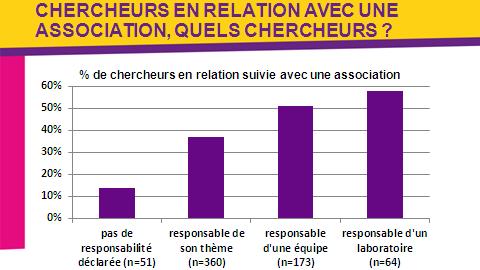
81% of them had contact with associations, half of which were ongoing. When asked to cite the name of the associations, more than 400 associations were cited by name (in addition to major associations with which everyone is familiar). Researchers who are also clinical practitioners are twice as likely to have relations with associations as their non-clinical colleagues.

The results show that researchers build up these relations over time. Relations increase in line with the researchers’ age and level of responsibility: 11% of researchers aged under 30 have ongoing relations with associations, 57% of researchers aged between 50-55 and 50% of 55-60 year olds.


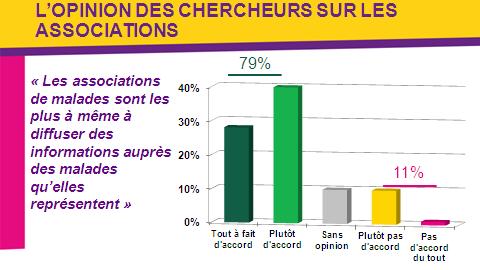
In less than half of all cases, the researchers stated they received financial support. The amount over the total length of collaboration is extremely variable: lower than €40,000 in one out of four cases; and greater than €2,500,000 in 5% of cases. The researchers underlined the possibilities opened up by this support: seed-funding for projects and sponsorship of doctorates or post-doctorates. For their part, researchers support the associations in the field of scientific information for patients, outreach activities, participation in meetings and scientific monitoring. Researchers recognize the important role of scientific mediator, undertaken by associations for patients, meaning four out of five researchers agree with the following statement: “Patient associations are best placed to distribute information to the patients they represent”. 

When questioned on benefits in terms of progress in their research, half the researchers consider that information provided by the associations concerning the patients’ daily life and their expectations helps them in their research.


Beyond the support, financial or otherwise, provided for their projects, two thirds of researchers consider that working with a patient association provides a useful, or even determining, motivation for their activity, and 80% of them consider it enhances the value of research results.


In response to the statement: “Being involved in patient associations risks impeding researchers’ scientific freedom”, 70% of the researchers said they did not agree, and this figure rose to 77% for those with ongoing relations with an association. When asked whether “involvement with a patient association hinders their activity by taking up too much of their time”, more than half the researchers disagreed (this figure again rose to nearly two thirds for researchers with ongoing relations with an association).

The first results of Cairnet demonstrate that patient associations are present in the world of researchers, which goes against the image of researchers ‘cut-off’ in their laboratories.

The vast majority of researchers surveyed now consider patient associations not only as contacts but also as players who encourage their research activities. Clarification provided by the researchers themselves must make it possible to ensure even greater progress in these partnerships, which are supported by Gram at Inserm.

Inserm was supported by the Patient Association Think-tank (Gram) to organize this meeting. Chaired by Pr Syrota, Inserm CEO, Gram is composed of 20 members, half of which are representatives from patient associations, disabled persons or family members, and the other half is made up of Inserm researchers and managers. “It is a unique location for open exchanges and debates into all issues that link research activities, the resulting progress in knowledge and the persons likely to benefit” states Martine Bungener, Gram Chairwoman. 

La Fondation Bettencourt Schueller apporte un soutien de 1 675 000 € à la recherche biomédicale française

fermer