Menu

A better understanding of accidents in everyday life

During their lives, every French person will be the victim of one accident in everyday life every 5 years, on average (fall, burn, drowning, etc.). Taken as a whole, these statistics represent 11 million people injured every year. The Accident Prevention and Trauma Treatment team led by Emmanuel Lagarde (Inserm Unit 897 ‘Institute of Public Health, Epidemiology and Development’/University of Bordeaux), in partnership with Calyxis, is today launching the MAVIE study to find out the scale and nature of accidents in everyday life in France. The researchers hope to be able to identify the factors associated with their occurrence and severity, by taking a representative sample of 100,000 French people.


Accidents in everyday life represent all unintentional injuries (excluding road traffic and occupational accidents). In particular they include domestic, sports, leisure and school accidents. Every year these accidents resulted in 11 million injured people, including 5 million requiring emergency treatment. They are also responsible for nearly 20,000 deaths, equivalent to five times more than casualties of road traffic accidents. Among them, the greatest number were victims to falls, suffocation and poisoning.

However, these accidents are still very poorly understood or studied.

Accidents in everyday life: statistics to be updated
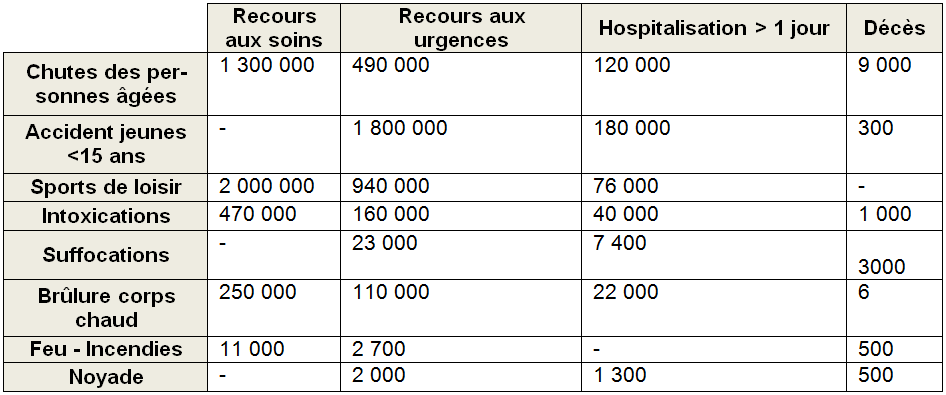
The following table presents the annual statistics for accidents in everyday life in France. These data come from studies by Inserm, by the health watchdog of the French National Institute for Accident Prevention and Health Education, as well as studies carried out by the French Institute for Public Health Surveillance, such as the Permanent Survey of Accidents in Everyday Life. However, it is proving essential to update these data.

Sans titre
In France, we have information about the types of these accidents, but little data about the variables explaining them‘, highlights Emmanuel Lagarde, Inserm Research Director.

A cohort study to better understand these ‘invisible’ accidents
The MAVIE study will rely on information collected from a large number of volunteers monitored over several years: in this case, 100,000participants. The methods are therefore based on thorough collection of data reported or observed prior to the accident occurring, such as the domestic environment, habits and lifestyles and, finally, the patient’s health. These data are essential to a better understanding of accidents in everyday life. They would enable priority intervention programmes to be put forward to reduce the number of victims.

The goal is to answer these big questions:
– What are these accidents?
– When, how and where do they occur?
– What factors are associated with their occurrence and severity?
– How can they be prevented?
– What is the outcome for the victims?

How do you volunteer?
100,000 people are needed to take part in the MAVIE study. You can enrol as a household, on the site www.observatoire-mavie.com. The enrolment questionnaire comprises a general description of the household, habits and lifestyles, and secondly a description of each individual member of the household. Quarterly reminders will be used to compile a summary of any accidents occurring in the household.

 To find out more
The press pack and volunteer recruitment campaign displays (posters, flyers, banners) are available and downloadable opposite https://we.tl/jxoAoADQdQ.

For the launch of the MAVIE study, personal accounts may be reported exceptionally from victims of accidents in everyday life at the Accident & Emergency Dept of Bordeaux University Hospital. Don’t hesitate to contact us.


PhotoCP web

© Affiche observatoire MAVIE

The children from the Elfe cohort turn three and a half : first results from the first interviews

The Elfe1 children are now three and a half years old , and a new survey was launched on 21 October to gather more detailed information about early childhood. This survey was conducted for the first time by telephone and through home visits with the families. The success of this new stage comes from the investment made by all of the families who believe in the value of this research, which will continue until their child turns 20 years old. Led by INED and INSERM, and in partnership with EFS, this study requires many stages starting from data collection up until the researchers publish the results. Some of this data has just been published in the three fields of health, environment and social sciences.


Insight on the preliminary findings of the Elfe study, by Marie-Aline Charles,

Research director of Inserm Unit 1018 “Centre for Research in Epidemiology and Population Health”
Elfe study director (Ined-Inserm-EFS combined unit)

In the health field, the survey showed that 70 % of mothers breastfeed, a number that has significantly grown since the 1970’s2:

Although infant formula is a completely acceptable alternative today for mothers who do not want to or cannot breastfeed, a considerable amount of scientific research shows that breastfeeding has a positive effect on the health of the mother and child. The findings of this Elfe study confirm that there has been an increasing trend documented over the last several years to initiate breastfeeding in the maternity ward, in conjunction with numerous public health initiatives that were started to promote breastfeeding.

In the maternity ward, 59% of mothers breastfeed only and 11% give both a bottle and breast milk. Mothers who breastfeed more frequently are older, have a normal body weight and belong to a higher socio-professional category. Mothers born in other countries breastfeed more often; likewise for mothers who took childbirth education classes and who did not smoke during their pregnancy. It also appears that breastfeeding is more common when fathers are involved and present during the birth, and when couples are married.

To continue efforts to promote breastfeeding, researchers suggest involving fathers as much as possible while allowing more women to attend childbirth classes (for example, 70% of those in the working class did not attend a class, compared to 27% of those in the managerial/professional class).

In the field of environmental health, the preliminary findings on housing contamination by micro-organisms are going to be published3

3,000 dust collectors were placed in children’s rooms for the first two months of their life, and the micro-organisms collected (mites, mold, etc.) were analysed to evaluate their influence on future health, particularly respiratory health. Six different housing contamination profiles were identified, of which two were commonly found in Western France (one had high numbers of mites and bacteria, and the other had mites, bacteria and mold). A higher humidity rate and temperatures more conducive to the growth of these micro-organisms could explain these results. The geographic breakdown of these profiles overlaps with the breakdown from a recent study conducted in day care nurseries on the frequency of asthma in young children . The follow-up data from the Elfe children will help confirm whether or not there is a relationship between these contamination profiles and children’s respiratory health. The objective within the Elfe study is to observe the respiratory diseases in these regions more carefully in correlation with the quality of housing, ventilation, isolation, etc.

The next publications in the field of social sciences will provide information on how parents prepare for the birth of a child, and in particular their desire to find out the baby’s gender5

The Elfe results show that nearly nine future parents out of ten want to know the gender of their child before his/her birth. For their first child, 60% of parents have no preference. When they do have a preference, it is equal for mothers (20 % for a girl and 20% for a boy), while fathers favour boys (25% would prefer a boy and 14% a girl). When it is a second child, the proportion of parents who do not have a preference decreases slightly. And when they do have a preference, it depends greatly on the gender of the oldest child; parents often want mixed-gender siblings. One of this research project’s objectives is to measure if this preference influences the beginning of parenthood.


A new survey when the child is three and a half and entering preschool

Two contacts are planned during this important stage young children’s lives:

• A telephone interview with one of the parents will focus primarily on updating information about the child’s environment (family, social, economic, culture, diet, etc.), the parents’ child-rearing practices, the child’s psychomotor development and health events. New topics including entry into preschool will also be discussed.

• A home visit with approximately 10,000 families, which will provide direct contact with the child. Researchers will use drawing, visual games and image association to gather information about the child’s cognitive development and learning.
Vidéo ELFE enquêteur

Video – Survey home visit (French version)

For families who have already participated in the lab work component in the maternity ward, new non-invasive sample collections, such as a urine sample from the child, are scheduled. Dust will also be collected in a few households to measure the substances found in the children’s environment. Finally, volunteer families can have their child wear a “movement counter” or accelerometer to measure their physical activity and sleep quality.

The progress of this unprecedented study, which includes one child out of 50 of the births in France in 2011, is based on the involvement of families who agreed to an initial interview in the maternity ward and then regular follow-up. The Elfe study families are playing a vital role in research for 20 years!

About the Elfe study
The Elfe study involves a large number of French researchers in a wide variety of scientific disciplines. Led by the Institut National d’Etudes Démographiques (INED – French National Institute of Demographic Studies), the Institut National de la Santé et de la Recherche Médicale (INSERM – National Institute of Health and Medical Research), in partnership with the Etablissement Français du Sang (EFS French Blood Agency), the Elfe study is supported by the ministries in charge of research, sustainable development, social affairs and health, and by public institutions: Institut de Veille Sanitaire (InVS – Health Watch Institute), Caisse Nationale des Allocations Familiales (Cnaf – French national family allowances fund) and the Institut National de la Statistique et des Études Économiques (Insee – National Institute of Statistics and Economic Studies). The Elfe study receives aid from the State managed by the Agence Nationale de la Recherche [National Research Agency) under a program entitled “Investments of the Future” under reference ANR-11-EQPX-0038.

1 Elfe is the first French longitudinal study dedicated to monitoring children from birth to adulthood. It takes a look at childhood from the multiple perspectives of social science, health and environmental health in order to better understand the interaction between them. During four enrolment periods in 2011, more than 18,000 families agreed to take part in this Elfe adventure in metropolitan France.
2 BEH no. 27 from 07 October 2014, Prevalence of breastfeeding based on parent characteristics and delivery conditions. Results from the Elfe maternity survey, Metropolitan France, 2011, by Claire Kersuzan and coll., Institut national de la recherche agronomique (Inra – National Institute of Agronomic Research) (French version)
3 Steffi Rocchi, Gabriel Reboux and coll., Université de Franche Comté, UMR 6249 Chrono-environnement, publication to appear in Sciences of total Environment under the title: Microbiological characterization of 3193 French dwellings of Elfe cohort children.
4 Study conducted with 20,000 children in day care nurseries who presented with wheezing and asthma: Delmas MC, Prevalence and controlling asthma in young children, Revue des maladies respiratoires, 2012.
5 XVIIIe Aidelf international conference, Université de Bari, 26-30 May 2014, Olivia Samuel and coll., Université Versailles St Quentin, Spring/Ined-IPOPs

Benzodiazepines and Alzheimer’s disease: the risk increases with duration of exposure

Researchers at Inserm Unit 657, “Pharmacoepidemiology and evaluation of the impact of health products on the population,” report new results on the link between benzodiazepines and dementia. In this study, published in the British Medical Journal (BMJ), they confirm that the use of benzodiazepines for three months or longer was associated with an increased risk of developing Alzheimer’s disease after the age of 65 years.The case-control study shows that the longer the exposure, the closer the association. The researchers therefore recommend monitoring the proper use of these drugs and limiting their intake to the recommended periods.

Benzodiazepines are prescribed by physicians for symptoms of anxiety and sleep disturbances for a recommended period of several weeks. In 2012, a study by Inserm Unit 657, “Pharmacoepidemiology and evaluation of the impact of health products on the population,” had shown, for a French cohort, that subjects using benzodiazepines showed an approximately 50% greater risk of developing dementia compared with those who had never taken them. In this new study, the researchers set out to confirm the association in another cohort, particularly the potential dose-effect relationship.

The researchers studied the database of the Quebec Health Insurance Board (RAMQ) to analyse the development of Alzheimer’s disease in a sample of patients aged over 66 years and living in Quebec (Canada) who had been prescribed benzodiazepines. They identified 1,796 cases of Alzheimer’s disease and monitored them for a period of at least 6 years. To carry out the case-control study, they then compared each of these cases with 7,184 healthy people of corresponding age, sex and duration of monitoring.

Results show that the use of benzodiazepines for three months or longer was associated with an increased risk (up to 51%) of later developing Alzheimer’s disease.

The association become closer with more prolonged exposure and with the use of long-acting benzodiazepines compared with short-acting benzodiazepines,” explains Sophie Billioti de Gage, a researcher at Inserm.

]In conclusion, the researchers stress that although the cause and effect relationship has not been proven, the stronger association seen with long-term exposure “supports the suspicion of a possible direct link, although benzodiazepines may also be an early marker of a state associated with an increased risk of dementia. “

Benzodiazepine use is frequent and more likely to be chronic among older people. Nonetheless, benzodiazepines are useful drugs for the treatment of transient anxiety and insomnia. The authors therefore call for greater awareness of and compliance with good practices in their use, such as appropriate prescription for a short period.

“This would help to ensure that use of these drugs is limited to several weeks, a period for which the researchers did not observe negative implications for the risk of subsequent dementia,” emphasises Sophie Billoti de Gage.

Exposure of pregnant women to certain phenols may disrupt the growth of boys during foetal development and the first years of life

A research consortium bringing together teams from Inserm, the Nancy and Poitiers University Hospitals, and the Centers for Disease Control and Prevention (CDC, Atlanta, USA), and coordinated by the Inserm and University of Grenoble Environmental Epidemiology team (Unit 823), has just published an epidemiological study indicating that exposure to certain phenols during pregnancy, especially parabens and triclosan, may disrupt growth of boys during foetal growth and the first years of life. Bisphenol A was not associated with any definite modification in growth. These results are published in this month’s issue of the journal Epidemiology, September 2014.


bébé

©Fotolia


Pregnant women are exposed to several compounds that are widely produced and abundant in our environment. This is the case for parabens (used as preservatives in cosmetics and healthcare products), triclosan (an antibacterial agent and pesticide found in some toothpastes and soaps), benzophenone-3 (used in sun protection products as a UV filter), dichlorophenols (the precursors of which are used in the manufacture of indoor deodorisers), and bisphenol A (the uses of which include manufacture of polycarbonate-based plastics (plastic bottles, CD cases, etc.) and epoxy resins (lining of food cans, dental amalgams) . These compounds belong to the phenol family, and are endocrine disruptors.[1] Experimental studies carried out in vitro and on animals have indicated that these compounds interact with the hormone systems involved in growth and weight gain.

The study was based on 520 boys from the EDEN mother-child cohort established by Inserm, and supported specifically for the present project by ANSES (French Agency for Food, Environmental and Occupational Health Safety).

 Pregnant women participating in this cohort were recruited in the Nancy and Poitiers University Hospitals between 2003 and 2006, prior to the present regulations concerning bisphenol A. Growth of each child was assessed by ultrasonography during pregnancy, and by measuring weight and length/height from birth to the age of 3 years. A urine sample taken during pregnancy allowed measurement of biomarkers for exposure to phenols in the CDC Atlanta Environmental Health Laboratory for US biosurveillance programmes.

Results obtained by Rémy Slama, Claire Philippat and colleagues show that over 95% of the pregnant women were exposed to these substances, and that maternal exposure to some phenols may disrupt the growth of boys. More specifically, the researchers showed a negative correlation between triclosan levels and growth parameters measured at the ultrasound examination in the third trimester of pregnancy, and that parabens were associated with increased weight at birth and at three years.

It is known that accelerated growth in the first years of life may increase the risk of obesity in later childhood. The study did not identify any clear link between urinary concentrations of other phenols and ante- and postnatal growth of boys. Because the urinary concentration of bisphenol A varies widely, it was not quantified accurately in the present study, which relied on a single urine sample for each woman.

For the researchers, “this is the first study concerning these environmental contaminants based on growth data collected during pregnancy, at birth, and up to the age of three years. Previous studies were focused on just one of these periods, and were usually restricted to the study of bisphenol A, without including other phenols.

The research teams will now try to repeat these results for a new couple-child cohort (the SEPAGES cohort), for which numerous urine samples will be collected from each participant (mother and newborn) during pregnancy and the child’s first few years of life. This approach will make it possible to reduce errors in exposure measurement, and to identify the potential periods of greatest influence of phenols on the growth of children during childhood. Girls, whose sensitivity to phenols may differ from that of boys, will also be considered in this new couple-child cohort.


[1]The use of bisphenol A in packaging for foods for infants and young children was banned in 2013. This ban is due to be applied to all food packaging from 1 January 2015.


What are the risks of post-traumatic stress disorder after an accident?

Many patients continue to suffer from symptoms (headaches, pain) several months after an accident, which can pose a real handicap to their lives. The team of Emmanuel Lagarde, research director at Inserm’s Research Centre for Epidemiology and Biostatistics (Inserm/University of Bordeaux) has studied the subsequent development of 1,300 people who were admitted to A&R between 2007 and 2009 for trauma. The researchers demonstrate that it is possible to identify people who will develop post-traumatic stress disorder, which generally occurs when the individual’s life was put in danger. This will enable their care to be adjusted accordingly. Their work also reveals that post-concussion syndrome, which has wrongly been defined as the consequence of cranial trauma, is only one part of post-traumatic stress disorder.

The results of the study have been published in the journal JAMA Psychiatry.

Every year, one in ten people in France are taken to A&E with a trauma following an accident. The large majority of the victims have only mild injuries and are discharged from hospital quickly. However, a number of them continue to suffer long after their direct injuries have healed. They may, for example, have headaches, uncontrollable fear or maladies of various kinds, vision problems, balancing problems or be irritable. When the symptoms occur simultaneously in a single context, they constitute what is called a syndrome.

Following a trauma, two syndromes are described: post-concussion syndrome (PCS), which occurs after a mild cranial trauma, and post-traumatic stress disorder (PTSD), which is encountered in people who have been exposed to a stressful situation wherein their life, or that of another person, was put in danger. Post-traumatic stress disorder was initially described in soldiers who, after exposure to combat or an explosion, complain of nightmares or obsessive thoughts which they are unable to get rid of. The two syndromes have been described for several years in the successive editions of the Diagnostic and Statistical Manual of Mental Disorders (DSM) of the American Psychiatric Association, which is a current standard reference in the area of diagnosis in mental health.

In this study, 1,300 people who were admitted to A&E at the Bordeaux Hospital Centre between 2007 and 2009 were contacted three months after their accident. Over 500 were suffering from a mild cranial trauma when they were admitted to hospital while the others had various injuries, all either mild or moderate in severity. The researchers measured the occurrence of 36 symptoms which are included in the definitions of PCS and PTSD.

‘Post-concussion syndrome (PCS) does not deserve its name because, on the one hand, the symptoms that constitute it are not specific to cranial trauma and, on the other, they do not occur simultaneously. It seems that PCS is, in reality, only one part of post-traumatic stress disorder’,

explained Emmanuel Lagarde, research director at Inserm.

Post-traumatic stress disorder in the general population

The results obtained also make it possible to have a better understanding of post-traumatic stress disorder, which is still insufficiently described for non-military contexts. In the general population, this disorder occurs in 2% of injured people but this figure rises to 9% when the trauma is cranial. However, it is more frequent among women and people who have been in a road accident or have been attacked. The occurrence of PTSD is also influenced by the state of the victim’s physical and mental health before the accident. All this information can enable doctors to determine if early treatment should be provided.

This study puts the classification of post-traumatic complaints into question because it also questions the very existence of post-concussion syndrome, which should be seen as only one part of post-traumatic stress disorder. These results do not, however, question the reality of the suffering of a significant number of people affected by this disorder, for whom the symptoms continue to persist and considerably impact the quality of their lives.

‘This is why it is necessary to describe these syndromes and their origin more accurately, particularly because identifying them also has important consequences in terms of insurance, compensation and the care and rehabilitation policies of patients’,

stressed Emmanuel Lagarde, who is the main author of this work.

100,000 women with breast implants monitored for 10 years

In 2013 an estimated 346,000 women in France had breast implants. Some 30,000 of these are thought to have received an implant produced by the company PIP (some of which have since been removed). Beyond determining that these breast implants are defective, it appears that the only way to document their potential adverse effects is to conduct a large-scale epidemiological study. At the request of the Agence Nationale de Sécurité du Médicament et des produits de santé (ANSM) [French National Agency of Medicine and Health Products Safety], a group of researchers managed by Florent de Vathaire in Inserm Unit 1018 “Centre for epidemiology and population health research” is launching a study entitled LUCIE. The aim of this 10-year study is to monitor some 100,000 women who have or have had breast implants of any brand. The results will enable conclusions to be drawn with regard to the potential medium and long-term adverse events in women with PIP implants.

In 2013, ANSM estimated that 346,000 women in France had silicone breast implants (either for aesthetic or medical reasons) including 30,000 with PIP brand implants. In explantations performed between 2001 and 2013, one in every four PIP implants explanted was considered defective.

There are still uncertainties with regard to the long-term effects of these implants.


In order to examine the potential risk of these implants to the women who carry them, Inserm backed by the Agence Nationale de Sécurité du Médicament et des produits de santé (ANSM) is launching a national epidemiology cohort study entitled LUCIE with women who have or have had breast implants and have undergone surgery in France. The Inserm team managed by Florent de Vathaire of Unit 1018 “Centre for Research in Epidemiology and Population Health” will manage this study.

This cohort has been set up to evaluate and describe the incidence of adverse effects linked to silicone gel breast implants manufactured by PIP. The data collected will be used to determine the state of health of women who have had silicone gel breast implants and examine whether there is a link between any health events declared (breast cancer or other adverse effects such as allergic skin reactions or burst implants) and PIP breast implants.

The aim is to include approximately 100,000 women who have undergone breast implant surgery including 30,000 who currently have or have had a PIP implant (with the remaining implants produced by other manufacturers).


To achieve this goal, the cohort will be recruited in two ways:

1) Through a transfer of records to Inserm researchers by hospitals and clinics which have implanted or explanted breast implants since 2001, regardless of the manufacturer.

2) Through voluntary registration of women after they have signed an on-line consent form on a “live” website on which they will be asked to complete an on-line questionnaire.

People who give their consent to take part will be contacted by e-mail every two to five years and asked to answer further on-line questionnaires (main health events which have occurred since they were last contacted, lifestyle etc.). The women are scheduled to be monitored for at least ten years.

Together, Inserm and ANSM are working to improve scientific knowledge of the problems associated with breast implants and therefore ensure that these products are used safely.

cohorte img2

To help recruit and retain participants, Inserm researchers have taken the following steps to promote the study:

– A website to inform the public of progress with the study and disseminate results. Participants can access the on-line medical questionnaire via this website alarecherchedelucie.fr

– A campaign on social media (Twitter,Facebook,LinkedIn)
Twitter account @EtudeLucie
Page Facebook
On  LinkedIn

Any woman who has or has had breast implants can take part in this study even if she has not experienced any health problems. This is important for ensuring that the study is representative of people with silicone gel breast implants and will ensure that questions raised regarding breast implants are answered.

Women requiring further information can e-mail contact ten.eicul-etrohoc@tcatnoc or call the following number from 15 July:

cohorte img

Cancer: life two years after diagnosis

On 10 June, at a special colloquium, the French National Cancer Institute (INCa) and Inserm will present and debate the results of a large survey of 4349 people with cancer conducted two years after diagnosis. Known as VICAN2 for “Vie après le Cancer à deux ans du diagnostic” (Life after Cancer two years post-diagnosis), this survey conducted in 2012 represents the only national study that reports on the living conditions of people with cancer.

Fotolia_37438608_XS

 ©fotolia

Background to the survey “Cancer: life two years after diagnosis”

The incidence of cancer has been increasing for several decades, but advances in treatment have significantly contributed to reducing the mortality associated with this disease. Although the prognosis remains poor for some cancer locations, the prospects for recovery and long-term survival are showing favourable trends in France for many cancers. Thus 3 million people in France have been or are currently affected by cancer. Cancer remains a hard trial both physically and psychologically. For several years after their diagnosis, people have to cope with the risk of a recurrence, and the side-effects of the disease and treatment, as well as resuming their daily lives.

In order to better know and understand these everyday difficulties, the French National Cancer Institute (INCa) wished to repeat the survey, which was first conducted in 2004 under the aegis of the (French Government) Directorate for Research, Studies, Evaluation and Statistics, on the lives of people two years following their cancer diagnosis. The National Cancer Institute entrusted the survey to Inserm Unit 913, SEESSTIM[1] . This research was conducted through a partnership with the French National Health Insurance Fund for Salaried Workers (CNAMTS), the French Agricultural Social Insurance Fund (MSA), and the Independent Workers’ Health Insurance Scheme (RSI).

Main results of the survey “Cancer: Life Two years After Diagnosis”

The VICAN2 survey addresses the different aspects of life for people with cancer from the initial care for their illness, and their relationship with the care system, to the state of their health two years after diagnosis, the impact of the illness on resources and employment, and problems encountered in their everyday and social lives. It emphasises:

The burden of inequalities

The results of this survey illustrate the scale of the impact of cancer on the existence of those affected, and indicate the burden of health inequalities, all along the person’s pathway. These inequalities sometimes reflect missed opportunities suffered by younger and older people in accessing care; however, they are mostly associated with socioeconomic problems, which sometimes carry as much if not more weight than the location of the cancer, the treatments received or the sequelae experienced. Cancer thus seems to be a factor that aggravates the person’s preexisting social inequalities.

News of the diagnosis is usually given under the right conditions

The survey explores the circumstances of diagnosis. Although the manner in which the diagnosis is given to the patient has advanced since 2004, it is still considered too inhumane by 18% of those surveyed. People with less formal education and lower incomes express this opinion even more often. However, the most obvious variations are seen to be associated with the age and gender of those surveyed: women and younger people most often consider that their diagnosis was given to them in an abrupt manner (This is the case for 28% of women aged from 18 to 40 years).

An apparent improvement in the sharing of information with caregivers

The proportion of people satisfied with their involvement in the choice of treatments has progressed.


Moreover, the proportions of those surveyed who believe that the information provided by caregivers was excessive or over-complicated, or that they themselves were poorly able to formulate their questions, have all considerably decreased in this new survey compared with 2004.

A close association between the impact of the disease and location of the cancer

Results show a general deterioration in quality of life caused by cancer; however, this deterioration greatly depends on the location (more frequent for lung cancer, and more rare for prostate cancer), the treatment received and the sequelae experienced.

Apart from than these medical factors, the quality of life measured also depends on possible situations of social fragility (low income, unemployment).

A very marked impact on work situation also

Cancer has an impact on work situation: at the time of diagnosis, eight out of ten people were employed, compared with six out of ten two years later.

The loss of employment more strongly affects the less well educated, younger people and older people, those working as operatives (manual and non-manual workers), who have an insecure work contract or are employed by SMEs.

Moreover, the severity of the cancer underscores the inequalities—the worse the initial prognosis, the greater the difference observed between those working as operatives and those working in management. Thus for a cancer with “a good prognosis,” the rate of staying in employment two years after diagnosis is 89%, for people working in management and 74% for operatives, as against respectively 48% and 28% for cancers with a poor prognosis.

Discrimination infrequent but still present

One out of ten of those surveyed claim that they have already experienced prejudice or discrimination directly related to their disease from their close associates. Women and younger people surveyed are the most likely to report such experiences.

Discrimination is experienced by up to 25% of people who declare that their household has financial problems (compared with 4% of those who claim to be “comfortable”). Social inequalities are thus reflected in the experience of discrimination at the hands of close associates.

These results will be discussed at a colloquium organised on Tuesday 10 June by the National Cancer Institute, bringing together all stakeholders, particularly patients and representatives of patient associations. This reflection will help to support the actions of the 2014-2019 Cancer Plan, which is especially aimed at limiting the social and economic consequences of the disease, facilitating the consideration of cancer in the workplace, continuation of schooling and study, and authorises a “right to be forgotten” for those seeking loans.

[1] Sciences Économiques et Sociales de la Santé et Traitement de l’Information Médicale (Economics and Social Sciences, Health Care Systems and Societies)

Social inequalities in health linked to diet and physical activity

A collective expert review by Inserm

Major social inequalities in health exist in France like other countries. These are reflected in varying rates of morbidity and mortality depending on individuals’ position on the socio-economic scale. For example, at 35, senior executives’ life expectancy is 6 years longer than that of manual workers. Lifestyle habits such as drinking, smoking, diet and physical activity are recognised as key determiners of health. A social gradient exists for health-related behaviour which manifests in childhood and lasts until old age.

One of the new focuses of the third period of the Programme National Nutrition-Santé [National Nutrition and Health Programme] (PNNS) (2011-2015) is to minimise social inequalities in health linked to diet (diet and physical activity). In this context, the Direction Générale de la Santé [Directorate General for Healthcare] (DGS) has asked Inserm to perform a review of scientific knowledge on social differentiation determiners in the area of nutrition and of the various intervention strategies that could be used to limit these inequalities.

In response to this request, Inserm formed a multidisciplinary group of experts on epidemiology, public health, human and social sciences, health economics, clinical research and geography.

The experts’ analysis of data from recent international scientific literature was used to evaluate nutritional disparities based on individuals’ socio-economic standing. The social, cultural, economic and environmental factors involved in creating social inequalities in nutrition were analysed. The experts also studied the impact of interventions and prevention policies based on socio-economic standing and identified the most effective strategies for limiting social inequality in the area of diet and physical activity.

In conclusion, the experts recommend designing and promoting programmes which benefit the entire population as well as actions targeting various social groups based on the risks and requirements they face.

Read a summary of the collective expert review and the full review (only in French)

The pill crisis in France: towards a new contraceptive model?

The 3rd and 4th generation contraceptive pills were the subject of a serious controversy in late 2012/early 2013, due to the risk of venous thrombosis associated with their use. What were the consequences for contraception in France? By analysing the Fecond survey, conducted by Inserm and the French National Institute for Demographic Studies (INED) several months later, Nathalie Bajos, Mylène Rouzaud-Cornabas, Henri Panjo, Aline Bohet and Caroline Moreau examined the recent trends in contraceptive practices, and the contribution of media debate to these changes.

moyens contraceptifs

© Fotolia

The media debate on contraceptive pills in late 2012/early 2013 did not lead to disaffection with contraception: of the women involved—whether infertile, pregnant, or engaging in heterosexual relations and not wanting children—only 3% did not use any method of contraception in 2013, the same proportion as in 2010.

However, nearly one in five women claimed to have changed methods since the media debate.

Use of oral contraception decreased strongly, from 50% in 2010 to 41% in 2013, a decrease solely attributable to 3rd and 4th generation pills. Some women, especially the younger ones, stated that they were on second generation pills. Others opted for the IUD (the more highly educated), condoms or so-called natural methods—periodic abstinence or withdrawal (the more vulnerable).

Media and political coverage therefore seems to have contributed to diversification in contraceptive practices, and to a redistribution of socioeconomic inequalities regarding access to contraception.

Retired people continue to have cognitive impairment long after high occupational exposure to solvents

Exposure to solvents during working life may have a negative impact on cognitive performance. But do these effects abate once exposure has ceased? French researchers from Inserm Unit 1061, “Neuropsychiatry: Epidemiological and Clinical Research,” and their American colleagues at Harvard have just shown that retired people continued to be affected by their work with solvents in cases of high exposure. The results are published in Neurology.

solvants

©Inserm M Depardieu

Solvents are often used in the workplace. They are used for cleaning metals, diluting paints, stripping varnishes, purifying perfumes during manufacture, etc. However, repeated (or chronic) exposure to these liquids can cause cancer and be detrimental to fertility. It can also be a source of mobility problems, depression or cognitive (intellectual) impairment. “Until now, few studies have evaluated whether this impact on cognitive impairment continues after retirement, i.e. after occupational exposure to solvents has ended, and very few studies have properly documented the exposure,” indicates Dr Claudine Berr, a research director at Inserm Unit 1061, “Neuropsychiatry: Epidemiological and Clinical Research,” in Montpellier. The researcher and her French and American colleagues therefore addressed the question through the Gazel cohort (20,000 employees from Électricité de France-Gaz de France [EDF-GDF] monitored for the last 25 years, whose working lives have been well documented at every stage). Their study, published in Neurology, concerned 2,143 men aged over 55 years, who had been retired for an average of 10 years. Overall, 33% of participants had been exposed to chlorinated solvents during their working lives, 26% had been exposed to benzene, and 25% to petroleum solvents. These retirees underwent a battery of 8 cognitive tests. For example, they had to name in one minute as many names of animals or words beginning with P as they could.

The researchers showed that high exposure to solvents was associated with poorer cognitive performance. Thus, for high doses of chlorinated solvents, the retirees had a greater than 20-50% risk of poorer cognitive performance.

 This shows that “these employees retain the effects of their occupational exposure, even though they have retired and even though this exposure is long past,” concludes Dr Berr. “Treating physicians need to pay closer attention to these patients, for example by managing other risk factors for cognitive decline on which we can take action, namely vascular risk factors. They should also encourage them to have more leisure activities that stimulate their cognitive functions.”

The results of this study will have to be confirmed in the Constances cohort, which monitors 200,000 people aged 18-70 years in the general population. “In this cohort, 20-25% of people claim to have had occupational exposure to these solvents,” says Claudine Berr.

Yes, you can make your children eat vegetables!

As part of the European project HabEat (2010-2014), coordinated by INRA and involving 10 scientific partners, researchers have made a step forward in the understanding of how eating behaviours and preferences form in early life. On March 31st and April 1st in Dijon (France), a symposium presents the results and recommendations for early childhood professionals and parents.

When looking at eating behaviours and preferences, even if it’s not all over at the end of early childhood, the first two years of life are of utmost importance regarding the development of eating behaviours in children, with a key period when solid foods are introduced. The collaborative project HabEat had the aim of better understanding the determinants of the formation of eating habits through two distinct approaches, epidemiological on one side and experimental on the other.

Food pyramid isolated on white

© Fotolia

Data from 18 000 mother-child pairs followed from birth to at least 4 years of age

Four large European cohorts have given insight into usual early feeding practices. The factors associated to the frequency of consumption of fruits and vegetables at various times during the establishment of the food repertoire were particularly investigated.

18 studies involving, in total, nearly 2000 children between 6 months and 6 years of age

The experimental part of the project comprised two sections. The first one primarily focused on key learning mechanisms, and concerned children from the beginning of complementary feeding (around 6 months) to 3-year-olds. The second studied different strategies aimed at increasing vegetable consumption beyond 3 and until 6 years of age.

Main results

Longer breastfeeding was associated with higher frequency of fruit and vegetable consumption in later childhood.

Introducing a variety of pureed vegetables at the beginning of the complementary feeding period facilitates the acceptance of novel vegetables in the short and medium term.

Repeatedly giving a novel vegetable is sufficient for increasing its consumption even in children who are ‘picky’ about food. However, giving already known vegetables repeatedly to kids between 3 and 6 is not efficient for increasing their consumption.

It is difficult to increase intake of an already familiar vegetable in older children (3 to 6). One strategy that seems to help is to let the child choose between two vegetables.

As early as 3 years of age, if a snack is offered before a meal, or if palatable foods are available after a meal, some children increase their total energy intake. This could lead over time to the child becoming overweight.

Recommendations for early childhood professionals and parents

The scientific results of this project have been translated into recommendations that will be addressed to early childhood professionals, pediatricians, politicians in charge of nutritional policies, and to agri-food industrials. These recommendations will be discussed during the symposium.

A guide for parents has been designed on the basis of the project’s results and of prior data.

HabEat received funding from the European Community’s Seventh Framework Programme (FP7/2007-2013) under the grant agreement n°245012-HabEat.

The cohorts:

ALSPAC (UK), 14 000 mother-child pairs, pregnant women were recruited from 1991 to 1992 and their children followed-up until 13 years of age

EDEN (FR), 2 000 mother-child pairs, pregnant women recruitedfrom 2003 to 2006, and their children followed-up until 5 years of age

Generation XXI (Portugal), about 8 500 mother-child pairs, pregnant women recruited from 2005 to 2006, and their children followed-up until 4 years of age

Europrevall (Greece), about 1 000 mother-child couples recruited from  2005 to 2007, and their children followed-up until 4 years of age.

fermer