Menu

Sport/physical exercise and health: what’s new?

The London Olympic Games kick off on July 27th. With around 100 days to go, Inserm wishes to invite you to look into the research that has been done in the fields of sport and health.

Various research programs over the last few years have shown the benefits of physical exercise on our health, in preventing obesity or in improving the health of patients suffering from chronic, cardiovascular or respiratory diseases in particular.

So what about high-level sports? These also seem to contribute to good health. Are high-level sport and physical exercise both determining factors for our health?

Several research teams in France specializing in epidemiology, sports medicine, physiology and physics are investigating the interactions between sport, physical exercise and health.

Below you will find contacts and detailed information about some of the Inserm teams involved in the fields below, among others:

• The impact of performance on life expectancy and mortality

• The part played by high-level athletes as models for studying respiratory diseases

• The rules of training for competitive sports transposed to physical exercise (notions of gradual build-up, development of different sporting energy systems, regularity, variations in exercises, motricity, assessment, etc.)

• Sport and aging

• Differences in the cardiac system of high-level athletes

Indoor air quality and respiratory health in schools

What link is there between poor indoor air quality and the allergic and respiratory health of children in French schools? The “Epidemiology of Allergic and Respiratory Diseases” (EPAR) team led by Isabella Annesi-Maesano, Director of research at the joint research unit 707 “epidemiology, information systems and modeling” (Inserm/UPMC) has recently published an article in the review Thorax showing the results of its study on the quality of the air inside 108 primary schools in 6 French towns. Although the indoor air quality varies depending on the schools and the towns, the researchers reveal that around 30% of the 6590 children monitored during this study, i.e. 3 out of 10 children, are exposed to atmospheric pollution levels higher than the values recommended by the WHO and the French agency for Food, Environmentaland OccupationalHealth Safety (ANSES)1. This exposure is related to an increase in cases of asthma and rhinitis in school children, among whom those who suffer from allergies are the most at risk.

Children are more sensitive to the effects of pollution than adults. In children, indoor air pollution can lead to both short-term and long-term health problems, such as nasal congestion, skin and eye irritations, allergic reactions, asthma, headaches, tiredness, dizziness or even nausea. In industrialized countries, children spend roughly 80% of their time indoors, a large part of this at school. Although the American authorities have reported increased indoor air pollution in schools, very little research has been undergone into the relationships between the quality of the air in schools and the allergic and respiratory health of school children. For this reason, the EPAR team led by Isabella Annesi-Maesano, Director of Research at Inserm, carried out a study in six French towns (Bordeaux, Clermont-Ferrand, Créteil, Marseille, Strasbourg and Reims) on a large sample of 401 classes in 108 primary schools. The aim of the study was to assess the exposure of the 6590 children taking part (girls and boys, average age 10 years old) to the main atmospheric pollutants present in classrooms and to analyze the resulting association with the cases of asthma and rhinitis developed by the children in these classes. The study shows that 30% of the children are exposed to indoor air pollutant levels in the classroom that are higher than the values recommended by the WHO and the ANSES (1), in other words, 3 out of 10 children, even although they are not all subjected to exposure in the same way. “The advantage of our study was in having a large number of children from all the different regions of mainland France”, explained Isabella Annesi-Maesano, Director of Research at the Inserm institute. During an entire school year, the research scientists analyzed the concentrations of different atmospheric pollutants: fine particulates with diameters of less than 2.5 micrometers (PM2.5), nitrogen dioxide (NO2) and 3 aldehydes (formaldehyde, acetaldehyde and acroleine). The fine particulates and the nitrogen dioxide (NO2) are caused mainly by automobile combustion and can enter rooms by transfer (such as when the windows are opened). Aldehydes are indoor pollutants that can come from numerous sources: combustion products (cigarettes, candles, incense, chimneys, gas cookers), building and decoration products (wood, stratified parquet flooring, adhesives used for carpeting, wallpapers, and also varnish, foam insulation products), maintenance and cleaning products (detergents, disinfectants, cleaning wipes) and products used for treatment such as insecticides, etc. In parallel, the research team studied the clinical signs of the children using data collected from a medical check-up that included a skin test to detect the 11 most common allergenic products (dust mites, cat hairs, pollens, etc.), plus an exercise test to detect effort-induced asthma. To complete the data, a questionnaire was filled in by the parents. “Exposure to high concentrations of particulates and volatile organic compounds is related to an increase in the prevalence of clinical signs of asthma and rhinitis in school children. Children prone to allergies seem to be the most at risk“, revealed Isabella Annesi-Maesano. In detail, the results show that cases of rhinitis (in particular rhino conjunctivitis) are significantly related to high levels of formaldehyde in the classrooms and that an increase in the prevalence of asthma was observed in classrooms where there were high levels of PM2.5 fine particulates, formaldehyde and acroleine. The relation between the poor quality of the air and asthma nearly always concerns allergic asthma as defined by the skin test. “The poor quality of the indoor air could eventually undermine the allergic and respiratory health of children who spend an average of 8 hours per day at school. So it is important to ensure good quality air in the classroom. This would help to limit the risks of developing the clinical signs of rhinitis and asthma. But we must also closely monitor how children are exposed to pollutants at home and outdoors”, concluded the research team.

The 6 towns used in the study: The French contribution to the ISAAC study 

The 6 major towns that took part in the ISAAC study (French part)

The specific aims of the study

The objective of the international study known as International Study of Asthma and Allergies in Childhood (ISAAC) is to measure the frequency and the severity of asthma and allergic diseases (phase I), to determine the risk factors (phase II) and to study the development of these diseases (phase III). The French part of the study took place in 6 major towns (Reims, Créteil, Strasbourg, Clermont Ferrand, Bordeaux, Marseille), selected for their different air qualities. The study initially involved 9615 children with an average age of 10 years, belonging to 401 classes from 108 schools. Sensors were set up to measure the exposure to gaseous pollutants and pumps measured the exposure to particulates both indoors (classrooms, school canteen) and outdoors (school yards, covered playgrounds). The ISAAC study was covered by several publications.

The European study SINPHONIE

  A European study known as SINPHONIE is currently under way in 27 European countries, including France. Its aim is to study how the quality of the air in schools affects the overall health of the schoolchildren.

 A question of healt

Isabella Annesi-Maesano will be present at the next Citizen’s conference as part of the cycle “A question of health”. It is organized by the Inserm and will take place on May 31, 2012 on the theme: “Asthma in children: how is it affected by tobacco smoke?” It will be held at the Palais de la découverte, a Universcience site in Paris and will be linked up with Numerica in Montbéliard (25).

Footnotes: (1) Fine particulates (PM2.5): 10μg/m3 according to the World Health Organization (WHO) Nitrogen dioxide (NO2): 40μ/m3 according to the (WHO) Formaldehydes: 10μg/m3 per year according to the French agency for health, food, environmental and occupational safety


Launch of “Health in Questions”, a new series of public conferences providing a fresh debate into health issues between the general public, civil society and scientists

With a view to strengthening dialogue into “science and society”, Inserm, in partnership with Universcience (1) and players from regional scientific and technical sectors, has launched “Health in questions”, a series of public conferences. The objective is to encourage interactivity with the public and to provide a platform for public information, reaction, expression and personal accounts; the participative conferences propose several annual events held on national or international health days. As such, these events will highlight an issue from health-related current affairs and then debate it in the presence of experts (researchers, doctors, sociologists, etc.) and representatives from civil society (patient associations, political groups, etc.).

Knowledge acquired in life sciences and health sectors helps produce treatments to combat disease; but this progress also has ethical, societal and economic consequences.

During the ‘Week of the Brain’, Inserm, Unverscience and their partners are pleased to invite you to join in discussions on:

“Parkinson’s disease: can we regenerate the brain?”

Thursday, 15 March, from 6.30pm to 8pm

at the Palais de la découverte, a Universcience venue in Paris

with live link-ups with the La Coupole theatre in Saint-Louis.

Parkinson’s disease is a neurodegenerative disorder characterized by the progressive loss of a single type of brain cell. Is transplanting healthy cells produced by induced pluripotent stem cells the solution?

Speakers

  • Marianne Kuhn, Chairwoman of the France Parkinson Alsace association – rf.oodanaw@ennairam.nhuk // +33 (0)3 89 40 29 90
  • Pr Philippe Remy, neurology dept. at the Hôpital Henri Mondor in Créteil and leader of the “Clinical imaging of neurodegenerative diseases” research team, MIRCen, Orsay –rf.phpa.nmh@ymer.eppilihp-oruen // +33 (0)6 61 79 37 90
  • Dr Christine Tranchant, Neurology dept., Hôpitaux Universitaires, Strasbourg – rf.gruobsarts-urhc@tnahcnarT.enitsirhC // +33 (0)3 88 12 85 31

Debate chaired by Jean-Philippe Braly (La Recherche).

This first conference from the “Health in Questions” series will be inaugurated by Claudie Haigneré, Chairwoman of Universcience and Pr. André Syrota, Inserm Chairman and CEO, at the Palais de la découverte in Paris. Inaugurations will also be led by Gérard Binder, Chairman of the Nef des sciences in Mulhouse and Gilles Block, Inserm Grand Est Regional delegate, at the La Coupole theatre in Saint-Louis. This conference is part of a general partnership agreement that will be signed, during the event, by Inserm and Universcience.

(1) Public establishment run by the Palais de la découverte and the Cité des sciences et de l’industrie.

Vitamin B and omega-3 supplementation and cancer: new data

Researchers from the Nutritional Epidemiology Joint Research Unit (Inserm-Inra-Cnam-Université Paris 13) have just published a study showing that, in men with a previous history of cardiovascular pathologies, supplementation with B vitamins and omega-3 polyunsaturated fatty acids (the fatty acids present particularly in oily fish and dried fruit) did not significantly increase the occurrence of cancer. However, women with a previous history of cardiovascular pathologies seem to have a higher cancer risk after five years of supplementation. The research is published in detail in the Archives of Internal Medicine.

Although some studies have suggested that supplementation with B vitamins has some benefits for protecting against cancer, the few randomised clinical trials conducted internationally in recent years remain equivocal.

The results of studies of the influence of supplementation with polyunsaturated fatty acids have been mixed.

That is why Valentina Andreeva and Pilar Galan and their staff wanted to study the effects of B vitamins and omega-3 polyunsaturated fatty acids (PUFAs) on cancer by monitoring, for five years from 2003 to 2009, more than 2500 people aged between 45 and 80 who had survived a heart attack, stroke or angina in the last 12 months.

The aim of the trial was to check the hypothesis that supplementation with en5-methyl-THF (and vitamins B6 and B12) and/or omega-3 was of value in preventing the recurrence of ischaemic pathologies in subjects who had suffered a heart attack or stroke.

The results, published this week in the Archives of Internal Medicine, are the outcome of a specific analysis performed as part of the intervention study SU.FOL.OM3, the results of which were published in 2010 in the British Medical Journal (1).

SU.FOL.OM3 is a randomised double-blind placebo-controlled secondary prevention trial in which participants aged from 45 to 80 years with a previous history of cardiovascular pathologies were given daily supplements for five years of B vitamins (3 mg of vitamin B6, 560 μg of folates and 20 μg of vitamin B12) and/or omega-3 PUFAs (600 mg of eicosapentaenoic acid, EPA, and docosapentaenoic acid, DHA, in a ratio of 2:1), according to a factorial design.

It tested the effect of supplementation on cancer development over the five-year monitoring period in 145 men and 29 women.

All types of cancer were monitored. “Despite the low numbers, the results are significant,” the authors believe, because the “methodology used – a randomised double-blind trial – is stringent.

The researchers conclude that “Neither B vitamin supplementation nor omega-3 PUFA supplementation has a significant effect on the occurrence of cancer in men. However, women receiving omega-3 fatty acids tended to present a higher risk of cancer compared with the placebo group (adjusted HR =3.02; CI of 95 % = [1.33; 6.89]). Although the underlying mechanisms are not clear, a potential mediating effect on the metabolism of oestrogens is suggested,” they add.

To confirm or contradict these results, it is necessary to await new studies: randomised trials, cohort studies and mechanistic studies.

Footnote

(1) Supplementation with nutritional doses of B vitamins and omega-3 fatty acids Galan P, Kesse-Guyot E, Czernichow S, Briancon S, Blacher J, Hercberg. Effects of B vitamins and omega 3 fatty acids on cardiovascular diseases:a randomised placebo controlled trial.

BMJ. 2010 341:c6273

How can head injury prevention be improved for cyclists?

Researchers from a team coordinated by Emmanuel Lagarde at Inserm unit 897 “Inserm Epidemiology & Biostatistics research centre”, in collaboration with the Université Victor Segalen Bordeaux 2, have endeavoured to ascertain the factors preventing helmet use and the approaches that could be used to promote it. Although they represent a small proportion of urban travel modes, cyclists make up 5% of deaths and 6% of serious road injuries in towns, with most suffering from head injuries (1). These figures inspired the researchers to study the impact of two promotion strategies (documentation and free helmets) on adults, using a randomised comparative methodology. The results of this study on 1,800 bike users in Bordeaux and its urban area were published in the PLoS ONE review on 15 February.

In 2010 in metropolitan France, 59 cyclists lost their lives and 963 were seriously injured1. Two thirds of those with a life-threatening condition had suffered head injuries (2). How to protect users of a green and healthy mode of transport is today still an open question.

To study significant cycling accident prevention factors, Emmanuel Lagarde, Director of Research at Inserm unit 897 “Inserm Epidemiology & Biostatistics research centre”, and his team, set up a study into the behaviour of some 1,800 cyclists in Bordeaux and its urban area. The study ran from May 2009 to September 2010. The participants, aged between 18 and 75, responded to a questionnaire on their habits and opinions related to bikes and helmets. They were then organised into four groups: the first group received a brochure promoting helmet use; the second received a free helmet; the third a brochure and a helmet; and the fourth group did not receive anything.

Afterwards, all groups were sent a coloured sticker to be placed on their mud-guard, so they could be easily identified in the streets of Bordeaux by a network of seven automated cameras, specially developed by the researchers. The system was used to detect the cyclists anomalously, to record their speeds and to detect whether or not they were wearing helmets.

Figure 1: Azimuth view and automated detected algorithm

Figure 2: mud-guard with participant colour authentication code

Figure 2: mud-guard with participant colour authentication code

Although 90% of all individuals asked to participate in the study thought that helmets do provide head protection, only 13% said they had already worn one. In the first months of the study, participants who had received a free helmet were more than eight times more likely to wear one. “But after four months, there were no longer any discernible differences between the groups: the majority of cyclists had abandoned the helmets” explains Emmanuel Lagarde. He also specifies that “distributing the information brochure had no effect on the use of helmets”.

Using the cameras installed by the researchers, and further to analysis of the questionnaires, the scientists identified two factors that encourage cyclists to wear a helmet:

– Belief that helmets protect the face;

– Encouragement from family to wear one.

This study concludes that promoting the use of helmets among cyclists will remain difficult. According the researchers, “pressure from loved ones is an important factor in terms of helmet use among cyclists”. If prevention is to have a hope of being effective, it must integrate easy access to helmets, parental education and communication on the preventive benefits of wearing a cycle helmet. The safety of cyclists is a complex subject, which goes beyond the issue of helmets. “The behaviour of cyclists and other road users can contribute to the safety of cyclists; road layouts also have a key role” underlines Emmanuel Lagarde.

This study is confunded by the ANR, INPES and the Aquitaine regional council.

Footnotes:

(1) Data from the French national interministerial road safety observatory (ONISR) 2010

(2) Amoros et al. BMC Public Health 2011, 11:653

GrippeNet.fr: a new Internet-based influenza monitoring system (www.grippenet.fr)

On January 25, 2012, a new influenza monitoring system known as GrippeNet.fr was launched jointly by the Sentinelles network team (the mixed research team, unit 707 at Inserm – Université Pierre et Marie Curie) and the Health Watch Institute (Institut de Veille Sanitaire). This monitoring system was set up to collect epidemiological influenza data directly from the French population via internet.

This is an experimental system in which the involvement of the population will be a determining factor. Until this year, influenza was monitored in France through data collected from voluntary medical practitioners and a network of laboratories and hospitals. The data collected by GrippeNet.fr is not intended to replace the information validated by the health professionals. Rather, it is hoped that it will provide complementary information, in particular about people who do not go to their medical practitioner.

How will it work? The dedicated website www.grippenet.frcan be used by any adult living in France, healthy or suffering, who wishes to take part in the influenza monitoring campaign. It is completely anonymous and is a voluntary program. It only takes a few minutes. When you log on for the first time, all you are asked for is an e-mail address. You simply fill in a questionnaire about your profile, then each week you are asked to fill in a short questionnaire noting any symptoms you may have had since you last logged on (temperature, cough, etc.). This anonymous data are analyzed immediately and used for real-time monitoring of influenza cases in France. Remember that taking part in this program does not mean you do not have to consult your medical practitioner in case of problems.

The GrippeNet.fr project is financed by the French Authorities. This project is part of a vast European epidemic monitoring campaign and as such it is part of the European Epiwork project, financed by the European Commission and aimed at setting up epidemiological modeling and monitoring infrastructures throughout Europe. The Netherlands quickly showed great interest in this project. 25,000 persons subscribed right from the first season and over 50,000 persons have already taken part in the monitoring and follow-up for at least one season, that’s 0.30% of the population. The data can be consulted on the general website of the European project (Epiwork), or on the dedicated influenza monitoring site (Influenzanet). Like France, Germany, Austria, Sweden and Switzerland are joining the Influenzanet project this year. In December 2011, in the six countries that have already set up a similar system to GrippeNet.fr, (including Great Britain and Italy), over 35,000 Europeans had already taken part in the monitoring campaign.

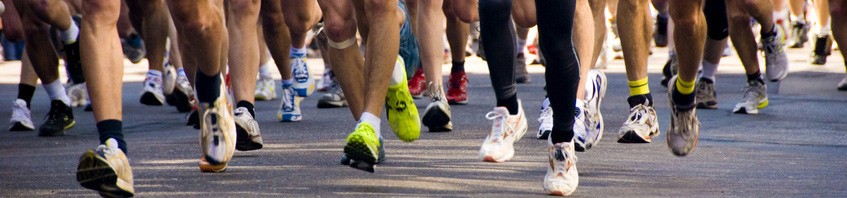
“Senior” runners never stop pushing their limits in marathons

Romauld Lepers and Thomas Cattagni, researchers from Inserm Unit 1093 “Cognition, Action and Sensorimotor Plasticity” at the Université de Bourgogone, have analysed changes in participation and performance of runners aged 20 to 80 in the New York marathon over the last 30 years. The results are largely unexpected: the best male marathon runners over 65 and the best female marathon runners over 45 have consistently improved their performance over the last 30 years. At the same time, the researchers also observed a strong increase in athletes over 40 participating in the New York marathon: from 36% of the total masculine runners between 1980-1989, to 53% between 2000-2009; and from 24 to 40% during the same periods for female runners. Details of these descriptive analyses were published in the AGE review, The Official Journal of the American Aging Association.

Inserm researchers analysed the chronometric performances of competitors in the New York marathon in accordance with age and sex over the 1980-2009 period. They classified runners who successfully completed he race into 10 separate age categories (20-29; 30-39; then every 5 years from between 40 and 79).

Although the average times achieved by the 10 best male and female athletes in age categories below 60-64 have not changed over the last 30 years, there was a sharp decrease in times for the senior age categories: for an average marathon time achieved of 3 hours and 50 minutes, men in the 65-69 age category improved by 8 minutes between 1980-1989 and 1990-1999, and 7 minutes between 1990-1999 and 2000-2009. Similarly, the average time achieved by women in age categories above 45-49 fell significantly. For example, the average performance for the 55-59 age category improved by 33 minutes between 1980-1989 and 1990-1999 (for an average race time of 4 hours and 20 minutes), and by 8 minutes between 1990-1999 and 2000-2009.

The researchers have thus concluded that, over the last two decades, the performances of the best male marathon runners over 65 and the best female marathon runners over 45 have particularly improved, whereas their younger counterparts have remained stable.

The improved performances can be explained by the increased number of participants in these age categories, as well as the increased interest this age population has in terms of the benefits of physical activity on health and well being” says Romuald Lepers, whose research into motor function plasticity during aging is part of the overall research of Inserm Unit 1093 “Cognition, Action and Sensorimotor Plasticity”, directed by Thierry Pozzo.

In recent years, the gap in performance between men and women has stabilized, in all age categories, suggesting that the decline in physiological functions with age is similar for both sexes. The mechanisms via which physical activity acts advantageously in terms of slowing down aging-related processes remain to be explored. For the researchers, this initial data on athletes over 40, combined with new physiology and sociology data, will lead to improved understanding of the role physical exercise has in “aging well”.

fermer