Menu

Psychotropic drugs: consumption and drug dependency

The term ‘psychotropic drug’ is used to define medication that acts on the central nervous system by modifying certain mental processes. Generally speaking, these are medicines used to treat mild or serious mental illness and to alleviate pain.

Due to their psychoactive properties, psychotropic medicines may cause dependency if used chronically or if abused.

Psychotropic medication is sometimes consumed outside any medical context and may be misappropriated or even trafficked in the same way as illegal drugs.

France’s Interministerial Mission to Combat Drugs and Drug Addiction (MILDT) asked Inserm to produce a collective expert opinion on the consumption of psychotropic medication and the misuse and drug dependency associated therewith so that a scientific light can be thrown on these phenomena, with the addition of useful recommendations for improving the regulations and current prevention and care arrangements in France.

To comply this request, Inserm has created a multi-disciplinary group of 11 experts in the fields of epidemiology, drug monitoring, public health, sociology, anthropology, toxicology, psychiatry and neurobiology. The group analysed more than 1100 international scientific publications, making it possible to report on the main findings concerning the French situation.

Principal classes of psychotropic drugs

Class of psychotropic drugsFamily (examples)Molecule (examples)
Anxiolytics or tranquillisersBenzodiazepinesDiazepam, bromazepam
 AntihistaminesHydroxyzine
 CarbamatesMeprobamate
Hypnotics or sleeping pillsBenzodiazepinesFlunitrazepam, nitrazepam
 Benzodiazepine- related

drugs

Zolpidem, zopiclone
Neuroleptics or antipsychoticsTypical neuroleptics typiquesChlorpromazine, haloperidol
 Atypical neurolepticsOlanzapine, risperidone
AntidepressantsInhibitors of serotonin reuptakeFluoxetine
 Inhibitors of noradrenaline reuptakeTrimipramine, mianserine
 Inhibitors of serotonin catabolism (IMAO)Moclobemide
Thymoregulators Lithium carbonate
Psychostimulants SympathomimeticsMethylphenidate
Analgesic opiates Opium alkaloidsMorphine sulfate
Opiate substitutesMorphinomimeticsHigh Dosage Buprenorphine

(HDB), methadone

What is Inserm’s Collective Expert Opinion Centre?

Collective expertise has been an Inserm initiative since 1994. More than seventy collective expert opinions have been produced in numerous healthcare fields.

Inserm’s Collective Expert Opinions throw scientific light on a given healthcare subject based on critical analysis and a summary of the international scientific literature. It is performed at the request of institutions that need recent data produced from research to help them in their decision-making process with respect to public policy. The Expert Opinion should be considered as the initial stage necessary to result in decision-making in the long term.

In response to the issue in question, Inserm brings together a multidisciplinary group of recognised experts consisting of scientists and doctors. These experts meet, analyse scientific publications and summarise them. The salient points are extracted and recommendations are often made.

The conclusions obtained through the collective effort of experts contributes to the debate of healthcare professionals involved and the social debate.

Optimizing the care of very preterm infants: A collective European initiative

“Effective Perinatal Intensive Care in Europe: translating knowledge into evidence-based practice”, is the theme that will bring together the 12 institutions taking part in the EPICE project – Effective Perinatal Intensive Care in Europe – a European project funded by the EU 7th Framework Program “Health”, coordinated by Inserm. This meeting organised in Paris from the 25th to the 27th of October, will be the opportunity to mark the end of inclusions for a cohort of over 8000 very preterm infants and to provide feedback on preliminary results of the project, launched in 2011.

Changing practices in obstetric and neonatal units

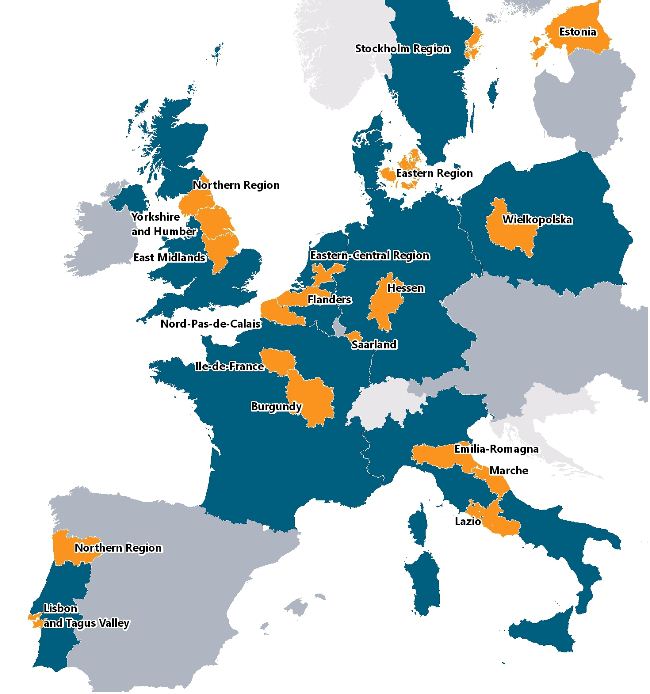
The EPICE project, set up 18 months ago, collects data from 19 European regions (shown in orange on the map) in order to identify the factors that promote the use of evidence-based medicine in the care of very preterm infants.

 “The need to set up a European research project arose from the observation that mortality and morbidity rates for very preterm infants can vary by a factor greater than two between European regions”, states Jennifer Zeitlin, coordinator of the EPICE project and Researcher at Inserm (Unit 953 “Epidemiological Research Unit on Perinatal Health and Women’s and Children’s Health”).

Very preterm infants born before 32 weeks of gestation (the 8th month of pregnancy) represent between 1 and 2% of all births. They have a higher risk of mortality and long term neurological and developmental impairments than full term infants.

The EPICE project thus aims to improve the survival and long-term health of these children by ensuring that medical knowledge is translated into effective care. The project results will provide scientific knowledge on which to base intervention strategies to improve the use of evidence based medicine. It will also build a methodological and conceptual framework for future scientific work on the effectiveness of intervention strategies.

Promoting evidence-based medicine

The development of evidence-based clinical-practice guidelines is one of the most promising and cost-effective tools for improving the quality of care The EPICE project researchers are studying a large range of interventions, in order to identify the factors that promote their dissemination in everyday clinical practice.

“The aim is to learn from the experiences of high performing neonatal units in Europe and to use what we learn to improve the care offered to very preterm infants”

explains Jennifer Zeitlin.

19 medical interventions have been selected based on their clinical importance, the solidity of the evidence base and the feasibility of collecting data. These interventions concern such aspects as:

– The use of antenatal corticosteroids to promote lung maturation prior to a very preterm delivery,

– The transfer of pregnant women before delivery to specialised centres with a neonatal intensive care unit (level III units),

– The restriction of post-natal corticosteroid use,

– Promotion of breastfeeding.

Since March 2011, two epidemiological studies have been running in parallel: the first is a cohort study of more than 8000 very preterm infants (between 180 and 1500 depending on the country); the second focuses on the maternity hospitals and neonatal units that care for these infants.

– The cohort study will provide data about the care of very preterm infants and their health from birth to discharge home. These data will be completed with information about health and development at 2 years of age by means of a questionnaire sent to the family.

– Questionnaires given to the medical teams of 261 maternity hospitals and neonatal units collect data on the characteristics of the units, their organization and protocols for use of selected medical interventions and procedures.

The project’s multidisciplinary team has expertise in obstetrics, neonatal medicine, epidemiology and health services research. By grouping and reinforcing national research initiatives, this project enhances cooperation and excellence in Europe.

Why is “evidence-based medecine” necessary?

Evidence-based medecine improves the quality of health care. It is defined by the solidity of the evidence proving the beneficial effects of a practice, its advantages and any risks involved in the treatment. It helps health professionals to select treatments and practices already proven to be effective.

For further information:

EPICE www.epiceproject.eu

“Effective Perinatal Intensive Care in Europe: translating knowledge into evidence-based practice”

The EPICE project is dedicated to the medical care of very preterm infants born before 32 weeks of gestation, in eleven European countries. The aim of the project is to assess practices in order to improve health care for this population of high risk babies.

The EPICE project was launched in 2011 and has been supported by the European Union (FP7) for five years. It is coordinated by Inserm, just like 27 other European “health” projects. The project involves 12 partners and 6 associate partners, based in 11 European countries.

The 12 partners:

Inserm (coordinator), France

SPE, Belgium

Hvidore Hospital, Denmark

Universitas Tartuensis, Estonia

Philipps Universität Marburg, Germany

Bambino Gesu Ospedale Pediatrico, Italy

Laziosanita Agenzia Di Sanita Pubblica, Italy

Radboud University Nijmegen Medical Centre, the Netherlands

Poznan University of Medical Sciences, Poland

U.Porto, Portugal

University of Leicester, United Kingdom

Karolinska Institutet, Sweden

EPICE in France

The EPICE project in France is part of a national study entitled EPIPAGE 2 (an epidemiological study on very preterm babies). It is a cohort study of very preterm infants, launched in 2011 in the 22 regions of mainland France and the French overseas departments. The study will monitor over 6000 premature children up to the age of 11 to 12. Three regions in France: Ile-de-France, Nord-Pas-de-Calais and Bourgogne participate in EPICE project.

The EPIPAGE 2 project is managed by the Inserm unit 953 (“Epidemiological research into perinatal health and the health of women and infants”), in collaboration with team 2, from UMRS 1027, directed by Dr Catherine Arnaud (Perinatal epidemiology, handicap of child and health of adolescents.

For further information on this study: www.epipage2.inserm.fr (Head of studies: Pierre-Yves Ancel, Inserm U953)

Inserm 

Founded in 1964, the French National Health and Medical Research Institute (Inserm) is a public science and technology institute, jointly supervised by the French Ministry of Higher Education and Research and the Ministry of Health.

The mission of its scientists is to study all diseases, from the most common to the most rare, through their work in biological, medical and public health research.

With a budget of 905 million euros in 2011, Inserm supports more than 300 laboratories across France. In total, the teams include nearly 13,000 researchers, engineers, technicians and administrative staff, etc.

Inserm is a member of the National Alliance for Life and Health Sciences, founded in April 2009 with CNRS, Inserm, the CEA, INRA, INRIA, the IRD, the Pasteur Institute, the Conference of University Presidents – Conférence des Présidents d’Université (CPU) and the Conference of Chairmen of The Regional and University Hospital Centres – Conférence des directeurs généraux de centres hospitaliers régionaux et universitaires. This alliance forms part of the policy to reform the research system by better coordinating the parts played by those involved and by strengthening the position of French research in this field through a concerted plan.

Inserm is Europe’s leading European project instigator, with 28 projects coordinated by the Institute as part of the FP7 scheme.


Benzodiazepine use and dementia in the over 65s

Benzodiazepines are prescribed to treat symptoms of anxiety and sleeping disorders. Collaborative research conducted by researchers from three Inserm units in Bordeaux has recently highlighted the link between benzodiazepine use and the development of dementia in the over 65s. The researchers analysed a sample from the PAQUID[1] cohort, consisting of individuals with a mean age of over 78, who were monitored for 15 years. The results from comparative analysis of this population demonstrate the risk of developing dementia increased by 50% for subjects who consumed benzodiazepines during the follow-up period, compared with those who had never used benzodiazepines. Although this study does not confirm a cause and effect relationship, as is the case for all epidemiological research, the researchers recommend increased vigilance when using these molecules, which remain useful in the treatment of insomnia and anxiety in elderly patients.

The results of this research are available online on the British Medical Journal (BMJ) website as of 28 September 2012

In France, approximately 30% of individuals over 65 are prescribed benzodiazepines to treat the symptoms of anxiety and sleep disorders. The prescription of these molecules is widespread, especially in France and other countries such as Canada, Spain and Australia. Consumption of benzodiazepines is often chronic, with many people taking them over a period (often several years) that significantly exceeds recommended good practice guidelines that suggest limiting the duration to two to four weeks. The effects of benzodiazepines on cognition have been the subject of several studies with much-debated results.

On 28 September 2012, researchers from Inserm unit 657 “Pharmacoepidemiology and the assessment of the impact of health products on the population”, 897 “Inserm Research Centre into epidemiology and biostatistics” and 708 “Neuroepidemiology”, in collaboration with the Université de Bordeaux, published on-line the sophisticated results of analyses from a cohort of elderly individuals to improve knowledge of the relationship between the use of benzodiazepines and the development of dementia.

In an attempt to counteract the bias that may have restricted the scope of previous studies, the researchers completed several comparative analyses using data from the PAQUID cohort, covering 3777 individuals from between 1897 and 1989.

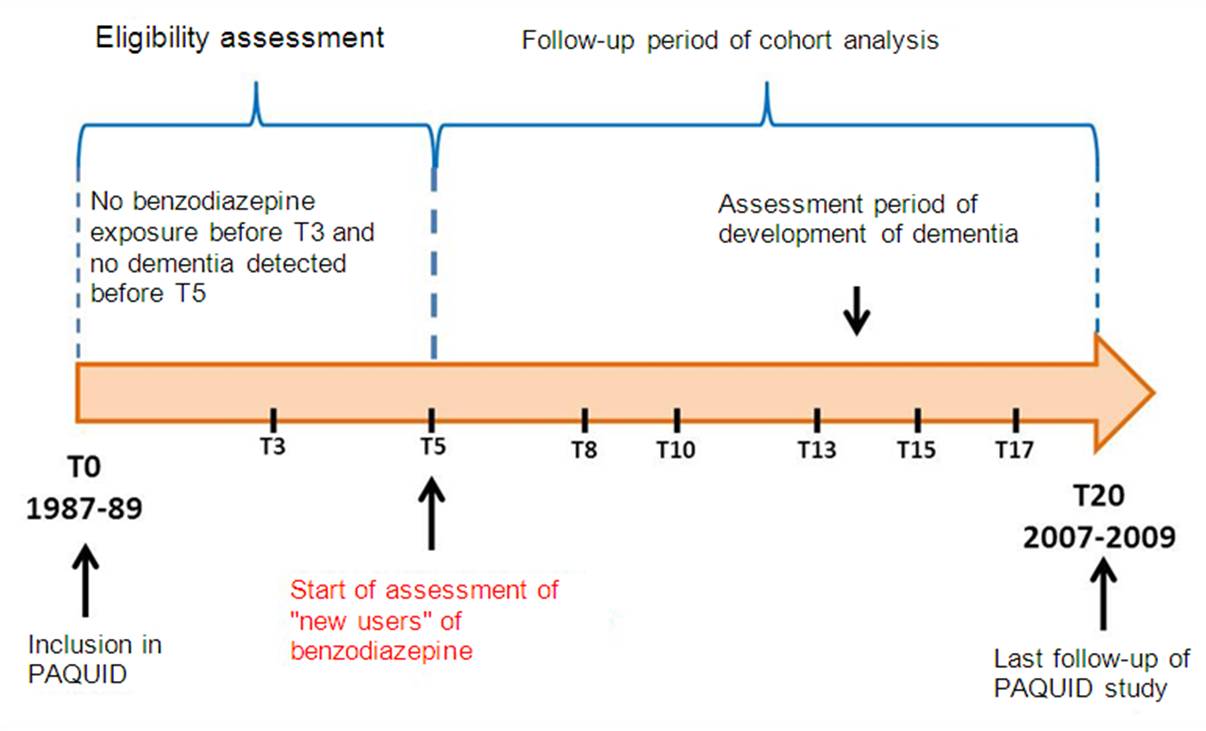
Diagram: Study design for cohort analyses 

© Inserm / J.Hardy

The main study focused on a sample of 1063 individuals from the PAQUID cohort (mean age of 78), who were free from dementia symptoms at the beginning of the follow-up period and who had not consumed any benzodiazepines prior to the fifth year in the follow-up period (see  above diagram). Out of the 1063 individuals, 95 used benzodiazepines from the fifth year onwards, thus defining two populations: those “exposed to benzodiazepines” and those “not exposed to benzodiazepines”. The annual occurrence of dementia observed in the exposed group is 4.8 individuals out of 100, compared with 3.2 individuals out of 100 for the “non-exposed” group.

“The analysis of the cases of dementia in the first population group shows that individuals who began treatment after five years during the follow-up period had an increased risk of developing dementia” states Tobias Kurth, an Inserm research director. “We wanted to check the robustness of this result by completing two additional analyses” he adds.

The second analysis consisted of creating five “small” cohorts using the sample studied previously. The researchers demonstrated that the link between benzodiazepine and dementia is robust, although the date treatment began does vary (benzodiazepine consumed from T5, T8, T10, T13, and T15).

To supplement these results, the researchers completed a case-control study on 1633 individuals with dementia (case) and 1810 without any dementia symptoms (control), all taken from the initial PAQUID population. For each time T studied, each case was compared with one or several individuals from the control group. This last analysis confirmed the trend observed in the main study, regardless of the previous exposure duration (three to five years for recent users to more than 10 years for users who had always taken benzodiazepines during the follow-up period).

“According to our analysis, benzodiazepine exposure for the over-65s is linked to an increased risk of dementia. Although we cannot prove a cause and effect relationship, we observed that during the follow-up period benzodiazepine users had a risk of developing dementia that was 50% higher than those who had never taken benzodiazepine” 

indicates Bernard Bégaud.

Although these molecules are useful to treat insomnia and anxiety, the authors of this study indicate that their consumption may lead to adverse effects, such as falls. Since this new data confirms that from the four previous studies, the researchers recommend “limiting prescriptions to periods of a few weeks and taking care to ensure these molecules are used correctly. We doubt that consumption over a period of a few weeks can have a negative impact on the risk of dementia”, concludes Bernard Bégaud. Furthermore, additional studies would also make it possible to ascertain whether this link is found in persons aged under 65.


[1] PAQUID (Personnes Agées QUID), cohort launched in 1988, of a population of subjects living in their own homes in two départements in South-West France, la Gironde and la Dordogne.

3777 subjects aged 65 and over took part in the study.

Impact of chlordecone exposure on the development of infants

Impact of chlordecone exposure on the development of infants

In an article published in the journal Environmental Research, researchers from Inserm (Inserm Unit 1085 – IRSET Institute for Research in Environmental and Occupational Health, in Rennes and Pointe à Pitre) in liaison with Canadian, Belgian and American researchers have investigated whether exposure to chlordecone (a pesticide used until 1993 on banana plantations in the Antilles) had an impact on the cognitive, visual and motor skills development of very young children. 1042 women were monitored during and after pregnancy and 153 infants were monitored at the age of 7 months. The results of this study show that pre- or post-natal exposure to chlordecone is associated with adverse effects on the cognitive and motor skills development of infants. They are not confirmed for older children, for whom the study is continuing.

Chlordecone is a pesticide used in theAntillesfor more than 20 years to combat banana weevil. However, its widespread use (prohibited in theAntillesfrom 1993) and persistence in the environment have caused permanent soil pollution and contamination of the population. Chlordecone is now considered to be an endocrine disruptor and a neurotoxin, and is classified by the WHO as potentially carcinogenic to humans.

To evaluate the impact on health of exposure to chlordecone, the team led by Sylvaine Cordier in Rennes and Luc Multigner in Pointe à Pitre set up a large mother and child cohort in Guadeloupe, known as TIMOUN[1] (meaning ‘child’ in Creole). The general aim of the study is to evaluate the health impact of chlordecone exposure on pregnancy and on pre- and post-natal development. The cohort consisted of 1042 women, who were monitored with their children from their pregnancy during the period 2005-2007. Researchers were particularly interested in the impact of pre-natal and post-natal exposure to chlordecone on the cognitive, visual and motor skills development of infants at the age of 7 months.

153 infants, both boys and girls, were monitored at the age of 7 months.

Pre-natal exposure to chlordecone was estimated from the levels in the umbilical cord blood. Post-natal exposure was estimated from levels in the mother’s breast milk and from the frequency of consumption by the infants of foodstuffs likely to be contaminated with chlordecone. Visual memory, visual acuity and the motor skills development of the infants was then tested.

Pre-natal exposure to chlordecone was found to be associated significantly with a reduction in the score for visual preference for novelty[2] and a low score on the fine motor skills development scale[3].

Post-natal exposure to chlordecone, estimated from the consumption of contaminated foodstuffs, was found to be associated, at the limit of statistical significance, with a reduction in the speed of acquiring visual memory and a reduction in visual preference for novelty. However, post-natal exposure to chlordecone through breastfeeding does not appear to be associated with any change in psychomotor development.

In conclusion, pre-natal exposure to chlordecone or post-natal exposure via food consumption is associated at the age of 7 months with adverse effects on cognitive and motor skills development in infants.

Although these observations based on small cohorts do not identify serious problems, they can nevertheless be compared with certain problems described in the past in adults exposed to chlordecone at work, characterised by short-term memory problems and the presence of intention tremor.

The researchers wonder whether these associations observed in infants at 7 months of age could be predictors of permanent problems when they are older. According to Sylvaine Cordier and Luc Multigner, “only by monitoring the children in future years will we be able to answer these questions”. The children in the TIMOUN cohort are now being monitored at the age of 7 years.


[1]    The TIMOUN study is a biomedical research project run jointly by Inserm Unit 1085 (formerly U625) and the Departments of Obstetrics and Gynaecology (Dr Philippe Kadhel) and Paediatrics (Dr Henri Bataille) at theUniversityHospital in Pointe à Pitre.

[2]    This test consists of determining a young child’s tendency to look at a new object for longer than it looks at an object that has been seen before and is familiar (preference for novelty).

[3]    At 7 months, the fine motor skills are acquired for grasping objects between the fingers and the palm of the hand (corresponding to the ability to use small muscles to perform precise movements in order to reach for, grip and manipulate small objects). This is assessed for example by seeing whether the child can pick up a cube.

Job strain and coronary heart disease linked

The most recent studies on the connection between ischemic cardiovascular disease and job strain have been affected by many types of bias, such as the methodology used, the definition of stress and the number of cases studied. This has led to different risk values. To find out more, French researchers at Inserm and Université Versailles Saint Quentin joined a large European consortium called IPD-WORK Consortium, which brings together thirteen cohorts in Europe. Following a far-reaching analysis of nearly 200,000 people in Europe, researchers have now confirmed that job strain and cardiovascular accidents are related. Studies show that the risk of heart attack is 23% higher in persons exposed to stress than in those who are not. Stress prevention could reduce this risk.

Result published in The Lancet on Friday September 14, 2012

In recent years, studies have investigated the role played by various psychological factors (including personality, cognition and stress) in cardiovascular diseases. The main focus has been on psychological stress, especially job strain, which combines high demand in the workplace with low control. It emerged from earlier studies that job strain could multiply the risk of coronary events by two. Other research suggests a much slighter risk. The European IPD-WORK Consortium (Individual-Participant-Data Meta-analysis in Working Populations) was set up in 2008 to investigate this topic further.

Study of 13 cohorts totalling nearly 200,000 participants

The consortium brings together thirteen European cohorts, including the French GAZEL cohort, which is made up of 20,000 EDF-GDF employees who have been monitored since 1989. Inserm researchers Marcel Goldberg, Archana Singh Manoux and Marie Zins, from Inserm unit 1018 “Research Centre for Epidemiology and Public Health” and Université Versailles Saint Quentin, have contributed to the most extensive analysis ever carried out on the relation between job strain and the onset of coronary events.

The specific feature of this analysis is that it incorporates the personal data of 193,473 participants in the European cohorts, thus allowing research teams to pinpoint the relation between job strain and risks over a large number of cases.

Seven national cohorts set up between 1985 and 2006 were studied. The countries concerned were Belgium, Denmark, Finland, France, Netherlands, Switzerland and the United Kingdom.

The study population had an average age of 42.3 years, with as many women as men. Questionnaires focusing on work-related psychosocial aspects were used to assess job strain. Among the points considered were job demand, the excessive workloads of some individuals, the conflicting demands made of them and the limited amount of time in which they were expected to complete their tasks.

The proportion of individuals exposed to job strain ranged from 12.5% to 22.3% according to previous studies. It represented 15.3% of this large study population.

At the same time, researchers identified 2,358 coronary events among the 200,000 individuals over an average monitoring period of seven years.

The importance of stress prevention

After analysing the data,

the results obtained from the 13 European cohorts show that the risk of heart attack is 23% higher in persons exposed to stress at work than in those who are not”

explains Marcel Goldberg, a professor at Université de Versailles Saint Quentin and researcher at Inserm.

The results are practically the same after allowing for the participants’ lifestyles, age, gender, socioeconomic status and geographical distribution.

Taking the population as a whole (stressed and unstressed), the researchers consider that job strain can lead to a slight, but not negligible, increase in the risk of heart attack: “In our study, 3.4% of the heart attacks reported among the 200,000 individuals can be explained by job strain. Of the 100,000 to 120,000 heart attacks occurring in France every year, that would represent roughly 3,400 to 4,000 accidents attributable to this risk factor,” Marcel Goldberg explains.

The European research team suggests reducing this risk by stepping up measures to prevent work-related stress. Preventive measures in this area could also positively affect other risk factors, such as tobacco and alcohol consumption, which recent studies have shown to be partly stress-related.

Contraception in France: new context, new practices?

Sorry, this press release is only available in French.

Radiation dose to the pancreas and risk of diabetes mellitus in survivors of childhood cancer

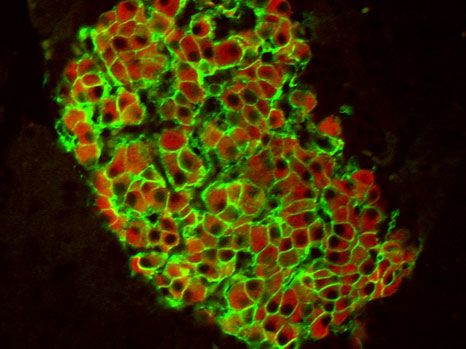
Florent de Vathaire, Research Director at Inserm (Epidemiology and Public Health Research Centre, Unit 1018 – University Paris-Sud, Institut Gustave Roussy, Villejuif) and his team have been studying the relation between doses of ionising radiation received to the pancreas during radiotherapy treatment for childhood cancer and the long-term risk of diabetes. The results of their research are published today in The Lancet Oncology

© F.Pattou/Inserm

This study was based on analysis of a cohort of 2,500 people in France and the UK who were treated for childhood cancer before 1986, who have been well for at least 20 years, and who answered a detailed questionnaire on their state of health.

Enfin, pour les auteurs, « le pancréas doit être considéré comme un organe critique lors de la planification de radiothérapie, en particulier chez les enfants ». Ils soulignent : « Jusqu’à présent, le pancréas est l’un des rares organes à ne pas être considéré à risque de complication des tissus normaux dans les directives nationales pour la radiothérapie du cancer. Nos résultats indiquent que le pancréas est un organe à risque pendant la radiothérapie et doit être couturé lors de la planification du traitement, afin de limiter au maximum son irradiation »

After an average monitoring period of 27 years, 65 of the childhood cancer survivors had developed diabetes.

The incidence of diabetes at the age of 45 was found to be 2.3% (95%CI: 0.8% – 6.4%) in individuals who have not received radiotherapy and 6.6% (4.8% – 9.0%) in those that have had radiotherapy. The researchers have demonstrated that the determining factor in increased risk of developing diabetes as adults is the radiation dose received during radiotherapy for childhood cancer and, specifically, the dose to the tail of the pancreas, where the islets of Langerhans are concentrated. It seems that radiation to other parts of the pancreas does not have a significant effect. The incidence of diabetes at the age of 45 is 16.3% (95%CI: 10.9% – 24.0%) in respondents that received over 10 Gray (Gy)[1] to the tail of the pancreas. In the case of low or moderate doses, the risk of developing diabetes later in life increased by 65% (95%CI: 23% – 170%) for each Gy received to the tail of the pancreas.

This is the first study carried out on the relation between the radiation dose received to the pancreas, regardless of the source, and the risk of developing diabetes.

If confirmed by subsequent studies, the linear nature of the relation found by Florent de Vathaire and his co-researchers implies an increased risk of diabetes even for low and moderate doses and this is bound to have implications for public health.

According to the authors, “the pancreas needs to be regarded as a critical organ when planning radiation therapy, particularly in children.” They point out that: “up to now, the pancreas is one of the few organs which, in national guidelines on radiation therapy for cancer, is not thought to entail any risk of complications in normal tissue.   Our results show that the pancreas is at risk during radiation therapy and needs to be analysed in depth when planning treatment in order to keep its irradiation to the absolute minimum.”


[1] A Gray (Gy) is the international unit of measurement used for the radiation dose absorbed by the body. One Gray is the equivalent of a dose of 1 Joule of energy absorbed per kilogram.

Tracking animal epidemics through road network

Road transport is one of the main vectors of animal epidemics. It is vital to understand how potentially infected animals are transported and exchanged within a country. A French-Italian team, including researchers from the Centre de physique théorique (CNRS/Aix-Marseille Université / Université du Sud Toulon Var) and the Epidémiologie, systèmes d’information, modélisation (Inserm/UPMC)[1] unit, has just presented large-scale numerical simulations to test potential scenarios of a cattle epidemic in Italy. The model is the first to take into account day-to-day variations in the Italian animal transportation network and could lead to new prevention and monitoring strategies. This work has been published on the website of the Journal of the Royal Society Interface.

Transportation of farm animals over long distances is vital for their rearing and for the agri-food industry.  However, it also facilitates the spread of pathogens. This was illustrated by the Foot and Mouth Disease epidemic that hit the UK in 2001 and cost around 8 billion GBP, and the 2006 swine fever epidemic in Germany in 2006, whose indirect costs are estimated at 60 million euros. Furthermore, there is increasing concern that animal diseases could pose a threat to human health, as recently shown by bird flu and the H1N1 virus.

To study how potentially infected animals are exchanged and transported within a country, and how this can affect the spread of an epidemic, the researchers used data from the movement records of 5 million cattle throughout 2007 in Italy. They built a model using tools from the complex network analysis. In mathematics, a network is a series of points (“nodes”) interconnected by communication paths. In the present case, the nodes were farms and the paths represented animal transport routes between them.

This model is novel in that it takes into account changes occurring from one week to another and even from one day to the next in the Italian animal transport network. Traditional models, by comparison, are based on a fixed network, which can lead to inadequate prevention and health screening measures. The researchers built digital simulations to predict how a disease in any Italian farm would propagate by road throughout the country. More importantly, this work could help identify the farms that require priority surveillance once an epidemic breaks out or is suspected. Moreover, in the case of a crisis, the model could be used to trace the path of infection back to the farm of origin. Finally, the research shows that the most important farms to monitor are not only those where animal transport is the busiest, although simpler models that do not account for network dynamics would predict this. Because standard characteristics are insufficient to identify the farms at risk, the researchers are now developing mathematical models to achieve this.

Although this work takes a pure science approach in developing new mathematical models, it could easily serve as a basis for creating a powerful, user-friendly tool for animal health authorities. In addition, the researchers hope to extend their study to the rest of Europe.


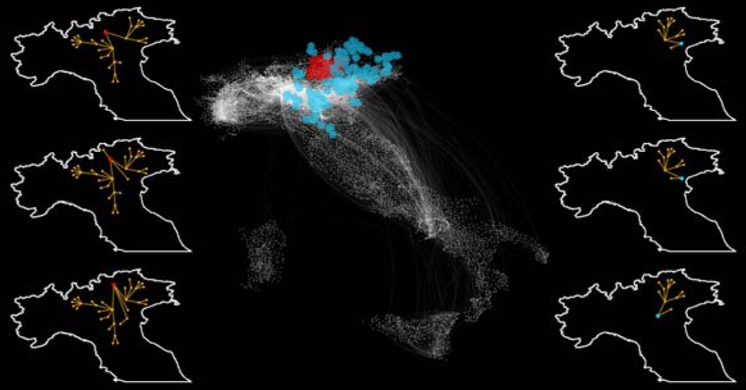
© P.Bajardi, A.Barrat, L.Savini and V.Colizza

Epidemic propagation paths

Each white dot on the main map represents a farm (node), and the lines represent animal transportation. Digital simulations of epidemics can detect groups of farms, defined by the same propagation scenario. Such groups are shown in color on the main map. Farms in a particular group can be located within a single area or be geographically dispersed.

The maps at the sides of the figure show several propagation paths originating in the red group (left) or the blue group (right) from the main map: propagation paths are similar for different origins within the same group.

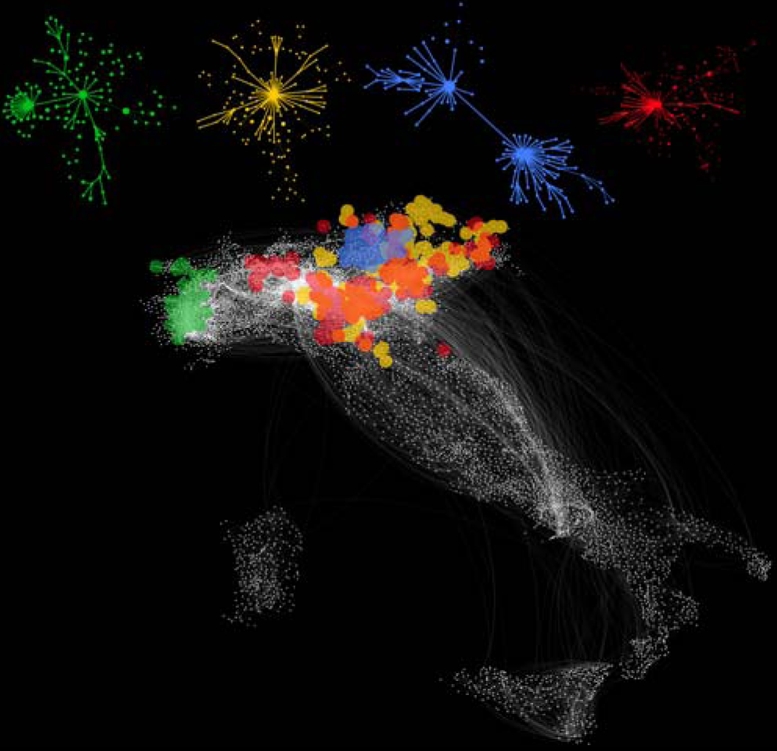
© P.Bajardi, A.Barrat, L.Savini and V.Colizza

Geographic distribution of groups of farms in the Italian cattle transportation network

Each white dot on the main map represents a farm (node) and the lines represent animal transportation routes. Digital simulations of epidemics can detect groups of farms, defined by the same propagation scenario. Each color shows a different group of farms, illustrating that farms in the same group can be located in a single area or be geographically dispersed.

The networks illustrated at the top of the figure correspond to epidemic propagation paths for each of the groups shown on the map: each group has a different propagation route.


[1] In collaboration with the ISI Foundation (Turin, Italy) and the Istituto Zooprofilattico Sperimentale Abruzzo-Molise (Teramo, Italy).

(French) Le travail de nuit, un risque pour les femmes ?

Sorry, this press release is only available in French.

Oestrogen and cardiovascular risk in menopausal women

Women are less prone to cardiovascular disease then men; but this difference between the sexes becomes less marked after the menopause. This observation is behind a great deal of received wisdom, where oestrogen is assumed to have a beneficial effect on the heart and blood vessels. Today, new data seems to question these presuppositions. A study has been conducted by a team of Inserm researchers, directed by Pierre-Yves Scarabin (Inserm Unit 1018 “Centre for Epidemiology and Population Health Research”), on 6,000 women aged over 65; its results demonstrate, for the first time, that women with high levels of oestradiol in their blood are exposed to a greater risk of myocardial infarction or strokes. The results are published in The American Heart Association Journal. 

Fotolia

Oestrogen hormones play a key role in sexual development and reproduction in women. Oestradiol is the most active hormone. Its blood levels are particularly high during the active reproductive period. After the menopause, the ovarian function ceases, leading to a significant drop in oestrogen levels in the blood (the adipose tissue then becomes the main source of oestrogen). However, low concentrations of these hormones do continue to circulate and may still exert biological actions.

Throughout their lives, women are less exposed to the risk of cardiovascular disease than men. For many years, this relative immunity displayed by women was attributed to oestrogen undertaking a ‘protector’ role in terms of atherosclerosis and its complications. However, this hypothesis was not confirmed by recent research into the hormonal treatment of the menopause. Oestrogen administration does not prevent ischaemic arterial disease in menopausal women and could even have a harmful effect on women in the highest age bracket.

Until now, no study has been able to clearly identify the link between circulating endogenous sexual hormones and the cardiovascular risk in menopausal women.

Today, this knowledge gap has been reduced by the results of a French cohort study(1) (Three City Study-3C) performed on approximately 6,000 women aged over 65 from among the general public. Oestradiol levels in the blood were measured upon entry into the cohort and, after monitoring performed over a four year period, 150 new cases of cardiovascular disease had appeared.

For the first time, the results demonstrate that high oestrodial levels in the blood lead to an increased risk of myocardial infarction or strokes, although the cause and effect link is not shown. This relation is not influenced by other known factors for cardiovascular risk, namely diabetes and obesity.

Other results show that oestrogen seems to affect some mechanisms involved arterial obstruction, which causes cardiovascular disease. Although the coagulative effect of oestrogen is clearly defined, significant research is now required to establish its role in the inflammatory process, particularly in obese women, where the accumulation of adipose tissues is associated with high oestrogen levels.

This new data questions the beneficial role of oestrogen on the heart and vessels. “Fresh studies must confirm this harmful effect and establish whether these results can be applied to younger

Footnote:

(1) https://www.three-city-study.com/l-etude-des-trois-cites-3c-historique.php

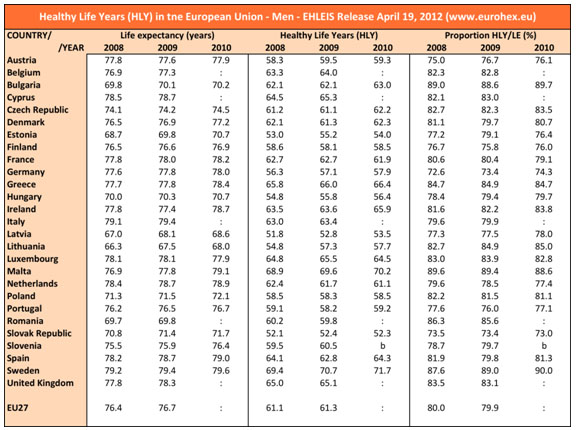
Life expectancy (LE) and Healthy Life Years (HLY) in the European Union, 2008-2010

The HLY (Healthy Life Years) indicates how long people can expect to live without disability. It has been computed annually for each Member State of the European Union since 2005. These figures are released in the framework of the first annual meeting of the European Joint Action on Healthy Life Years (EHLEIS), organized in Paris on April 19, 2012 (ASIEM, 6 rue Albert de Lapparent, from 1:30pm) by the French Ministry of Health. The European Joint Action on Healthy Life Years (EHLEIS) is led by FRANCE, and coordinated by the French National Institute of Health and Medical Research (INSERM).

In 2009 men in the European Union (EU27) could expect 61.3 Healthy Life Years (HLY), representing almost 80% of their life expectancy (LE) at birth of 76.7 years. Women could expect 62 HLY, 75% of their life expectancy (LE) at birth of 82.6 years in 2009.

2010 values for men

In 2010, Sweden has the longest life expectancy at birth (79.6 years) for men in the European Union and Lithuania the shortest (68 years), a gap of almost 12 years. Swedish men also have the most Healthy Life Years (71.7 years) with men in the Slovak Republic having the least (52.3 years), a gap of almost 20 Healthy Life Years. And again Sweden has the highest proportion of years lived without disability (HLY/ LE) in 2010 with 90% of life expectancy without limitations in usual activities. Men in the Slovak Republic on the other hand spend the lowest proportion without disability (73%), a difference of 17 percentage points. This suggests that for men the longer the life expectancy the greater the proportion lived without disability.

In this short period 2008-2010 and despite its low life expectancy and HLY for men, Lithuania experienced the largest gain in HLY, almost three years, whilst the Netherlands saw the largest decline (a loss of 1.3 years). So there is also a tendency for health expectancies in Europe to converge since the gap between Lithuania and the Netherlands fell by more than four HLY in just 3 years. See attached tables for all figures 2008-20010 by Member State.


Better health outcomes for women

In 2010, France and Spain have the longest life expectancy at birth (85.3 years) for women in the European Union and Bulgaria the shortest (77.4 years), a gap of nearly eight years. In 2010 Malta has the highest HLY (71.6 years) for women and the Slovak Republic the lowest (52.1 years), the gap being the same as for men at almost 20 years. However for women in 2010, it is in Bulgaria that the proportion of years lived without disability (HLY/LE) reaches its maximum with 87% of life spent free of activity limitation. This contrasts with the Slovak Republic where women spend the shortest proportion (66%), a difference of 21 points. The results for Bulgaria show that a short life expectancy combined with a low prevalence of activity limitation leads to a large proportion of life expectancy apparently free of disability.

In the short time period 2008-2010, it is again Lithuania that experienced the largest gain in HLY in women (2.4 years), confirming the observation made for men, whilst Finland saw the largest decline (a loss of 1.7 years). As in men, women’s health expectancies show some convergence.

Differences between men and women

Whilst the gap in life expectancy (LE) between men and women is around 6 years (5.9 years) in the European Union in 2009, the gap in HLY is less than one year (0.7 years). Thus the proportion of years lived without disability is 5 percentage points lower for women compared to men (75% vs. 80%).

In 2010, Lithuania has the largest gap in life expectancy (LE) between men and women (10.9 years) and Sweden the smallest (4 years). Lithuania has also the largest gap in HLY (4.6 years) and the Slovak Republic the least (0.2 years). When these two measures are looked at in combination, Portugal has the largest gap in the proportion of years free of disability (HLY/LE) between men and women at almost 9 percentage points and Bulgaria the smallest gap at around about 3 percentage points. But in all European countries women live longer than men and spend a greater proportion of their lives with disabilities. Differences in HLY between men and women are much smaller than differences in life expectancy and in seven cases out of 27 (see figures for 2009), men experience a slightly more HLY than women. This is indeed the case in 2009 for Belgium, Denmark, Italy, the Netherlands, Portugal, Spain and Sweden, a significant number of western European countries.

France, which has the longest female life expectancy in 2009, occupies the 10th place in terms of HLY, illustrating a case where long life does not coincide with a low report of activity limitation. French men occupy respectively the 8th place (out of 27 MS) in terms of life expectancy and 11th place for HLY with respect to 2009 values.

The HLY (Healthy Life Years) is an important European policy indicator and was selected as part of the Lisbon Strategy (2000-2010) to assess the quality of life and functional health status of Europeans. The HLY is also part of the European Community Health Indicators (ECHI) and was set as the overarching target of the first partnership of Innovation Union (research and development component of the new strategy Europe 2020): the Active and Healthy Ageing Partnership, the target being an increase in HLY in the European Union of two years by 2020. HLYs are obtained by applying the prevalence of disability observed in the general population to a standard life table to distribute the years lived into those lived with disability and those lived free of disability. For HLY, the prevalence of disability comes from the annual EU-SILC survey whose implementation is coordinated by EUROSTAT. The prevalence of disability is measured by a general question on activity limitations known as the GALI question: To what extent have you been limited for at least 6 months, due to health problem, in activities people usually do? EUROSTAT calculates and disseminates the HLY as it does for all European policy indicators. The objective is to provide in year t (i.e., 2012) the HLY indicators of year t-2 (i.e., 2010). The Joint Action EHLEIS performs calculations in parallel and compares its results with those of EUROSTAT. The European Joint Action, supported and supervised by the European Commission, disseminates widely the results for all ages (not just birth and age 65 years) through country reports, dedicated websites, Wikipedia, and other media, encourages correct interpretation through training material and an interpretation guide, promotes their use in policies and, lastly and most importantly, produces in-depth analyses of trends and gaps in HLYs and their determinants.

fermer