Menu

A paralysed man walks again after a spinal cord operation

A paralysed man has been able to walk again after being treated by Polish surgeons at Wroclaw in south-west Poland. According to AFP, two years ago Darek Fidyka underwent two operations in Poland, performed by a team of doctors led by Dr Pawel Tabakow from Wrocław Medical University. This operation was the result of the researchers’ work, published in the journal Cell transplantation in 2013.

A BBC Panorama documentary reported on this medical first.

For a statement on this news item:

Pierre François Pradat, specialist spinal cord researcher in an Inserm unit and clinician at the Pitié-Salpétrière (AP-HP) hospital
Inserm Unit 1146 Biomedical Imaging Laboratory
rf.phpa.lsp@tadarp.siocnarf-erreip

Telephone number by request from the press service: rf.mresni@esserp

Bubble Babies: a new gene therapy

9 children with X-linked severe combined immunodeficiency have received a new form of gene therapy. Alain Fischer, Marina Cavazzana-Calvo and Salima Hacein-Bey-Abina, together with their teams at Inserm Unit 1163 and AP-HP, have just published these results in the New England Journal of Medicine.

In 1999, these researchers pioneered the treatment by gene therapy of children with a disease that left them without any immune defences. However, some of these children developed leukaemia after therapy. Following the development of safer therapeutic vectors, it was possible to start a new clinical trial in 2010.

4 years later, the results obtained and described in this scientific article are encouraging. 7 children treated using this method are now in good health.

For more information, see the press release “Les “bébés-bulle” ont 11 ans: L’efficacité de la thérapie génique est démontrée (“Bubble babies” are 11 years old: the efficacy of gene therapy is demonstrated),” published in July 2010

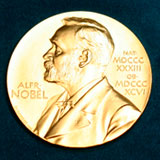
Nobel Prize in Chemistry 2014

The 2014 Nobel Prize in Chemistry was awarded to two Americans, Eric Betzig and William Moerner, and a German, Stefan Hell, on Wednesday 8 October “for the development of super-resolved fluorescence microscopy,” nanoscopy, as the jury said in its press release.

The laureates developed two methods enabling microscopy on a nanometric scale, and hence the study of living cells in the finest detail.

Stefan Hell, 51 years old, discovered “stimulated emission depletion (STED)” microscopy. Eric Betzig, 54 years old, and William Moerner, 61 years old, each working separately, created the method known as “single-molecule microscopy.”

Work useful in understanding, in particular, diseases such as Parkinson’s, Alzheimer’s and Huntington’s diseases.

Further information in the Nobel Prize official press release
See also the diagrams explaining STED microscopy, and single-molecule microscopy

Nobel Prize in medicine 2014

The Nobel Prize of physiology or medicine 2014 is awarded to John O’Keefe,  May-Britt and Edvard I. Moser for their work about for their discoveries of cells that constitute a positioning system in the brain.

May-Britt’s work, conducted with Edvard Moser as a long-term collaborator, includes the discovery of grid cells in the entorhinal cortex, as well as several additional space-representing cell types in the same circuit.

Read the press release

See the computer graphic

Ebola virus : research update

The Ebola epidemic is continuing to spread across West Africa. In March 2014, Guinea notified its first cases of Ebola virus illnesses to the World Health Organisation (WHO). Since then it has spread across borders, to Liberia, Sierra Leone and Nigeria.

According to the latest WHO report, dated 18 September, 5 762 cases of Ebola have been identified and 2 793 people have died.


What is Ebola virus?

Ebola virus is a highly contagious, fatal virus. After 2 to 21 days incubation, the disease appears as non-specific symptoms (fever, tiredness, muscle and joint pain) before developing into a phase characterised by gastro-intestinal signs such as bloody diarrhoea, vomiting, respiratory and sometimes neurological symptoms. In 40% to 80% of cases, the development is fatal.

Researchers at Inserm (the P4 Laboratory in Lyon) and the Pasteur Institute revealed, in an article published last April in The New England Journal of Medicine, using samples originating from Guinea, that the virus currently spreading in West Africa is actually a variant of the Ebola virus identified in the Republic of Congo and the Gabon. In fact, the analysis showed only 97% similarity with strains sampled in these two countries. The remaining 3% therefore demonstrate that it is a new ‘form’ of the Ebola virus in Guinea.

How is Ebola virus research organised at Inserm?

  • The International Centre for Infectiology Research (CIRI)

The CIRI (a mixed unit created on 1st January 2013 by Inserm, CNRS, ENS Lyon and University Claude Bernard Lyon 1) brings twenty scientific teams together with a common objective: to better understand and control infectious diseases, such as the Ebola virus. It has become a very important player in fundamental, diagnostic and therapeutic research in a number of fields (including virology, bacteriology and immunology).

CIRI is the only research centre in France involved in the study of this type of viral haemorrhagic fever. Four of its teams are currently researching the latter at the P4 Inserm-Jean Mérieux laboratory. These teams are “Unit of Biology for Emerging Viral Infections”, “Molecular Basis of Viral Pathology”, “Enveloped Viruses, Vectors and Innate Responses” and “Cell Biology of Viral Infections”.

UMR 1111

The International Centre for Infectiology Research (Inserm Unity 1111) ©Inserm/Guénet, François

Inserm Research Director Vincent Lotteau and his team (“Cell Biology of Viral Infections”) were recently entrusted with such a research project concerning the Ebola virus. Their work generally involves the identification of cellular functions that are used by viruses to replicate.

In particular, Vincent Lotteau and his team have created a unique systems biology platform at the Lyonbiopôle Centre of Infectiology. With its thorough knowledge on how viruses perturb cell host functions, the platform can investigate protein interaction networks and identify new therapeutic targets and molecules. This year, Vincent Lotteau and his colleagues created the start-up Enyo Pharma to conduct initial proofs of concept for this approach on the flu virus and hepatitis B.

Through the initiative of the Institute of Microbiology and Infectious Diseases (IMMI), Vincent Lotteau’s team and Enyo Pharma are currently working on the identification of drugs that already have marketing authorisation and could be repositioned for therapeutic indications against Ebola. Once these molecules are identified, they will be tested in vivo and in vitro at the P4 Inserm-Jean Mérieux laboratory.

    •  The Jean Mérieux-Inserm P4 laboratory

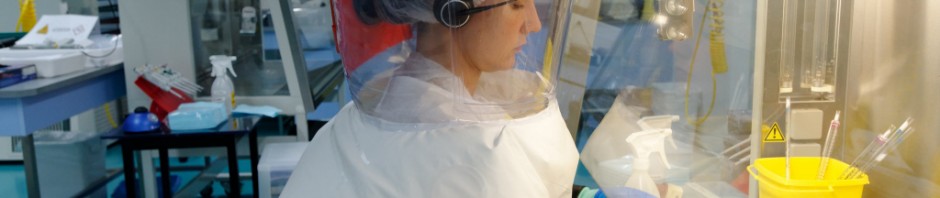
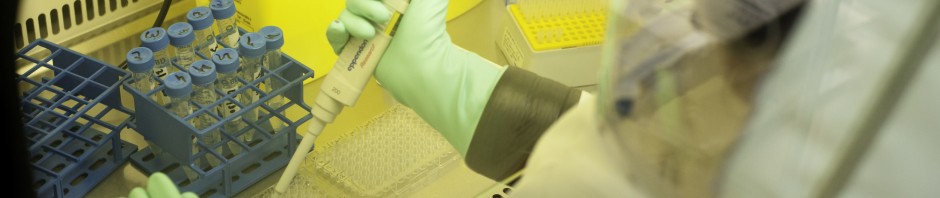
The Jean Mérieux-Inserm P4 laboratory is a high-level containment laboratory dedicated to the study of Class 4 pathogens. The biological safety level applied is 4, the highest possible level. The researchers working there wear a full body, air-supplied, positive pressure suit to protect them from all contamination. The laboratory is itself maintained under negative pressure in order to protect the environment. Moreover, all wastes produced are completely inactivated, and the exhaust air is purified by a double absolute filtration system. This laboratory today remains the structure offering the largest experimental capacity in Europe for this containment level.


Laboratoire P4 Jean Mérieux/Inserm.

The Jean Mérieux-Inserm P4 laboratory ©Inserm/Guénet, François

Highly-pathogenic agents: class 4 (or risk group 4) pathogens are highly pathogenic microorganisms characterised by a very high mortality rate, a lack of prophylactic or therapeutic measures to provide protection, and ready transmissibility. All class 4 pathogens currently known are viruses, and include viruses that cause haemorrhagic fevers or encephalitis. They include the Ebola, Marburg, Lassa, Junin, Machupo, Guanarito, Sabia, Crimean-Congo, Nipah and Hendra viruses.

The Jean-Mérieux P4 laboratory is the French partner of the European ‘EMP4’ project, coordinated by German researchers. As part of this project, a mobile P4 laboratory was deployed in Guinea to provide field assistance diagnosing Ebola cases. Six specialists in dangerous infectious diseases from the European Mobile Laboratory (EMLab) project arrived in Guéckédou last April and were relieved by seven new experts at the end of July. The mobile laboratory unit set up on site provides easily-transported equipment to enable the virus to be handled safely enclosed in boxes. This considerably improves the quantity of samples available for analysis and makes it easier to confirm cases of Ebola, so contributing to reducing the number of undiagnosed cases and preventing the spread of the disease.


In France, the French National Alliance for Life Sciences and Health (Aviesan), of which Inserm is a founder member, is mobilising its experts, at regular meetings, in order to define needs and consider directions for research to deal with future epidemics.

Are treatments for Ebola available?

Research on Ebola virus should put a priority on improving therapeutic treatments for the sick, whether by using treatments to limit replication of the virus or to boost protection of the host. This is a major need because, apart from symptomatic treatment (to relieve the pain but not treat its cause), there is currently no effective treatment and no molecule has been tested in an epidemic situation. The challenge is therefore to develop antivirals against Ebola.

There are several experimental vaccines and treatments against the virus that have given promising laboratory results. Several candidate vaccines have actually shown some efficacy when administered very soon after infection, but none when given more than two days after infection. A study published recently by German research teams used a mouse model to show that administering a derivative of pyrazinecarboxamide (T-705) orally 6 days after the beginning of the infection had a 100% effect on survival of the animals.

In France, research has particularly been conducted on other antiviral molecules as well as on the use of polyclonal antibodies.
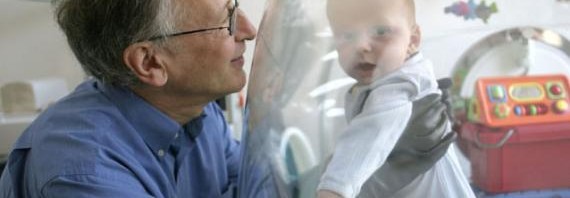
Alim Louis Benabid receives the 2014 Lasker Award

The 2014 Lasker Award has just been won by Alim Louis Benabid, Director of Inserm Unit 318 “Preclinical Neurosciences” from 1988 to 2006, and winner of the 2008 Inserm Prix d’Honneur for his work on deep brain stimulation for the treatment of Parkinson’s disease.

Since 1945, the Lasker Award has distinguished the most brilliant researchers who have contributed to major advances in the diagnosis, treatment and prevention of human disease.

For further information, read our press release : Alim Louis Benabid receives the 2014 Lasker Award

Prix d'Honneur Inserm 2008

© Inserm /Latron, Patrice

Use of unapproved treatments against Ebola : what are the ethical issues?

The approval of the World Health Organisation on 12 August to use experimental treatment against the Ebola virus in West Africa, such as the ZMapp serum, underlines two types of ethical issues:


 1) Access to experimental treatment, on a compassionate basis, given the severe spontaneous development of the disease (60% mortality). Who is given priority when administering treatment available in small quantities and under what conditions in the absence of human data? In addition, the ZMapp serum is developed by private pharmaceutical companies, which raises the issue of the partial or total waiver of intellectual property.

For WHO, several ethical principles should guide and direct its prescription including “the transparency of all aspects of care, informed consent, freedom of choice, confidentiality, respect for people, preservation of dignity and community involvement”. In this way, unknown information regarding therapeutic risks and effects should be explained as clearly as possible to the patient before a decision is made on their part.


2) The effectiveness and safety of treatment only tested in a laboratory on non-human primates
, and then directly administered to two sick patients (with no possible comparison with healthy patients) given the health emergency at hand. The effectiveness of the ZMapp serum on both American patients can only be hypothesised. For example, they may be part of the 40% of patients who survive because of their health and nutrition prior to contamination.

WHO is currently looking into conditions to establish a research protocol in West Africa with all of the required rigour and methodology. Experts are mulling over available means in order to “scientifically evaluate the use of these interventions during the study to ensure the timely provision of accurate information on their safety and effectiveness”. And if this treatment is effective, how can access to care and follow-up for contaminated patients be assured in the long term?

These ethical issues recall those raised by AIDS and by diseases associated with poverty in general (Malaria, tuberculosis and HIV-AIDS), which Inserm are combating alongside the French National Agency for Research on AIDS and Viral Hepatitis (ANRS) (French site), as well as the French National Alliance for Life Sciences and Health (AVIESAN).

Further information: experts from the Inserm Ethics Committee are available to answer your questions (see “Researcher Contacts” Section).

The Ebola epidemic is spreading in West Africa

The Ebola epidemic is continuing to spread in West Africa. In March 2014, Guinea was reporting its first cases of the Ebola virus disease to the World Health Organization (WHO). The disease has since spread beyond Guinea’s borders to Liberia, Sierra Leone and Nigeria. Within the past several days, a first case has been reported in Lagos and subsequently another in Freetown. According to the WHO’s latest report of 20 July, 1,093 cases of Ebola have been recorded and 660 people have died of the virus. 28 deaths were reported between 18 and 20 July.


The Ebola virus is a highly contagious, lethal virus for which no treatment as yet exists. The symptoms are not very specific, involving fever, severe diarrhoea and vomiting. 30 to 90% of people infected die from the effects of their infection.


Researchers at Inserm (at the P4 Laboratory in Lyon) and the Pasteur Institute have revealed in an article that appeared last April in The New England Journal of Medicine, on the basis of samples originating from Guinea, that the virus currently spreading in West Africa is in fact a variant of the Ebola virus identified in the Republic of Congo and Gabon.

Research on the Ebola virus at Inserm

The Jean Mérieux BSL-4 Laboratory is a high-level containment laboratory dedicated to the study of class 4 pathogens. The biological safety level applied is 4, the highest possible level. The researchers working there wear a full body, air-supplied, positive pressure suit to protect them from all contamination. The laboratory is itself maintained under negative pressure in order to protect the environment. Moreover, all wastes produced are completely inactivated, and the exhaust air is purified by a double absolute filtration system. This laboratory today remains the structure offering the largest experimental capacity in Europe for this containment level.

Highly pathogenic agents:
Class 4 pathogens (or risk group 4) are highly pathogenic microorganisms characterised by a very high mortality rate, a lack of prophylactic or therapeutic measures to provide protection, and ready transmissibility. All class 4 pathogens currently known are viruses, and include viruses that cause haemorrhagic fevers or encephalitis. They include the Ebola, Marburg, Lassa, Junin, Machupo, Guanarito, Sabia, Crimean-Congo, Nipah and  Hendra viruses.


For further information :

New outbreak of ebola fever in Africa

According to WHO, between 29 May and 1 June 2014, 37 new cases of Ebola fever and 21 deaths were recorded in Guinea, and 13 new cases (no deaths) were recorded in Liberia.

The Jean Mérieux BSL-4 Laboratory is a high-level containment laboratory dedicated to the study of class 4 pathogens. The biological safety level applied is 4, the highest possible level. The researchers working there wear a full body, air-supplied, positive pressure suit to protect them from all contamination. The laboratory is itself maintained under negative pressure in order to protect the environment. Moreover, all wastes produced are completely inactivated, and the exhaust air is purified by a double absolute filtration system. This laboratory today remains the structure offering the largest experimental capacity in Europe for this containment level.

Highly pathogenic agents:
Class 4 pathogens (or risk group 4) are highly pathogenic microorganisms characterised by a very high mortality rate, a lack of prophylactic or therapeutic measures to provide protection, and ready transmissibility. All class 4 pathogens currently known are viruses, and include viruses that cause haemorrhagic fevers or encephalitis. They include the Ebola, Marburg, Lassa, Junin, Machupo, Guanarito, Sabia, Crimean-Congo, Nipah and  Hendra viruses.

Further information:

On Ebola Filovirus:
Delphine Pannetier
Inserm Research Engineer
+33 (0)4 72 76 82 91


Bone marrow cancer remission thanks to measles virus

Photo ©Inserm/Fournier, Jean-Guy

Article published in the “Mayo Clinic Proceedings” journal describing complete remission of a 49-year old patient (after more than 6 months) suffering from bone marrow cancer following an injection of a strong dosage of the modified measles virus. The Mayo Clinic researchers have been using this to vaccinate 10 million people.

Reach the scientific article

Read the press release

Inserm researchers are able to comment this study at the Inserm unit 892 “Centre régional de recherche en cancérologie -nantes-angers”:

Marc Grégoire, Inserm research director
Head of team “Innovative therapeutic strategies inducing immune responses: application to the treatments of mesothelioma”
rf.mresni@eriogerg.cram
Cell phone available by request at the Inserm press office. rf.mresni@esserp

Jean-François Fonteneau
Inserm researcher
02 28 08 02 39
rf.mresni@uaenetnof.siocnarf-naej 

Mathieu Mateo
Post-PhD student at the Mayo Clinic
ude.oyam@ueihtaM.oetaM

Breakthrough: new letters in the alphabet of life

In an article published yesterday in the journal Nature, an American team led by Floyd Romesberg (Scripps Research Institute, La Jolla, California) explains how it succeeded in integrating two new DNA bases into the genetic code of a bacterium. Their breakthrough is that the bacterium retains these genetic modifications during replication.

To comment this findings,  contact at Inserm : Thierry Grange, directeur de l’Institut thématique Génétique, génomique et bioinformatique de l’Inserm :
rf.toredid-sirap-vinu@egnarg.yrreiht
01 57 27 81 29

fermer