Menu

Ebola virus : Inserm’s P4 laboratory mobilised

In the last 24 hours, the World Health Organisation (WHO), in a communiqué published by the UN, has reported that it has recorded 5 new cases of Ebola fever in Guinea. Since January the total number of suspected and confirmed cases of Ebola fever in the present outbreak in Guinea is 127, with 83 deaths, according to WHO, which emphasises that 35 cases were confirmed by laboratory testing. The initial samples were analysed in Lyon in the Jean Mérieux-Inserm BSL-4 Laboratory directed by Hervé Raoul, Inserm Research Director, by the French National Reference Centre for Viral Haemorrhagic Fevers (attached to the Biology of Viral Emerging Infections Unit at the Institut Pasteur, directed by Sylvain Baize). A positive diagnosis was made.

A mobile P4 laboratory has been deployed in Guinea to provide assistance with diagnosis in the field. This mobile laboratory was developed as part of a European project, “EMP4,” coordinated by German researchers, for which the Jean Mérieux-Inserm BSL-4 Laboratory is the French partner.


The Jean Mérieux BSL-4 Laboratory is a high-level containment laboratory dedicated to the study of Class 4 pathogens. The biological safety level applied is 4, the highest possible level. The researchers working there wear a full body, air-supplied, positive pressure suit to protect them from all contamination. The laboratory is itself maintained under negative pressure in order to protect the environment. Moreover, all wastes produced are completely inactivated, and the exhaust air is purified by a double absolute filtration system. This laboratory is currently the structure of this containment level that offers the largest experimental capacity in Europe.

Highly pathogenic agents:
Class 4 pathogens (or risk group 4) are highly pathogenic microorganisms characterised by a very high mortality rate, a lack of prophylactic or therapeutic measures to provide protection, and ready transmissibility. All class 4 pathogens currently known are viruses, and include viruses that cause haemorrhagic fevers or encephalitis. They include the Ebola, Marburg, Lassa, Junin, Machupo, Guanarito, Sabia, Crimée-Congo, Nipah and Hendra viruses.

For further information

On the Ebola Filovirus :
Delphine Pannetier
Inserm research engineer
04 72 76 82 91
rf.mresni@reitennap.enihpled


Putting the clocks forward : what are the impacts on health?

During this last weekend in March, we will be switching to summer time. On the night between Saturday and Sunday, we must put our watches and clocks forward by one hour. What do we currently know about the impact of changing the time on our health? Does it upset our biological clock?

Find out more by contacting Claude Gronfier, Research Fellow at Inserm Unit 846, “Stem-cell and Brain Research Institute,” “Neurobiology of Circadian Rhythms and Sleep” team.

Further Information:
• Press release How does light affect our brain’s performance? (March 2014)
Our latest news on sleep

Semaine du cerveau (Brain awareness week) 10-16 march 2014

The 15th edition of Brain Awareness Week will take place in France and in 62 countries around the world from 10 to 16 March 2014. Throughout this week, the general public will be able to meet researchers from Inserm to gain better knowledge of the brain and become better informed about recent research in this area.

The inaugural conference, “Evolution de l’intelligence et taille du cerveau: quelle relation? (Evolution of intelligence and brain size: what is the relationship?),” will be held in Paris:
on 10 March 2014 at 6:30 pm in the auditorium of the Brain and Spinal Cord Institute (ICM), La Pitié Salpêtrière Hospital, 47 Bd de l’Hôpital, Paris 13th Arrondissement (registration recommended, gro.etutitsni-mci@uaevrecudeniames)
In the company of: Philippe Vernier, Director of the Alfred Fessard Institute of Neurobiology, CNRS, and former President of the French Neuroscience Society, Roland Salesse (Coordinator of Brain Awareness Week in France, INRA) and Alexis Brice (Director of ICM).

Inserm schedule of events by region:

Lille
Lyon
Nantes
PACA
Paris
Strasbourg
Toulouse
Tours

See the complete programme on the French Neuroscience Society website

In over 30 cities and towns in France, researchers from major research organisations, neuroscience institutes, and university hospitals offer a varied and fun programme of exhibitions, films, public talks, shows, activities for children, gatherings in schools, and debates. Access to all events is free, and the programme is deliberately aimed at the general public.

AfficheNationale_SDC2014

This event is coordinated by the French Neuroscience Society in partnership with the French Federation for Brain Research (FRC), under the aegis of the Dana Alliance, Dana Foundation. The major research organisations Inserm, INRA (French National Institute for Agricultural Research) and CNRS (French National Centre for Scientific Research) are partners in the event.

World cancer day

On World Cancer Day, visit the press room to see the latest press releases and packs on cancer.


For further information about cancer (the latest figures and major landmarks), take a look at the WHO site.

30 years of aids research

crédit photo : ©Inserm

AIDS stands for acquired immunodeficiency syndrome.

This sexually transmitted infection is caused by a virus called HIV which attacks the immune system, making the body less resistant to normally benign diseases.

Every year there are almost 2 million new cases.


WHO reports that more and more adolescents are affected by AIDS. “Over two million adolescents aged 10 to 19 live with HIV, and many of them do not receive the necessary treatment and support to stay healthy and prevent transmission”, WHO stated on Monday.

This worrying figure has been increasing steadily over the last ten years.

30 years after discovering the virus that causes AIDS, Françoise Barré-Sinoussi, (Nobel Prize 2008), Anna-Laura Ross and Jean-François Delfraissy (Director of the ANRS – French National Agency for AIDS Research) recently published an article in Nature Review Microbiology on the major milestones of AIDS research.

They emphasise how translational research has affected the treatment and prevention of HIV. They also mention the areas of current research and future scientific challenges, particularly in the search for HIV treatment.


Past, present and future: 30 years of HIV research

Françoise Barré-Sinoussi, Anna Laura Ross & Jean-François Delfraissy

Nature Reviews Microbiology, 28 October 2013

12 november: world pneunomia day

Inserm

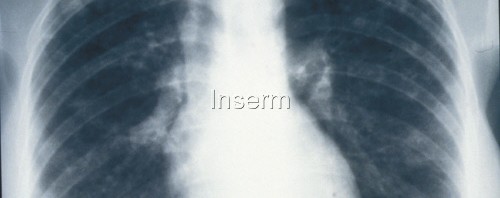
Each year, pneumonia kills more than AIDS, malaria and measles combined (according to the UN, 1.2 million children under 5 die of pneumonia each year). Rapid noting of symptoms and quick treatment would avoid many infant deaths. For this World Day, the UN calls upon people to unite against pneumonia, the “leading child killer”.

Pneumonia, lung disease and lung abscesses are the main currently known infectious lung diseases that affect both the lungs and respiratory tracts.

In the vast majority of cases, these infections are due to viruses, microbes or bacteria that infiltrate into the lungs and cause respiratory problems, if resistance is low.
The patient will have different medical conditions depending on the part of the lung affected. Usual symptoms of pneumonia are a cough, breathlessness, respiratory failure, etc.

Lung infections sometimes have very serious outcomes. They lead to great difficulty breathing, and can also damage the respiratory system. Old people are particularly vulnerable.

For more information, please contact Camille Locht, Director of the Inserm unit “Lille Infection and Immunity Centre”.

Take care of your teeth to protect your heart

crédit photo : ©Fotolia

We already know the importance of a healthy mouth and teeth to prevent tooth decay and avoid gum inflammation.

According to a recent study by Columbia University, New York, there is a link between gum disease and the state of the arteries.

The American researchers showed that the damage done by bacteria is not mainly in the mouth, but spreads throughout the body, deteriorating artery walls. The study, carried out over 3 years on 420 people with an average age of 68, showed a close link between the quantity of bacteria in dental plaque and the course of atherosclerosis (hardening of the arteries), which causes many cardiovascular diseases.

For further information on this study, please contact Olivier Meilhac, research director Inserm (Bichat University Hospital).

Pollution threatens the health of 2 million people

crédit photo : ©Fotolia

This Tuesday, environmentalists denounced the various forms of pollution caused by human activity which today threatens the health of millions of people. A list of the ten most polluted places in the world was published.

According to the AFP and experts on the question, based on studies carried out in 49 countries, the 10 sites are in 8 countries, 3 of them in Africa (Ghana, Nigeria, Kalimatan Province in Indonesia, Bangladesh, etc.)

For further information, please contact Antoine Magnan, head of the team Immunopathology and Respiratory Diseases and Clinical Director of Pneumology in the Nantes University Hospital and Michel Aubier, co-director of the Inserm unit Physiopathology and Epidemiology of Respiratory Failure.

Nobel Prize in medicine 2013

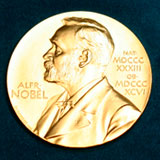
The Nobel Prize of physiology or medicine 2013 is awarded to James Rothman, Randy Shekman et Thomas Südhof for their work about vesicular transport in cells.
Comments available on our twitter account : @Insermlive

Read the press release.

See the image.

IgNobels 2013 awards

10 September: World Suicide Prevention Day

The International Association for the Prevention of Suicide is working with WHO to hold this World Prevention Day to raise awareness about the number of lives lost due to suicide.
Decreasing the number of suicides is a major public health issue which is part of a wider aim to reduce early mortality (mortality before the age of 65).

Each year, 11,000 people take their own life.

Despite a general decrease in the number of deaths by suicide between 1990 and 2010, the level remains high, and is the second cause of death after road accidents in the 15-24 age group (16.3% of all deaths).
Faced with this public health issue, the French Health Minister, Marisol Touraine, has declared her intention to create a Suicide Watch. Its main objective will be to “improve the coordination of existing information, improve identification of the problem and alert people better.” The Suicide Watch will be inaugurated on the World Prevention Day.

For further information, contact Grégoire REY, Director of the CépiDc-Inserm (Centre d’épidémiologie sur les causes de décès – Epidemiology Centre on the Causes of Death).

fermer