Menu

Friday 5 June: World Environment Day

On 15 June 1972, the United Nations celebrated World Environment Day for the first time. Since that day, every year on the same date, the major issues in environmental conservation are given prominence in over 100 countries, a day devoted to the protection of the planet and the future of mankind, which is inseparable from the fate of the ecosystem.

At Inserm, active research is being devoted to understanding the impact of the environment on health, especially changes due to environmental contaminants such as pesticides, atmospheric pollution, radiation, etc.

In 2011 and 2013, the researchers at Inserm endeavoured to understand the influence of  pollution on general health and of environmental factors on reproduction, respectively, in two joint expert reports[1].

Today, many studies are devoted to this theme. The European project HELIX, which brings together experts from every background, is especially focused on exposome-related risk factors for children, i.e., the sum of environmental exposures from the antenatal period on. Pregnancy and the early years of life are well recognised as periods of high sensitivity to these factors, with lifelong consequences.As part of HELIX, Inserm Research Director Rémy Slama directs a working group that is attempting to determine the relationship between the exposome and child health. By establishing a database that includes all environmental pollutants, behaviours, diet and health outcomes, the researchers hope to establish the risk factors that lead to the development of diseases in children.


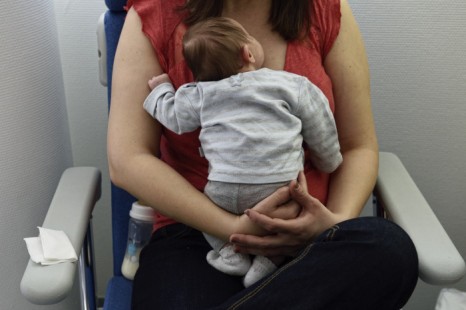
Cohorte couple-enfants SEPAGES

©Inserm/Delapierre, Patrick. All the photos of the SEPAGES cohort cohorte are available on the Inserm image bank Serimedis


Latest Inserm actualities on this theme:

Air quality in nursing homes affecting lung health of residents – March 2015
Exposure of pregnant women to certain phenols may disrupt the growth of boys during foetal development and the first years of life – September 2014

[1] See the joint expert reports “Reproduction et Environnement” (Reproduction and Environment) and “Pesticides: Effets sur la Santé” (Pesticides: Effects on Health) on the Inserm.fr website.

Saturday 23 May: European Obesity Day

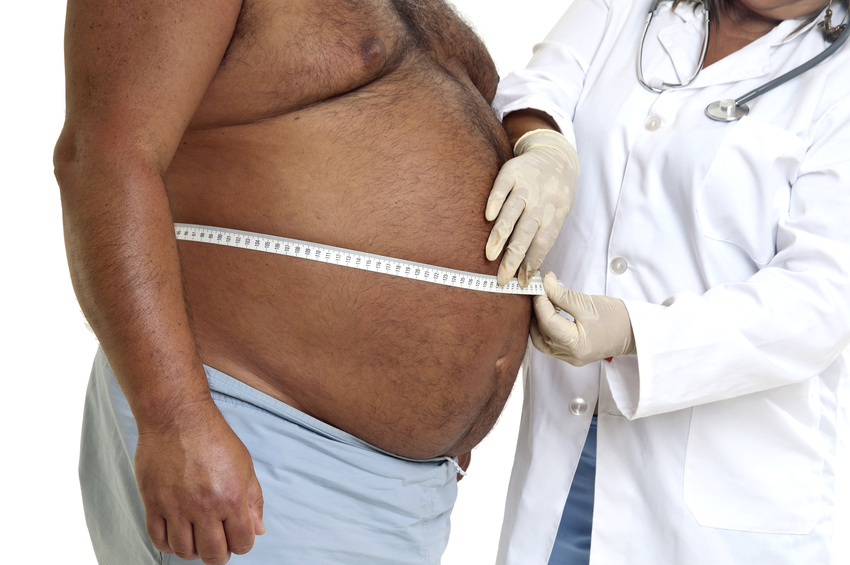
European Obesity Day, which will be held on Saturday 23 May, recalls the seriousness of this disease, which is affecting more and more people in France and in the world. 

On a world scale, the number of obesity cases has doubled since 1980. In 2014, over 1.9 billion adults were overweight. Of this total, over 600 million were obese.

Overweight and obesity are defined as an abnormal or excessive fat accumulation. Body mass index, BMI, corresponding to the weight divided by the square of the height, expressed in kg/m2, is a quantity that makes it possible to estimate a person’s corpulence. Thus a BMI of 30 or greater is generally associated with an obese status. A person with a BMI of 25 or more is considered overweight.

According to the World Health Organisation, by 2030 most European countries are at risk of experiencing an increase, spectacular in some cases, in these diseases.[1]

As well as having an impact on peoples’ quality of life of from a social, occupational and familial point of view, obesity is a factor in cardiovascular disease, diabetes, hypertension and cancer. This serious disease, recognised as a public health priority, is the subject of much study, particularly by Inserm Units 1166, “Research Unit on Cardiovascular, Metabolic and Nutritional Diseases” (ICAN) and 1153, “Nutritional Epidemiology Research Team” (EREN).

During this day, events and actions (sports activities, cookery workshops, service open days, etc.) will be on offer from the players involved in this theme, in public places and in healthcare facilities (more information on the official website for European Obesity Day of the French National Collective of Associations of the Obese (CNAO)).

[1] This warning was issued by WHO during the European Congress on Obesity held in Prague in early May
.

Monday 5 May 2015: World Asthma Day

World Asthma Day will take place next Tuesday, 5 May. This chronic respiratory disease is characterised by attacks during which the lining of the bronchi swells, causing the bronchi to become narrower, and reducing the volume of air inhaled and exhaled. Asthma usually has an allergic component, i.e. its progression is influenced by exposure to inhaled allergens, such as pollens, moulds, house dust mites, pollution, etc.

The World Health Organization predicts that one in two people will have an allergy by 2050, compared with 20% at present

In some patients, attacks can be triggered by specific factors. Thus exercise-induced asthma usually occurs 5-15 minutes after stopping physical exercise. These attacks may also be triggered by simply taking aspirin or nonsteroidal anti-inflammatory drugs (NSAIDs).

A poor knowledge of asthma, and the still too many preconceived ideas are a serious impediment to the proper management of this disease, which affected 235 million people worldwide in 2013[1]. While common in children, asthma remains underdiagnosed and undertreated. Organised this year around the theme of “Asthma: let’s get rid of received ideas!” this day is therefore an opportunity to raise awareness among the general public, and highlight research achievements in the area.

Researchers at Inserm are involved in fighting this disease all year long. For your interviews and reporting requirements, see the “Asthma and Allergies press-kit” available as a download opposite, which lists the contact details of specialists on this theme, together with the latest news from Inserm on the subject (available only in french)

[1] Source: World Health Organization website

Saturday 25 April: World Malaria Day

Caused by a parasite of the genus Plasmodium, malaria is transmitted to humans by the bite of a female Anopheles mosquito. It can also be transmitted by blood transfusion, or from mother to foetus at the end of pregnancy.[1]
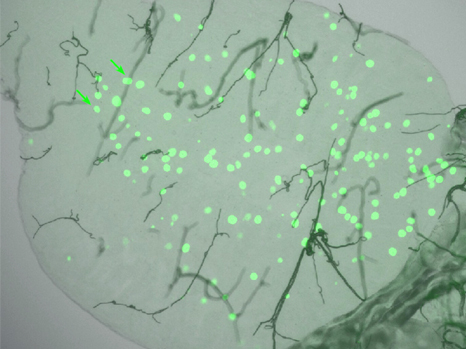
Paludisme et gène TEP1

Live Plasmodium parasites in the Anopheles mosquito express GFP fluorescence protein, and are visible in green (green arrows). Mosquitoes that express only the sensitive allele of TEP1 are less resistant than those that express only the resistant allele. © Inserm/Lamacchia, Marina

Held on 25 April each year, World Malaria Day is specifically aimed at raising awareness among the general public in order to increase its involvement in controlling this disease. This event is also an opportunity to highlight the advances made in research.

In line with its year-round commitment to malaria research, the team led by Benoît Gamain, Inserm Unit 1134, “Integrated Biology of Red Blood Cell,” is currently working on the PRIMALVAC[2] project, the objective of which is the development of a malaria vaccine for pregnant women (gestational malaria).

This phase I trial is aimed at assessing the vaccine’s safety and tolerance for human subjects, as well as its ability to induce an immune response, enabling pregnant women to be protected against gestational malaria in future.

Research done by Dominique Mazier and her staff at Inserm Unit 1135, “Centre for Immunology and Infectious Diseases,” is focused on the biology and immunochemistry of the hepatic stages of Plasmodium in humans.

A fraction of the parasites located in the liver, known as hypnozoites, may remain “dormant,” before awakening over time, and causing bloodstream infection. This hepatic phase of parasite development, which is specific to the vivax and ovale species, constitutes a double problem for the elimination of malaria: a higher number of patients to be treated, and increased transmission. Unfortunately, primaquine, and a recently developed analogue, tafenoquine, the only drugs capable of killing hypnozoites, have adverse effects that are sometimes serious for patients.

Research done by this team is helping to improve the understanding of this biological phenomenon, and to identify new strategies for an innovative, non-toxic radical cure.

The team led by Stéphanie Blandin, Inserm Unit 963 “Immune Responses in the Malaria Vector Anopheles gambiae,” is seeking to understand how mosquitoes defend themselves from parasites, and to exploit this antiparasitic response to help control transmission of the disease.

[1] For more details, consult the Inserm information pack on this theme (only available in French).

[2] The PRIMALVAC project is coordinated by EVI (European Vaccine Initiative), and has received financial support from the German Federal Ministry of Education and Research (BMBF), Inserm, the French National Institute of Blood Transfusion (INTS), and from Irish Aid via EVI

Friday 17 April: World Haemophilia Day

Haemophilia is quite a rare disease, with approximately one in 10,000 people born with haemophilia, and hereditary (i.e. passed on through the parents’ genes)

. It causes a failure of the blood to coagulate. As a result, people with haemophilia do not bleed faster than normal, but bleed for longer.

World Haemophilia Day is on Friday 17 April. On this occasion, the institutes and associations, particularly the World Federation of Haemophilia, work to sensitise and inform the general public and caregivers about hereditary coagulation disorders.

Throughout the year, research is conducted by the Inserm teams to improve replacement therapies.

Bleeding disorders (including haemophilia) are the main concern of the team led by Cécile Denis in Inserm Unit 1176, “Haemostasis–Inflammation–Thrombosis.” The researchers’ work is focused on the development of innovative therapies, such as gene therapy, which could be used to treat this disorder.

Saturday 11 April: World Parkinson’s Day

In France, Parkinson’s disease affects more than 150 000 people[1], and there are 6.5 million sufferers in the world, a figure set to increase as the population ages.

World Parkinson’s Day is taking place on 11 April, in memory of the anniversary of the birth of Dr James Parkinson, the first physician to describe the symptoms of this degenerative disease, in 1817.  

A condition that is still of largely unknown cause, Parkinson’s disease is characterised by progressive degeneration of the neurons that produce dopamine. The symptoms are motor-related, with tremor being the best known, but they also include slowness of movement, a feeling of stiffness, difficulty with writing, and pains.

This year, the day is specifically devoted to interruptions in care, and is an opportunity to remind the general public that Parkinson’s disease is not a rare disease. Thus, throughout France, public institutions and associations, especially the France Parkinson association, are taking initiatives to welcome the public and inform them about this serious condition.

Throughout the year, researchers from Inserm work hard to better understand this disease and develop new therapies.

In particular, Inserm Unit 1084, Experimental and Clinical Neurosciences Laboratory,” is working to develop cellular therapies to repair the brain lesions seen in Parkinson’s disease. The first results have been successful in animals. The researchers are now trying to obtain other sources of cells capable of developing into neurons that may be transplanted to repair the injured brain.

Read the press release about this team recent findings: «Repairing the cerebral cortex: it can be done »


Meanwhile, the members of Inserm Unit 1127, “Brain and Spinal Cord Institute,” are interested in the molecular and genetic mechanisms of Parkinson’s disease. A better understanding of the cause of neuronal death should make it possible to identify new symptomatic and curative therapies.

Finally, Benjamin Dehay, Inserm researcher, and his team at Joint Research Unit 5293, “Institute of Neurodegenerative Diseases, are working on the cellular and molecular bases for the processes underlying movement impairments in Parkinson’s disease and atypical parkinsonian syndromes (20% of syndromes). They are mainly focusing on the mechanisms that lead to the total loss of response to L-dopamine in these atypical syndromes.

For your interviews and reporting requirements, you can find all specialist contacts at Inserm in the “Parkinson press-kit” available as a download opposite.

[1] Source: DREES (Directorate for Research, Studies, Evaluation and Statistics), Étude sur l’état de santé de la population en France, édition 2015 (Study on the State of Health of the French Population, 2015 Edition).

Reducing risks among drug users

In order to limit the health risks associated with the use of drugs, certain countries have set up supervised injection centres where drug addicts can inject under the supervision of qualified personnel.

In 2010, the French General Health Administration asked Inserm to perform a collective report on the theme of Reducing the risks in drug users. The aim was to report on what scientific knowledge we had of existing schemes and programmes on an international scale, the contexts in which they were set up and their impact on the experimental projects in progress.

More than ten experts (epidemiologists, sociologists, addictologists, etc.) studied in particular how these centres had been set up in neighbouring countries such asSpain,Switzerland,Germany, the impact of these schemes and the projects in progress.

©Inserm

Tuesday 7 April World Health Day

This year, World Health Day will be dedicated to food safety.

According to the World Health Organisation, unsafe food is the cause of nearly 2 million deaths a year. Food containing bacteria, viruses, parasites and chemical substances are responsible for more than 200 illnesses, ranging from diarrhoea to cancer.

This event is an opportunity to educate professionals and the general public on the importance of food safety and the role people can play every day to remove any doubt about the safety of the food on their plate.

Researchers leading the Nutritional Epidemiology Research Team (Equipe de Recherche en Epidémiologie Nutritionnelle, EREN) are primarily focussed on advancing knowledge, through epidemiological means, on the role of nutrition (diet and physical activity) as a health factor and, notably, as a risk or protection factor regarding chronic diseases.


More detailed information is available on the World Health Organisation] (WHO) website, and l’Agence Nationale de Sécurité du Médicament et des produits de santé [French Agency for Food, Environmental and Occupational Health Safety] (ANSES).

[1] Source: Who Manual Cinq clefs pour des aliments plus sûrs (Five Keys to Safer Food), 2007, 32 pages.

Semaine du Cerveau 2015 (Brain Awareness Week 2015): 16–22 March

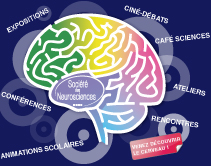
The 16th edition of Brain Awareness Week will take place in France and in 62 countries around the world from 16 to 22 March 2015. Throughout this week, members of the public can meet researchers from Inserm to gain a better understanding of the brain and learn about the latest research developments in this area. This week will enable the public to better understand how the brain works and what happens when it malfunctions, to discover techniques for exploring it, and to learn about the new technologies used to “repair” it.

The inaugural conference, “Comprendre et manipuler le cerveau par la lumière” (Using light to understand and manipulate the brain), will be held in Paris:

on Monday 16 March at 6:30 pm in the auditorium of the Brain and Spinal Cord Institute (ICM), Pitié Salpêtrière Hospital, 47 Bd de l’Hôpital, Paris 13th Arrondissement

Registration: gro.etutitsni-mci@uaevrecudeniames

In the company of:

Roland Salesse, coordinator of Brain Awareness Week

Alexis Brice, General Manager of the Brain and Spinal Cord Institute (ICM)

Jean-Marie Laurent, President of the French Federation for Brain Research (FRC)

Researchers from Inserm will be involved in many regional events organised in over 32 towns and cities in France:

See the complete programme on the French Neuroscience Society website

Etienne-Hirsch-portraitEtienne Hirsch

Director of Aviesan’s Thematic Institute for Neurosciences, Cognitive Sciences, Neurology and Psychiatry, sets out the challenges for brain research


What are the scientific challenges for brain research?

Our nervous system is made up of 100 billion neurons, which are interconnected by millions of kilometres of connectors (the axons). The number of contacts formed between the neurons is of the order of 10,000–100,000 billion.

The main challenge for the neurosciences is to analyse and integrate the complexity inherent to all levels of the nervous system’s organisation, so as to understand the neural basis for the higher cognitive functions and behaviours.

What are the medical challenges for brain research?

Data from the World Health Organization (WHO) show that diseases of the nervous system represent over a third of all diseases in wealthy countries. In Europe, 380 million people are directly affected by these diseases. Thus 23% of healthy life years are lost following brain diseases, as well as 50% of life years in poorer health.

Understanding the causes, mechanisms and physiopathological processes underlying neurological and psychiatric and sensory organ diseases is therefore an essential step in developing symptomatic or curative treatments for these diseases.

Ebola Virus: Detailed notice for the clinical trial being launched in Guinea

In Guinea, the epidemic caused by Ebola infection is still in the active phase nearly one year after it began. It is essential that measures for surveillance, control and management be accompanied by study of innovative therapies in order to reduce mortality. Potentially useful drugs include favipiravir (T-705), an antiviral drug already tested against influenza virus in adult humans (and well tolerated). The latter (no more than other potential treatments) has never been tested in humans for treating Ebola haemorrhagic fever, but its efficacy has been demonstrated in vitro and in mice.

The pilot clinical trial conducted by Inserm is aimed at testing the efficacy of favipiravir in reducing mortality in individuals infected by Ebola virus in Guinea. It began on tuesday 23rd december 2014 in Gueckedou.

  • What does this clinical trial involve?

The trial conducted by Inserm is a non-randomised open label multicentre Phase IIb trial All patients will receive the drug for 10 days. The drug favipiravir, which comes in the form of a 200 mg scored tablet (the tablet can be crushed and dissolved in a drink), will be administered according to the following dose regimen :

– Adults: D0: 2,400 mg at H0, 2,400 mg at H8 and 1,200 mg at H16, then 1,200 mg twice a day for 9 days;
– Children: doses adjusted to body weight.

Details of this dose regimen are the subject of a publication in the journal The Lancet Infectious Diseases.

  • For whom is it intended?

All patients entering these various centres at the time of the trial may take the drug favipiravir if they so wish. The main analysis of the trial will be focused on patients taking the treatment at disease onset (within 48 h of the start of symptoms), based on the hypothesis that the drug is most active when administered early. However, all patients capable of swallowing the drug will be offered the treatment, regardless of how long they have had symptoms when they arrive.

Before being enrolled in the trial, each participant will give his/her consent. Consent will indicate that they have fully understood the clinical protocol. The latter will be explained prior to consent, in the appropriate language, by professionals in psychosocial counselling.

Since the symptoms are somewhat non-specific (fever, diarrhoea, vomiting), the researchers will perform PCR (a test based on gene amplification), which must be positive for Ebola virus before the treatment is offered.

In order for the results to be interpretable, the researchers must enrol 60 people responding to these criteria, something that may result in their treating several hundred people in total, for all durations of symptoms combined. Interim analyses will be conducted on every 20th patient treated to “survey” the safety and efficacy of the treatment, and to decide on the relevance of continuing the trial in the exact same way, or with modifications.

        ●  Where will this trial take place?

The trial will take place in three Ebola Treatment Units (ETU) in Guinea:

Gueckedou (managed by MSF),
Macenta (managed by the French Red Cross),
Nzérékoré (managed by the Alliance for International Medical Action, ALIMA).

  • The team

The team conducting the clinical trial is based in Guekedou, in the Ebola Treatment Unit established by Doctors Without Borders/Médecins Sans Frontières (MSF). It should comprise some 30 individuals in total, including researchers, healthcare professionals and anthropologists. Coordination will be provided by French researchers from Inserm, and Guinean researchers from the Centre for Education and Research in Rural Health, under the authority of the National Ebola Response Coordination Committee in Guinea.

Relations with the community will be a central concern for the researchers, given the background of a serious epidemic and major health crisis, combined with a climate of justifiable distrust of outside interventions among the populations. A community committee to monitor the trial will be put in place before the trial is launched.

Coordinating investigators: Prof. Denis Malvy and Dr Sakoba Keita

Lead scientists: Dr Xavier Anglaret and Prof. France Mentré

        ●  Provisional schedule

Enrolment is planned between 15 December 2014 and 15 March 2015.

Duration of involvement by each participant: 30 days

Total expected duration of the protocol: 4 months

Total duration of the project: 8 months

The first results will be published in March 2015 at the earliest.

  • Funding

The European Commission is funding this trial for an amount of €700,000.

Frequently asked questions:

Why not administer the drug vs a placebo?

For a disease with a very high risk of mortality, the evidence that a treatment is effective can be deemed convincing on observing a lower mortality than expected, without recourse to a placebo-controlled comparative trial. The principles of the experimental design for this trial are those retained for all the other trials being arranged.

Can there be side-effects from the treatment, and how are they monitored?

Favipiravir has been well tolerated in trials where it was used against influenza. Since the dose employed against Ebola is higher, side-effects will, however, be closely monitored, although problems of toxicity are not generally expected.

And if the results are inconclusive?

Depending on the first interim results, the trial can be interrupted in order to move on to another drug, or continued, either on its own or in combination with other antiviral drugs or other interventions.

What are the terms of the contract with the Japanese company that sells favipiravir?

The terms of this contract are confidential, but Inserm’s private subsidiary, Inserm Transfert, will safeguard Inserm’s interests and those of the populations.

What ethical questions are being raised by this trial?

This trial is being conducted under particularly difficult conditions, but ethical considerations are making us face these conditions in order to make progress, rather than do nothing. Populations affected by Ebola, like any population, are entitled to have promising therapeutic avenues explored using rigorous methods.

MSF and Inserm join their forces against Ebola : first trials

In the absence of specific treatments for Ebola, international medical humanitarian organisation Médecins Sans Frontières/Doctors Without Borders (MSF) announced today that it will host clinical trials in three Ebola treatment centres in West Africa. The separate trials, which are aimed at quickly finding an effective therapy that can be used against the disease which has so far taken around 5,000 lives in the current outbreak in the region, will be led by three different research partners.

See the press conference

The French National Institute of Health and Medical Research (INSERM) will lead a trial using antiviral drug favipiravir in Guéckédou, Guinea; the Antwerp Institute of Tropical Medicine (ITM) will lead a trial of convalescent whole blood and plasma therapy at the Donka Ebola centre in Conakry, Guinea; and The University of Oxford will lead, on behalf of the International Severe Acute Respiratory and Emerging Infection Consortium (ISARIC), a Wellcome Trust-funded trial of the antiviral drug brincidofovir at a site yet to be determined. The World Health Organization (WHO) and health authorities of the affected countries are also taking part in this collaborative effort.

“This is an unprecedented international partnership which represents hope for patients to finally get a real treatment against a disease that today kills between 50 and 80% of those infected,” said Dr Annick Antierens, who coordinates the investigational partnerships for MSF. “As one of the principal providers of medical care to Ebola patients in West Africa, MSF is taking part in these accelerated clinical trials to give people affected by the current outbreak a better chance of survival.”

The trials’ protocols are in the final stages of development and are designed with a simple target of 14-day survival and with broad inclusion criteria. The protocols will ensure that disruption to patient care will be minimal, that internationally-accepted medical and research ethical standards are respected, and that sound scientific data will be produced and shared for public good. The main principles and designs have been shared with the respective countries’ ethical authorities, with the goal of starting the first trials during December 2014. Initial results could be available in February 2015.

The two drugs, brincidofovir and favipiravir, were selected from WHO’s shortlist of potential Ebola treatments after careful review of safety and efficacy profiles, product availability, and ease of administration to patients.

Professor Peter Horby, the Chief Investigator of the ISARIC-led trial, said, “Conducting clinical trials of investigational drugs in the midst of a humanitarian crisis is a new experience for all of us, but we are determined not to fail the people of West Africa. It has been a privilege to witness the extraordinary willingness of all the partners in this initiative to step outside their comfort zones in order to fast track these critically important trials.”

“These three trials are part of the first phase of a research aimed at finding the best treatment to cure patients with Ebola,” said Professor Denis Malvy, who will lead the INSERM trial in Guinea. “The three trial boards will therefore be coordinated in a very reactive way, so that any new fact can be discussed rapidly and our research plans can be adapted accordingly. Strengthening the link between our teams is all the more important as there is the possibility that, should our trials give positive results, the next phase could consist of combining interventions.”

Trial of convalescent whole blood and plasma therapy will consist of administering blood or plasma, containing antibodies from survivors, to infected patients. This approach is also endorsed by WHO.

“Convalescent plasma from recovered patients, containing antibodies against pathogens, has been safely used for other infectious diseases,” said ITM’s Johan van Griensven, coordinating investigator of the trial. “We want to find out whether it works for Ebola, whether it is safe and whether it can be scaled-up to reduce the number of deaths in the current outbreak. Close communication with people who recovered from Ebola, and the community at large, will be vital for a successful trial. We hope that recovered patients donating blood and plasma to help sick people could reduce fear of the disease and reduce stigmatisation of those who survived.”

When other experimental or off-label products with promising efficacy and safety data become available, they will be assessed with the view of proposing further trials in other MSF Ebola management centres in the region.

All three trials will prioritise community engagement and informed consent from patients or their representative. Each patient who consents to be part of a trial will have the potential risks of being subjected to a new therapy clearly explained. “We need to keep in mind that there is no guarantee that these therapies will be the miracle cure,” added MSF’s Dr Antierens. “But we need to do all we can to try the products available today to increase the chances of finding an effective treatment against Ebola.”

While clinical trials are underway, MSF is urging the drugs’ developers to scale up production supply now, to ensure there is no gap between the end of the trials and the large-scale introduction of products found to be safe and effective. MSF is also urging drug manufacturers to ensure that end products are affordable and available in the quantities needed to tackle the outbreak at its epicentre in West Africa. Distribution of end products should be driven by needs, irrespective of where people live or the capacity of a country to pay.

#

For general interviews and questions regarding the sites, please contact MSF:

Yasmin Rabiyan gro.fsm.aveneg@nayibar.nimsay +41 79 441 8996

Sandra Smiley gro.fsm.nodnol@yelims.ardnas +32 471 71 58 69

For general interviews and questions specific to the individual trials, please contact:

At INSERM: Priscille Riviere rf.mresni@ereivir.ellicsirp +33 68 932 8774

At the University of Oxford: the News Office ku.ca.xo.nimda@eciffo.swen +44 1865 280530

At ITM: Roeland Scholtabers eb.gti@sreblatlohcsr +32 47 706 8384

fermer