Menu

Consumption of ultra-processed food and risk of cancer

© AdobeStock

A new study bringing together researchers from Inserm, Inra and University of Paris 13 (Center of Research in Epidemiology and Statistics Sorbonne Paris Cité, EREN team) suggests a link between the consumption of ultra-processed food and the additional risk of developing cancer. In total, 104,980 participants from the French NutriNet-Santé cohort were included.  During the follow-up period (8 years), 2,228 cases of cancer were diagnosed and validated.  A 10% increase in the proportion of ultra-processed foods in the diet was associated with a greater than 10% increase in the risk of overall cancer and, more specifically, breast cancer. Out of the various hypotheses which could explain these findings, the generally poorer nutritional quality of ultra-processed food may not be the only contributing factor, thereby pointing to mechanisms involving other compounds (additives, substances formed during industrial processes, materials in contact with food, etc.).  These findings, which must therefore be considered as an initial avenue of investigation in this area, need to be confirmed in other study populations.  The causal relationship in particular remains to be proven.  This study was published on February 15, 2018 in the British Medical Journal.


In recent decades, dietary habits have shifted towards an increased consumption of ultra-processed foods, which currently account for over half of the total daily energy intake in many western countries.  Such foods are often characterized by lower nutritional quality, in addition to the presence of additives, neoformed compounds and substances from packaging and other contact materials. 


Recent studies have shown links between the consumption of ultra-processed foods and an increased risk of dyslipidemia, overweight, obesity, and hypertension.  However, none of the studies looked at the risk of cancer, even though animal experiments suggest potential carcinogenic effects of a number of components usually present in ultra-processed food. 


In total, 104,980 participants from the French NutriNet-Santé cohort (followed up between 2009 and 2017) were included.  Dietary intakes were collected with the help of repeated 24h dietary records, designed to evaluate participants’ usual consumption for 3300 different food items. These were grouped according to their degree of processing by the NOVA classification (see text box below).


During the follow-up period, 2,228 cases of cancer were diagnosed and validated.  A 10% increase in the proportion of ultra-processed foods in the diet was associated with a greater than 10% increase in the risk of overall cancer and, more specifically, breast cancer. These results were significant after a large number of sociodemographic and lifestyle characteristics were taken into account, as well as also the nutritional quality of the diet. This suggests that the lower overall nutritional quality of ultra-processed foods may not be the only factor involved.


These findings must be considered as an initial avenue of investigation in this area and require confirmation in other study populations. The causal relationship in particular remains to be proven. Likewise, further studies are needed to better understand the relative impact of the various dimensions of food processing (nutritional composition, additives, contact materials and neoformed contaminants) on these associations.


To continue this work, the research team is currently launching a new program on food additives, the principal objective of which will be to evaluate the usual dietary exposures to these substances and study their potential effects on health and chronic disease development.  This will be made possible thanks to the accurate and repeated evaluation of dietary exposures in the NutriNet-Santé cohort (together with nutrition supplements and medicines), including the brands and trade names of the processed foods consumed.  This last point is fundamental in accurately determining exposure to additives at the individual level given the wide variability of composition between the brands.  The recruitment of new volunteers to participate in the NutriNet-Santé study continues. Simply register online (www.etude-nutrinet-sante.fr) and complete the questionnaires. These will enable the researchers to deepen their knowledge on the links between nutrition and health and thereby improve the prevention of chronic diseases through our diet.


Definition and examples of ultra-processed foods


Food and drinks are assigned to one of the four groups in the NOVA classification, based on their degree of industrial processing (unprocessed or minimally processed foods, processed culinary ingredients, processed foods, ultra-processed foods). This study primarily focused on the “ultra-processed foods” group, which includes, for example, mass produced breads and buns, candy bars, savory snacks, sodas and sweetened drinks, poultry and fish nuggets, instant soups, frozen or shelf-stable ready meals, and any processed products with the addition of preservatives other than salt (for example, nitrites), as well as food products made mostly or entirely from sugar, oils and fats and other substances not used in culinary preparations, such as hydrogenated oils and modified starches.  Industrial processes notably include hydrogenation, hydrolysis, extruding, and pre-processing by frying.  Colors, emulsifiers, texturizing agents, non-sugar sweeteners and other additives are often added to these products.

Examples:

– Fruit compotes with only sugar added are considered “processed foods”, whereas flavored fruit desserts with the addition of not just sugar but also texturizing agents and colors are considered “ultra-processed” foods.

-Salted red or white meats are considered “processed foods”, whereas smoked meats and/or with added nitrites and preservatives, such as sausages and ham, are considered “ultra-processed foods”.

-Likewise, canned vegetables with only salt added are considered “processed foods”, whereas industrially cooked or fried vegetables, marinated in sauces and/or with added flavors or texturizing agents (such as industrially-produced vegetable stir-fry preparations) are considered “ultra-processed foods”.


Source: Monteiro CA, Cannon G, Moubarac JC, Levy RB, Louzada MLC, Jaime PC. The UN Decade of Nutrition, the NOVA food classification and the trouble with ultra-processing. Public Health Nutr 2018;21:5-17. https://dx.doi.org/10.1017/S1368980017000234


Beware of Sustained Ibuprofen Use in Men

©ustas – stock.adobe.com

A recent study conducted by Inserm researchers within Irset[1] has shown that sustained ibuprofen use in young male athletes induces a hormonal imbalance known as “compensated hypogonadism”, usually observed in elderly males. This situation arises due to the negative effects of ibuprofen on testosterone production, and on the production of two other testicular hormones. These results have been published in Proceedings of the National Academy of Sciences.

Ibuprofen, which can be purchased without a prescription, is one of the most widely used medications in the population. This anti-inflammatory analgesic is mainly used for headache, toothache, chronic pain, influenza, fever, and certain rheumatic disorders. Furthermore, numerous studies have shown that vast quantities of ibuprofen are used by athletes, often as self-medication or when pressured by their professional circle. Conducted by Inserm researchers that have already demonstrated the potential harmful effects of aspirin and acetaminophen on adult human testicles[2] and those of ibuprofen on testicular development during pregnancy[3], and supported by colleagues from Rennes University Hospital, David Møberg Kristensen and his Danish colleagues, and researchers from LABERCA in Nantes, this new study brings together, in an unprecedented manner:

– A clinical trial involving 31 volunteer male athletes aged 18 to 35 years, half of whom take ibuprofen;

– Cultures of fragments of human testicles having been exposed to ibuprofen and taken from specimens related to therapeutic procedures or organ donation;

– And cultures of an immortalized human cell line.

The conclusions of the clinical trial show that levels of one pituitary hormone, luteinizing hormone (LH), rise strongly in men exposed to ibuprofen. This hormone plays a key role in controlling testosterone production. This increase has been shown to result from direct negative effects of ibuprofen on the expression of genes coding for several enzymes responsible for steroidogenesis, responsible for testosterone production.

Furthermore, ex vivo and in vitro studies have highlighted direct effects on testosterone production. Ibuprofen has been shown to inhibit a hormone produced by Sertoli cells – inhibin B – which is responsible for regulating follicle-stimulating hormone (FSH).

Moreover, the production of anti-Müllerian hormone by Sertoli cells is also inhibited, both in volunteers exposed to ibuprofen, and in the cultures of human testicle fragments.

Lastly, ibuprofen suppresses testicular prostaglandin production in ex vivo and in vitro tests.

Overall, this study shows that prolonged intake of high-dose ibuprofen (1,200 mg/day for 6 weeks) gives rise to severe endocrine disruptor effects in young males, leading to a condition known as “compensated hypogonadism”. This condition, usually observed in approximately 10% of elderly males, is generally associated with increased risks in terms of reproductive health, as well as general health.

According to Bernard Jégou, Inserm research director and research director at the EHESP French School of Public Health, who is the coordinator of this study, and joint lead author Christèle Desdoits-Lethimonier, research engineer at Université de Rennes 1, the conclusions of this research should require serious consideration: “there are male subpopulations who continuously take ibuprofen, namely men not suffering from chronic disease, such as high-level athletes. If compensated hypogonadism develops, they run the risk of increasing the hazards already associated with this medicinal product, impairing their physical condition (muscles and bones), and potentially jeopardizing their reproductive and even mental health”.

[1]  Irset: Research Institute for Environmental and Occupational Health

[2] Albert O, Desdoits-Lethimonier C, Lesne L, Legrand A, Guille F, Bensalah K, Dejucq-Rainsford N, Jegou B (2013) Paracetamol, aspirin and indomethacin display endocrine disrupting properties in the adult human testis in vitro. Hum Reprod 28(7):1890–1898.

[3] https://presse.inserm.fr/attention-a-la-prise-dibuprofene-pendant-la-grossesse/27524/

An international study identifies new loci associated with asthma wich are enriched in epigenetic marks

©AdobeStock

An international study led by scientists from Inserm and Paris Diderot University (France), the University of Chicago (USA), the National Heart and Lung Institute (UK) and the University of Colorado Anschutz Medical Campus (USA) together with researchers of the Trans-National Asthma Genetics Consortium (TAGC) has discovered five new regions of the genome that increase the risk of asthma. This study is published online in Nature Genetics on 22 December 2017.

A major finding of this study is that the genetic loci associated with asthma are enriched in epigenetic marks characterizing gene enhancers. Another key element is the shared associations of variants with asthma, auto-immune diseases and diseases with an inflammatory component. The outcomes of this work open new avenues of research with the goal of elucidating the biological mechanisms underlying asthma in relationship with environmental exposures and to promote the development of new therapies

Asthma is a chronic inflammatory disease that affects more than 300 million people worldwide and has a significant socio-economic impact. Asthma is characterized by clinical heterogeneity. Asthma results from both genetic predisposition and exposure to environmental and lifestyle factors.

The TAGC study brought together more than 45 research groups from Europe, North America, Mexico, Australia and Japan. It allowed pooling data on millions of DNA polymorphisms (genetic variants) throughout the genome in more than 142,000 asthmatic and non-asthmatic subjects of European, African, Latino and Japanese ancestry. Meta-analyses of genome-wide association studies conducted in these ethnically-diverse populations identified a total of 878 genetic variants belonging to 18 loci associated with asthma risk.

The TAGC study showed that genetic variants associated with asthma are preferentially located near critical gene regulatory sites called “enhancers” in immune cells, suggesting a role of these variants in the regulation of immunologically related mechanisms.

Another key element concerns the involvement of several identified candidate genes in the immune response to viruses, thus highlighting the importance of viral infections in the risk of asthma.

The genetic variants associated with asthma have also effects on  autoimmune diseases and other diseases with an inflammatory component (such as cardiovascular diseases, cancers, neuro-psychiatric diseases), which strengthens the importance of pleiotropy in multifactorial diseases.

In conclusion, these results highlight the importance of large-scale genetic studies to better characterize complex diseases. This study opens new avenues of research aiming at integrating genomic and epigenomic data together with environmental exposures in order to elucidate the physio-pathological mechanisms underlying asthma and to promote the development of new therapies.

The consumption of antioxidant-rich foods is associated with a lower risk of type 2 diabetes

A lower risk of type 2 diabetes has been observed among individuals consuming food rich in antioxidants. This effect is largely contributed by fruit, vegetables, tea and other hot beverages, as well as moderate consumption of alcohol, as shown in a recent study from an Inserm research group, published in Diabetologia, the journal of the European Association for the Study of Diabetes (EASD)

A diet rich in fruit and vegetables has previously been associated with a lower risk of certain cancers and cardiovascular conditions. An Inserm team (Health across generations, Center of Research in Epidemiology and Population Health, Villejuif, France) has now shown that such a diet is similarly associated with a reduced risk of type 2 diabetes.

The team already suspected there might be a link on the basis of previous studies showing that certain antioxidants, such as vitamins C and E, lycophenes or flavonoids, were associated with a reduction in type 2 diabetes risk. However, these studies looked only at isolated nutrients, not at the total antioxidant capacity of the diet. The researchers therefore wanted to verify whether overall diet, according to its antioxidant capacity, is associated with diabetes risk. Using data from the E3N cohort comprising French women recruited from 1990, then aged between 40 and 65 years, they followed 64,223 women from 1993 to 2008, all of whom were free from diabetes and cardiovascular disease at the time of inclusion in the study. Each participant completed a dietary questionnaire at the beginning of the study, including detailed information on more than 200 different food items. Using this information, together with an Italian database providing the antioxidant capacity of a large number of different foods, the Inserm researchers calculated a score for ‘total dietary antioxidant capacity’ for each participant. The group then analysed the associations between this score and the risk of diabetes occurrence during the follow-up period.

The results show that diabetes risk diminished with increased antioxidant consumption up to a level of 15 mmol/day, above which the effect reached a plateau. Increasing dietary antioxidants to this level could be achieved through eating antioxidant-rich foods such as dark chocolate, tea, walnuts, prunes, blueberries, strawberries or hazelnuts, to name just a few.

Women with the highest antioxidant scores had a reduction in diabetes risk of 27% compared with those with the lowest scores. ‘This link persists after taking into account all the other principal diabetes risk factors: smoking, education level, hypertension, high cholesterol levels, family history of diabetes and, above all, BMI, the most important factor’, clarifies Francesca Romana Mancini, the first author of this study. The foods and drinks that contributed the most to a high dietary antioxidant score were fruits and vegetables, tea and red wine (consumed in moderate quantities). The authors excluded coffee from the analysis, despite its high antioxidant levels, because the antioxidants in coffee have already been shown to be associated with reduced type 2 diabetes risk, and might therefore mask the effects of antioxidants from other sources.

‘This work complements our current knowledge of the effect of isolated foods and nutrients, and provides a more comprehensive view of the relationship between food and type 2 diabetes’ explains Guy Fagherazzi, the lead researcher in charge of diabetes research in the E3N study. ‘We have shown that an increased intake of antioxidants can contribute to a reduction in diabetes risk’. This now raises the question why: ‘We know that these molecules counterbalance the effect of free radicals, which are damaging to cells, but there are likely to be more specific actions in addition to this, for example an effect on the sensitivity of cells to insulin. This will need to be confirmed in future studies’, concludes Francesca Romana Mancini.

The E3N study (e3n.fr; Etude Epidémiologique auprès de femmes de la MGEN [Mutuelle Générale de l’Education Nationale]) is a prospective cohort study of around 100,000 French female volunteers born between 1925 and 1950, and followed from 1990. Since 1990, the women have completed and returned self-administered questionnaires every 2–3 years. The questionnaires cover their lifestyle and their  health status over time. The ‘lost to follow-up’ rate is very low because the MGEN is able to assist in following up non-responders.  The E3N study is supported by four founding partners: Inserm, la Ligue contre le Cancer, l’Institut Gustave Roussy and the MGEN. The E3N study is now continued via the E4N study (e4n.fr), a study awarded the status of  ‘Investment for the future’ (Investissement d’Avenir) in 2011 by the French National Research Agency (Agence Nationale de Recherche), and which aims to follow the children and grandchildren of the E3N participants, as well as the biological fathers of the children, with a view to studying the health of three generations of family members in relation to modern lifestyle.

Maternal and neonatal health : preliminary results of the French National Perinatal Survey 2016

The French National Institute for Health and Medical Research (Inserm) and the Directorate of Research, Studies, Evaluation and Statistics (DREES) have published the preliminary results of the French National Perinatal Survey 2016. This report, based on a sample of births representing all births in France for the year 2016, presents the changes in the main perinatal indicators of health, medical practices and risk factors. It also describes the organization of healthcare in the country’s 517 maternity units.

The National Perinatal Surveys are conducted at regular intervals (1995, 1998, 2003 and 2010). The latest, performed in March 2016, was jointly led by the Ministry of Health and Solidarity (DREES, Directorate-General of Health (DGS) and the Directorate-General of Health Care Provision (DGOS)) together with the National Public Health Agency (Santé publique France) and the Obstetrical, Perinatal and Pediatric Epidemiology research team (EPOPé) at Inserm (see boxed text).

In metropolitan France, certain risk factors increased in 2016

  • Advanced maternal age (35 years or older), overweight and obesity were more common in 2016 than in 2010 (respectively 21%, 20% and 12% in 2016 vs. 19%, 17% and 10% in 2010).
  • Between 2010 and 2016, there was no reduction in the rate of tobacco consumption during pregnancy (17%) and exclusive breastfeeding prior to maternity unit discharge fell (from 60% to 52%): two indicators for which France was already faring less favorably than its European neighbors in 2010.
  • The rate of anti-influenza vaccination of pregnant women was very low (7%), despite the high risk of complications represented by the disease.

Certain perinatal health indicators worsened

  • The preterm delivery rate has been on the increase since 1995 (from 4.5% in 1995 to 6.0% in 2016 for live-born singletons).
  • The proportion of infants with a low birth weight (for their gestational age) increased between 2010 and 2016 (from 10.1% to 10.8% for live-born singletons).

In the overseas departments and regions (DROM), the risk factors differ from those of metropolitan France and the perinatal health indicators are less positive overall

  • The socioeconomic characteristics of women in the overseas departments and regions (DROM) are less favorable than in metropolitan France.
  • 25% of pregnant women in the DROM declare that they do not live with a partner (vs. 5% of women in metropolitan France).
  • Pregnant women are younger (6% between 18 and 19 years of age vs. 2% in metropolitan France).
  • Pregnant women in the DROM have a higher rate of obesity (21% vs. 12% in metropolitan France).
  • Tobacco consumption is lower (5% vs. 17% in metropolitan France).


  • The frequency of hospitalizations during pregnancy is higher (27% vs. 18% in metropolitan France).
  • The preterm delivery rate for singleton live births is 10.1% (vs. 6.0% in metropolitan France).

Deliveries took place in larger maternity units, offering increased safety and a better response to women’s needs

  • The number of maternity units continues to decrease: with 517 in March 2016 (including 20 in the DROM).
  • In 2016, births most often took place in large, specialist, public maternity units, although there was no decrease in the number of small units (fewer than 500 births per year).
  • The percentage of units permanently staffed with an obstetrician (from 54% in 2010 to 61% in 2016), an anesthetist (from 75% to 81%) and a pediatrician (from 34% to 40%) increased.
  • Refusal of admission for lack of space was less common in 2016.
  • Pain management improved through more frequent use of patient controlled epidural analgesia (PCEA) and 88% of women were satisfied with what they were offered to manage pain and contractions.


Increased compliance during childbirth with professional recommendations on good practice

  • The rate of cesarean sections was stable (20.4% in 2016 vs. 21.1% in 2010).
  • The rate of episiotomy fell, from 27% in 2010 to 20% in 2016.
  • The care women received during childbirth was less medicalized, with less frequent use of oxytocin (drug used to speed up contractions and which presents a risk to maternal health) during labor.
  • Prevention of post-partum hemorrhage became widespread.


About French National Perinatal Surveys

The French National Perinatal Surveys cover all births (live and stillborn infants) during one week in all French maternity units. The data is collected from medical records and interviews with postpartum women. Data are also collected on the characteristics of maternity units and their organization of healthcare. The latest survey conducted in March 2016 covered 14,142 births and 13,894 women, including 13,384 births and 13,148 women in metropolitan France and 758 births and 746 women in the DROM. The data obtained are used to build reliable indicators and monitor their changes in relation to previous surveys. The survey was coordinated at departmental level by the Mother and Child Protection Services (PMI), the perinatal health networks and Inserm.

The 2016 survey was funded by DREES, DGS, DGOS and Santé publique France.

Prenatal exposure to endocrine disruptors and behavioral problems in children

© Fotolia

An epidemiological study carried out by Inserm on families from the EDEN cohort (500 boys born between 2003 and 2006 and their mothers) shows that exposure during pregnancy to certain phenols and phthalates is associated with behavioral problems in boys between 3 and 5 years of age. The most worrying compounds in this respect are bisphenol A, triclosan and dibutyl phthalate (DBP). The results of this study have recently been published in Environmental Health Perspectives.

In France, bisphenol A has been banned from use in all food containers since January 2015, occurring after this study was performed. Triclosan is an antibacterial agent found in certain toothpastes and soaps. DBP is used as a plasticizer in PVC plastics, certain glues, nail varnishes and hair sprays. According to the regulations, triclosan and DBP are permitted in limited quantities in certain product families but banned in others (in the EU for example, DBP is forbidden in cosmetics and triclosan is forbidden in clothing). Toxicological in vitro and animal studies have revealed that these compounds are endocrine disruptors and could interact with hormone systems involved in the normal development of the central nervous system. The specific mechanisms that could explain an effect of endocrine disruptors on neurodevelopment and behavior could involve the impaired functioning of thyroid hormones, of steroid hormones such as estrogen, or of other hormones such as oxytocin or vasopressin which are secreted by the hypothalamus.

In light of these initial findings in animals, the researchers wanted to study the association between exposure to endocrine disruptors during pregnancy and the subsequent behavior of the children.

The study concerned 529 young boys from the EDEN Mother-Child Study Group, set up by Inserm. The pregnant women participating in this cohort were recruited between 2003 and 2006 in the university hospitals of Nancy and Poitiers. At their children’s third and fifth birthdays, they completed a standardized questionnaire called the “Strengths and Difficulties Questionnaire” (SDQ), which evaluated certain aspects of their children’s behavior, such as hyperactivity, emotional problems and relationship problems. This questionnaire, which has been in use for 20 years, establishes scores for various aspects of behavior, such as emotional symptoms, peer relationship problems, conduct problems, hyperactivity and inattention problems. A urine sample taken during pregnancy was used to screen for the biomarkers characteristic of exposure to phenols and phthalates at the Environmental Health Laboratory of the CDC in Atlanta, which is responsible for biomonitoring campaigns in the US.

Between 70 and 100% of women from the Eden cohort, recruited during their pregnancy between 2003 and 2006, had been exposed to detectable levels of various substances. Levels in urine ranged from 1 to 3 µg per liter for bisphenol A, from 10 to 100 µg per liter for triclosan, and from 50 to 200 for methylparaben. The results suggest that maternal exposure to certain phenols and phthalates is linked with behavior problems in young boys.

Exposure to bisphenol A was associated with increased relationship problems at 3 years and hyperactivity problems at 5 years,  thus confirming that the effects of bisphenol A on the behavior observed in laboratory animals also occur in humans at low levels of exposure, levels that are probably lower than those recommended by the European Food Safety Authority (EFSA).

The metabolite of DBP was linked to increased emotional and relationship problems, including internalizing behavior, at 3 years of age. However, this was not the case for emotional problems at 5 years of age. Links between these compounds and behavior had already been revealed in previous studies in young boys and animals. In one such study on mother-child pairs from New York, an increase in internalizing behaviors in children of 3 years of age had been reported with an increase in levels of the DBP metabolite in 2012.

The results of this study have also shown a link between triclosan and increased emotional problems at 3 and 5 years of age. This is the first study to evaluate the effects of this compound on behavior, for which the environmental epidemiology team from Grenoble had already revealed a reduction in head circumference at birth, in the same population. At the molecular level, triclosan can interact with the thyroid axis which, during pregnancy, is involved in fetal brain development.

The sample size of this study, which is one of the largest on the subject, did not enable direct study of the onset of neurodevelopmental disorders, such as those of the autism spectrum, which would require the study of tens of thousands of children.

The research teams will now endeavor to replicate these results within the SEPAGES mother-child cohort, a study which is currently taking place in the Grenoble region, coordinated by Inserm and with the support of the European Research Council. In this study, a number of urine samples are collected from each participant, during pregnancy and the first years of the child’s life. This approach will make it possible to minimize errors in the measurement of exposure, as well as to identify potential periods of sensitivity to phenols and phthalates in relation to various health events, such as growth, behavior or respiratory health. It will also mean that the potential effect of these substances can be studied in young girls, a population that it was not possible to take into consideration here. It is possible that their sensitivity to endocrine disruptors differs from that of boys.

Maternal mortality: deaths from hemorrhage reduced but inequalities remain

© Fotolia

Between 2010 and 2012, 256 women died in France from causes linked to pregnancy, labor, or following childbirth, amounting to 85 such cases a year. Although inequalities remain, improvements have been observed in the provision of labor care, with the death rate from hemorrhage halving. These epidemiological results have been made public by the triennial report of the Confidential Inquiry into Maternal Deaths (Enquête Confidentielle sur les Morts Maternelles, ENCMM) in regard to the period 2010-2012, which was led by Inserm’s EPOPé – “Obstetrical, Perinatal, and Pediatric Epidemiology Team” – at the Center of Research in Epidemiology and Statistics Sorbonne Paris Cité (CRESS, Unit 1153).

Considered internationally as a reflection of the overall quality of a country’s health care system, maternal mortality rate constitutes a key indicator of public health. Co-ordinated by the Inserm EPOPé team since 1996 and led by Catherine Deneux-Tharaux, the Confidential Inquiry into Maternal Deaths (ENCMM) facilitates comprehensive identification of the causes of deaths in women occurring before, during, or following labor. This enables all the information to be collated in order to understand the chain of events leading to a death, and the lessons that can be learned for the future. This analysis, led by the National Expert Committee on Maternal Mortality (part of Santé Publique France, the French public health agency, since 2014), allows for any failings in the health care system to be brought to light, and is also responsible for considering non-fatal complications, which are more common but more difficult to study.

For the period 2010 to 2012 under review, 256 maternal deaths were identified: a total of 85 women dying each year in France. This figure corresponds to around 10 maternal deaths per 100,000 live births. It remains stable in comparison to the previous period (2007-2009) and is in line with the European average. However, 56% of these deaths were considered “avoidable” or “potentially avoidable”, and in 59% of cases optimal care was not provided, demonstrating clear room for improvement.

Reduction in direct mortality (during labor)

A major result of this report is the reduction by a third compared to 10 years ago of deaths directly related to obstetrical complications such as hemorrhage and eclampsia. For the first time, a statistically significant reduction in obstetrical hemorrhage has been observed, with the rate halving over the last 10 years. These results demonstrate an overall improvement in the quality of obstetrical care during the period under review.

However, almost all the deaths from hemorrhage were judged to be avoidable, and it remains the leading cause of maternal mortality in France (11% of deaths), although it has become rare in other countries. The researchers state therefore that: “we cannot drop our guard, and the results of this report enable us to identify new areas for focus in order to further reduce deaths from hemorrhage.”

Regional and social inequalities persist

Some troubling inequalities in maternal mortality persist. These are regional disparities: 1 out of every 7 maternal deaths occurs in the French overseas departments (DOMs), and the number of maternal deaths reported per live births in the DOMs is 4 times higher than in Metropolitan France (40 compared to 9 deaths/100,000 live births).

And social disparities: mortality among migrant women remains 2.5 times higher than among women born in France. This excess death rate is particularly marked in women born in Sub-Saharan Africa, among whom it is 3.5 times higher than that of women born in France. Investigating the care pathway of these women suggests that language barriers, among other factors, may sometimes play a role in the chain of events leading to their death.

Overall stability masking other trends

The overall stability of maternal mortality since 2007 can be explained by two trends:

  • the changing characteristics of the population of pregnant women, which place them at higher risk of maternal death (maternal age continues to rise along with the number of overweight and obese patients)
  • The increase in causes of death not directly linked to labor complications: These include maternal deaths due to infection (9%), including those linked to flu in unvaccinated women; sudden maternal deaths (9%); and maternal suicides (4%).

 “Going beyond the figures, the members of the National Expert Committee on Maternal Mortality (CNEMM) have drawn out 22 key messages from this analysis for clinicians and the public authorities (ed: report in full). According to the general principle of the inquiry, ‘better understanding for better prevention’, we have targeted specific elements to be improved within the provision and organization of health care in order to avoid patient deaths, but also in all likelihood serious maternal complications, which do not lead to death but result from the same failings” concludes Catherine Deneux-Tharaux, who led the inquiry.

Follow-up at the age of 2: preterm children have higher survival rates and better health than 20 years ago

©Fotolia

It’s good news. Over the last 20 years there has been a marked improvement in the survival rate of preterm infants, and rates of brain damage at the age of 2 years have halved. These are the latest results of the EPIPAGE-2 study carried out by researchers from the Inserm group EPOPé – Obstetrical, Perinatal, and Pediatric Epidemiology Team at the Center for Research in Epidemiology and Statistics, Sorbonne Paris Cité (CRESS, Unit 1153), AP-HP. These results from follow-up of 5,000 preterm infants were published in the British Medical Journal.

EPIPAGE-2 is a French study that initially included over 5,500 children, born preterm between 22 (5 months) and 34 weeks (7 and a half months) of pregnancy, between April and December 2011. The researchers’ main objective was to achieve a better understanding of the factors associated with children born preterm, in particular their neuromotor and sensory outcomes, and overall development at 2 years. The EPIPAGE-2 results were compared to those collected in 1997 by a similar study carried out in 9 French regions.

The data were collected from doctors who followed up with these children and families.

  • At 2 years, 52% of children born between 22 and 26 weeks of pregnancy, 93% of those born between 27 and 31 weeks, and 99% of those born between 32 and 34 weeks survived.
  • Rates of cerebral palsy (a motor disability often associated with preterm birth) were 7%, 4%, and 1% in these same groups by birth.
  • Less than 1% of children in the cohort had a severe sensory deficit (blindness or deafness).
  • Development, as assessed by parental questionnaires, was at the level expected for their age groups among 50% of children born between 24-26 weeks, 59% of children born between 27-31 weeks, and 64% of those born between 32-34 weeks.
  • Between 1997 and 2011, the rate of cerebral palsy was halved among very preterm babies. The rate of survival without severe motor or sensory impairment has thus increased in all groups by birth, particularly for the most preterm. Before 7 months of pregnancy, it was 74.5% in 1997, and 80.5% in 2011.

“Such studies are needed to better understand the impact of changes in medical practice on outcomes in children, and to adapt the organization of health care based on population-level data,” explains Pierre Yves Ancel. “Parental questionnaires, for example, have allowed children’s development to be evaluated by their own families, and enabled early identification of those requiring further investigation. For us, the challenge is therefore identifying at a very early stage the children most at risk of developmental delay in the future. These questionnaires represent a promising option for providing structured follow-up of babies while focusing resources on those who really need it,” adds Véronique Pierrat, who led the study.

However, the rates of overall and above all disability-free survival have only marginally improved among children born before 5 months of pregnancy. After adjusting for baseline characteristics, rates of survival and rates of survival without severe or moderate neuromotor and sensory disabilities at 2 years appeared to have increased between 1997 and 2011 for children born between 22 and 31 weeks of gestation. However, no change was observed in children born at 24 weeks of gestation or earlier. These statistics are noticeably poorer than in countries where management of the delivery room is more active than in France. Since publication of the initial EPIPAGE-2 results, a working group has been set up in France to consider the management of these extremely preterm children. As in seven other European countries, the recommendation in France is not to provide medical intervention for children born before 24 weeks, rather to provide them with “comfort” care.


Preterm birth

Children born between 22 and 26 weeks of gestation are considered to be extremely preterm.

Children born between 27 and 31 weeks of gestation are considered to be very preterm

Children born between 31 and 34 weeks of gestation are considered to be moderately preterm

Hereditary hearing loss: the ear and auditory brain are both affected

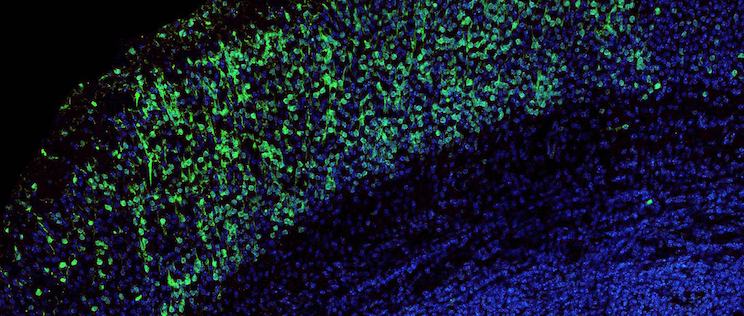
Brain slice showing neurons migrating to the auditory cortex. The nuclei are shown in blue. In green, molecules from the “molecular code” that sends the neurons to this brain region.

©Institut Pasteur

Scientists from the Institut Pasteur, Inserm, the Collège de France and Pierre & Marie Curie University have recently demonstrated that mutations in three genes responsible for Usher syndrome – a hereditary condition that affects both hearing and sight – influence not only the workings of the ear, specifically the function of sensory cells in the cochlea, but also the development of the auditory cortex. Their discovery could explain why some patients, even after being fitted with a cochlear implant (an electro-acoustic device that bypasses the defective cochlea), still have difficulties understanding speech. The findings are reported this week in a paper in the Proceedings of the National Academy of Sciences of the USA.

In most cases of hereditary hearing loss in humans, damage to the auditory sensory organ, the cochlea, is sufficient to account for patients’ hearing impairment. Many forms of hereditary hearing loss affect the hair bundle that acts as the sound receptor for auditory sensory cells. Cochlear implants stimulate the auditory nerve directly, bypassing the need for the sound signal to be processed by the cochlea and restoring a good level of hearing. In some cases, however, patients still have difficulties in understanding speech.

The team led by Prof. Christine Petit[1] from the Genetics & Physiology of Hearing Unit (Institut Pasteur/Inserm/UPMC) – with research by Baptiste Libé-Philippot supervised by group leader Dr. Nicolas Michalski –, working in cooperation with Dr. Christine Métin (Inserm/UPMC), recently identified three genes in mice which, when damaged, affect not only the cochlea but also the auditory cortex, the brain region responsible for analyzing auditory information. These three genes are among the nine currently recognized as causing Usher syndrome (type I and II), the leading hereditary cause of hearing and sight loss. Since damage to the cochlea in these patients prevents the auditory brain from receiving some or all of the acoustic information it normally receives, the cerebral damage had previously gone unnoticed.

The scientists demonstrated that, during embryogenesis, the proteins coded by these three genes are involved in the migration and maturation of some cells destined to become “inhibitory” neurons, which specifically colonize the auditory cortex. These neurons produce parvalbumin and are closely involved in cortical plasticity, which determines the structure and function of neural networks in the cortex based on auditory experience. They also play an important role in the temporal precision of sound detection that is required to understand speech. In mice, a single mutation in one of these three genes prevented this population of neural precursors from entering the developing cortex and reaching the auditory cortex.

The scientists also revealed that these neurons synthesize molecules that act as molecular markers. “These molecules serve as labels that instruct neurons to be sent from their birthplace in the subpallium, in the center of the brain, to the cortical area, their final destination. For the first time, we suggest that inhibitory neuron precursors have a “molecular mailing code”, explains Prof. Christine Petit.

These findings therefore demonstrate that hearing loss genes, previously thought to influence just the cochlea, also have another independent role in the development and formation of neural networks in the auditory cortex. In embryogenesis, this role is performed prior to the one played by the same genes in the cochlea.

Prof. Christine Petit’s team is at the forefront of pioneering research into hereditary hearing loss. It previously demonstrated that the proteins coded by the genes that cause type I and type II Usher syndrome are also responsible for the development and workings of the hair bundle, and went on to unravel the related molecular networks. The scientists hope to use these new findings to develop innovative aural rehabilitation methods designed specifically for patients with damage to the auditory cortex.

This research was funded by the French National Research Agency (LIGHT4DEAF [ANR-15-RHUS-0001] and LIFESENSES LabEx [ANR-10-LABX-65]), the European Commission (ERC-2011-ADG_294570), the BNP Paribas Foundation, the FAUN Stiftung (Suchert Foundation) and the LHW-Stiftung (CP), and the “scientific discovery” award and SEIZEAR grant from the “Agir Pour l’Audition” foundation (NM).

[1] Prof. Christine Petit is a Professor at the Collège de France and at the Institut Pasteur.

Physical activity does not protect against the onset of dementia

 
© fotolia

Physical activity in adulthood is not associated with a reduced risk of developing dementia. However, a decline in this activity is observed during the decade preceding its diagnosis. If this decline in activity cannot be considered as an early sign of dementia, it could be one sign – among others – to be taken into account by the attending physician. This is demonstrated by a study conducted by an Inserm research team of the Center for Research in Epidemiology and Public Health (Unit 1018 Inserm / Université Paris-Saclay). The results were published in the British Medical Journal on June 22, 2017.

Over the past forty years in France, life expectancy in good health has increased by 10 years, from 72 years in 1970 to 82 years in 2010. This increase in life expectancy can be explained by the improvement in quality of life but above all by the progress made in the field of medicine. However, living longer also leads to a higher probability of developing dementia (reduction of cognitive abilities leading to difficulties in everyday activities). The World Health Organization (WHO) estimated in 2015 that 47 million people worldwide were suffering from this disease and this number is expected to triple by 2050.

Until very recently, many studies suggested that physical activity could be a neuroprotective factor, thus delaying the onset of cerebral pathologies. In order to study this hypothesis, a longitudinal study conducted by a team of Inserm researchers from the Center for Research in Epidemiology and Public Health (CESP), in collaboration with University College London, followed more than 10,300 people aged 35 to 55 at the time of inclusion, between 1985 and 2012 (i.e. 27 years). Every 4 years the researchers measured the physical activity of each subject and made them take numerous cognitive tests.

This study showed that physical activity in adulthood would not have a protective effect on the risk of dementia. Indeed, it could not be demonstrated that there was any association between the practice of physical activity (whether mild or moderate to intense) and the onset or not of dementia. Moreover, people following public health recommendations in terms of physical activity, i.e. more than 2 hours 30 min of moderate to vigorous physical activity, showed a decline in cognitive functions, such as memory or thinking skills, similar to people not following these recommendations. As stressed by Séverine Sabia, Inserm researcher heading this study, “These results are corroborated by two recent intervention trials1,2 and an expert report published on June 22, 2017 that concludes there is a lack of sufficient evidence of a protective effect of increased physical activity on the risk of dementia”.

Nevertheless, researchers observed a decrease in physical activity (up to 2 hours / week less) in the 9 years preceding diagnosis in subjects with dementia. These findings suggest that the decline in physical activity in these individuals may be part of the changes that occur during the preclinical phase of dementia such as Alzheimer’s disease. Even today, it is very complicated to diagnose this disease before certain clinical signs such as memory problems or loss of autonomy appear. It therefore remains to be seen whether maintaining a good level of physical activity during this preclinical phase of dementia could slow down the disease process.

While physical activity appears to have no protective effect on the onset of dementia, it is important to remember that practicing a sport is beneficial for the cardiovascular system and the prevention of obesity and type 2 diabetes. It is therefore necessary to maintain good regular physical activity, even of moderate intensity, as it is a major determinant of a person’s state of health at all ages of life.

Refractory cardiac arrest: an aggressive ECPR strategy significantly increases patient survival

© Fotolia

Multidisciplinary teams from the AP-HP Paris public hospitals network (SAMU75 emergency response dispatch centers and Hôpital européen Georges-Pompidou), as well as from Inserm, the Université Paris-Descartes, and the Paris BSPP medical emergency service, compared, in the French capital, two strategies of extracorporeal cardiopulmonary resuscitation (ECPR) used in patients suffering refractory cardiac arrest (defined as lack of return of spontaneous circulation after 30 minutes of resuscitation). The results of this study, which took place between November 2011 and December 2015 and involved 156 patients, were published on the website of the journal Resuscitation on April 14, 2017 and show that an aggressive strategy significantly increases patient survival following discharge from intensive care and with a favorable neurological prognosis.  It is the largest cohort to be studied in Europe and the United States.


Every year, approximately 50,000 adults in France die from cardiac arrest, which is fatal within minutes unless treated. At present, less than 5% of refractory cardiac arrest victims survive, hence the importance of an early and appropriate response.


In the Greater Paris region (Ile-de-France) at present, the emergency services dispatched by the SAMU75 hubs located within the AP-HP hospitals network use ECPR in the pre-hospital setting in patients with refractory cardiac arrest and potential for neurological recovery. These patients are selected according to a very precise algorithm in which, for example, they must have received chest compressions very soon after onset of the arrest and present signs of life (movement, breathing, etc.) – even in the absence of cardiac activity. If ECPR is indicated, it must be initiated within 60 minutes of onset of the cardiac arrest.


The role of ECPR, which is normally used in cardiac surgery, is to take over from the patient’s failing heart and lungs. A cannula is placed in the femoral vein through which the blood will pass into a machine that generates circulation and gas exchange to mimic heart and lung function, before being returned to the body via another cannula, this time in the femoral artery.


(Extracorporeal Cardiopulmonary Resuscitation (ECPR) in the Prehospital Setting: An Illustrative Case of ECPR Performed in the Louvre Museum.

Lamhaut L, Hutin A, Deutsch J, Raphalen JH, Jouffroy R, Orsini JP, Baud F, Carli P. Prehosp Emerg Care. 2017 May-Jun;21(3):386-389. doi: 10.1080/10903127.2016.1263372. Epub 2017 Jan 19. PMID: 28103127)


Teams from the AP-HP Paris public hospitals network (SAMU75 emergency response dispatch centers and Hôpital européen Georges-Pompidou), as well as from Inserm, the Université Paris-Descartes, and the Paris BSPP medical emergency service, conducted a single-center observational study involving 156 refractory cardiac arrest patients treated with ECPR by teams dispatched by SAMU75.


They compared two strategies that were used over two different periods:

> From November 2011 to December 2014, 114 patients received ECPR on arrival at hospital or directly at the site of the arrest, following 20 minutes of resuscitation by the emergency services.

> Throughout the year 2015, a team specialized in ECPR was deployed together with the initial response team for 42 cardiac arrests in patients under the age of 70 having already received chest compressions from bystanders immediately after onset. The ECPR was generally deployed before arrival at hospital. This pre-hospital ECPR was supplemented by other treatments, such as immediate coronary angiography.


This study shows that the second, more aggressive, ECPR strategy significantly increases survival following discharge from intensive care, with a favorable neurological prognosis. Without ECPR, these patients had virtually no hope of survival.


This study is supplemented by a European multicenter study which has been ongoing for several months.

fermer