Menu

French Cyclists of the Tour de France live 6 years longer that the general population

There is current over-treatment of prostate cancer in France

Research conducted by Cyrille Delpierre (INSERM Unit 1027 “Epidemiology and Public Health Analyses: Risks, Chronic Illness and Handicaps”) in collaboration with the French Cancer Registers Network assessed the proportion of patients potentially suffering from prostate cancer and currently over-diagnosed or over-treated in France. According to a study performed on 1840 patients, current over-treatment involves a considerable number of patients being treated for a cancerous tumour in what is known as Stage T1 (early tumours) and, to a lesser extent, patients suffering from tumours in stage T2 (more advanced tumours). These figures should be taken seriously because over-diagnosis or over-treatment can be associated with undesirable side effects such as impotence or incontinence.

This work has been published in the review Cancer Epidemiology.
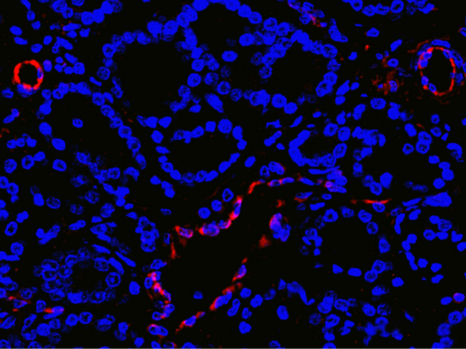
photo-cancer-de-la-prostate

© Ghinea N/Inserm Cancer de la prostate (stade précoce)

The generalised use of the PSA[1] test for prostate cancer treatment has led to earlier diagnosis of the condition. This development is an advance in itself, since the early stages are less serious and thus easier to cure. But not all prostate cancers are equally aggressive; like many diagnostic tests, the administration of PSA detects tumours more easily, including those that grow at a slower rate. Consequently, a considerable number of tumours diagnosed from a PSA test develop very slowly, thus exposing patients to the risks of over-diagnosis or over-treatment.

In the absence of markers that make it possible to identify tumours that are specifically aggressive, the main difficulty with prostate cancer diagnosis lies in assessing the benefits for the subject, taking account of the risks of over-diagnosis and over-treatment (which can vary between 30% and 50% according to the literature). It is therefore necessary to compare theoretical life expectancy, and thus to assess such cancers correctly. In practice, if the patient’s life expectancy exceeds 10 years, a period considered necessary for a cancer that has become clinically significant, the treatment is justified.

The purpose of the study conducted by Cyrille Delpierre was to assess the extent of the potential actual over-diagnosis and over-treatment for prostate cancer in France, by taking account of comorbidity rates liable to seriously affect theoretical life expectancy.

The sample consisted of 1840 patients diagnosed in 2001. The proportion of patients over-diagnosed and over-treated was assessed by comparing theoretical life expectancy (taking co-morbidity into account) to life expectancy for those living with the cancer.

It was possible to identify patients in a potential over-treatment situation, i.e. those whose theoretical life expectancy was less than their life expectancy when living with cancer, and among the latter group to discover whether they had actually been treated (either through surgery or through radiotherapy) and thus genuinely over-treated.

Of these, 9.3% to 22.2% of patients with T1 tumours had been over-treated. This represents between 7.7% and 24.4% of patients who had had a prostate ablation and 30.8% and 62.5% of those treated with radiotherapy.

Two per cent of patients with stage T2 tumours had been over-treated, making 2% of patients who had had a prostate ablation and 4.9% who had received radiotherapy.

The presence of a co-morbidity considerably increases these proportions. Patients at stage T1 with more than two comorbidities were in a potential over-treatment situation in almost all cases and were actually over-treated in one third of all cases.

One of the major limits in our study was working with patients diagnosed in 2001. The present situation is different. But the most recent data covering 2008 show inverse proportions of stages T1 and T2. T1 stages are now more frequent than T2. The proportion of minor stages during which a higher risk of over-treatment has been observed is now on the increase”, explains Cyrille Delpierre.

The research highlights that there is a significant proportion of actual over-treatment, mainly observed in patients with co-morbidity.

The main question for researchers around the debate as to the usefulness of PSA, and more generally surrounding all diagnoses, is there for not the test in itself but rather the choice of appropriate treatment.

Diagnosis is a process that starts with the offer of a PSA test, followed in the case of positive results by diagnostic examinations and suitable treatment if disease is detected. “In view of the over-treatment of prostate cancer that has been confirmed, treatment could be restricted, especially for patients with co-morbidities, to supervision that would make it possible to offer the treatment when it becomes appropriate”, proposes Cyrille Delpierre.

The difference observed between potential over-treatment and actual over-treatment is a sign that the risk of over-treatment has been taken into account by urologists, although it needs to be improved. This situation translates the difficulty in suggesting active monitoring and the difficulty of justifying a non-interventionist attitude for patients who are aware that they have cancer.

Over-diagnosis or over-treatment?

Over-diagnosis: the time between diagnosis and the emergence of clinical symptoms and/or death from cancer may be higher than life expectancy, since the cancer will not manifest itself or at least will not kill the person. This situation corresponds to the situation known as over-diagnosis.

Over-treatment: the decision to use an invasive treatment may be the origin of over-treatment when treating a cancer that has not been particularly intrusive during the life of an individual.  It is therefore not always in the patient’s interest to be diagnosed and treated for a tumour that is unlikely to develop much, by using treatment that have undesirable side effects.


[1] Prostate cancer diagnosis is based on detecting a marker in the blood of a specific marker for prostate dysfunction (a specific antigen known as PSA)

 

Stress: it should never be ignored!

Work pressure, tension at home, financial difficulties … the list of causes of stress grows longer every day. There have been several studies in the past showing that stress can have negative effects on health (cardiovascular diseases, diabetes, high blood pressure and more). The Inserm researchers at unit 1018, “The Epidemiology and Public Health Research Centre”, working in collaboration with researchers from England and Finland have demonstrated that it is essential to be vigilant about this and to take it very seriously when people say that they are stressed, particularly if they believe that stress is affecting their health. According to the study performed by these researchers, with 7268 participants, such people have twice as much risk of a heart attack, compared with others.

These results have been published in European Heart Journal.

Today, stress is recognized as one of the main health problems. When people face a situation that is considered stressful, they may experience several physical, emotional and behavioural symptoms (anxiety, difficulty in concentrating, skin problems, migraines, etc.). Previous studies, particularly the recent studies performed within the Whitehall II cohort[1], composed of several thousand British civil servants, have already shown that the physiological changes associated with stress can have an adverse effect on health.

stess au travail

crédit : ©Fotolia

Herman Nabi, Inserm researcher at Unit 1018 “The Epidemiology and Public Health Research Centre”, and his team went further and studied people who declared themselves to be stressed, in order to look more closely at whether there was a link between their feeling and the occurrence of coronary disease some years later.

Using a questionnaire prepared for the Whitehall II cohort, the participants were invited to answer the following question: “to what extent do you consider the stress or pressure that you have experienced in your life has an effect on your health”, the participants had the following answers to choose from: “not at all”, “a little”, “moderately”, “a lot” or “extremely”.

The participants were also asked about their stress level, as well as about other factors that might affect their health, such as smoking, alcohol consumption, diet and levels of physical activity. Arterial pressure, diabetes, body mass index and socio-demographic data such as marital status, age, sex, ethnicity and socio-economic status were also taken into account.

According to the results, the participants who reported, at the start of the study, that their health was “a lot” or “extremely” affected by stress had more than twice the risk (2.12 times higher) of having or dying from a heart attack, compared with those who had not indicated any effect of stress on their health.

From a clinical point of view, these results suggest that the patient’s perception of the impact of stress on their health may be highly accurate, to the extent that it can predict a health event as serious and common as coronary disease.

In addition, this study also shows that this link is not affected by differences between individuals related to biological, behavioural or psychological factors. However, capacities for dealing with stress do differ massively between individuals depending on the resources available to them, such as support from close friends and family.

According to Hermann Nabi, “the main message is that complaints from patients concerning the effect of stress on their health should not be ignored in a clinical environment, because they may indicate an increased risk of developing and dying of coronary disease. Future studies of stress should include perceptions of patients concerning the effect of stress on their health”.

In the future, as Hermann Nabi emphasizes, “tests will be needed to determine whether the risk of disease can be reduced by increasing the clinical attention given to patients who complain of stress having an effect on their health”.


[1] Created in 1985, the Whitehall II cohort, consisting of British civil servants, is making a major contribution to research in social epidemiology and is considered internationally to be one of the main sources of scientific knowledge concerning social determinant factors for health.

Pesticides and their effect on health

Since the eighties, epidemiological research has been looking into how pesticides are involved in several pathologies in persons who are exposed to these substances in the course of their work, in particular cancerous pathologies, neurological pathologies and reproductive disorders. These investigations have highlighted the potential effects of even low levels of exposure during the sensitive periods of development (in utero and during childhood).

In this context, the DGS (Direction Générale de la santé – the public health authority) asked Inserm to draw up a list of scientific publications that could be used to corroborate the health risks involved in occupational exposure to pesticides, in particular in agriculture and on the effects of early exposure of the foetus and young children.

In reply to this request, Inserm got together a multidisciplinary group of experts in which epidemiologists specialising in environmental health or occupational health worked alongside biologists specializing in cellular and molecular toxicology.

According to international scientific publications issued over the last 30 years and analysed by these experts, there appears to be a positive link between occupational exposure to pesticides and certain pathologies in adults: Parkinson’s disease, prostate cancer, hematopoietic cancers (non-Hodgkin’s lymphoma, and multiple myeloma).

Furthermore, exposure to pesticides during the prenatal and postnatal periods and in infancy appears to be a particularly risk for the development of the child.

tracteur pesticides

©Fotolia 

Pesticides: definitions, use and exposure routes

The term ‘pesticide’ comes from the Latin ‘Pestis’ (plague) and Caedere (to kill), and encompasses a large number of widely varying substances that act on living organisms (such as insects, vertebrae, worms, plants, fungi and bacteria) in order to destroy, control or limit them.

There is currently a huge variety of pesticides (around 1000 active substances have already been commercialized, with 309 phytopharmaceutical substances already authorized in France). They vary according to their targets, their modes of action, their chemical class or their persistence in the environment.

– Targets: these include herbicides, fungicides, insecticides, etc.

– There are nearly 100 chemical families of pesticide: organophosphates, organochlorides, carbamates, pyrethrinoids, triazines, etc.

– There are almost 10 000 commercially available formulations of the active substance plus different types of additive (liquid, solid, granules, powders, etc.).

– Pesticides can remain present in the environment from a few hours to several years. They are transformed or degraded into numerous metabolites. Certain of these, such as organochlorides, persist for years in the environment and end up in the food chain.

For the purposes of this study, the term ‘pesticide’ refers to all active substances, independently of regulatory definitions.


Pesticides: what are they used for?

In France, very little quantitative data are available for each type of use. Most of the tonnages (90%) are used for agriculture, but other professional sectors are also concerned: road, garden and park maintenance, the industrial sectors (production, wood treatment), use for human and veterinary health care purposes, vector control (mosquitoes), pest control, etc. We can also add domestic uses to this list (plants, animals, disinfection, gardening, wood).

In France, fungicides represent almost half of the tonnages. 80% of the tonnages of pesticides are used to treat straw cereals, corn, colza and vines. The most commonly sold contain sulphur or glyphosate as the active substance.


Sources of exposure:

Pesticides are present everywhere in the environment. They are present in the air (indoors and outdoors), in water (underground, surface water, coastal waters), in the ground and in foodstuffs (including commercialized bottled water).

In professional environments, the dermal route is the main type of exposure (roughly 80%). Exposure through the respiratory tract occurs in specific application circumstances (during fumigation or when used in closed spaces). Exposure can occur at different times: during handling, preparation, application, cleaning or re-entry (tasks carried out in areas treated with pesticides), but the worst exposure occurs when preparing spray solutions or mixtures or when re-entering already treated areas. For the general population, the oral route is often considered as the main cause of exposure via foodstuffs.


Pesticides and cancers

The group of experts targeted 8 cancer sites: 4 hematopoietic cancers, plus prostate cancer, testicular cancer, brain tumours and melanomas. Most of these sites had been identified in previous meta-analyses as being potentially linked to exposure to pesticides, generally without any distinction having been made between the active substances involved.

  •  Prostate cancer

According to available publications, there is a greater risk to farmers, workers in pesticide manufacturing plants and rural populations (between 12 and 28%, depending on the population). Some active substances have been specifically documented: chlordecone among the general population and carbofuran, coumaphos, fonofos and permethrin among the populations working in associated professions. All these substances are currently prohibited. For certain of them, a higher risk was observed among farmers who had previous family histories of prostate cancer.

  •  Hematopoietic cancers

According to available publications, there is a higher risk of non-Hodgkin’s lymphomas and multiple myelomas for workers exposed to pesticides in the farming and non-farming sectors. Organophosphates and certain organochlorides (lindane, DDT) are thought to be the cause. Although these results are not as convergent, a higher risk of leukaemia cannot be ruled out.

As for the other cancerous sites concerned, it is very difficult to carry out an overall analysis of all the studies. There are several reasons for this: they may occur less frequently (testicular cancer, brain tumours and Hodgkin’s disease), or other factors may lead to confusion (for example, exposure to UVs in the farming population, since UV exposure is a well-known risk factor for melanomas).


Pesticides and neurodegenerative diseases

The group of experts concentrated on 3 neurodegenerative diseases: Parkinson’s disease, Alzheimer’s disease and amyotrophic lateral sclerosis, and on cognitive disorders, that could be early signs of or be associated with certain neurodegenerative diseases.

  • Parkinson’s disease

An increased risk of developing Parkinson’s disease was observed in persons who were exposed to pesticides in the course of their work. The connection was particularly marked in the case of persons exposed to insecticides and herbicides. Up until now, no connection has been proven with fungicides, however there have been fewer studies on this subject.

The results are more contrasted for the other neurodegenerative diseases. For example, in the case of Alzheimer’s disease, the results from the cohort studies are convergent and reveal that there is a higher risk when the case-control studies are less robust. As for amyotrophic lateral sclerosis, the lack of study data makes it impossible to draw conclusions.

Several reviews and a recent meta-analysis have confirmed the adverse effects of exposure to pesticides in the work place, in particular the effect of organophosphates on cognitive functioning. This effect seemed to be clearer for a person having suffered from previous acute intoxication.


Effects on pregnancy and the development of the child

There now exist numerous epidemiological studies that suggest there is a connection between prenatal exposure to pesticides and the development of the child, both in the medium and long term.

  • Effect of occupational exposure during the prenatal period

Publications suggest that there is a significant increase in the risk of foetal deaths (miscarriages) and an increased risk of congenital malformations when the mother has been exposed in her work place. Other studies suggest adverse effects on fine motor skills, visual acuity, or even short-term memory during the development of the child. Finally, the recent meta-analyses have highlighted a significantly higher risk of leukaemia and brain tumours.

  • Effects of residential exposure during the prenatal period (surrounding environment or domestic uses)

Several case-control and cohort studies show an increased risk of congenital malformations in children born to women living in the vicinity of an agricultural area or involved in the domestic use of pesticides (cardiac malformations, neural tube defects, hypospadias).

Low birth weight, neurodevelopmental disorders and a significant increase in the risk of leukaemia have also been reported.


Pesticides and fertility

The link between certain pesticides (in particular dibromochloropropane) that are no longer used and adverse effects on male fertility has been clearly established, but many uncertainties remain as to pesticides currently in use.

The link between pesticides and female infertility is not well known and needs more in-depth study.


Biological mechanisms

Current publications are insufficient to accurately identify the cellular and molecular mechanisms involved in pathologies that are potentially linked to exposure to certain pesticides. However, certain modes of action of these substances corroborate the epidemiological data. For example, oxidative stress seems to play a major part, in the case of Parkinson’s disease. DNA damage, disturbances in certain signalling pathways (likely to cause a disturbance in cell proliferation or cell death), or alterations to the immune system are all indicative of the effects of pesticides on health.


The problem of pesticide mixtures

Populations are permanently exposed to low doses of pesticides and numerous other substances that contaminate the environment. These mixtures of pesticides and other substances could lead to health risks that are difficult to predict at the current time, and this makes the problem of mixtures and low doses a major issue for research and evaluating dangers.

Experts are pointing out that the fact of being unable to come to a conclusion does not necessarily mean that there is no risk. If certain substances are blamed, it is merely because they have been studied more often than others (in particular, in the United States context); many active substances have not been subjected to epidemiological studies.


Recommendations

The recommendations highlight the need for a better understanding of old and new data concerning populations exposed either directly or indirectly to pesticides in the work place.

The recommendations also draw attention to the critical exposure periods (development periods), both in working environments and in the general population.

Multi- and trans-disciplinary research must be consolidated in order to allow more rapid characterisation of the potential dangers presented by the active substances in pesticides.

Physicians insufficiently informed of the side effects of drugs.

An international study involving 255 physicians practising in Vancouver, Montreal, Sacramento and Toulouse found that physicians are not given enough information about the adverse effects of drugs during presentations made by medical sales representatives from pharmaceutical companies. And yet, these same physicians are willing to prescribe at least some of the presented drugs. Dr. Geneviève Durrieu (from the Pharmaco-epidemiology team assessing the use of medication and the risks involved, Unit 1027 “Epidemiology and public health analyses: risks, chronic diseases and handicaps” – Inserm / Université Toulouse III – Paul Sabatier) led the French part of this study, the results of which are published in the Journal of General Internal Medicine. Within the framework of this international study, is France proving to be a model student?

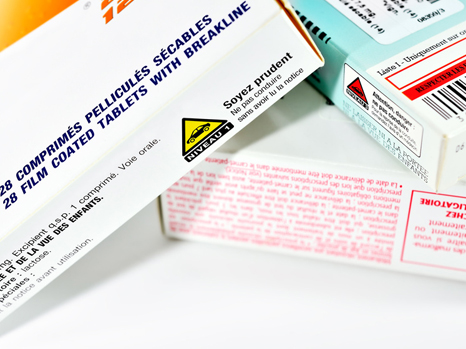
boites de médicaments

©Fotolia

Prescription-only drugs play a major part in the therapeutic care of the patient. However, they can also have adverse effects on the patient’s health. Several studies have shown that the information provided by the medical sales reps strongly influence the decision to add a drug to a prescription, often without the physician being fully aware of the side effects. In order to find out more, international researchers carried out an accurate study on the quality of the information given by medical sales reps when promoting drugs to physicians.

4 sites were selected: Vancouver, Montreal, Sacramento and Toulouse. The physicians were selected by a draw. Of the 704 physicians contacted, 36% agreed to participate. Then information was gathered about 1692 drugs promoted by medical sales reps between May 2009 and June 2010.

After each visit from the sales rep, the physicians were asked to fill in a questionnaire about how the drugs were promoted by the sales rep: they gave information (benefits and risks) about each promoted product, handed out free samples and gave invitations to events.

An overall lack of information

In this study, the researchers reported that the information given by the medical sales reps concentrated on the benefits of the drugs presented more often than their potential risks.

 And the same situation was reported for all sites in the study (Montreal, Sacramento, Toulouse and Vancouver). During more than half of the visits made to promote drugs (59%), the sales rep did not mention any adverse effects at all. This figure rose to 66% for Vancouver and Montreal.

Even more worrying: the results showed that “serious” side effects of drugs were only mentioned in 6% of the sales promotions.

France may be a model student, but…..

France differs from other countries by the fact that that the risks are mentioned more often by the sales reps: in 61% of cases to be exact.

But the overall figure taking into account all the countries involved in the study gave an average of only 41%.

However, this figure must be considered with caution, because the information given mainly concentrated on frequent and benign side effects (such as nausea, diarrhoea), whereas, in the other sites, 94% of presentations mentioned no “serious” side effect whatsoever.

On the other hand, the therapeutic benefits are highlighted in 80% of cases.

fig-benéfice-risque


Physicians are willing to prescribe promoted drugs

In this study and whatever the country, 2/3rds of physicians declared that the presentation would encourage them to prescribe a promoted product, or would “probably” or “very probably” incite them to prescribe this product more often.

surconsommation de médicaments,sécurité sociale

©Fotolia

What are the rules applicable to medical sales reps?

In France and in the USA, government authorities in charge of medication regulations are in charge of the rules and supervision of medical sales rep presentations at physicians’ surgeries. In France an additional approach was introduced in 2005. It is known as the Charter of Ethics for Pharmaceutical Sales Visits. This charter sets out the authorized and the prohibited practices and the information that must be given to the physician.

In Canada, the medical sales rep visits are regulated by Canada’s research-based pharmaceutical companies (Rx& D), who set out criteria concerning the information to be given to the physician.

The Health and Care of Pregnant Women and Babies in Europe in 2010

Second European Perinatal Health Report released by the Euro-Peristat project

The burden of mortality and morbidity in the perinatal period – pregnancy, childbirth, and the postpartum – remains a major concern in Europe. Over 5 million women deliver babies in European countries every year. A healthy pregnancy and infancy confers long-lasting benefits by preventing death and disability in childhood, and reducing risks of adult chronic diseases such as diabetes and hypertension.

The European Perinatal Health Report released by the Euro-Peristat project is the most comprehensive report on the health and care of pregnant women and babies in Europe and brings together data from 2010 from 26 European Union member states, plus Iceland, Norway and Switzerland. Euro-Peristat takes a new approach to health reporting. Rather than simply comparing countries on single indicators such as infant mortality, our report paints a fuller picture by presenting data about mortality, low birthweight and preterm birth alongside data about health care and maternal characteristics that can affect the outcome of pregnancy. It also illustrates differences in the ways that data are collected and explains how these can affect comparisons between countries.

The first Euro-Peristat report, with data for 2004, was published in 2008. It found wide differences between the countries of Europe in indicators of perinatal health and care. Documenting these differences is important because it shows that gains are possible in most countries, provides information about alternative ways of providing care, and raises important questions about the effectiveness of national healthcare policies and the role of evidence in maternity care. This second report provides the opportunity to see whether these gains have been achieved and whether inequalities between the countries of Europe have narrowed.

The 250-page European Perinatal Health Report is a major feat of collaboration between researchers and official statisticians in Europe. It also contains data from two other European projects: Surveillance of Cerebral Palsy in Europe (SCPE) and European Surveillance of Congenital Anomalies (EUROCAT).The Euro-Peristat project is cofinanced by the Health Programme of the European Union’s Directorate General for Health and Consumers which also provides funding for SCPE and EUROCAT.

Report highlights

HEALTH OUTCOMES

Fetal, neonatal, and infant mortality fell across-the-board in Europe between 2004 and 2010, but these declines were not equally distributed.

  • Fetal, neonatal and infant mortality rates declined by approximately 20%.
  • Declines were most pronounced in countries with higher mortality rates in 2004 (including Denmark, Italy, and the Netherlands for fetal mortality and Estonia, Latvia, and Lithuania for neonatal mortality).
  • Fetal, neonatal and infant mortality rates also fell in some countries with very low mortality in 2004 (including Slovenia, Finland, the Czech Republic and Austria), a decline showing that further decreases are possible.

Declines in mortality did not narrow the wide differences between European countries.

  • Fetal mortality rates at or after 28 weeks of gestation ranged from under 2.0 per 1000 live births and stillbirths in the Czech Republic and Iceland to 4.0 or more per 1000 in France, Latvia, the region of Brussels in Belgium, and Romania. The countries of the United Kingdom also had relatively high fetal mortality rates.
  • Neonatal mortality rates ranged from 1.2 per 1000 live births in Iceland and 1.5 per 1000 in Finland and Sweden to 4.5 per 1000 in Malta and 5.5 per 1000 in Romania.
  • Infant mortality rates ranged from 2.3 per 1000 live births in Iceland and Finland to 5.5 in Malta, 5.7 in Latvia, and 9.8 in Romania.

Preterm birth rates stayed the same or declined in many countries. Previous reports, including a new study issued by the Euro-Peristat group (see below) have found increases in overall preterm birth rates over the past 15 years. In contrast, our data for 2010 suggest that increases may have stopped in some countries. Understanding why these rates have stabilised or decreased in some countries can help shape health policies in countries where rates continue to rise.

European congenital anomaly registries (in the EUROCAT network) recorded a total prevalence of major congenital anomalies of 25.5 per 1000 births for 2006-2010. The prevalence among live births was 20.9 per 1000 births. Extrapolating to the EU-27, this represents approximately 112 000 affected live births. Although most fetuses affected by a congenital anomaly survive the first year of life, these anomalies are a major contributor to fetal and neonatal deaths. The total perinatal mortality rate associated with congenital anomaly was 0.81 per 1000 births. Rates of termination of pregnancy for fetal anomaly varied between regions and countries from 0 to 10.5 per 1000 births. The decade through 2010 saw shallow declines in the prevalence of non-chromosomal anomalies including neural tube defects and congenital heart defects and an increase in some congenital anomalies including Down syndrome and Gastroschisis.

Cerebral palsy affects one newborn in 500 per year. Population-based registries across Europe have shown a decrease in cerebral palsy rates in children born with very low birth weight or moderate gestational age.

Maternal deaths are rare in Europe, but under-reporting is widespread. The maternal mortality ratio (MMR) ranges from under 3 per 100 000 (in Estonia, Italy, Austria, and Poland) to over 10 per 100 000 live births (Latvia, Hungary, Slovenia, Slovakia, and Romania). Although considerable variation arises from the very small numbers of deaths involved, there is good evidence that maternal deaths derived from routine statistical systems are under-reported. This must be investigated particularly for countries where ratios are very low.

CHARACTERISTICS OF CHILDBEARING WOMEN    

Some risk factors for poor perinatal outcome increased, while others decreased. Levels of risk vary greatly between countries.

  • Multiple pregnancies: Multiple pregnancy rates differ widely throughout Europe, ranging from lows of 9 to 13 per 1000 women with live births or stillbirths in Romania, Latvia, Lithuania, and Poland to more than 20 per 1000 in Brussels, the Czech Republic, Denmark, Cyprus, Spain, and Malta. However, rates rose in 20 of the 23 countries that provided data on this indicator in both time periods. Babies from multiple births are 10 times more likely than singletons to be delivered preterm and as a result have higher risks of neonatal and infant death.
  • Maternal age: Since 2004, the average age of women giving birth in Europe has risen, but the proportions of mothers 35 years and older vary between countries from 10.9% in Romania to 34.7% in Italy. Births to mothers aged under 20 are uncommon (2% or lower in many countries), but in some countries, they account for over 5% of births (United Kingdom, Hungary, Latvia, Malta, Slovakian, and Romania.
  • Smoking during pregnancy: Our data show a decline over time in countries for which these data were available. In many countries, however, more than 10% of women continue to smoke during pregnancy. Countries with highest proportions of smokers were:  Spain (data from Catalonia – 14.4%), France (17.7%), and some UK countries, including Scotland (19%), Wales (16%), Northern Ireland (15%). Eleven countries had no data on this indicator.
  • Underweight, overweight and obesity: Data on maternal prepregnancy body mass index were collected for the first time in this report although 18 countries did not have these data. In many countries, more than 10% of pregnant women were obese, with highs in Wallonia in Belgium (13.6%), Germany (13.7%), and Scotland (20.6%).

HEALTH SERVICES

Caesarean section rates increased in most countries between 2004 and 2010. With the exception of Finland and Sweden, where rates declined, increases were widespread ranging from under 0.2% in Italy to over 7% in Lithuania, Slovakia, and Poland. In general, increases were most marked in the countries of central and eastern Europe and in Germany and Austria.

Practices related to caesarean section have not converged over time. Rates in 2010 ranged from 52.2% in Cyprus, 38.0% in Italy, 36.9% in Romania and 36.3% in Portugal to below 20% in the Netherlands, Slovenia, Finland, Sweden, Iceland, and Norway. Differences in population risk factors for caesarean section, such as maternal age and parity do not suffice to explain these wide differences. Among countries with high proportions of older mothers Italy and Portugal had high caesarean section rates while the Netherlands and Finland had lower rates.

Variations in obstetric practices raise questions about the role of scientific evidence in clinical decision making. In addition to caesarean, other aspects of clinical practice also varied widely. For example, episiotomy rates ranged from 5% to 70% of vaginal deliveries, yet current evidence does not support routine use of this procedure. Rates were around 70% in Cyprus, Poland, Portugal, and Romania and ranged from 43-58% in Wallonia and Flanders in Belgium and in Spain. The lowest rates – between 5 and 7% – were reported in Denmark, Sweden, and Iceland.

Up to 5 to 6% of births in some countries may occur after use of some form of assisted reproductive techniques (ART), although the use of the less invasive procedures is under-reported in most data systems or not reported at all. Births after in vitro fertilisation (IVF) accounted for 2 to 4% of all births. Many countries are implementing policies to prevent multiple pregnancies in assisted conception, and the decrease in twin rates observed in some countries – such as Denmark, the Netherlands and Norway – may be the result of these policies. In contrast, the substantial increases in twin birth rates observed in Italy, Malta, Luxembourg, Brussels in Belgium and the Czech Republic could result from more widespread use of ART without clear practice guidelines.

While the proportion of births in larger maternity units has increased in many countries, the size of maternity units still varies widely. Overall, few births occurred in maternity units with fewer than 500 births in 2010, but this proportion was higher in some countries (16.1% in Germany, 17.6% in Estonia, 18.3% in Switzerland, and 61.9% in Cyprus). At the other end of the spectrum, in Denmark, Ireland, Latvia, Slovenia, Sweden, England and Scotland, over one quarter of births take place in maternity units with 5000 or more deliveries per year.

THE FUTURE OF PERINATAL HEALTH REPORTING IN EUROPE

European countries face common challenges related to the health and care of mothers and babies as shown by the results of this and the previous Euro-Peristat report. By making its perinatal health indicators widely available to health planners, clinicians, researchers and users, Euro-Peristat seeks to promote evidence-based actions to improve maternal and child health. Yet to build a truly sustainable system, further actions are needed to:

Improve national capacity for perinatal health reporting by ensuring that each country can provide the full set of Euro-Peristat indicators using appropriate definitions as well as by improving ascertainment of very preterm births and maternal deaths. Wider linkage of data sources, building on methods already in use in Europe, could yield immediate gains for perinatal health monitoring in many countries.

Reinforce European collaborations to produce and use these data. The Euro-Peristat network has published 20 articles in peer-reviewed journals based on these data. Other researchers have also used the Euro-Peristat data for research on perinatal health in their own countries. We expect that these new data from 2010 – which allow exploration of time trends in maternal and infant health–to further highlight the value of having comparable data from the countries in Europe.

Notes to editors:

  • On May 27th, the Euro-Peristat project released the European Perinatal Health Report: The health and care of pregnant women and their babies in 2010. It can be downloaded free of charge as a PDF from https://www.europeristat.com.
  • Funding: Support comes from the European Union’s Health Programme
  • The Euro-Peristat project is coordinated by the Institut de la santé et de la recherche médicale (INSERM) in Paris. Data collection is coordinated by TNO, the Netherlands

Analysis of metabolic fingerprints of pregnant women living in proximity to cereal farming areas

An exploratory study published today by Sylvaine Cordier and her team (“Health, Environment and Work Research Institute”, a mixed Research Unit with input from Inserm, the Université de Rennes 1 and the Ecole des Hautes Etudes en Santé Publique) and researchers from Inra in Toulouse, suggests that environmental exposure to complex pesticide mixtures could led to metabolic disturbance in pregnant women. Observations indicate that concentrations of elements, such as amino acids or other organic acids, were modified in the urine of the pregnant women, suggesting an oxidative stress and a modification of the energy metabolism. The study was performed on 83 pregnant women from the PELAGIE cohort (Brittany), who were split into three groups, according to the areas of land dedicated to agricultural cereal activities in their town of residence. Details of the research are published in the PLOS ONE review.

Using pesticides can lead to the contamination of different environmental media (air, water, soil, food). As a consequence, exposure of the general public is possible, as shown by the presence of some pesticides in biological fluids and tissues. In addition to dietary exposure, exposure of the general public may result from the use of pesticides at home (use of household and gardening insecticides, etc.) and in proximity to the home. Pesticides used by professionals are dispersed into the atmosphere and could be a source of population exposure at varying distances from the area treated.

During pregnancy, the foetus is particularly vulnerable to environmental factors and low doses of toxic substances could be responsible for development disorders and trans-generational health effects.

Although the toxicity in high exposure conditions of several pesticides is well documented, questions remain about the effects of low doses of these molecules (environmental). Furthermore, as yet little is known about the impact of a combination of these exposure types. In addition to studies into the presence of pesticide residue in human biological fluids, one of the possible approaches to take account of these multiple exposures is to study the biological modifications in the exposed organism. The objective is to improve understanding of the mechanisms involved in exposure to pollution. The modifications can be identified by performing an overall analysis of metabolites in biological fluids (metabolic fingerprinting). Metabolites are small molecules involved in the functioning of the organism to sustain cell growth, balance and functions. Examples of metabolites are amino acids, small-sized organic acids (citric acid, hippuric acid), sugar, simple fatty acids, hormones, polyphenols, vitamins, alkaloids, minerals, etc.

This exploratory approach was implemented in 2004 using a sample of 83 pregnant women, taken from the PELAGIE (Endocrine disrupters: longitudinal study into pregnancy anomalies, infertility and childhood) mother-child cohort, which has been run by Inserm in Brittany since 2002. Three groups of women were composed in accordance with the proportion of cereal farming in their town of residence. The metabolites in the urine of these women, sampled during the first trimester of pregnancy, were characterized using a spectroscopic analysis technique (nuclear magnetic resonance) combined with a statistical method used to distinguish the three groups. The technique thus identified the metabolites for which the level of expression is modified between the three groups.

The first results of this study suggest modifications to the concentration of some metabolites in the urine of pregnant women living in towns with high levels of cereal farming; in particular, metabolites that may be involved in oxidative stress mechanisms and in the modification of the energy metabolism.

These elements led the researchers to suggest that environmental exposure to complex mixtures of pesticides, such as those used in 2004 on cereal crops, could lead to metabolic disturbances in pregnant women, for which the clinical significance, for the woman or her child, is yet to be assessed.

This is the first exploratory study conducted by Inserm Unit 1085 (IRSET) in Rennes, the Université de Rennes 1 and the Ecole des Hautes Etudes en Santé Publique (EHESP), in partnership with INRA in Toulouse (Toxalim). The study is part of a global research project that combines epidemiological research with toxicology studies to better understand metabolic pathways modified during multiple and complex exposure to pesticides (METABOLE project, www.irset.org). Ultimately, these elements could be used to better understand the effects of pesticides on health.

The “Young Researchers” congress to be held in 5 towns in France, on the theme of addiction

Over the whole school year, 20 middle school and high school pupils were seen each month in 5 neuroscience laboratories specializing in the study of addictions.

Goals: to change the attitude of these budding “apprentice researchers” to the hidden side of drugs (alcohol, tobacco, cannabis, etc.) and to addictions and to make for easier contact between youngsters and the world of research.
Starting soon on May 30th, the Young Researchers will present their research during five conference to be held in Poitiers (May 30), Amiens (June 4), Paris (June 5), Bordeaux (June 6) and Marseille (June 10).
The MAAD programme (Mechanisms of Addiction to Alcohol and Drugs) launched by Inserm with the support of the MILDT (the Interministerial mission for the fight against drugs and drug addiction) uses a “scientific education” type of approach that attempts to give these youngsters a better understanding of the products involved by introducing them to the scientific process.

One Wednesday per month, five research laboratories specialising in the pathology of addiction worked with teams consisting of a fourth-year junior school student and a middle-year high school student[1]. Working under the auspices of a senior researcher, the youngsters ran a research programme, carried out experiments and interpreted the results.

The 5 conferences held in the different research centres involved will provide information useful to all our Young Researchers. The audience will be made up of their classmates, parents, teachers, etc – and the public. These conferences are open to all and are free.

In Paris, the conference will take place on Wednesday June 5, 2015 at 18H30
in the Salle Polyvalente du SHU Sainte-Anne, 108 rue de la Santé, Paris
Danièle Jourdain Menninger, President of the MILDT, will be there for the occasion

The presentations given by the Young Researchers will be followed by a debate chaired by Laurence Lanfumey-Mongrédien, an Inserm researcher. The theme will be: “Drinking alcohol while young: the consequences in adult life”

Poitiers conference: Thursday May 30, 2013 at 18H30
Amiens conference: Tuesday June 4, 2013 at 18H00

Bordeaux conference: Thursday June 6, 2013 , at 18H00
Marseille conference: Monday June 10, 2013 , at 18H00

The consumption by young people of psychoactive products (alcohol, tobacco, cannabis, etc.) is causing constant concern for the health authorities, because it is now known that consumption at an early age while the brain is still in its developing stage, is a factor that favourises the development of dependence once adult age is reached. This campaign to arouse awareness of the toxicity of drugs is trying to bring an innovatory light to the other more conventional methods (radio spots, video clips, newspapers, mini-conferences inside schools and educational establishments, etc.).


[1]   The 5 laboratories who participated are: Amiens (Inserm ERI 24, Pr Mickaël Naassila), Bordeaux (Inserm U862 Magendie Neurosciences, Pr. Véronique Deroche), Marseille (UMR 7289 CNRS cognitive neurobiology laboratory, Dr Christelle Baunez), Paris (Inserm UMR 894, Dr. Laurence Lanfumey-Mongrédien) and Poitiers (Laboratory of experimental neurosciences and Inserm Clinic U1084, Pr. Mohamed Jaber).

(French) : VIH et Pays du Sud : Le suivi biologique des patients est coût-efficace sous certaines conditions de prix

The latest trends in healthy life expectancy in the European Union

A key priority for the European Union is to ensure its ageing population keeps as healthy as possible and it has set a target to increase the number of healthy life years (HLY) by 2 years from 2010 to 2020. The European Joint Action on “healthy life years” (EHLEIS) coordinated by the National Institute of Health and Medical Research (INSERM, France), the Member States and the European Commission together monitor and analyze trends in health expectancies in Europe. The latest results on healthy life expectancy at age 65 years and above will be revealed at the second annual meeting of EHLEIS in Paris on Thursday, April 18, 2013 (Salle Pierre Laroque, 14, Avenue Duquesne – 75007 PARIS at 13:30) at the invitation of the French Ministry of Health.

Doctor with female patient

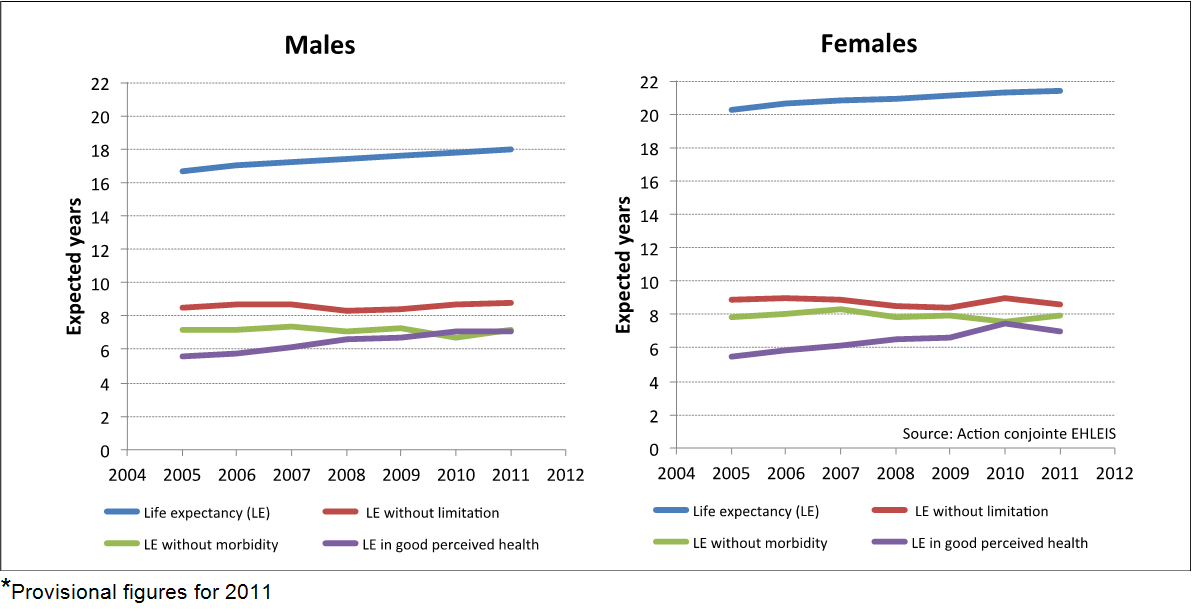
• In the EU as a whole life expectancy at age 65 in 2011 was 18.0 years for men and 21.4 years for women, an increase of more than a year from 2005 (1.3 years for men and 1.2 years for women).

• Life expectancy in good perceived health (years lived where people perceive themselves in good or very good health) has also significantly increased since 2005, by 1.5 years for men and 1.6 years for women, more than the increases in life expectancy.

• On a less positive note healthy life years (years free of activity limitation) at age 65 have remained stable between 2005 and 2011, increasing by only 0.2 years, to 8.8 years for men, and decreasing by 0.2 years, to 8.6 years, for women. This means that the years lived with activity restriction have increased between 2005 and 2011.

• Life expectancy without chronic illness, significantly decreased between 2005 and 2010 but increased markedly between 2010 and 2011 so that the 2011 values (7.2 years for men and 8.0 years for women) were similar to those in 2005

. Again this means that the number of years lived with chronic illness increased between 2005 and 2011. These apparently contradictory results might be explained by better management of health problems and/or associated disability (activity limitations), so that the health problems and disability associated with increases in life expectancy at age 65 have not generated an increase lower quality of life. It is likely that people, better informed today about their actual health status, report more chronic health problems and at earlier stages.

Table 1: Life and health expectancies at age 65 in Europe (EU25) from 2005 to 2011 * – by sex (Figures corresponding to Figure 1)

tableau 1 ENG

Figure 1: Changes in life and health expectancies at age 65 in Europe (EU25) from 2005 to 2011 * – by sex *Provisional figures for 2011

Changes in life and health expectancies at age 65 in Europe (EU25) from 2005 to 2011 * - by sex *Provisional figures for 2011

For more information

The HLY (Healthy Life Years) is an important European policy indicator and was selected as part of the Lisbon Strategy (2000-2010) to assess the quality of life and functional health status of Europeans. The HLY is also part of the European Community Health Indicators (ECHI) and was set as the overarching target of the partnership of Innovation Union (research and development component of the strategy Europe 2020) on Active and Healthy Ageing, the target being an increase in HLY in the European Union of two years by 2020. HLYs are obtained by applying the prevalence of disability observed in the general population to a standard life table to distribute the years lived into those lived with disability and those lived free of disability. The same principles are applied to compute the life expectancy without chronic disease and the life expectancy in good perceived health. The health information used (prevalence of activity limitation, longstanding health problems, self perceived health) comes from the annual EU-SILC survey whose implementation is coordinated by EUROSTAT. Self perceived health is measured by the question: How is your health in general? Very good, good, fair, bad, very bad. Chronic diseases are measured by the question: Do you have long standing health problems? Yes, no. The prevalence of disability is measured by a general question on activity limitations: To what extent have you been limited for at least 6 months, due to health problem, in activities people usually do? Severely limited, limited but not severely, not limited at all. EUROSTAT calculates and disseminates the HLY as it does for all European policy indicators. The objective is to provide in year t (i.e., 2013) the HLY indicators of year t-2 (i.e., 2011). The Joint Action EHLEIS, supported and supervised by the European Commission, disseminates widely the results for all ages (not just birth and age 65 years) through country reports, dedicated websites, Wikipedia, and other media, encourages correct interpretation through training material and an interpretation guide, promotes their use in policies and, lastly and most importantly, produces in-depth analyses of trends and gaps in HLYs and their determinants.

Adolescents aujourd’hui, adultes demain

fermer