Menu

Semaine du cerveau (Brain awareness week) 10-16 march 2014

The 15th edition of Brain Awareness Week will take place in France and in 62 countries around the world from 10 to 16 March 2014. Throughout this week, the general public will be able to meet researchers from Inserm to gain better knowledge of the brain and become better informed about recent research in this area.

The inaugural conference, “Evolution de l’intelligence et taille du cerveau: quelle relation? (Evolution of intelligence and brain size: what is the relationship?),” will be held in Paris:
on 10 March 2014 at 6:30 pm in the auditorium of the Brain and Spinal Cord Institute (ICM), La Pitié Salpêtrière Hospital, 47 Bd de l’Hôpital, Paris 13th Arrondissement (registration recommended, gro.etutitsni-mci@uaevrecudeniames)
In the company of: Philippe Vernier, Director of the Alfred Fessard Institute of Neurobiology, CNRS, and former President of the French Neuroscience Society, Roland Salesse (Coordinator of Brain Awareness Week in France, INRA) and Alexis Brice (Director of ICM).

Inserm schedule of events by region:

Lille
Lyon
Nantes
PACA
Paris
Strasbourg
Toulouse
Tours

See the complete programme on the French Neuroscience Society website

In over 30 cities and towns in France, researchers from major research organisations, neuroscience institutes, and university hospitals offer a varied and fun programme of exhibitions, films, public talks, shows, activities for children, gatherings in schools, and debates. Access to all events is free, and the programme is deliberately aimed at the general public.
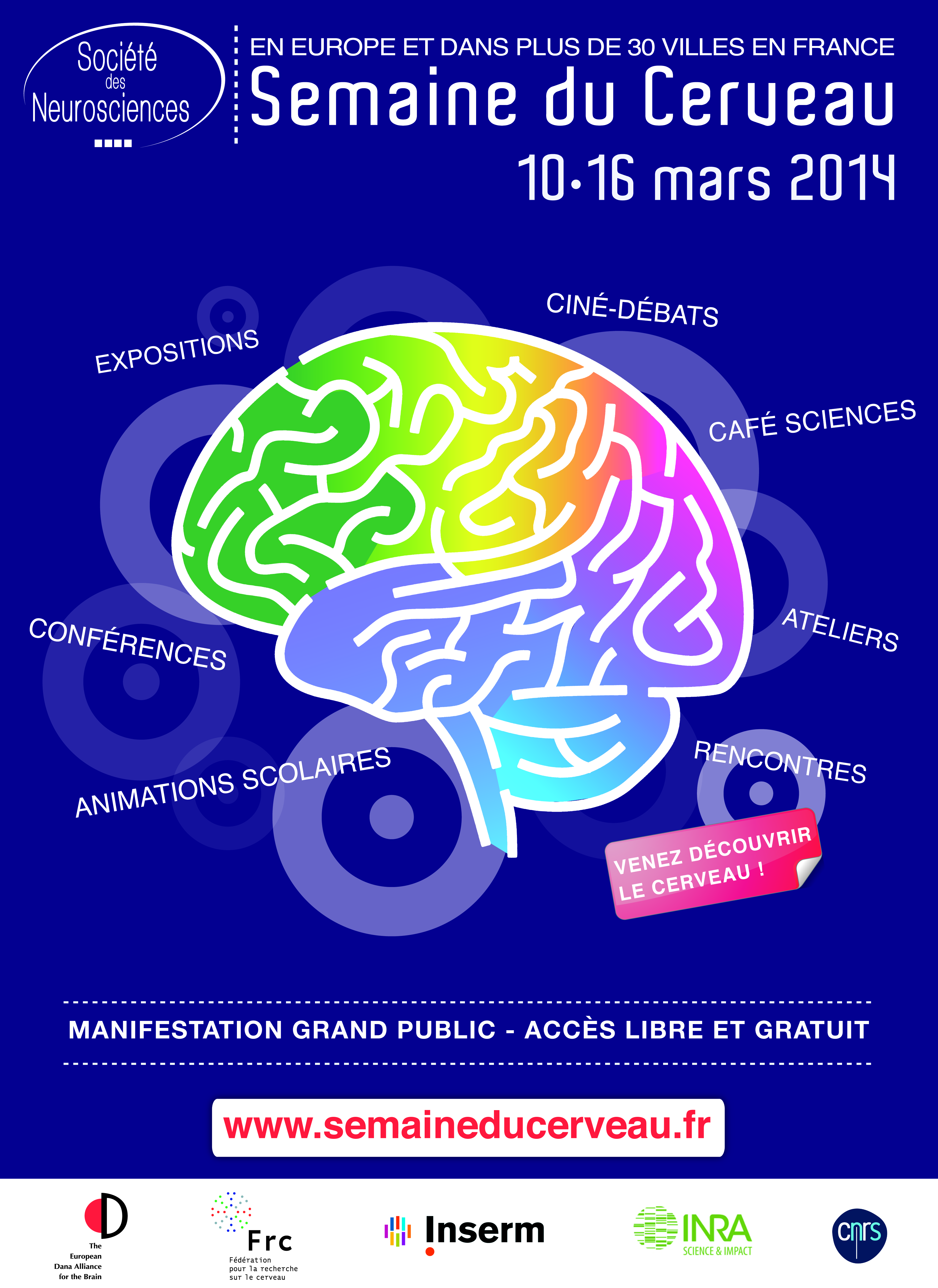
AfficheNationale_SDC2014

This event is coordinated by the French Neuroscience Society in partnership with the French Federation for Brain Research (FRC), under the aegis of the Dana Alliance, Dana Foundation. The major research organisations Inserm, INRA (French National Institute for Agricultural Research) and CNRS (French National Centre for Scientific Research) are partners in the event.


Best wishes 2014

Throughout the year, the press office filmed Inserm researchers talking about their discoveries in the simplest possible terms. The short “making of” below shows that this was not always easy. Enjoy the bloopers of 2013!

We at the Inserm press office hope that these 2 minutes will make you smile as much as they did us. And we wish you all the best for 2014.

To watch and share the video: https://youtu.be/M8IacYHTR-Y and as always, to contact us, a single address: rf.mresni@esserp
Follow the news on salle de presse de l’Inserm (in French and English)
Follow us on twitter @Inserm ou @Insermlive (for events) and on our page Facebook Inserm

Alcohol and research meeting : what is addiction?

4th Meeting-Debate with support groups for people in difficulty with alcohol

Are people “addicts” when they are dependent, or is the opposite true? Or are both words totally interchangeable? What is there in common between addiction-dependency on alcohol and dependency-addiction to gambling?

The day will be centred around 3 main panel sessions :
From alcoholism to addiction
From gene to behaviour, from neuron to addiction
Is DSM-5 a health hazard?

Click here to see the programme and read the journal of the meeting (French version)

Telethon 2013 : Cure through innovation

“Cure through innovation” is the slogan of the Telethon 2013 fundraising campaign which will begin on 6 and 7 December.

Between 5,000 and 7,000 rare diseases have been listed affecting 3 million people in France.

For a very long time, these disorders, which are mainly genetic and invalidating, were poorly understood.
The Telethon, a major fundraising movement organised by and for the French Muscular Dystrophy Association (AFM), broadcast live on France Télévisions, puts genetic disorders in the limelight. The aim of these two days is to raise maximum funding to improve patient care, provide suitable help for patients and actively support research.

Professor Jérôme Bertherat, head of the Endocrine and Metabolism Disorders Department at Cochin Hospital in Paris, and his team have shown that a rare disease, Cushing’s syndrome caused by macronodular adrenal hyperplasia, has a genetic origin. The work, which was recently published in the New England Journal of Medicine, is an excellent illustration of the usefulness of genetics to gain a more sophisticated understanding of a rare disorder, and the physiopathology of other disorders.

Click to read the interview with Jérôme Bertherat (French version)


For press releases on the work of Inserm teams working on rare disorders, see:

Clinical trial launched to treat Sanfilippo B syndrome using gene therapy November 2013

21 September 2013: World Alzheimer Day

The 20th World Alzheimer’s Day is to be held on 21 September 2013. The main aim of this international day is to reflect on ways to improve the quality of life of patients and carers.

Today, over 850,000 people are living with this disease.

This day was the occasion for the Alzheimer Foundation, hosted by Inserm, to launch its app for smartphones and pads. The “Alzheimer Foundation” app, which is already available on Google Play and will soon be on Apple Store, is for everyone – patients, families, healthcare professionals, researchers and the general public. Its aim is to inform, comment on and share the latest changes and breakthroughs for managing and researching into the disease, and do this directly and continuously.

For the 20th Alzheimer’s Day, the Claude Pompidou Foundation awarded its prize to Luc Buée for his work on lesions found in the brains of Alzheimer patients, and particularly on neurofibrillary degeneration.
For further information on this work, please contact Luc Buée, director of the “Alzheimer and Tauopathies” team from the mixed research unit 837 (Inserm/Université Lille 2/Université Lille Nord de France).

Latest news from Inserm :

A new therapeutic strategy to combat prion and Alzheimer’s diseases, August 2013
Contact : Benoit Schneider

Man & robot : The Interspeech 2013 – August,28th – Lyon

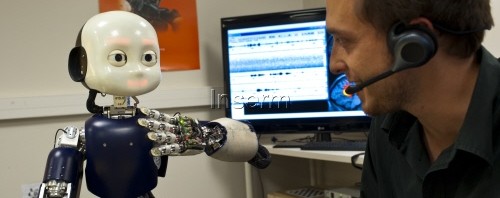
At the IUT GMP of Lyon 1 University, researchers for the first time were able to teach an industrial robot how to perform new tasks, by explaining the task in spoken language.  Combining forces from cognitive neuroscience and industrial robotics, Peter Ford Dominey (INSERM/CNRS) and Sébastien Henry (Univ Lyon 1) made the link between language and robot commands.  This may be the first step towards allowing smart robots to interact with non-experts in the factory.  And this may be a step in boosting the competitivity of French PMEs.  

M. Dominey and his colleagues will talk about interaction between men and robots during a pau sujet de l’interaction the Interspeech conference in Lyon, Wednesday 28  august   (special session « Show and Tell », Wednesday 28 August, 2-4 pm).

On-Line Learning of Lexial Items and Grammatical Constructions via Speech, Gaze and Action-Based Human-Robot Interaction
Gregoire Pointeau, Maxime Petit, Xavier Hinaut, Guillaume Gibert, Peter Ford Dominey, Interspeech 2013, Lyon.

See the process that give robots the ability to execute several tasks, thanks to the human voice :

Sport and disability: a training plan for paraplegics

One year after the success of the Paralympic Games in London, France will be hosting the World Handisport Athletics Championships this Friday 19 July in Lyon (lasting until 28 July, the World Handisport Athletics Championships.

In Dijon, Gaëlle Deley, scientific officer of the Centre d’Expertise de la Performance and associate researcher in Inserm Unit 1093 “Cognition, action, sensory-motor plasticity” and her team have developed an innovative training technique for paraplegics.

In fact, if they are to be effective for health, sports exercises need to reach a certain intensity but this poses a problem for paraplegics. That is because their bodies do not generally work out hard enough because they can only use their upper limbs. This affects their health since the main causes of mortality among paraplegics are cardiovascular diseases.

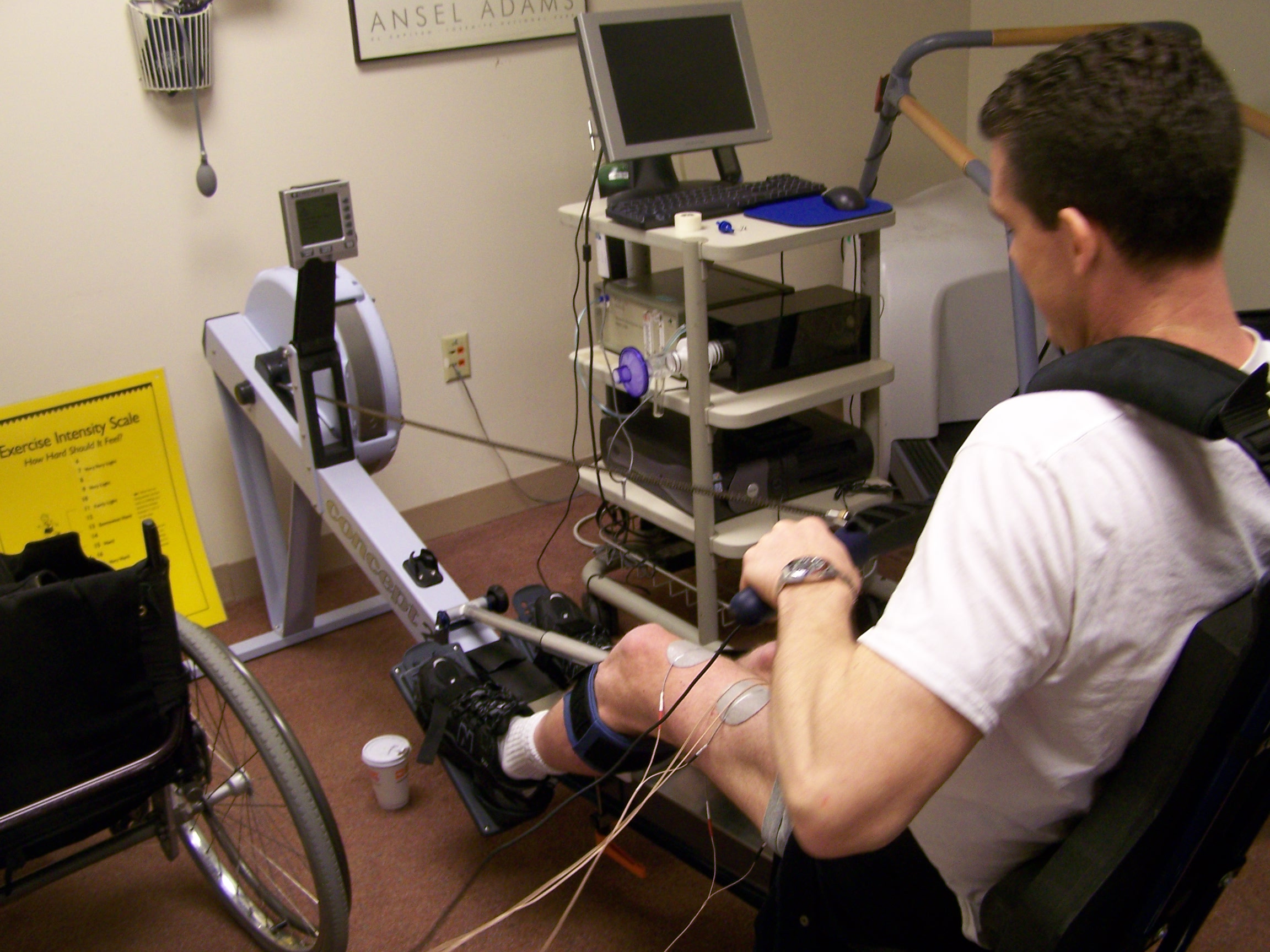
By using a rowing machine combined with electrical stimulation, the patient is able to perform the same movements as an able-bodied sportsperson. This procedure mobilises all the muscles in the body and is aimed at increasing the physical capacities and quality of life for a wheelchair-bound person.

handisport

crédit : ©Gaëlle Deley

The patient sends an electrical current to his/her thighs via electrodes. This causes the muscles to contract and propel the chair backwards. When the electric current is cut, the action of the upper limbs moves the chair forwards.

This programme, developed in close collaboration with Harvard University, has already taken on considerable magnitude in the United States.  “The purpose is to look at our results and progress together. If the health benefits are confirmed, this method could be developed on a larger scale”, explains the scientific officer.

The initial results are very encouraging: the physical capacities of the patients have improved by nearly 40% after only a few months.

Apart from the health benefits, this method is of great interest to the paraplegic sportsperson, regardless of the sport practised, because this makes it possible to train at much greater intensity and thus to develop physical abilities to a much greater extent”.

For more information about the study currently in progress, please contact Gaëlle Deley.

A “Salamander” robot presented in Lyon from 19 to 21 March

Salamandra robotica II,  an amphibian robot created by the Bio-robotics Laboratory of the Ecole Polytechnique Fédérale de Lausanne (EPFL) will be presented at the Innorobot Show held in Lyon from 19 to 21 March. The team headed by Professor Auke Ijspeert has perfected this latest generation in collaboration with Jean-Marie Cabelguen INSERM Research Director in Bordeaux.

Salamandra robotica II digitally reproduces the networks of medular neurons that produce locomotion. It is the only robot inspired by nature and capable of swimming, climbing and walking. The electrical signals sent to the robot by a “brain” computer enable it to walk or swim,  and to control the speed and direction of movement.

For more information, read the press release presenting the first generation of Salamander robots.

Anything you want to know about the Innorobot Show.

photo ©EPFL

March 14th, 2013 : National hearing date

The natural loss of hearing with age is no longer a secret today. The sixteenth “National Hearing Day” is aimed especially at the elderly. Retaining one’s hearing ability, by any means whatsoever, appears to be a new way of Aging Well.

In the context of its citizens’ lectures, INSERM arranged a session on Thursday 14 March from 7.00 p.m. to 8.30 p.m.:
Hearing difficulties: breaking the silence* was held at the Paris Cité des sciences and de l’industrie, in tandem with the Jacques Ellul de Pessac mediatheque.

(French) La présence de sels d’aluminium dans les vaccins constitue-t-elle un danger?

©Depardieu, Michel

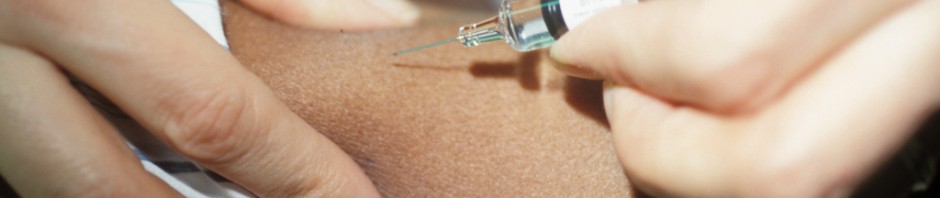
The aluminium salts used in the makeup of vaccines could have adverse effects on health. The metal could build up in the central nervous system and cause a rare disease known as macrophagic myofasciitis that can cause intense muscular pain, cognitive disorders and intense fatigue, among other symptoms.

Romain Gherardi, Inserm researcher at the Inserm unit 955 “Mondor Biomedical Research Institute (IRMB), has been working on this subject for several years.

Find the latest publications by this Inserm team :

Long-term follow-up of cognitive dysfunction in patients with aluminum hydroxide-induced macrophagic myofasciitis – Journal of Inorganic Biochemistry

Long-term persistence of vaccine-derived aluminum hydroxide is associated with chronic cognitive dysfunction – Journal of Inorganic Biochemistry

The Telethon: to take place on 7 and 8 December 2012 with the help of Inserm researchers

“Oser vaincre” (Dare to win) is the slogan for the Telethon 2012 campaign that will start on December 7 and 8.  Three million people in France are affected by 6,000 different rare diseases. These diseases, mostly genetic and disabling, had remained largely unknown for a long time. The aim of the Telethon is to put these diseases back in the limelight, to provide good quality care for those who suffer from them, to provide suitable support and obtain concrete solutions to help them cope with the diseases by actively supporting research.

Several Inserm researchers are currently working on these rare diseases.Some of them will take part in the 30-hour live Telethon programme and will present the results of their research. They will be available to answer any questions you want to ask between now and Friday.

The personalities below will take part in the Telethon:


Marisol Corral Debrinsky and José-Alain Sahel from theInstituteofVision
Marc Peschanski and Xavier Nissan from Istem
Marina Cavazzana and Alain Fischer
Martine Barkats, Thomas Voit and Laurent Servais from theInstituteofMyology
Nicolas Lévy
Philippe Moullier and Guylène Le Meur

The press releases from these teams are available.

Identification of a recurrent chromosomal anomaly in neural cells derived from pluripotent stem cells (ES and iPS).

The cause of blindness has been identified for certain forms of deaf/blind disorders

On 6 December 2012, Patrizia Paterlini Bréchot’s team published an article demonstrating that it was possible to obtain a prenatal diagnosis of genetic diseases from a simple blood sample.

fermer