Menu

A Common Food Additive Found to Alter the Human Microbiota and Intestinal Environment

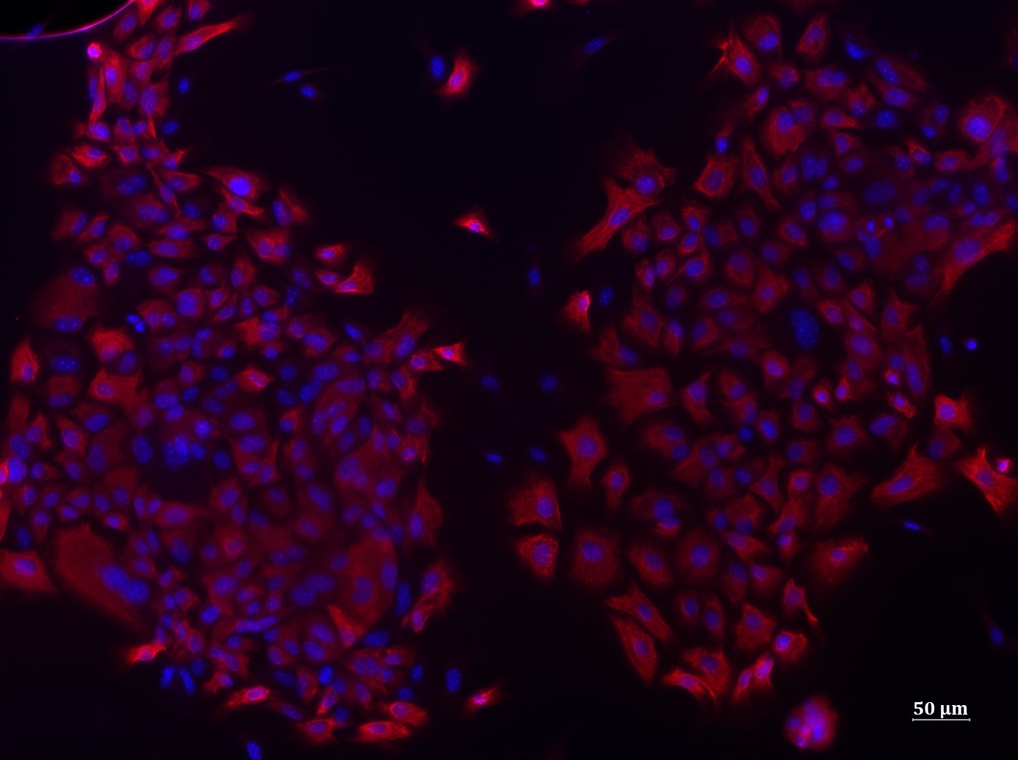
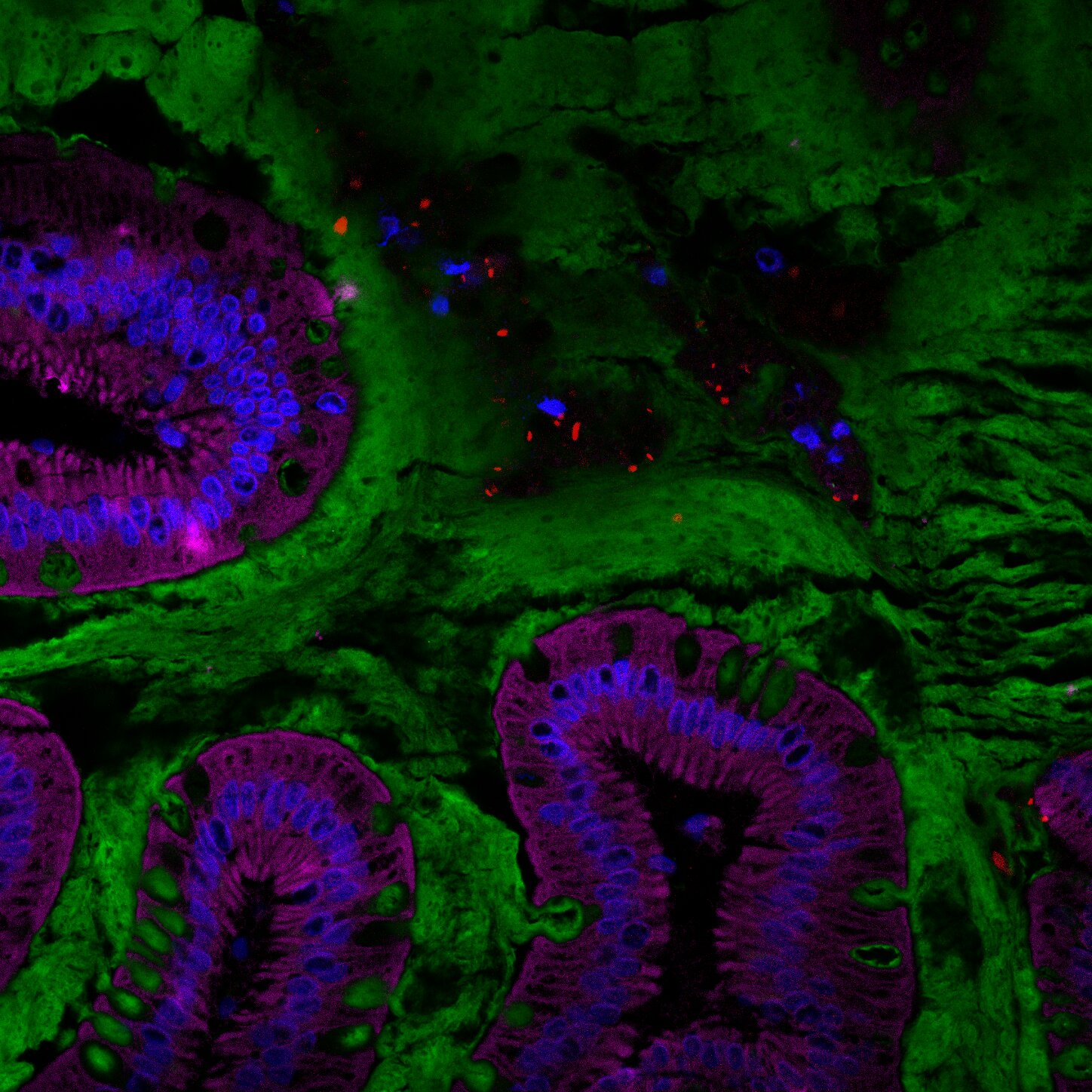
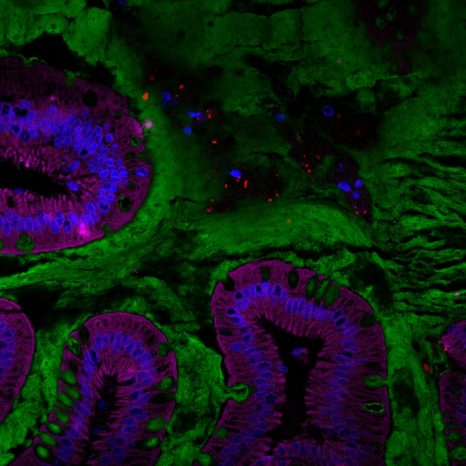
microbiote intestinal humain (rouge) au sein de la couche de mucus (verte) située à la surface de l’intestin.

Visualization of the human gut microbiota (red) in the mucus layer (green) on the surface of the intestine. © Benoit Chassaing/Institut Cochin

Given the high prevalence of inflammatory bowel diseases, such as Crohn’s disease, research is progressing to improve understanding of their risk factors and thus improve patient care. Scientists at Institut Cochin (Inserm/CNRS/Université de Paris), led by Inserm researcher Benoît Chassaing, had previously shown in mice that the presence of emulsifiers in many processed foods could promote intestinal inflammation. In a new study published in Gastroenterology, the same team has shown in healthy human volunteers that carboxymethylcellulose (CMC)[1], a widely used food emulsifier, affects the intestinal environment by altering the composition of the microbiota. The team stresses that more research is needed in order to characterize the long-term impact of this additive, including in individuals with inflammatory bowel disease.

Around 20 million people worldwide are thought to be affected by inflammatory bowel disease, which includes Crohn’s disease and ulcerative colitis. Genetic factors have been identified to explain the intestinal inflammation that characterizes these conditions, but these predispositions are not enough to explain their onset. For several years now, many research teams have been looking at environmental factors.

One such team is that led by Inserm researcher Benoît Chassaing, at Institut Cochin (Inserm/CNRS/Université de Paris), which is interested in the impact of diet – and more specifically the role of certain food additives, such as emulsifiers (thickeners) – on the gut microbiota.

A particular focus of the team has been the impact of carboxymethylcellulose (CMC), a synthetic emulsifier added to many processed foods to improve texture and prolong shelf-life. Research in mice had previously found that CMC, as well as some other emulsifying agents, alters the composition of the gut microbiota, thereby worsening many chronic inflammatory diseases, such as colitis, metabolic syndrome, and colon cancer.

Therefore, in their latest study, the scientists sought to verify whether CMC could have the same impact in humans, given its growing use in processed foods since the 1960s despite having never been the subject of extensive clinical testing.

Clinical study on healthy volunteers

To conduct this clinical study, the scientists recruited a small group of healthy volunteers. The participants, housed at the study site for the duration of the research, were split into two groups. One consumed a diet that was strictly controlled and free of additives, and the other followed the same diet but enriched with CMC.

After two weeks, the researchers observed that, among the participants who had consumed CMC, the bacterial composition in the intestine was modified, with a marked decrease in the number of certain species known to play a beneficial role in human health, such as Faecalibacterium prausnitzii. In addition, the fecal samples of the participants receiving CMC were highly depleted of many beneficial metabolites. Finally, from the clinical viewpoint, these participants were more prone to abdominal pain and bloating.

Colonoscopies performed in these volunteers at the start and end of the study also showed that in a subset of the CMC group subjects, the intestinal bacteria were located closer to the walls of the intestine. This is a characteristic observed in inflammatory bowel diseases and type 2 diabetes.

While the consumption of CMC did not induce any inflammatory disease in this relatively short study, these findings confirm data from animal studies and suggest that the long-term ingestion of this additive by humans could negatively impact the gut microbiota and therefore promote chronic inflammatory diseases and metabolic deregulation.

“Our findings underline the need for further studies on this category of food additives, on larger numbers of people and for a longer duration. We also now want to know more about the differences in response to CMC between individuals. Why is it that only some develop inflammatory markers after consuming these additives? Are some people more sensitive to certain additives than others? These are the questions we want to answer and for which we are currently devising a variety of approaches,” specifies Chassaing.

The team is planning new clinical and preclinical studies that are expected to identify molecular markers of sensitivity to CMC in order to better explain these differences. Trials on larger groups of volunteers with inflammatory bowel disease are ongoing so as to identify the impact of the additive in these patients.


[1]CMC is also referred to as E466 on food product labeling.

Does Falling Asleep Boost Creativity?

Sommeil _ Dali© Wiki Commons – Fair Use

Salvador Dali liked to use short phases of sleep to stimulate his creativity. © Wiki Commons – Fair Use

What if a few minutes of sleep could trigger creativity? This is what suggests a study by researchers from Inserm and Sorbonne Université at the Brain Institute and the department of sleep medicine at Pitié-Salpêtrière Hospital AP-HP. Their findings have been published in Science Advances.

The inventor Thomas Edison is said to have taken short naps to spark his creativity. During them, he would hold a metal ball in each hand. Upon falling asleep, the balls would crash to the floor, waking him up just in time so that he could note his flashes of creativity. Other famous people also liked to use short phases of sleep to stimulate their creativity, such as Albert Einstein and Salvador Dali.

Inspired by this, the team of Inserm researcher Delphine Oudiette and her colleague Célia Lacaux at the Brain Institute and Pitié-Salpêtrière Hospital AP-HP wished to explore this very specific phase of sleep, to determine whether or not it affected creativity.

As part of their study, the team set the 103 participants math problems that could all be instantly solved using the same rule – of which the participants were unaware when starting the test. The subjects were allowed a first attempt at solving the problems. Those who had not found the hidden rule were invited to take a twenty minute nap inspired by Edison, holding an object in their right hand, before repeating the math tests.

Spending at least 15 seconds in this very first phase of sleep after falling asleep tripled the chances of finding the hidden rule, due to the effect of the famous ‘Eureka!’ moment. ” An effect that disappeared if the subjects plunged into a deeper sleep,” explains Lacaux, first author of the study.

In parallel, the researchers revealed several key neurophysiological markers of this sleep phase that generates creativity.

During the onset of sleep, there is indeed a phase that is conducive to creativity. Activating it requires finding the right balance between falling asleep quickly and not falling asleep too deeply. These “creative naps” could be an easy and accessible way of stimulating our creativity in everyday life.

“The sleep onset phase has so far been relatively neglected by the cognitive neurosciences. This discovery opens up an extraordinary new avenue for future studies, particularly of the brain mechanisms of creativity. Sleep is also often seen as a loss of time and productivity. By showing that it is in fact essential to our creative performance, we hope to reiterate its importance to the general public. ” concludes Oudiette, Inserm researcher and last author of the study.

COVID-19: New Avenues to Explain Why Children Are at Less Risk of Severe Forms

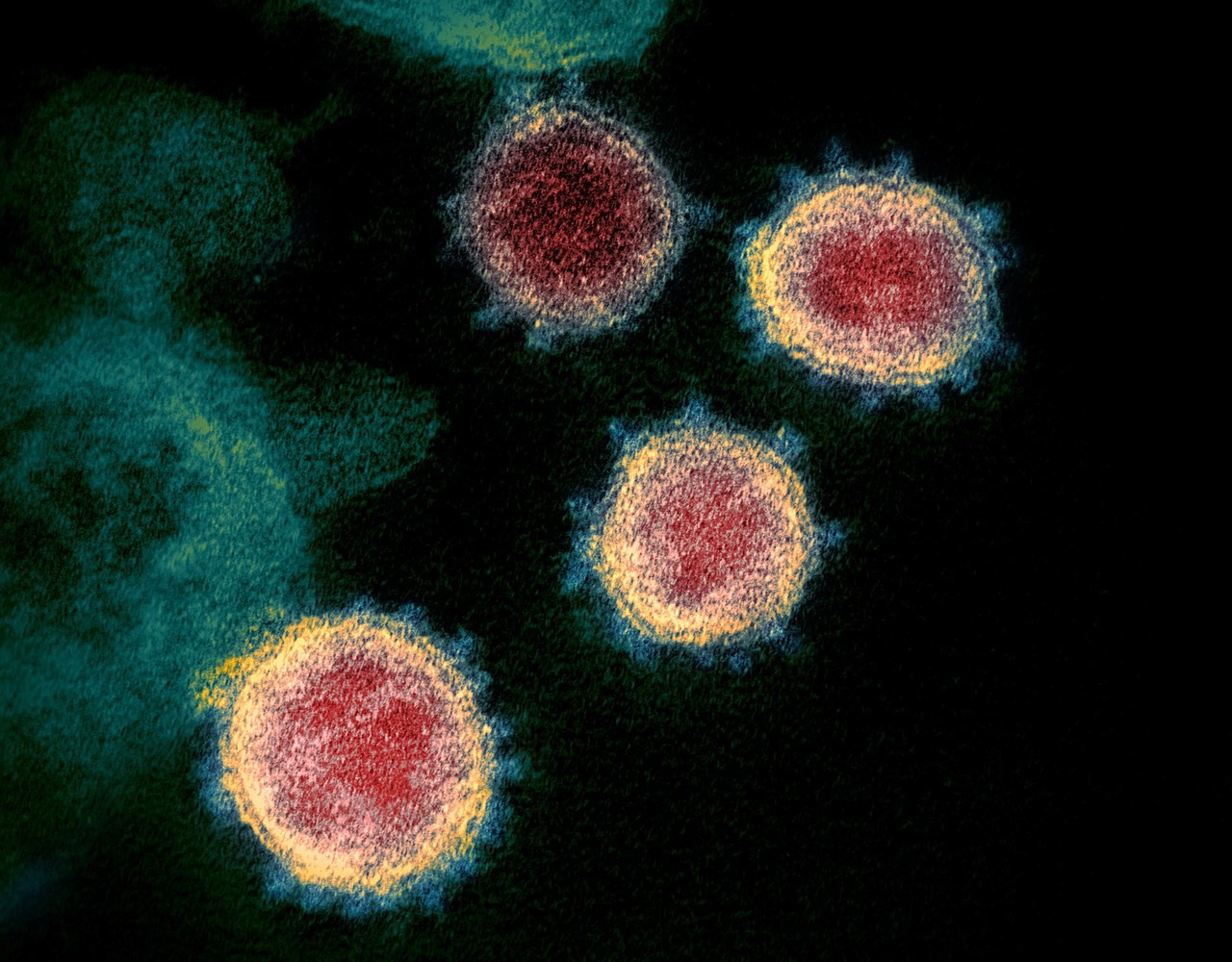
This colorized electron microscope image shows SARS-CoV-2 isolated from a patient in the USA. Viral particles emerge from the surface of the laboratory-cultivated cells. © NIAID-RML Creative Commons.


Why are children less susceptible than adults to critical forms of COVID-19? This question has been studied by many scientists since the pandemic began. A number of interesting avenues are emerging, notably suggesting differences in immune response following SARS-CoV-2 infection. In a new study, researchers from Inserm, Université d’Angers and Angers University Hospital, members or partners of the Regional Center for Research in Cancerology and Immunology Nantes-Angers (CRCINA) have shown that the interferon response, which is part of the innate immune response, differs according to the age of the patient. Their findings have been published in Frontiers in Immunology in November 2021.

The symptoms of COVID-19 vary widely from one person to another. While some are asymptomatic following SARS-CoV-2 infection, others develop severe and possibly fatal forms of the disease. Since the start of the pandemic, age has been identified as a major risk factor for developing a severe form of COVID-19. Unlike adults, and especially the elderly who are very vulnerable to infection, children usually have no clinical signs of the disease (or only mild symptoms).

Numerous research teams are trying to identify the immune response parameters that could explain this difference in susceptibility between young and elderly people.

In this collaborative research, scientists from Inserm and Université d’Angers at the Regional Center for Research in Cancerology and Immunology Nantes-Angers, as well as the Virology and Immunology laboratories at Angers University Hospital, have hypothesized that children are protected due to a stronger local innate immune response, in the nasopharyngeal mucosa. So far, there has been less research into innate immunity to COVID-19 than into adaptive immune response[1].

A closer look at immune response

Innate immunity is the immediate response that occurs locally, at the point of entry of a pathogenic microorganism, in any individual – even in the absence of prior contact with that microorganism. It is the first barrier of defense against pathogens. In the event of a viral infection, it primarily deploys Natural Killer cells

that kill the cells infected with a virus. It also induces the production of interferons by the infected cells, and it is these interferons that protect the adjacent cells from infection.

Adaptive immunity is a response that takes 5 to 7 days to become protective when the pathogen is encountered for the first time (primo-infection), but is more rapidly effective once the pathogen has already been encountered (this is known as a memory response). In the event of a viral infection, it deploys two types of protective immune cells: antibody-producing B cells that bind to the virus and “neutralize” it, namely by preventing it from entering the cells and by promoting its elimination, and cytotoxic CD8+ T cells that kill the infected cells. The B and T cells recognize protein structures (of the virus) known as antigens.

Following infection with a virus or vaccination, the level of antibodies and lymphocytes recognizing the virus decreases over time. Nevertheless, the so-called “memory” B and T cells remain in the body and keep watch, acting faster and more efficiently if they encounter the same virus in the future.

Different interferon responses
 

In their research, the scientists analyzed nasopharyngeal samples from 226 people who had come for a PCR test at a drive-through screening center at Angers University Hospital between March 2020 and March 2021. Of these individuals, 147 were infected with SARS-CoV-2. “Our research was original in that we had not preselected the participants, so as not to bias the results, and also that we were interested in innate immunity – and more specifically the interferon response,” emphasizes Yves Delneste, an Inserm researcher who took part in this study.

When cells are infected with any given virus, they rapidly produce type I (IFN-α/β) and type III (IFN-l) interferons, which are powerful natural antiviral molecules. They are called interferons because they “interfere” with the replication of the virus and protect the adjacent cells from infection.

While these interferons all have antiviral activity, their modes of action are not redundant. Each induces an antiviral response of a different intensity and duration and has a different but complementary action on immune response[2].

An inadequate or inappropriate interferon response will not make it possible to contain the replication of the virus or it may promote a pathological immune response (for example, an exacerbation of the immune system as seen with severe forms of COVID-19).

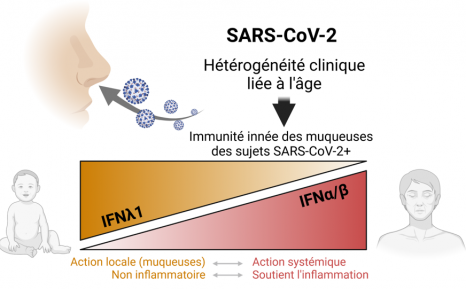
Analysis of the samples studied by the research team revealed that in subjects infected with SARS-CoV-2, the expression profiles of type I (IFN-α/β) and type III (IFN-l) interferons differ with age. Thus, children under 15 years of age have an increased expression of type III interferons, locally-acting molecules with limited inflammatory properties, which control the virus locally at its entry point in the nasopharyngeal mucosa. Conversely, adults, especially elderly adults, preferentially express type I interferons, which are inflammatory and have a more systemic action (in the whole body).

“These findings help to explain why children are less susceptible to critical forms of COVID-19 than adults. Type III interferons, which primarily act by protecting the epithelium at local level, could control infection at the point of entry, without inducing excessive widespread inflammation, thereby preventing the slide towards the inflammatory storm with mass cell destruction that is seen in severe forms,” emphasize Pascale Jeannin (university professor and hospital practitioner) and Dominique Couez (university professor) in Angers, who led this research.

Based on these findings, the scientists will now conduct a prospective study to evaluate whether, in children with clinical signs of the disease, the characteristics of the interferon response associated with severe forms in adults are present and whether they can predict the course of infection.


1 see text box on innate and adaptive immunity

2 see text box

Covid-19 booster doses: start of inclusions in the COVIBOOST trial

Vaccin Anti Covid

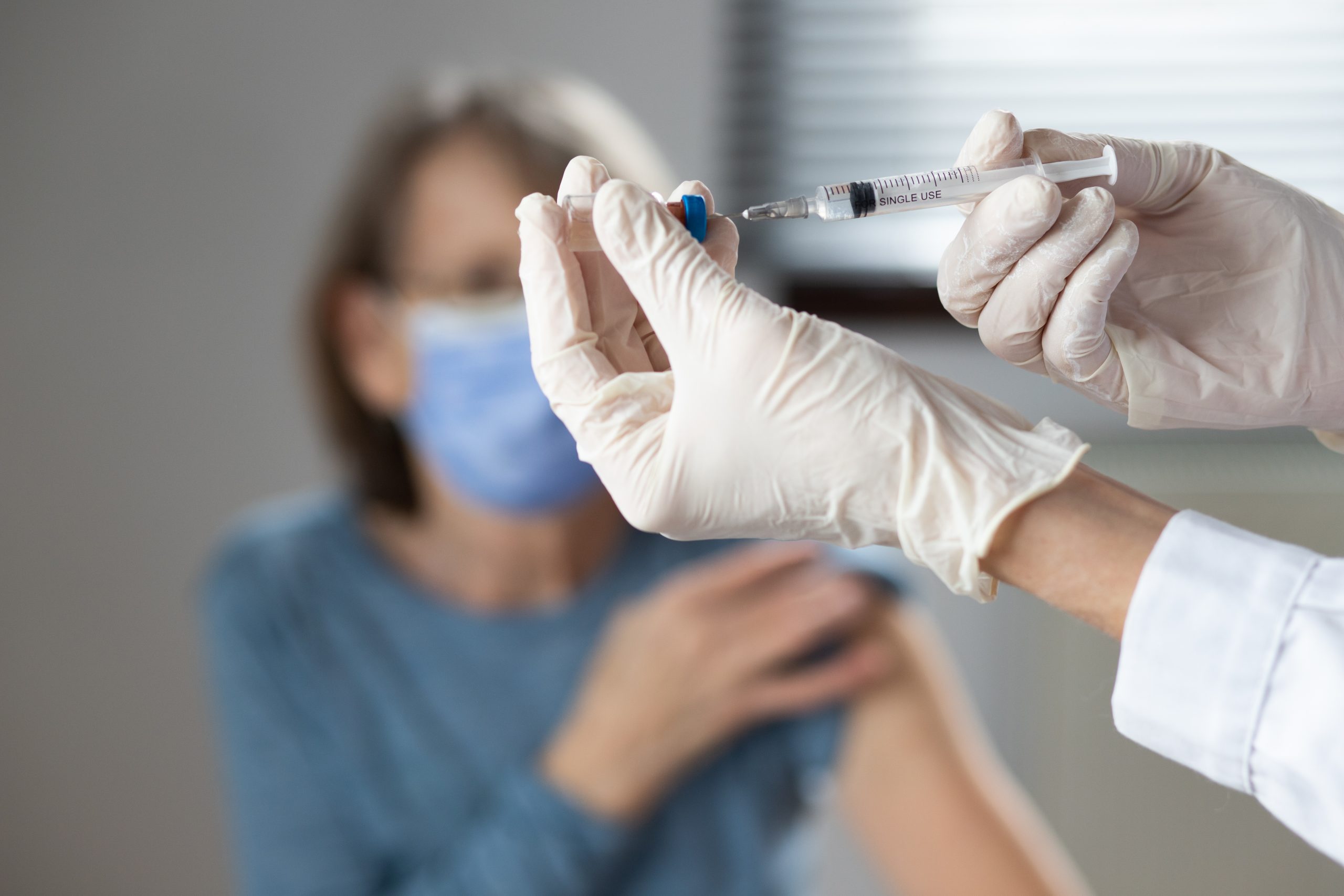
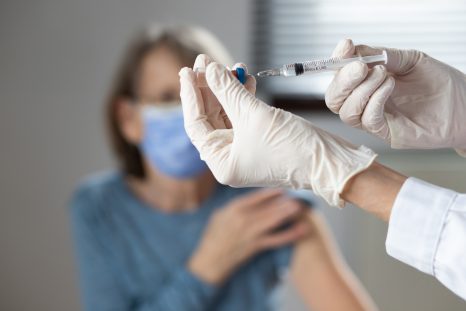
French health authorities recommend that all adults over 18 years of age perform a booster injection with a MRNA to ensure maximum and prolonged vaccine protection.© AdobeStock


In a context of winter circulation of the virus, a constant increase in the number of confirmed cases and the appearance of new variants, the French health authorities recommend that all adults over 18 years of age perform a booster injection with a MRNA to ensure maximum and prolonged vaccine protection.

Administration of a 3 rd dose of a different vaccine could nevertheless have advantages in terms of efficacy and safety, but also in terms of cost and acceptability.

The COVIBOOST trial is designed to study the immune response of the two candidates based recombinant protein vaccine associated with an adjuvant developed by Sanofi Pasteur and GSK and that of a 3 rd dose of the Pfizer-Biontech vaccine.

This randomized double-blind trial, promoted by Assistance Publique – Hôpitaux de Paris, will be carried out in 11 hospitals in the COVIREIVAC network coordinated by Inserm. It starts on December 8.

300 participants who had previously received two doses of the Pfizer-BioNTech vaccine ( 2nd dose received within 5 to 7 months) and without a history of Covid-19 will be included, half of them aged 65 and over.

They will randomly receive a booster dose:

– the mRNA vaccine from Pfizer-BioNTech (Comirnaty®)

– the adjuvanted recombinant protein vaccine from Sanofi-Pasteur / GSK based on the original strain of the virus (Wuhan strain)

– the adjuvanted recombinant protein vaccine from Sanofi-Pasteur / GSK based on the beta variant (South African variant)

The data from the trial will make it possible to measure the immune response induced by the three vaccines studied as a booster, and its effectiveness on the different variants but also its persistence at 3 and 12 months, depending on age.

This is the eighth study launched by COVIREIVAC.

The booster vaccination as part of the trial will validate the health pass for the 3rd dose according to national requirements.

Today the booster dose with an mRNA vaccine has become essential. But we hope to broaden the range of possibilities with other vaccine technologies. » Explains Marie Lachâtre, infectious disease doctor (Hôpital Cochin and Hôtel Dieu / APHP) and member of COVIREIVAC. “The Sanofi-Pasteur / GSK vaccine candidates have for several months been the subject of phase 3 clinical trials as a primary vaccination or as a booster. Today we want to assess the immune response they induce by booster compared to that of the Pfizer-BioNTech vaccine ”.

This clinical study has been labeled a “national research priority” on Covid-19 by the Ministry of Health and Solidarity.

Launched in October 2020, the COVIREIVAC platform coordinated by Inserm and F CRIN in conjunction with 32 university hospitals and a network of 11 immunology laboratories aims to conduct and promote excellent clinical vaccine research in France. Since October 1, 2020, 50,000 volunteers have registered to participate in research efforts and improve knowledge about these new vaccines. This is an unprecedented initiative in our country. The platform is managed by Inserm, and the clinical operational component is coordinated by the Assistance Publique-Hôpitaux de Paris of the various CHUs. New research projects are regularly launched within the framework of COVIREIVAC.

Even if several vaccines against Covid-19 are available, it is imperative to continue research in order to deepen scientific knowledge, in particular the duration of protection and the quality of the immune response.

The objective of the clinical studies coordinated by COVIREIVAC is to provide answers to these research questions.  

Bronchopneumopathie chronique obstructive : une mutation génétique confirmée comme facteur de prédisposition

Inserm 2021 Prizes: Science More Mobilized Than Ever to Serve Health

Prix Inserm 2021

© Inserm


In this year 2021, still marked by COVID-19, Inserm’s workers have remained mobilized to advance biomedical research and pursue their efforts across all areas of health research. To honor this collective endeavor, Inserm has awarded its 2021 Prizes to five people whose quality of work bears witness to the scientific excellence of the Institute’s research. “By shining the spotlight on its talents, Inserm intends to show the diversity and richness of the biomedical research professions, as well as the tireless creativity and passion of the women and men whose achievements contribute to the Institute’s scientific excellence – for the benefit of society and, of course, for everyone’s health,” praises its CEO Gilles Bloch.

The Inserm 2021 Grand Prize has been awarded to psychiatrist and researcher Marion Leboyer, who has dedicated her career to improving the understanding and treatment of mental illness. This Grand Prize rewards the innovative nature of her research, particularly in bipolar disorders, schizophrenia, and autism spectrum disorders.

Marion Leboyer, Inserm Grand Prize

   Marion Leboyer, Grand Prix Inserm 2021

©Inserm/François Guénet

Marion Leboyer is head of the Translational Neuropsychiatry laboratory in Créteil (Unit 955 Inserm/Université Paris-Est Créteil). She has dedicated her professional life to researching mental illness – innovative work that has greatly contributed to improving the treatment of people suffering from schizophrenia, depression, bipolar disorders and autism spectrum disorders, with the ever-present goal of developing personalized therapeutic approaches for each patient.

In 2007, she created the FondaMental foundation, which supports her laboratory with conducting its research. Her team is behind the discovery of several genes involved in various mental disorders and has helped demonstrate the cost of mental health in France. Leboyer’s team has also been heavily involved in providing support to patients during the COVID-19 epidemic, by setting up CovidÉcoute followed by Écoute Étudiants Île-de-France – digital platforms dedicated to psychological support and listening.


Pierre-Louis Tharaux, Research Prize

©Inserm/François Guénet

Twenty-five years ago, nephrologist Pierre-Louis Tharaux set himself the challenge of helping to bring kidney failure out of its therapeutic dead-end. Now a researcher at the Paris Cardiovascular Research Center (Unit 970 Inserm/Université de Paris), he is on the way to success with an innovative approach and a first treatment being trialed in patients: progress that has been rewarded by the Research Prize.


Laurent Fleury, Opecst-Science and Society Prize

Laurent Fleury, Prix Science et société-Opecst 2021

©Inserm/François Guénet

Together with the Collective Expert Review structure that he has led since 2016, Laurent Fleury is at the interface between science and society taking stock of scientific knowledge on a health subject at a given moment in time. The objective is twofold: aid political decision-making and inform citizens. These expert reviews and the value created from them have earned him the Opecst-Science and Society Prize.

Ana Zarubica, Research Support Prize

Ana Zarubica, Prix Appui à la recherche 2021

©Inserm/François Guénet

Ana Zarubica plays a coordinating role at the Center for Immunophenomics in Marseille (Service Unit 12 Inserm/CNRS/Aix-Marseille Université). Her objective: ensure optimal organization of this unit that offers scientists around the world mouse models for use in researching immune system function and dysfunction. An investment that has been recognized by the Research Support Prize.

Francine Behar-Cohen, Innovation Prize

Francine Behar-Cohen, Prix Innovation2021

©Inserm/François Guénet

Francine Behar-Cohen is an ophthalmic surgeon, researcher at Cordeliers Research Center in Paris (Unit 1138 Inserm/Sorbonne Université/Université de Paris), and founder of the start-up Eyevensys, specialized in treating eye diseases with gene therapy. Her greatest wish is for her discoveries to leave her laboratory and benefit patients as quickly as possible. Her research and the value created from it have earned her the Innovation Prize.

Understanding Zebrafish Fin Regeneration Opens up Avenues in Regenerative Medicine

zebra fish _ poisson zèbre

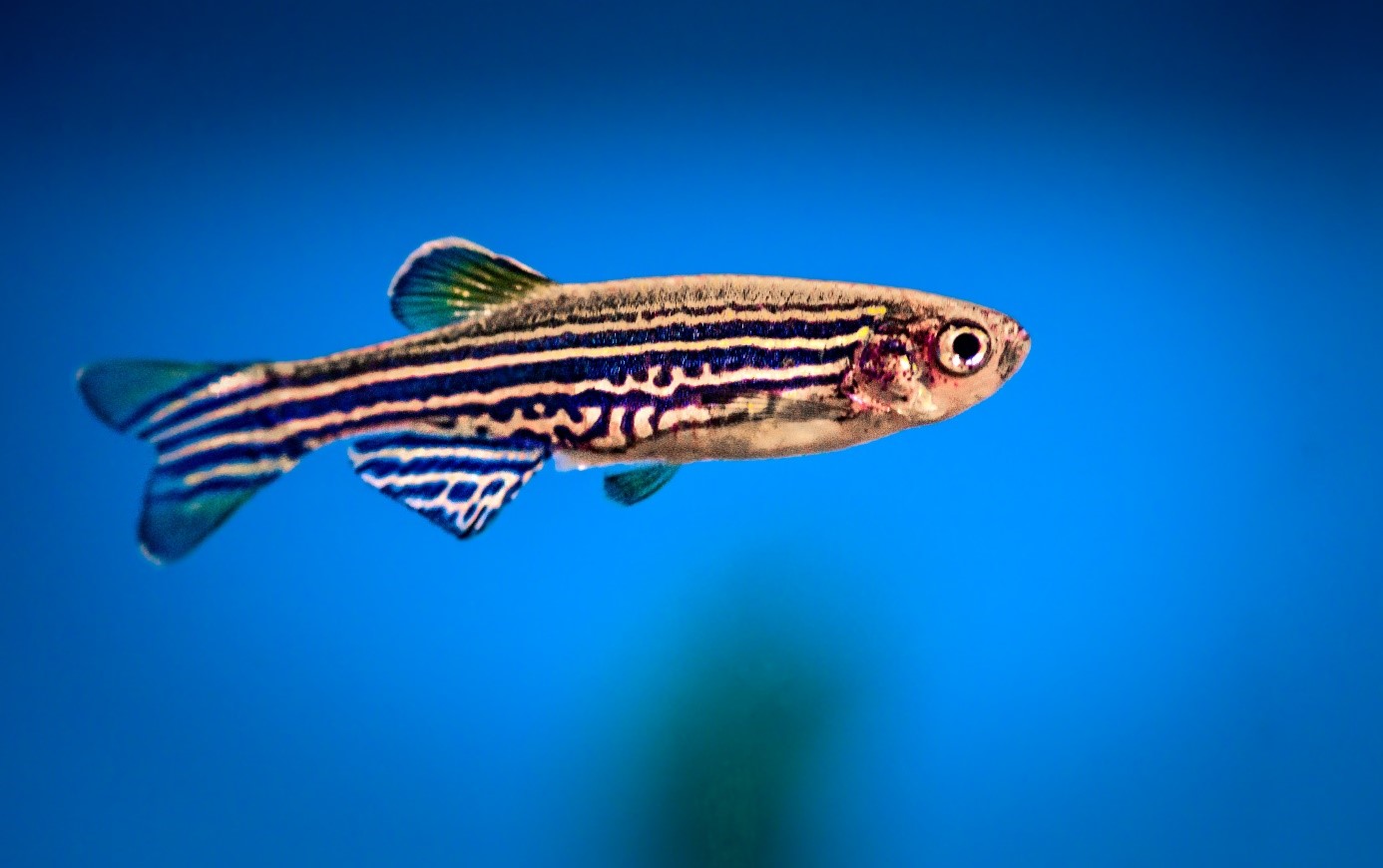
The zebrafish (Danio rerio) is a tropical species commonly used as a model organism in research laboratories. © Adobe Stock


In the animal kingdom, several species share the extraordinary ability to regenerate their limbs or appendages following amputation. One of them is the zebrafish, which is particularly studied in research laboratories due to its ability to regenerate its caudal fin. This phenomenon is made possible by the formation of a blastema, a transient structure composed of undifferentiated cells, which initiates and controls the regeneration of the tissue. Improving our understanding of the cells that make up the blastema and deciphering their interactions opens up new avenues for improving our understanding of the regeneration processes, with the aim of developing clinical applications in the field of regenerative medicine. In a study published in Nature Communications, scientists from Inserm and Université de Montpellier have taken one step closer to this objective, by identifying within the blastema the cell population that coordinates the regeneration process in zebrafish.

The zebrafish, also known as Danio rerio, is a tropical species which has been commonly used as a model organism in research laboratories since the late 1990s. It offers many advantages to scientists, such as the transparency of the embryo and its external development, which is easier to observe than that of mammals. In addition, humans and zebrafish share 70% of the same genes. This genetic conservation with the other vertebrates makes Danio rerio a model of choice for deciphering several major biological processes and their conservation over the course of evolution.

Surprisingly, the zebrafish is also able to regenerate its caudal fin when amputated, thanks to the transient formation of a cell mass known as a “blastema”.

At the larval stage, this structure ensures regeneration of the sectioned appendage in only three days. This is enough to attract the interest of the scientific community, given that understanding the mechanisms associated with this process could pave the way for multiple regenerative medicine applications.

However, only a few cells of the blastema had been described until recently, with the underlying biological mechanisms poorly documented. In their previous work, Inserm Research Director Farida Djouad and her team had highlighted the unique role of macrophages – immune system cells – during the formation of zebrafish blastemas. The team had thus showed that macrophages coordinate the inflammatory processes necessary for the proliferation of the blastema cells and the regeneration of the caudal fin.


Identify the cell coordinating the regeneration

In their new study, these researchers went further in exploring the blastema and revealed the major involvement of a new cell population – cells derived from the neural crest[1]. These cells are found in all vertebrates, including in humans, and play a key role in embryonic development.

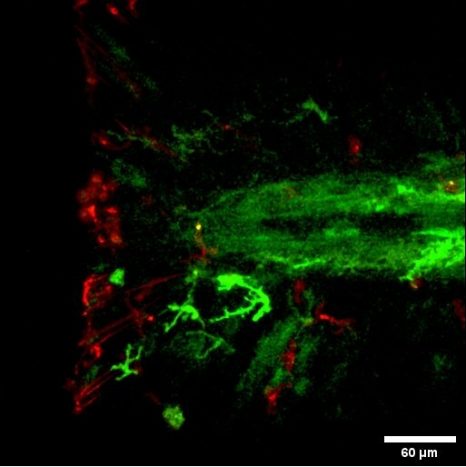
The scientists deployed several methodological approaches to observe and monitor the fate of the blastema cells. By combining the applications of real-time confocal imaging and single cell RNA-sequencing technology[2] on zebrafish larvae, the Montpellier-based team was able to demonstrate that cells derived from the neural crest coordinate the fin regeneration process, dialoguing with macrophages and other cells in the blastema in order to control and regulate their response. This dialog is conducted via a key factor called NRG1 (Neuregulin 1).

Interactions between the macrophages (in red) and neural crest cells (in green) during regeneration of the zebrafish larva caudal fin. © Farida Djouad

All of these data make it possible to go further in understanding the regeneration processes and their activation in zebrafish. Based on these findings, the next objective will be to understand why mammals, which also possess macrophages and cells derived from the neural crest, fail to regenerate their appendages.

We are continuing this work on other vertebrate models, including mice, in order to better understand when mammalian embryonic development loses this regeneration capacity, and why, whilst focusing on the role of cells derived from the neural crest,” says Djouad.

“The aim of this research on several animal models capable of regenerating is to identify ‘THE’ coordinating cell, which is common to all regeneration processes. A better understanding of its role, and especially of the factors it secretes, could open up new avenues to promote the regeneration of certain tissues in the treatment of degenerative diseases such as osteoarthritis.”


[1] The neural crest of vertebrates is a transient embryonic structure, involved in development, and capable of producing many tissues of the face and skull, particularly the cartilaginous and osteomembranous skeleton, the meninges, the vascular walls of the external and internal carotid system, the dermis… Source: French Academy of Medicine

[2] Single-cell sequencing is based on a set of molecular biology methods to analyze genetic information (DNA, RNA, epigenome…) on a single cell scale.

Creation of a Scientific Interest Group: A French Reference for All Questions Regarding the 3Rs

The use of animals for scientific purposes is based on the principles of the 3Rs (Replacement, Reduction and Refinement) to provide the best guidance to research and promote responsible and innovative methods. A group of research players comprising Inserm, CNRS, INRAE, Inria, CEA, Institut Pasteur de Paris, CPU, and the association Udice has announced the creation in France of FC3R (France Center 3R) to support the application of the rules resulting from these principles. Founded at the request of the country’s Ministry of Higher Education, Research and Innovation and taking the form of a Scientific Interest Group (GIS) endowed with substantial missions and resources, this structure aims to be recognized in France and Europe as a reference and contact point for all 3R-related questions, in both public and private research.


Structure and composition

Founded by major public research operators1, FC3R will promote synergy and collaboration between the existing entities in the use of animals for scientific purposes, mobilizing the various competences available in order to fulfil its missions. It will operate in close collaboration with the Ministry of Higher Education, Research and Innovation and the Ministry of Agriculture and Food, and will interact with partners in the private sphere.

FC3R will be structured around an initial team of five (director, secretary/administrator, webmaster, and individuals in charge of training and calls for projects, respectively) and it will have its own steering committee, scientific committee, and advisory board/think-tank. It will be attentive to the various stakeholders, especially the associations.

FC3R will be based at the National Veterinary School of Alfort, in Maisons-Alfort, where it will have at its disposal an operational structure and receive strong support from this major player in animal biology education for its training missions.


Main missions

Training in the 3Rs

    • Make all 3R training opportunities known thanks to a website that lists the existing opportunities in French and English,

    • Promote the emergence of training by encouraging its partners, whether private or public, to create courses in areas of insufficient provision,

    • Develop remote training tools (webinars, e-learning, MOOC, etc.),

    • Provide innovative content: create training modules on emerging approaches or that promote the harmonization of existing approaches,

    • Develop international openness: make its courses known and recognized in Europe, thereby contributing to the recognition of French training.


Engineering of 3R-compliant projects

  • Assist with project design: become a point of contact and advice,

  • Process unpublished data of relevance to the 3Rs: create a platform for the submission of negative results (on the FC3R website), for better dissemination of the knowledge obtained but not published by the authors.


Funding of 3R projects

  • Hold an annual call for projects to develop and validate research methods improving respect of the 3Rs,

  • Hold calls for projects on specific 3R-related issues in order to fund the best projects for the development and validation of innovative approaches, involving any public or private partners,

  • Fund 3R Prizes.


 Communication

  • Implement specific communication following the motto “For responsible and innovative research”,

  • Create a website and a social media communication strategy: disseminate relevant information on the correct application of the 3Rs and on FC3R-specific activities, primarily for the research sphere, but also civil society.


10-year objectives

  • Bring about a significant reduction in the number of animals used in experimentation, particularly through longitudinal multimodal approaches, ensure better replacement by invertebrate models or complementary approaches, particularly in vitro, and ensure refinement based on innovative practices,

  • Ensure training in rigorous and responsible practice, in accordance with the 3Rs, of all students and/or newcomers required to use animals for scientific purposes,

  • Position FC3R as a key player in France and Europe in the development of alternative methods to the use of animals and on other issues relating to the 3Rs.


1 The founding members of the GIS are Inserm, CNRS, INRAE, INRIA, CEA, Institut Pasteur de Paris, CPU and Udice.

The Impacts on Reproductive Function of Early Exposure to Endocrine Disruptors

Astrocyte né pendant la période infantile

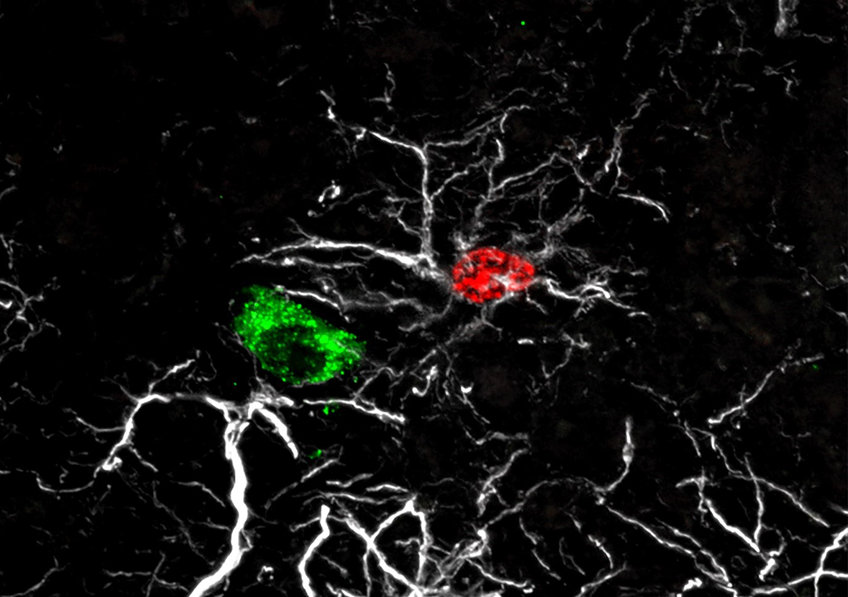
Astrocyte born during the infancy period (red) (7 to 20 days after birth) adhering to a GnRH neural cell body (green). The astrocytes’ processes are shown in white. © Vincent Prévot, Inserm.


Researchers from Inserm, Lille University Hospital and Université de Lille, at the Lille Neuroscience and Cognition laboratory, have discovered one of the mechanisms by which endocrine disruptors can alter reproductive function development from birth. At the neural level, they saw in animals how exposure to low doses of bisphenol A – a known endocrine disruptor – a few days after birth disrupts the integration of GnRH neurons within their neural circuit and alters their reproductive function regulation activity. The findings of this study have been published in Nature Neuroscience.

In mammals, reproduction is regulated by the GnRH neurons, a population of neurons that, during embryonic development, appears in the nose and then migrates to the hypothalamus in the brain. Being well established in the brain at birth, these neurons go on to control the various processes associated with reproductive function: puberty, acquisition of secondary sexual characteristics, and fertility in adulthood.

To perform their functions, the GnRH neurons must be surrounded by another type of neural cell: the astrocytes. The adhesion of the astrocytes to the GnRH neurons plays a decisive role in their integration within the neural network. The encounter between these two cell types takes place during the so-called “mini-puberty” period that begins one week after birth in mammals, when the GnRH neurons are first activated, and which is when the first sex hormone secretions occur.

“Failure of GnRH neurons to integrate during mini-puberty may lead to a predisposition to developing puberty and/or fertility disorders, and also potentially affect brain development, thereby leading to learning disorders or metabolic disorders, such as being overweight,” explains Vincent Prévot, Inserm Research Director and last author of the study.

But how does this encounter between GnRH neurons and astrocytes take place? According to the findings of this research, the astrocytes do not get there by chance but respond to molecular signals emitted by the GnRH neurons, which recruit them as soon as they appear in the hypothalamus.

Early bisphenol A exposure prevents communication between GnRH neurons and astrocytes

Going further, the researchers wanted to understand the importance of this meeting between astrocytes and GnRH neurons in the development of mammalian reproductive functions during the mini-puberty period. With recent studies having shown that the GnRH neural network is particularly sensitive to endocrine disruptors and that there is a link between the latter and puberty disorders, the researchers investigated the impact of exposure to one of these endocrine disruptors, bisphenol A, in rats.

Bisphenol A is a compound used in the industrial manufacturing of plastics whose endocrine disruptive nature is now widely recognized. It is used for example in the production of food containers such as drinks bottles and baby feeding bottles. It is also found in the protective linings of drinks cans and tinned food, or on till receipts where it is used as a developer. In France, bisphenol A has been banned from use in baby feeding bottles and other  food containers since 2015. It has been replaced with substitutes such as bisphenol S (BPS) and bisphenol B (BPB) which also raise questions regarding their safety.

“Despite its ban, bisphenol A continues to remain present in our environment due to the slow degradation of plastic waste, and also because people are still using food containers they had purchased before 2015. With the recycling of waste, bisphenol A from plastics produced before 2015 has also found itself in new products,” explains Prévot.

During the 10 days following their birth, the female rats received low-dose injections of bisphenol A. Using an astrocyte labelling technique, the researchers saw that, under the effect of bisphenol A, the astrocytes were unable to permanently adhere to the GnRH neurons. The absence of such a phenomenon

occurring between these nerve cells then led to delayed puberty and the absence of estrous cycles in the adult female rats (equivalent to the menstrual cycle in women), suggesting that reproductive functions are affected.

Our findings suggest that early exposure to chemicals in contact with food, such as bisphenol A, can disrupt the onset of puberty and have a lasting impact on reproductive functions, by preventing GnRH neurons from building an appropriate and necessary environment in the hypothalamus for their role as fertility coordinator,” explains Ariane Sharif, lecturer at Université de Lille, who co-led the study.

Taking this research further, the scientists are now seeking to understand the exact mechanism by which bisphenol A prevents communication between GnRH neurons and astrocytes. One hypothesis is that bisphenol A acts directly on the astrocytes’ receptors, preventing them from adhering to the GnRH neurons. The research team is also interested in the action of bisphenol A on DNA and the traces it may leave.

Child Physical Abuse: Standardizing Guidelines to Optimize Diagnosis

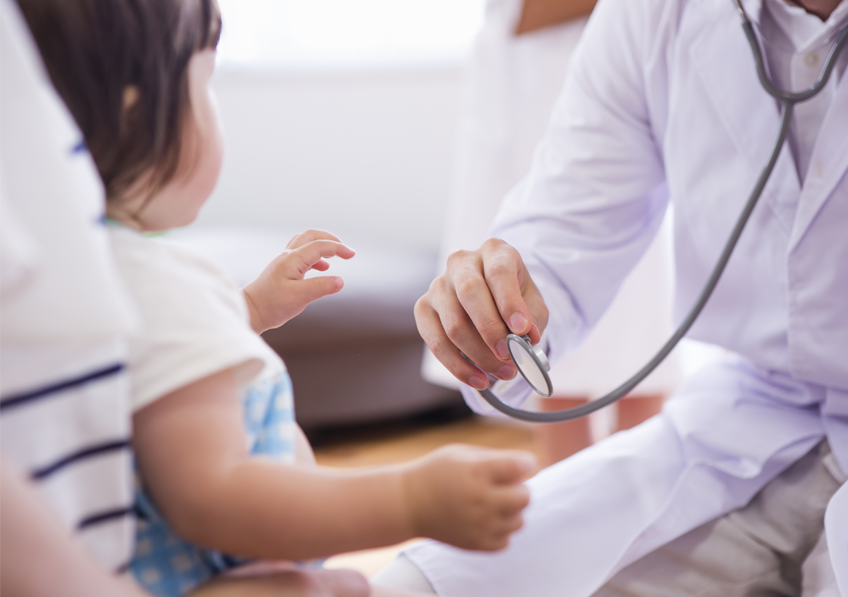
In developed countries, 4% to 16% of children under 18 are physically abused. © Adobe Stock


Diagnosing physical abuse in infants can be difficult. To assist health care professionals, guidelines defining what to do in case of suspected physical abuse have been produced by learned societies, public authorities, and independent expert groups. Despite this reference framework, differences in management have been observed between practitioners, both in France and in other developed countries. To try to understand this phenomenon, researchers from Inserm and teacher-researchers from Université de Paris at the Center for Research in Epidemiology and Statistics (CRESS), the Paris hospitals group AP-HP and Nantes University Hospital analyzed and compared different clinical guidelines published in 15 countries. They have discovered substantial differences between countries and even within countries where several reference documents sometimes coexist. The findings of this systematic review highlight the need for an international consensus process in order to produce clear and standardized guidelines to optimize the practices of health care professionals. These findings have been published in JAMA Network Open.

Physical abuse affects 4% to 16% of children under the age of 18 in developed countries and around one third of diagnoses of such abuse are made late. Infants under two years of age are the most affected, which adds to the difficulties of rapid diagnosis based on a combination of clinical and social assessments, imaging examinations, and laboratory tests.

Several previous studies revealed discrepancies in the practices of health care professionals when physical abuse is suspected. A French study published in 20151 showed, for example, that in the theoretical case of a 9-month-old infant presenting with femoral fracture, multiple bruising, and a head injury, only 28% of the pediatricians surveyed would have requested a skull MRI, despite it being recommended following a CT scan within this context of potential inflicted injury.

Faced with this observation, and in an attempt to understand these differences between practices, the study looked at guidelines intended to assist health care professionals in diagnosing child physical abuse. These guidelines, accessible online, were produced by learned societies, health agencies, and pediatric expert groups, and include documents written by the French National Authority for Health (HAS), the UK Royal College of Paediatrics and Child Health, and the American Academy of Pediatrics.

The scientists extracted the data from 20 reference documents published between 2010 and 2020, by 15 of the 24 most developed countries according to the United Nations. They compared the diagnostic examination guidelines in the event of suspected child abuse, determining for each examination whether it was routinely recommended, conditional (on a case-by-case basis depending on the clinical context), not recommended, or not even mentioned.


Discrepancies between reference documents that create gray areas

According to the study findings, the international guidelines vary widely, which could explain some of the differences between the clinical practices observed in the diagnosis of child physical abuse.

While some examinations, such as skeletal X-rays, are recommended across the board, others are recommended on a case-by-case basis or not at all, depending on the country. For example, a bone scan – an imaging examination used to look for fractures in addition to skeletal X-rays – is recommended by the HAS and the American Academy of Pediatrics but not by the Royal College of Radiologists. Within the UK, the Royal College of Radiologists and the Royal College of Paediatrics and Child Health differ in their recommendation for the use of this scan.

The researchers also saw significant differences in the definition of “sentinel injuries,” – injuries found in infants who have not acquired the ability to move on their own and which require assessment for physical abuse. While all the documents analyzed propose a description of these injuries, the content differs: six give a brief description and focus solely on skin lesions, while ten also refer to intra-oral, intracranial and abdominal injuries, and fractures.

Finally, the researchers found that some of the elements frequently mentioned in the guidelines did not appear in all of them. For the researchers, even investigations that are not recommended should be mentioned in all of the documents, if only to explain to the practitioner why they are not recommended.

“Our objective was to systematically examine the completeness, clarity and consistency of the clinical guidelines for the early detection and diagnostic work-up of child physical abuse. We felt that, in the developed countries, the authors of guidelines theoretically all have access to the same knowledge and that all practitioners have the possibility to prescribe the same examinations. As such, there should be little variation between the examinations recommended for suspected child physical abuse and those actually carried out. We did not expect to identify such great disparities between the guidelines. We believe that these differences may partially explain the absence of the standardization of practices,” explains Flora Blangis, first author of the study and doctoral student at Inserm.

“Our objective was to systematically examine the completeness, clarity and consistency of the clinical guidelines for the early detection and diagnostic work-up of child physical abuse. We felt that, in the developed countries, the authors of guidelines theoretically all have access to the same knowledge and that all practitioners have the possibility to prescribe the same examinations. As such, there should be little variation between the examinations recommended for suspected child physical abuse and those actually carried out. We did not expect to identify such great disparities between the guidelines. We believe that these differences may partially explain the absence of the standardization of practices,” explains Flora Blangis, first author of the study and doctoral student at Inserm.

According to the researchers behind this systematic review, the findings highlight the need for an international consensus process in order to produce clear and standardized guidelines to optimize the practices of health care professionals in the diagnosis of child physical abuse. Such an approach has been carried out in many other areas of medicine, particularly for the screening of hypertension.

Primary care physicians and pediatricians are key players in the early detection and diagnosis of child physical abuse. They should be able to base their decisions on guidelines that are clear, comprehensive, and consistent, as is the case with other diseases,” concludes Blangis.

Standardizing practices2 is an issue that is all the more important given the serious consequences that incorrect diagnosis can have on a child’s health. In particular, false negative results expose infants to a risk of recurrence of abuse estimated as being between 35% and 50%.


1 Ledoyen A, Bresson V, Dubus J-C, et al. Explorations complémentaires face à une situation d’enfant en danger : état des lieux des pratiques en France en 2015. Arch Ped. 2016

2 Deployment throughout France of Pediatric Reception Units for Children at Risk (UAPED) should help to standardize practices in the diagnosis of abuse and the care pathway for abused minors. This is a strong focus of the plan to combat violence against children decided upon by the Ministry of Solidarity and Health and supported by the French Society for Forensic Pediatrics.

Lancement du Groupement d’intérêt scientifique Obépine sur les eaux usées

fermer