Menu

Lack of sleep causes brain impairment in adolescents

illustrationsommeil1en

©Alexandra Pinci pour l’Inserm

Not sleeping enough or going to bed too late leads to a reduction in the volume of grey matter in the brains of adolescents. These conclusions were obtained by researchers at Inserm Unit 1000, “Neuroimaging and Psychiatry” (Inserm/Paris-Descartes University/Paris Sud University), who studied the brain and sleep habits of 177 14-year-old students. This work is published in the journal Scientific Reports, and received support from the Academy of Finland.

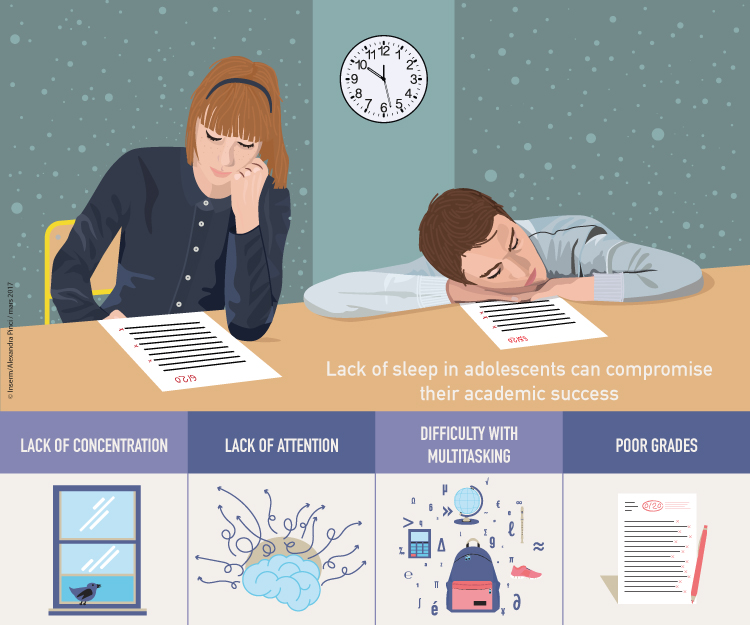
Lack of sleep in adolescents can compromise their academic success, and their health and safety. Shortened or delayed sleep has consequences for academic performance. There is still debate over the time at which lessons should begin in order to benefit the health of adolescents. However, researchers did not know until now whether or not poor sleep habits in adolescents were associated with damage to the anatomy of the brain.

A collaboration between researchers from Inserm and from the Finnish National Institute for Health and Welfare, supported by the Academy of Finland, shows for the first time a link between sleep habits and brain structure in young adolescents.

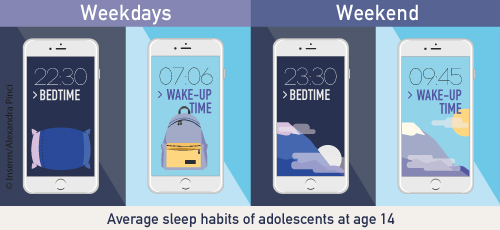
The researchers studied the sleep habits of 177 14-year-old students attending secondary schools in the Paris region. On average, the adolescents went to bed at 10:20 pm on week nights and got up at 7:06 am, and went to bed at 11:30 pm at weekends, getting up at 9:45 am. But there were large discrepancies between the adolescents.
illustrationsommeil2_1

©Alexandra Pinci pour l’Inserm

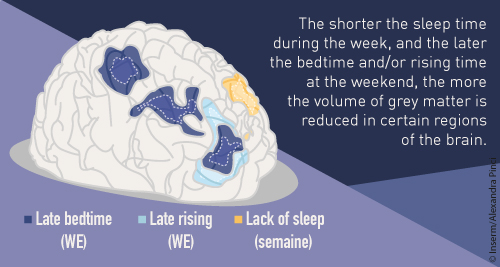
The researchers found that a short period of sleep (less than 7 h) during the week, and going to bed an hour later at weekends were correlated with smaller volumes of grey matter in several regions of the brain (the frontal cortex, anterior cingulate cortex and precuneus). “The most significant result from our study is very definitely the finding that the later the adolescents go to bed at weekends, the greater the reduction in their volume of grey matter,” explains Jean Luc Martinot, Inserm Research Director and last author of this work.

These 3 regions of the brain are particularly involved in attention, concentration, and ability to multitask. Moreover, the researchers observed an association between poor grades obtained by students and smaller amounts of grey matter in their frontal regions, the regions in which the volume is reduced by late bedtimes at weekends.
illustrationsommeil2_2

©Alexandra Pinci pour l’Inserm

These results show that there is a link between poor sleep habits, brain structure (still actively undergoing peripubertal maturation), and poor academic performance.

For the researchers, this study suggests making sure that adolescents acquire good sleep habits during this period of brain maturation. “We encourage parents, social workers and school liaison officers to promote the maintenance of a good sleep-wake routine for adolescents. In particular, avoiding routinely late bedtimes during weekends seems important for optimising the brain’s potential for development and for supporting academic success,” concludes Jean-Luc Martinot.
Multiple sclerosis : Mission Regeneration !

sclerosis

Why does multiple sclerosis progress more rapidly in some patients than others? Why do some patients with MS manage to regenerate their myelin, while others do not? Inserm researchers at Unit 1127, “Brain and Spine Institute” (Inserm/CNRS/UPMC) have demonstrated that lymphocytes play a major role in the remyelination process, and that they could possibly be exploited to develop new myelin regeneration strategies.

This work is published in Brain

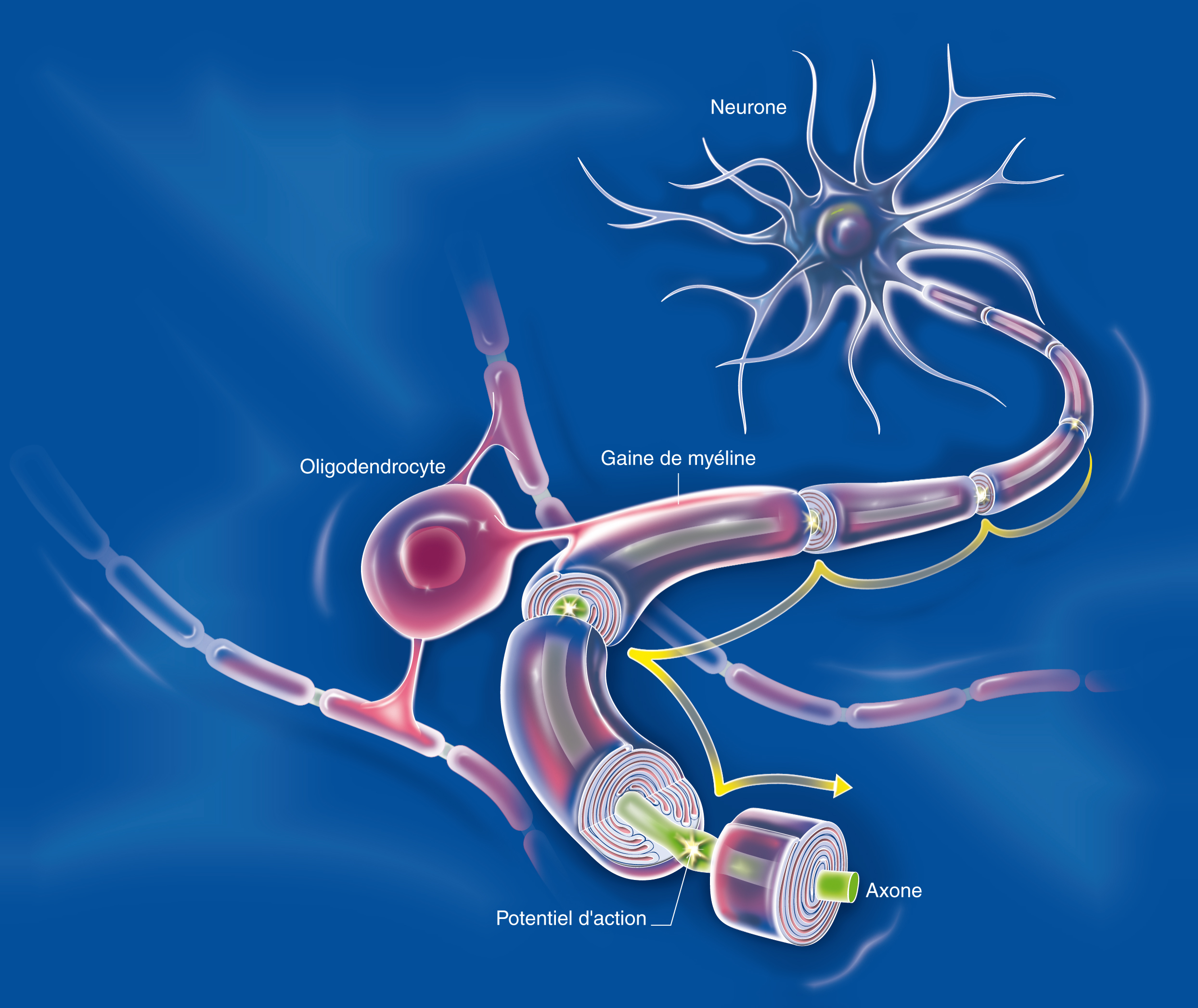
Multiple sclerosis (MS) is an inflammatory disease of the central nervous system, causing progressive destruction of the myelin sheath that surrounds the axons and is essential for their protection and for the transmission of nerve impulses. The ability to repair myelin efficiently is a key factor in preventing progression of the disease. It is essential to understand why and how certain patients manage to better handle the disease than others.

In multiple sclerosis, T lymphocytes attack myelin as if it were a virus, which is abnormal, but it is also they that organise its repair, more or less well. Lymphocytes activate macrophages and microglia (other cells of the immune system), which in turn attract new stem cells to the site of the lesion in order to repair the damaged myelin. Previous studies showed that in some patients, the lesions are completely repaired while in other patients, once the lesion has appeared, it is never repaired.

To gain a better understanding of the phenomenon, the researchers at Inserm transplanted lymphocytes from healthy donors or patients with multiple sclerosis into demyelinated lesions in the spinal cord of mice.

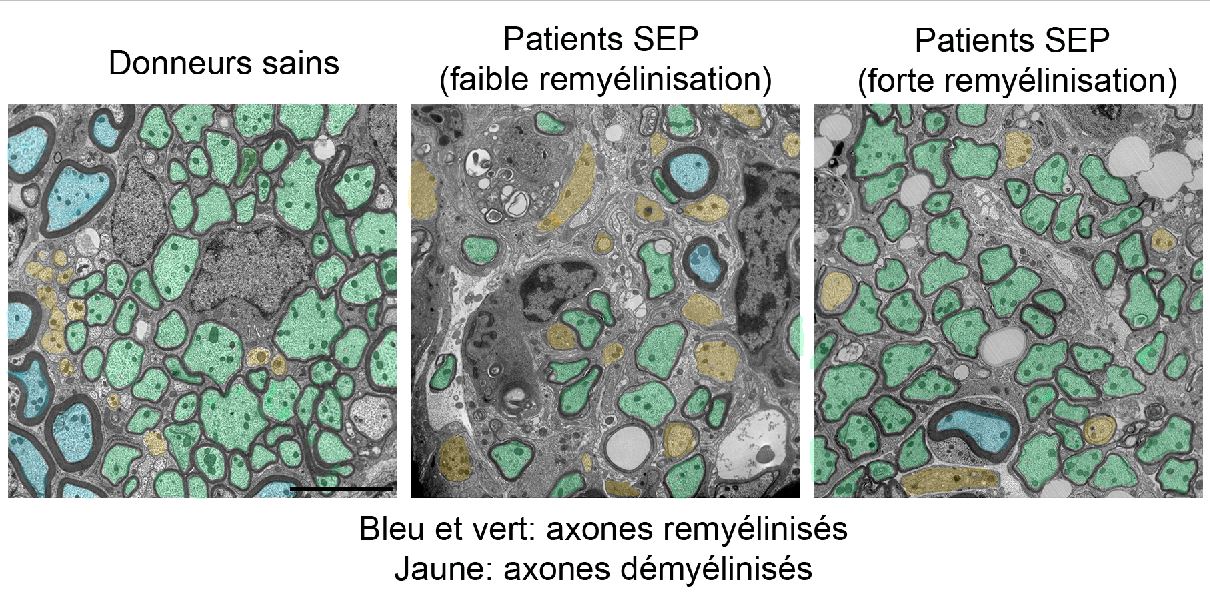
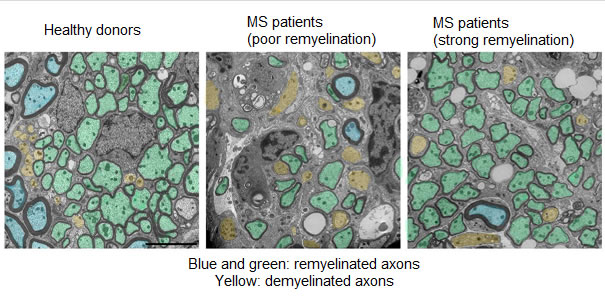
Using this technique, the researchers showed that the problem was not associated with the first phase of recruiting cells capable of repair, but with the point where these cells differentiate in order to perform myelin repair. In patients with a strong capacity for remyelination, the lymphocytes send the appropriate signals to activate the microglia, which then enter a state of activation and bring about stem cell differentiation and myelin repair. In patients with a poor capacity for remyelination, the T lymphocytes do not allow activation of the microglia, affecting the entire repair cascade.

By comparing the secretion profiles of lymphocytes from patients with a strong or poor capacity for remyelination, the researchers demonstrated the existence of 3 molecules associated with good remyelination, and 3 associated with poor remyelination.

One of these molecules is CCL19, which is associated with poor remyelination capacity. The researchers propose a hypothesis whereby inhibiting this molecule would allow macrophages to attain a state of activation and could therefore affect the remyelination profile of patients. 

Since microglial cells and macrophages are essential elements in coordination and repair, these results could also contribute additional elements of information regarding other conditions such as amyotrophic lateral sclerosis (also known as motor neuron disease), Alzheimer’s disease and Parkinson’s disease.

“The study of lymphocytes from patients with strong capacities for remyelination is a promising route to the development of new myelin regeneration strategies. Moreover, the systematic study of their lymphocytes might make it possible to provide support for diagnosis and treatment and to develop precision medicine tailored to each patient,” explains Violette Zujovic, Inserm Researcher and main author of this work.

Testosterone for nerve fibre repair

To protect against attack, the body uses natural repair processes. What is involved in the spontaneous regeneration of the myelin sheath surrounding nerve fibres? This is the question addressed by researchers in Unit 1195, “Neuroprotective, Neuroregenerative and Remyelinating Small Molecules” (Inserm/Paris-Sud University). They have discovered, in mice, the unexpected regenerative role of testosterone in this process. This could be a factor in the progression of demyelinating diseases, such as multiple sclerosis, which can present differently in women and men, and heralds new therapeutic opportunities.  

These results are published in PNAS.

The myelin sheath allows the rapid transmission of information between the brain or spinal cord and the rest of the body. Myelin may be targeted by conditions known as demyelinating diseases, such as multiple sclerosis or injuries that lead to its destruction. These diseases disrupt neurotransmission, leading to various symptoms including paralysis. Repair mechanisms then come into play, and bring about myelin regeneration and resolution of symptoms. This regenerative process is erratic, for reasons that are still largely unknown. This question was analysed by the research team “Myelination and Myelin Repair” in Unit 1195, “Neuroprotective, Neuroregenerative and Remyelinating Small Molecules.”

In this study, the researchers present evidence of the unexpected central role of the well-known male sex hormone, testosterone, and of its receptor, the androgen receptor, in spontaneous myelin repair.

“Testosterone promotes the production of myelin by the cells that synthesise it in the central nervous system, in order to repair the sheath, which is essential to the transmission of nerve impulses,” explains Elisabeth Traiffort, Inserm Research Director.

In the absence of testes and hence of the hormone, testosterone, that these organs produce, the spontaneous myelin repair process is disrupted in mice. Indeed, the maturation of cells specialised in myelin synthesis, known as oligodendrocytes, is defective. The researchers also showed that control of this maturation, provided by astrocytes, another type of cell with an important role in repair, is what is compromised.

But why testosterone? Returning to the origins of this hormone, it turns out, surprisingly, that the androgen receptor that enables testosterone to act appeared at the same time as myelin, very late in the evolution of gnathostomes (vertebrates with jaws). According to the researchers, this would explain their very strong association in the myelination process.

“It is perhaps also one of the reasons why progression of demyelinating diseases such as multiple sclerosis often differs between men and women. Our results pave the way for new therapeutic opportunities, and might also benefit research on psychiatric diseases or cognitive ageing,” concludes Elisabeth Traiffort, Inserm Research Director.

La sclérose en plaques

Myelin forms a sheath surrounding neurons © Inserm/Carole Fumat

Neurons paralyze us during REM sleep

During REM sleep, the brain inhibits the motor system, which makes the sleeper completely immobile. CNRS researchers working in the Centre de Recherche en Neurosciences de Lyon (CNRS/Université Claude Bernard Lyon 1/INSERM/Université Jean Monnet) have identified a population of neurons that is responsible for this transient muscle paralysis. The animal model created will shed light on the origin of some paradoxical sleep disorders, and more particularly the condition that prevents this paralysis. It will also be most useful in the study of Parkinson’s disease, since these pathologies are related. This work was published on December 12, 2016 on the website of the journal Brain.

In spite of being in a deep sleep, the patients talk, move, kick and eventually fall out of bed. They are suffering from a parasomnia called REM Sleep Behavior Disorder[1] (RBD). This disorder usually appears around the age of 50. Muscles are at rest during the REM sleep phase, but in these patients, there is no paralysis, although the reason for this is not known. The sleepers move abnormally, probably reflecting their dream activity.

A team from the Centre de Recherche en Neurosciences de Lyon (CNRS/INSERM/Université Claude Bernard Lyon 1/Université Jean Monnet) has taken one more step towards elucidating this pathology. The researchers identified neurons in the sublaterodorsal nucleus of the brain, ideally located to control motor system paralysis during REM sleep. In rats, they specifically targeted this neuron population, by adding genetically modified viral vectors to it.[2] Once these are in the neural cells, they block the expression of a gene that allows synaptic glutamate secretion. Now incapable of releasing this excitatory neurotransmitter, the neurons can no longer communicate with their neighbors. They are disconnected from the cerebral network necessary for paralysis during REM sleep.

For 50 years, the scientific community has considered that these glutamate neurons generated REM itself. This team’s experience invalidates this hypothesis: despite the absence of activity in this neuron circuit, the rats still experience this stage of sleep. They are fast asleep and disconnected from the outside world, with eyes closed. But these rats are no longer paralyzed. Their behavior is very reminiscent of the clinical profile of patients suffering from RBD. The glutamate neurons targeted in this study play an essential part in REM paralysis during sleep and are reportedly the first neurons affected in this neurological disease.

This research work goes beyond creating a new preclinical model that mimics this parasomnia. It may be of paramount importance in studying some neurodegenerative diseases. Recent clinical research has shown that patients diagnosed with RBD almost always develop the motor symptoms of Parkinson’s disease, on average a decade later. The team is now attempting to develop an animal model that evolves from parasomnia into Parkinson’s disease, in order to understand how neuron degeneration occurs.

2016_12_13_neuroneglutamate

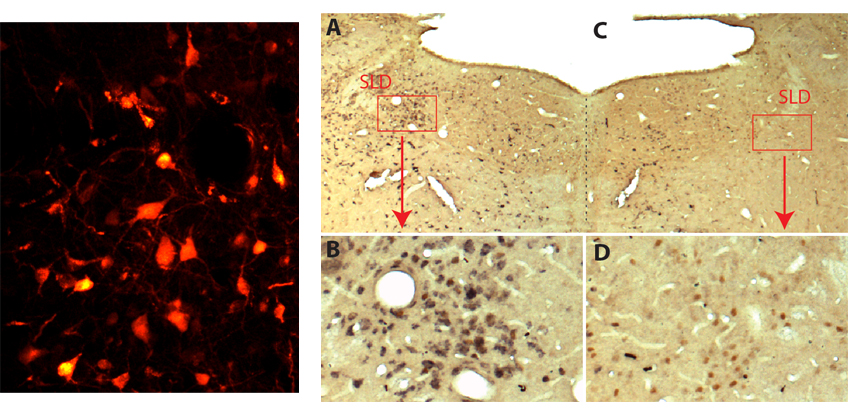
(Left) the glutamate neurons of the sublaterodorsal nucleus emit a spontaneous red fluorescence indicating that the viral vectors used have been successfully added. © Sara Valencia Garcia / Patrice Fort, CNRS

(right) in a normal rat specimen (A and B) the neurons of the sublaterodorsal nucleus (SLD, colored in brown) are glutamate neurons (also colored in black). In rats treated with viral vectors (C and D), neurons are still present (in brown) but are not longer capable of releasing glutamate (absence of black color). © Sara Valencia Garcia / Patrice Fort, CNRS

[1] REM sleep is also called paradoxical sleep.

[2] Provided by researchers at Tsukuba University in Japan

Minimum effort for maximum effect

Ten days after astronaut Thomas Pesquet take-off into space on the Proxima mission, many questions remain about human adaptation to gravity. The research team at Inserm Unit 1093, “Cognition, Motor Activity and Sensorimotor Plasticity” (Inserm/Université de Bourgogne), focuses on the manner in which movements that depend on this parameter are performed. For 30 years, it was thought that the brain, when giving motor commands, continuously compensated for the effects of gravity. In this study, the researchers reveal that it uses gravity to minimise the efforts our muscles have to make. These results have been published in eLife.

Many human and animal activities need our limbs to move in a precise manner. (Such is the case for professional dancers, who have perfect control of their bodies.) For a movement to be performed correctly, the brain has to generate muscular contractions while taking account of environmental factors likely to affect that movement. One of the most important of these is gravity. The brain develops an internal representation of gravity that it can thus use to anticipate its effects on our bodies. But how does that work? Until now, researchers thought that the brain compensated for the effects of gravity at every moment in order to direct a movement. But the Inserm researchers have proposed a new hypothesis. The brain may use the internal representation of gravity to take advantage of it and save energy.

In order to solve this mystery, the research team asked volunteers to perform arm movements under normal gravity and microgravity conditions. Under normal gravity, 15 volunteers performed right arm movements in 17 different directions.

Each movement was made up of two phases, which determined the total duration of the movement: an acceleration phase (e.g.: raising the arm if the initial trajectory is “upwards”) and a deceleration phase (e.g.: stopping the arm on its pathway). This is known as temporal organisation of movement.

If the brain continuously compensated for the effects of gravity, as was thought, the acceleration and deceleration phases would be of constant duration. Under normal gravity, the acceleration or deceleration phase directed by the brain proved to be more or less, depending on the direction of the movement. This observation corroborates the hypothesis that humans have adapted to exploit gravity by modulating the duration of these phases in order to avoid making unnecessary demands on the muscles.

To confirm and validate these results, the researchers simulated weightlessness in an aircraft. The volunteers repeated the arm movements in the 17 directions. While at the beginning of the experiment, the manner of performing the movements was the same as on Earth, the phases of acceleration and deceleration gradually changed in duration.
 

Volunteer performing movements under microgravity conditions in an aircraft travelling in a parabolic arc

© Jérémie Gaveau / Inserm

“This observation clearly shows that our brain captures information from the environment, reprogrammes itself and adapts to new gravity conditions,” explains Jérémie Gaveau, first author of this work. Once the brain has understood, it incorporates the new parameters and sends commands that allow movements to be performed with as little effort as possible.

 “Comparing these results to those of computer simulations shows sophisticated behaviour on the part of the individual. Indeed, our movements are organised to take advantage of the effects of gravity, in order to minimise the efforts that our muscles need to make,” he concludes.

 This is a genuine paradigm shift. This advance might ultimately be used to correctly programme the “brains” of humanoid robots or assist movement in disabled people.

Mitochondria are essential to memory

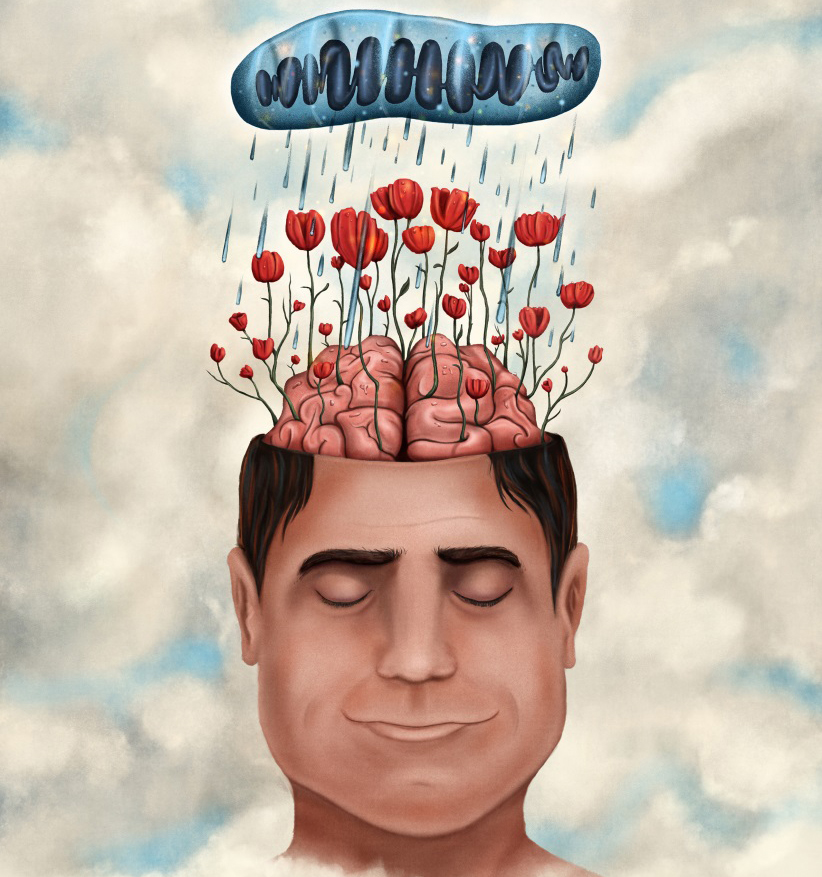
visuel-marsicano-newsroomMitochondria develop our memory by providing brain cells with energy (c) Charlie Padgett

Numerous studies have shown that using cannabis can lead to short- and long-term memory loss. These effects on memory may be related to the presence of specific receptors on several types of brain cells (glial cells as well as neurons). Inserm researchers led by Giovanni Marsicano (Neurocentre Magendie, U1215) have shown that these effects on memory are related to the presence of these same receptors on the mitochondria, the energy centre of the cell. This is the first time that the direct involvement of mitochondria in higher brain functions, such as learning and memory, has been shown. This work is published in the journal Nature.


Mitochondria are the energy centre of the animal cell. They are present within cells to produce the energy (in the form of ATP) needed for all biochemical processes. To do this, they use oxygen to transform nutrients into ATP. These functions are obviously necessary for the survival of all the cells in the body, but in the brain the impact of mitochondria goes beyond simple cell survival. Although the brain represents only 2% of the weight of the body, it actually consumes up to 25% of its energy. As a result, the energy balance of the brain is highly important for its functions, and is therefore tightly regulated. We know very well that chronic impairment of mitochondrial functions (e.g. in mitochondrial diseases) produces serious neurological and neuropsychiatric symptoms.

However, the direct functional involvement of mitochondria in higher brain functions, such as learning and memory, was not known before now.

In other terms, do we use the mitochondria in our brain when we are learning or remembering something?

This study, which is based on the discovery that the cannabinoid receptor CB1 is also present on the brain mitochondria (where it is known as mtCB1), reveals that this is indeed the case. With the help of innovative tools, the Inserm researchers showed that the active component of cannabis, THC (delta-9-tetrahydrocannabinol), causes amnesia in mice by activating mtCB1 receptors in the hippocampus.

“The impairment in memory induced by cannabis in the mouse requires activation of these hippocampal mtCB1 receptors,” explains Giovanni Marsicano. Conversely, “Genetically deleting them prevents this effect induced by the active drug in cannabis. We therefore think that mitochondria develop our memory by providing the brain cells with energy.”

This study is important not only because it reveals a new mechanism underlying the effects of cannabis on the memory, but also because it shows that mitochondrial activity is an integral part of the functions of the brain.

Caffeine and its analogues revert memory deficits by normalizing stress responses in the brain

Roasted coffee beans background concept

(c) Fotolia

A study published in the journal Scientific Reports from Nature publishing group, describes the mechanism by which caffeine counteracts age-related cognitive deficits in animals.

The study coordinated by Portuguese researchers from Instituto de Medicina Molecular (iMM Lisboa) and collaborators from Inserm in Lille, France, along with teams from Germany and United States, showed that the abnormalexpression of a particular receptor – the adenosine A2A, target for caffeine – in the brain of rats induces an aging-like profile namely memory impairments linked to the loss of stress controlling mechanisms.

“This is part of a larger study initiated 4 years ago in which we identified the role of this receptor in stress, but we did not know whether its activation would be sufficient to trigger all the changes. We now found that by altering the amount of this receptor alone in neurons from hippocampus and cortex – memory related areas – is sufficient to induce a profile that we designate as ‘early-aging’ combining the memory loss and an increase in stress hormones in plasma (cortisol)” – explains Luisa Lopes, Group Leader at iMM Lisboa and the coordinator of the study.

When the same animals were treated with a caffeine analogue, which blocks the action of adenosine A2A receptors, both memory and stress related deficits were normalized.

David Blum, from Inserm research director, adds:

“In elderly people, we know there is an increase of stress hormones that have an impact on memory. Our work supports the view that the procognitive effects of A2AR antagonists, namely caffeine, observed in Alzheimer’s and age-related cognitive impairments may rely on this ability to counteract the loss of stress controlling mechanisms that occurs upon aging”

This is important not only to understand the fundamental changes that occur upon aging, but it also identifies the dysfunctions of the adenosine A2A receptor as a key player in triggering these changes. And a very appealing therapeutic target” – concludes Luisa Lopes.


About Luísa Lopes

Luísa V. Lopes is a Group leader@iMM Lisboa, Portugal since 2013.  Luisa graduated in Lisbon in 1998 in Biochemistry and then pursued a PhD in Neurosciences being trained in the University of Cambridge, UK and at the Karolinska Institute, Sweden. Her current work focuses on understanding the mechanisms inducing the “early-aging” of the cognitive function. The team has provided evidence for an important contribution of adenosine receptors in pathophysiological context, and their impact in noxious brain conditions such as stress, aging and neurodegeneration. Her team provided crucial evidence of a possible glucocorticoid-adenosine link in Alzheimer’s disease (with D. Blum) following previous groundwork suggesting circadian disorders as a trigger for accelerated cognitive loss.


About David Blum

David Blum is Inserm Research Director at UMR-S 1172 Inserm/Université Lille2/CHRU Lille in the laboratory “Alzheimer & Tauopathies” headed by Dr. Luc Buée. David graduated in Strasbourg University and got his PhD at Inserm in Grenoble. Current work of David Blum focus on the understanding of the role of caffeine and adenosine receptors in cognitive disorders, particularly Alzheimer’s Disease. In this field, the laboratory has recently provided evidence, with the group of Luisa Lopes, that A2A receptors are important for the development of AD-like Tau pathology. Our current work is interested on the instrumental role of sub-population of A2A receptors in the brain on the occurence of cognitive disorders in neurological disorders.


About iMM Lisboa

Instituto de Medicina Molecular (iMM Lisboa) is a reference biomedical research centre in Portugal, having acquired the special status of Associate Laboratory of the Portuguese Ministry of Science and Technology. iMM’s mission is to promote basic, translational and clinical biomedical research, with the aim of understanding the mechanisms of disease and developing new therapeutic approaches.

For more information please visit the iMM Lisboa’s website: www.imm.medicina.ulisboa.pt


 “Alzheimer & Tauopahies” laboratory at UMR-S 1172 Inserm/Université Lille 2/CHRU-Lille  is a world class research laboratory interested in the molecular, cellular, and physiological aspects of Alzheimer’s Disease and dementia. The lab is part of the LabEx DISTALZ (national consortium on AD) and of the LICEND excellence centre for neurodegenerative diseases.

Artificial retinas: promising leads towards clearer vision

Visuel chavanne

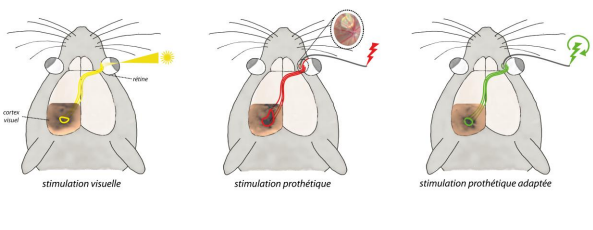
Activation (colored circles at the level of the visual cortex) of the visual system by prosthetic stimulation (in the middle, in red, the insert shows an image of an implanted prosthesis) is greater and more elongated than the activation achieved under natural stimulation (on the left, in yellow). Using a protocol to adapt stimulation (on the right, in green), the size and shape of the activation can be controlled and are more similar to natural visual activation (yellow).

© F. Chavane & S. Roux.


A major therapeutic challenge, the retinal prostheses that have been under development during the past ten years can enable some blind subjects to perceive light signals, but the image thus restored is still far from being clear. By comparing in rodents the activity of the visual cortex generated artificially by implants against that produced by “natural sight”, scientists from CNRS, CEA, Inserm, AP-HM and Aix-Marseille Université identified two factors that limit the resolution of prostheses. Based on these findings, they were able to improve the precision of prosthetic activation. These multidisciplinary efforts, published on 23 August 2016 in eLife, thus open the way towards further advances in retinal prostheses that will enhance the quality of life of implanted patients.


A retinal prosthesis comprises three elements: a camera (inserted in the patient’s spectacles), an electronic microcircuit (which transforms data from the camera into an electrical signal) and a matrix of microscopic electrodes (implanted in the eye in contact with the retina). This prosthesis replaces the photoreceptor cells of the retina: like them, it converts visual information into electrical signals which are then transmitted to the brain via the optic nerve. It can treat blindness caused by a degeneration of retinal photoreceptors, on condition that the optical nerve has remained functional1 . Equipped with these implants, patients who were totally blind can recover visual perceptions in the form of light spots, or phosphenes. Unfortunately, at present, the light signals perceived are not clear enough to recognize faces, read or move about independently.

To understand the resolution limits of the image generated by the prosthesis, and to find ways of optimizing the system, the scientists carried out a large-scale experiment on rodents. By combining their skills in ophthalmology and the physiology of vision, they compared the response of the visual system of rodents to both natural visual stimuli and those generated by the prosthesis.

Their work showed that the prosthesis activated the visual cortex of the rodent in the correct position and at ranges comparable to those obtained under natural conditions. However, the extent of the activation was much too great, and its shape was much too elongated. This deformation was due to two separate phenomena observed at the level of the electrode matrix. Firstly, the scientists observed excessive electrical diffusion: the thin layer of liquid situated between the electrode and the retina passively diffused the electrical stimulus to neighboring nerve cells. And secondly, they detected the unwanted activation of retinal fibers situated close to the cells targeted for stimulation.

Armed with these findings, the scientists were able to improve the properties of the interface between the prosthesis and retina, with the help of specialists in interface physics. Together, they were able to 1 This is the case of patients with Retinitis Pigmentosa or Age-related Macular Degeneration (AMD). Artificial retinas: promising leads towards clearer vision generate less diffuse currents and significantly improve artificial activation, and hence the performance of the prosthesis.

This lengthy study, because of the range of parameters covered (to study the different positions, types and intensities of signals) and the surgical problems encountered (in inserting the implant and recording the images generated in the animal’s brain) has nevertheless opened the way towards making promising improvements to retinal prostheses for humans.

This work was carried out by scientists from the Institut de Neurosciences de la Timone (CNRS/AMU) and AP-HM, in collaboration with CEA-Leti and the Institut de la Vision (CNRS/Inserm/UPMC).

Unconscious processing operates under conscious influence

Opened book

(c) Fotolia

In a study published in the new international scientific journal Neuroscience of Consciousness, Benjamin Rohaut, Inserm researcher, and Lionel Naccache, leader of the team “Picnic lab: Physiological Investigation of Clinically Normal and Impaired Cognition,” both of whom are also clinicians attached to the Neurology Department at Pitié-Salpêtrière Hospital, AP-HP, provide proof that unconscious semantic processing of a word exists, but that it is subject to very strong conscious influences. The work was conducted in collaboration with their colleagues at the Brain and Spine Institute – AP-HP/CNRS/Inserm/UPMC and the Laboratory of Cognitive Psychology (CNRS/AMU).


Experimental psychology is full of situations that make it possible to probe the depth and variety of mental operations performed unbeknown to us, i.e. unconsciously. For example, using subliminal visual presentation techniques, it is possible to “inject” a word into the brain of someone, and then track its fate at psychological and brain levels with the help of behavioural measurements and functional brain imaging. Since the late 1990s, several high-profile studies have also demonstrated that the meaning of a subliminal image, number or word may be unconsciously represented in our mind/brain.

In the study conducted by Lionel Naccache, the researchers provide proof that unconscious semantic processing of a word genuinely exists, but that it is subject to very strong conscious influences.

To do this, they used words such as: “palm, bank, jam, bail, date, ball, tire, bark, bowl, spit  …”. All these words share a common semantic property, have you noticed?

In reality each of these words is “polysemous,” and therefore has two (or more) different meanings. Each time such as word is presented to you, you can therefore understand it in two different ways. Consciously, we perceive only one meaning at a time, as stated by Descartes back in 1649 in Les Passions de l’âme : “We have only one thought of one thing at a time.” The meaning of the word we access consciously at a given moment is likely to be influenced.


Thus, if you read: TREE then PALM you are very likely to access the botanic meaning of the word PALM: “an unbranched evergreen tree with a crown of long feathered or fan-shaped leaves, and typically having old leaf scars forming a regular pattern on the trunk. Palms grow in warm regions, especially the tropics” whereas the HAND – PALM pair will strongly orient your semantic analysis toward the “the inner surface of the hand between the wrist and fingers”.

In this experiment authors presented the volunteers with words triplets while recording their brain activity using an electrode headset. Each test began by presenting the first word, which was always visible and which allowed a particular semantic context to be defined (e.g. HAND). Then the second word was flashed on the screen and was either subliminal or consciously visible. The third word then appeared, and was always consciously visible. It served as a target stimulus to which the subjects had to respond by pressing a button in order to indicate whether it was a real word (e.g. WRIST) or a pronounceable chain of letters which did not correspond to a lexicon word (known as a pseudo-word, such as DRAIE). When the middle word was semantically related to the target word, the subjects responded faster. This is known as a priming effect. This priming effect also appeared in the analysis of brain activities.

When the polysemous word (the middle word of the triplet) was consciously visible, a priming effect was present only when the meaning was consistent with the contextual word presented at the start of each test (Word 1). For example, when the following triplet was presented: HAND-PALM-WRIST, a priming effect of the word WRIST by the word PALM was found, but this effect was absent from triplets such as: HAND-PALM-TREE. Analysis of the electrical activity in the brain confirmed and clarified this result. The absence of priming for the non-contextualised meaning of the polysemous word indicates that this meaning was simply not analysed by the subjects. Conscious semantic processing is therefore strongly influenced by the conscious context.

The core result of this work lies in the discovery that it is the same for the unconscious perception of polysemous words. When the polysemous word (Word 2) was presented in a subliminal manner, the authors found semantic priming effects comparable to those observed under conscious reading conditions: only those meanings of the polysemous word that were consistent with the contextual word were unconsciously analysed.

This series of experiments thus demonstrates that unconscious cognition is not only highly complex, since it can reach the level of semantics (the meaning of words), but also shows that it seems to be extremely sensitive to conscious influences. At every moment, our conscious position influences the nature of the mental operations unconsciously unfolding within us.

“This work, which combines neurosciences with the psycholinguistics of the French language, also illustrates the potential of multidisciplinary scientific approaches,” conclude Lionel Naccache and his collaborators

A virtual brain helps decrypt epilepsy

cerveau virtuel

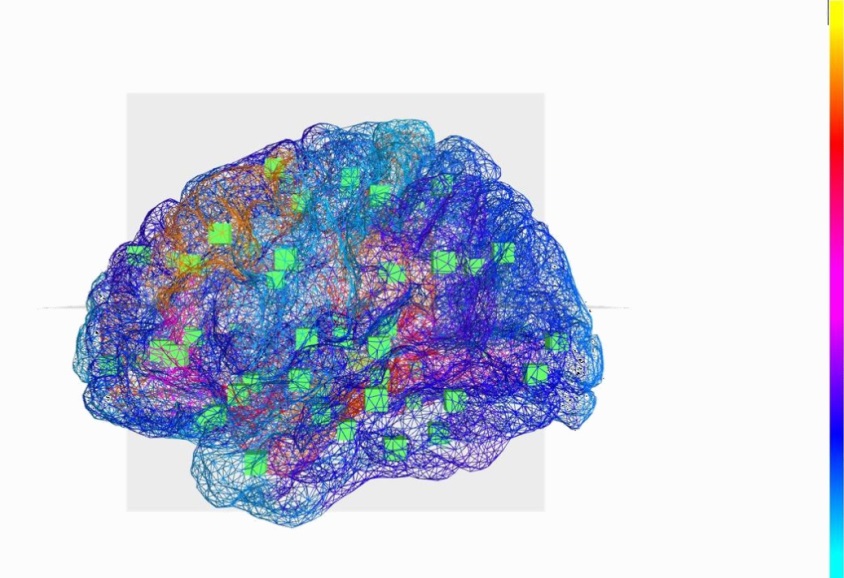
The Virtual Brain: reconstruction of brain regions and where they are connected. The green cubes indicate the center of brain regions that are connected

©INS UMR1106 INSERM/AMU.

Researchers at CNRS, INSERM, Aix-Marseille University and AP-HM have just created a virtual brain that can reconstitute the brain of a person affected by epilepsy for the first time. From this work we understand better how the disease works and can also better prepare for surgery. These results are published in Neuroimage, on July 28, 2016.


Worldwide, one percent of the population suffers from epilepsy. The disease affects individuals differently, so personalized diagnosis and treatment are important. Currently we have few ways to understand the pathology’s mechanisms of action, and mainly use visual interpretation of an MRI and electroencephalogram. This is especially difficult because 50% of patients do not present anomalies visible in MRI, so the cause of their epilepsy is unknown.

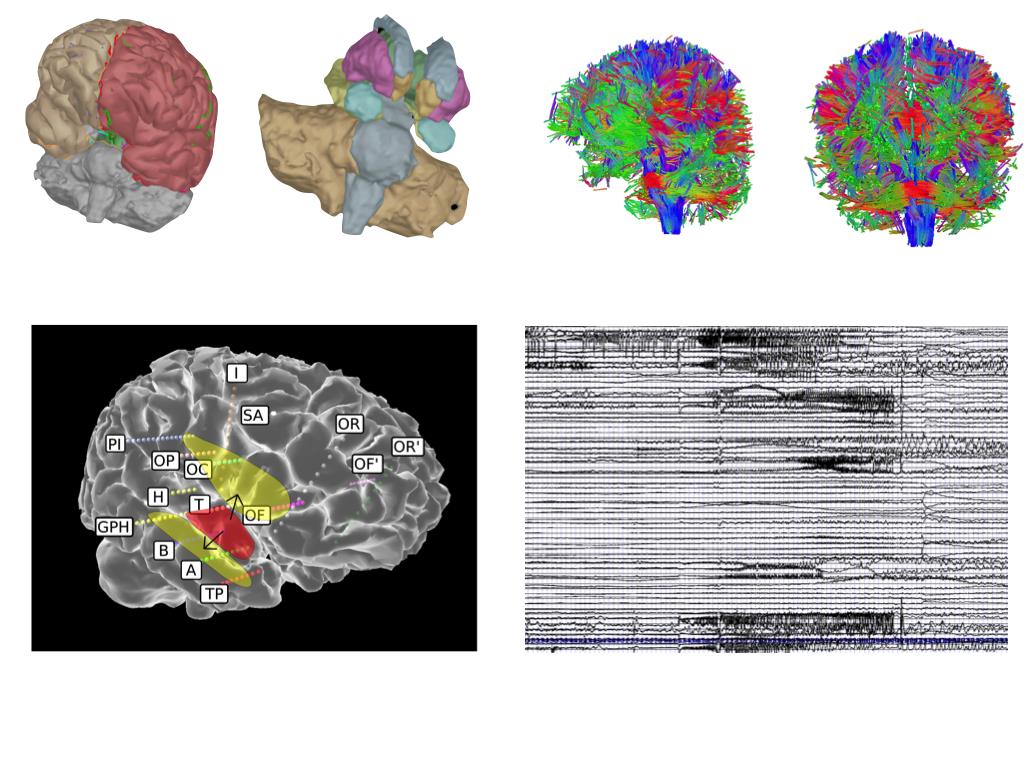
Researchers have succeeded for the first time in developing a personalized virtual brain, by designing a base “template” and adding individual patient information, such as the specific way the brain’s regions are organized and connected in each individual. Mathematical models that cause cerebral activity can be tested on the virtual brain. In this way, scientists have been able to reproduce the place where epilepsy seizures initiate and how they propagate. This brain therefore has real value in predicting how seizures occur in each patient, which could lead to much more precise diagnosis.


Moreover, 30% of epileptic patients do not respond to drugs, so their only hope remains surgery. This is effective if the surgeon has good indications of where to operate.

The virtual brain gives surgeons a virtual “platform.” In this way they can determine where to operate while avoiding invasive procedures, and especially prepare for the operation by testing different surgical possibilities, seeing which would be most effective and what the consequences would be, something that is obviously impossible to do on the patient.

In the long run, the team’s goal is to provide personalized medicine for the brain, by offering virtual, tailored, therapeutic solutions that are specific for each patient. The researchers are currently working on clinical trials to demonstrate the predictive value of their discovery. This technology is also being tested on other pathologies that affect the brain, such as strokes, Alzheimer’s, degenerative neurological diseases, and multiple sclerosis.


This work involves researchers at the Institut de Neurosciences des Systèmes (INSERM/AMU), the Centre de Résonance Magnétique Biologique et Médicale (CNRS/AMU/AP-HM), the Département Epileptologie et du Département Neurophysiologie Clinique at AP-HM, and the Epilepsy Center of Cleveland. It was done in the Fédération Hospitalo-Universitaire Epinext (www.epinext.org).

cerveau

The Virtual Epileptic Patient: brain regions and their connections are rebuilt by computer. Digital simulations generate an electric signal similar to that generated by the brain during seizures. These simulations allow digital testing of new therapeutic strategies

©INS UMR1106 INSERM/AMU.

Omega-3 fatty acids and stress management: growing links

nutrition poisson légumes aliments

Fotolia

The relationship between omega-3 fatty acid intake and adaptation to stress or anxiety is becoming clearer. Back in 2011, a team of researchers from INRA and Inserm showed that reducing the intake of omega-3 fatty acids in mice increased their stress. This phenomenon may be linked to impairment of the brain’s ability to produce endogenous cannabinoids, the “endocannabinoids,” brain lipids that control synaptic memory. To better understand the endocannabinoid-dependent links between anxiety and synaptic plasticity, the research team continued its experiments by testing different models of behavioural stress on the rodents. These studies are the subject of an article published in the journal Cell Reports on 21 July.

Mice do not respond equally to stress. An observation made by an INRA/Inserm research team who, after submitting the rodents to a battery of tests related to behaviour stress – isolation, maze or anxiogenic environment – found that some subjects were naturally resilient, or in other words, more resistant to stress. This ability may be related to better plasticity in the neurons of the accumbens nucleus, an area of the brain associated with regulation of the emotions and of stress, where endocannabinoids play a key role in memory at synapse level.

To confirm this relationship, mice showing several anxiety-related symptoms received a treatment to stimulate endocannabinoid production in the accumbens nucleus. Result: the scientists observed an attenuation of anxiety in these mice. For the first time, it has been proven that there is a relationship between anxiety and the levels of endocannabinoids produced by the brain. These results further emphasise the therapeutic potential of molecules that modulate the natural production of endocannabinoids, including dietary omega-3 fatty acids.

A milestone has thus been reached in demonstrating the protective effect of omega-3 fatty acids on the impairment of the brain’s ability to produce endocannabinoids. Ultimately, the idea is to understand how omega-3 fatty acids exert a protective action in response to the impairment of endocannabinoid-dependent plasticity in the accumbens nucleus, a part of the brain that constitutes the neurobiological substrate for anxiety.

This opens new perspectives in understanding the role of omega-3 fatty acids in the management of stress by the brain. The next studies will be aimed at better understanding the role of dietary omega-3 fatty acids in protecting the plasticity of the accumbens nucleus, and hence their ability to stimulate endocannabinoid production in a situation of stress.

fermer