Menu

When Moss Reflects Air Pollution

©Photo by Michaela on Unsplash

Despite the increasing research into and recognition of the role of particulate matter in the excess mortality caused by air pollution, it is still poorly understood. A research team from Inserm and Université Versailles Saint-Quentin-en-Yvelines used an innovative method based on the biomonitoring of metal levels in mosses in rural France. Over 15 years, the team mapped levels of metals − including lead and cadmium − in mosses. The results were then compared with mortality data from the Gazel cohort. Their findings, published in Environment International, point to a link between long-term exposure to atmospheric metals and excess mortality, even in areas remote from major sources of emissions. They confirm the utility of moss biomonitoring as a tool to evaluate the effects of exposure to air pollution.

External air pollution has been recognized as being responsible for 4.2 million premature deaths in 2016, and scientific evidence continues to accumulate in regard to the role played by particulate matter. Produced by both human activity and natural sources, particulate matter contains various metals. Its role in morbidity and mortality however is poorly understood, with little research into the health effects of exposure to atmospheric metals. Often limited by the absence of widespread monitoring stations, studies focus on areas of high exposure or population density (cities, proximity of major roads or polluting industries).

Biomonitoring metal levels in moss [1] is an approach which, although it does not measure them directly, is able to evaluate over time the level and variations of atmospheric concentrations of heavy metals deposited on mosses.

A research team from Inserm and Université Versailles St-Quentin-en-Yvelines compared moss biomonitoring data in France with epidemiological data from the Gazel cohort in order to deepen its understanding of the effects on mortality of long-term exposure to atmospheric metals in areas with low levels of exposure to human emissions.

Over 15 years – from 1996 to 2011 – the researchers mapped levels of 13 atmospheric metals (aluminum, arsenic, calcium, cadmium, chrome, copper, iron, mercury, sodium, nickel, lead, vanadium and zinc) in mosses using readings taken as part of the French National Museum of Natural History moss biomonitoring program. They distinguished between metals of natural origin and those of anthropogenic origin (human activity) – the latter being lead, cadmium, copper, mercury and zinc. The health data of over 11,000 Gazel cohort participants living in rural and suburban areas were compared with this mapping.

The researchers observed an increased risk of death from natural causes for the simultaneous exposure to all of the anthropogenic metals. Exposure at shorter distances from major roads appears linked to a higher mortality increase than exposure at longer distances, which could indicate a link between exposure to atmospheric metals produced by road traffic and mortality.

Some atmospheric metals produced by human activities could therefore be linked to excess mortality even in the areas where exposure to air pollution is low. ” Previous studies within the Gazel cohort had shown that those living in urban areas were a lot more exposed to particulate matter than those living rurally and so had a high likelihood of exposure to atmospheric metals, states Bénédicte Jacquemin, the Inserm researcher having led the study. City-dwellers are therefore probably more subject to the health effects of atmospheric metals. “

And to conclude: The results of this study confirm the utility and relevance of moss biomonitoring as a tool to evaluate the effects of exposure to air pollution. Further studies are needed in order to specify which of the metals contained in the particulate matter are likely to affect human health, which would give us a deeper understanding of the effects of atmospheric pollution on health. 

[1] In France, the BRAMM program, managed by the French National Museum of Natural History, uses moss biomonitoring for many atmospheric metals, with the objective of monitoring levels of these metals mainly in forests and areas remote from major industrial, urban and traffic sources. This monitoring involves sampling mosses at sites across France, recording the location of each collection site and analyzing their metal content in the laboratory.

Better air quality: what should the target values be for improving health?

©Photo by Pierre Herman on Unsplash

To produce a significant reduction in mortality due to fine particulates, their average level should be reduced by at least 3 micrograms per m3 as a yearly average, concludes an interdisciplinary study led by researchers from Inserm, the CNRS, INRA, Atmo Auvergne Rhône-Alpes and the Université Grenoble Alpes. This work, published in Environment International, also provides an estimate of the costs of pollution in urban areas: €1200 per inhabitant per year in the Lyon and Grenoble conurbations.

Exposure to fine particulate matter (PM2.5) is recognized to have significant effects on health in urban areas (including cardiovascular and respiratory mortality and disease, and pregnancy and fetal growth problems), but can be reduced. However, public policies designed to reduce atmospheric pollution are often developed without setting the explicit health benefits to be achieved.

So what should the target values be if we want to significantly improve health, decrease health costs, and reduce environmental inequalities? A multidisciplinary team of researchers (epidemiologists from Inserm, biologists and economists from the CNRS and INRA, and air quality specialists from Atmo Auvergne Rhône-Alpes) looked at different hypothetical scenarios for improving air quality in order to identify those that would be most effective.

First, yearly average exposure to PM2.5 was estimated using air quality observation tools and data on the location of housing in the Grenoble and Lyon conurbations (0.4 and 1.4 million inhabitants respectively). Based on previously established dose-response relations, the researchers estimated variations in the number of deaths and cases of lung disease, life expectancy, and associated economic costs for ten different scenarios for reducing PM2.5.

Using the actual situation over the period 2015-2017 as a baseline, with an average concentration of around 14 and 15 µg/m3 in Grenoble and Lyon, and comparing it to a hypothetical situation without human-produced fine particulates (equating to a concentration of 4.9 µg/m3), fine particulate pollution was considered to be responsible for 145 deaths per year in Grenoble (5.6% of deaths, with a 2% margin of error either way) and 16 cases of lung cancer. In Lyon, the respective numbers were 531 and 65. The associated costs, which included tangible costs linked to treatment, but also “intangible” costs linked to the psychological impact on friends and family, came to nearly 500 million euros per year in Grenoble and 1.8 billion/year in Lyon.

10 scenarios tested

The scenarios designed to obtain spatially homogeneous exposure to pollution across the entire study area were the most effective. “Measures that are highly spatially limited – or limited by time, for example, to ‘peak’ pollution periods – would appear to have a much lower impact on both mortality and on reducing health inequalities, ” explains Rémy Slama, Inserm research director.

In relation to mortality, reducing exposure to PM2.5 in line with the WHO (World Health Organization) guideline value for air quality (10 μg/m3) would halve mortality attributable to PM2.5 of human origin, while a reduction of 2.9 μg/m3 (Grenoble) and 3.3 μg/m3 (Lyon) would be required to reduce the mortality attributable to these particulates by a third. It is not simply deaths among vulnerable individuals that would be prevented: life expectancy would also simultaneously increase by around 3 months.

This kind of study can be easily transposed to other conurbations, and may help French cities, many of which have similar levels of pollution to those in Grenoble and Lyon, to focus on scenarios for reducing atmospheric pollution that make it possible to significantly improve health and well-being. The team of researchers is now working to identify the concrete measures that might be taken in relation to the main sources of pollution (heating and road traffic) in order to achieve such a decrease in pollution concentrations.

This study was carried out as part of the QAMECS and MobilAir projects supported by ADEME, Grenoble-Alpes Métropole and IDEX Université Grenoble Alpes.

When narcolepsy makes creative

©Adi Goldstein/ Unsplash

Sleeping we make it more creative? The study of narcolepsy, which enjoy privileged access to REM sleep, could provide key information to understand this phenomenon. A team including doctors from the hospital Pitié-Salpêtrière AP-HP and researchers from Inserm, CNRS and Université Sorbonne within the Institute for Brain and Spinal Cord Disorders, in collaboration with a team University of Bologna in Italy, revealed the existence of a greater creativity in patients with narcolepsy. The results of the study suggest a link between a particular phase of sleep, REM sleep, and creative abilities. This important advance, published in the journal Brain May 29, 2019, opens new avenues in understanding the cognitive functions of sleep and mechanisms of creative thinking.

Narcolepsy is a rare sleep disorder that affects approximately 0.02% of the general population. It is characterized by uncontrollable sleep phases. These sleepiness have the distinction of often begin immediately by a particular phase of sleep, REM sleep, a situation not to encounter in normal times.

Indeed, our sleep consists of several stages and REM sleep is always preceded by a slow phase of sleep. So it usually sleep at least an hour before accessing this particular sleep. Narcoleptic people therefore have privileged access to REM sleep. They also have many parallels symptoms associated with REM sleep, as if they existed in them a porous barrier between wakefulness and that sleep phase. For example, the majority of them are lucid dreamers, that is to say conscious dreaming when they are dreaming and can sometimes influence the dream scenario. If more than half of the adult population reported having made a lucid dream at least once in his life, regular lucid dreamers (several times a week) are very rare.

Data from the current literature suggest that either nap including REM sleep is followed by an increased period of greater mental flexibility to solve problems. Narcoleptic individuals with privileged access to this sleep phase, would there be a long-term effect on their creativity?

By meeting regularly with narcoleptic patients in my service, I noticed they seemed more change in creative activities than average; not only in their careers but also in their leisure or their thinking. “Says Dr. Isabelle Arnulf, head of the Sleep pathology department at the Pitié-Salpêtrière, AP-HP. From this observation was born the idea of exploring the creative capabilities of these patients with regard to their particular access to REM sleep.

A study by Celia Lacaux, a researcher at the Sorbonne University, and Delphine Oudiette researcher at Inserm, within the department of sleep pathologies of the Pitié-Salpêtrière Hospital AP-HP led by Prof. Isabelle Arnulf to ICM, tested in collaboration with a team from the University of Bologna in Italy, the creative capacities of 185 narcoleptic individuals and 126 control individuals.

Defining and measuring creativity is not an easy task. In neuroscience, it can be defined as the ability to produce something both original and adapted to the constraints. To evaluate and obtain the fullest possible extent, the researchers used two methods:

  • A “subjective” measure based on creativity questionnaires in 185 narcoleptic subjects and 126 control subjects: a test “creative profiles” focused on the personality and creative profile, and a test of “creative fulfillment” on personal achievements participants in various fields of the arts and sciences, cinema writing, through humor, cooking or architecture.


  • A measure ‘objective’ creative performance through a “paper and pencil” test for two hours, called EPOC (Evaluation of the Creative Potential) in 30 patients and 30 controls. It assesses the two main dimensions of creativity: divergent thinking which demand from a stimulus to generate the most possible responses; and convergent thinking, which requires the integration of several objects in a single generation, coherent and original.

Narcoleptic individuals generally received higher scores than the control subjects, both objective measures and subjective. ”  If narcoleptic subjects had higher scores than control subjects, only some of them really stood out in terms of creative fulfillment. This suggests that we really encourage narcoleptic people realize their potential. “Said Delphine Oudiette, Inserm researcher at the MHI, who led the study. ”  Moreover, among people with narcolepsy, the subgroup of lucid dreamers obtenaitles highest scores of creative profiles test, suggesting a role of dreams in the creative abilities. 

This increased creativity could be explained by the privileged access to REM sleep and dreams enjoyed narcoleptic people and gives them the opportunity to “incubate” their ideas during brief naps during the day.

”  This is a strong argument to say that regular access to REM sleep and dreams promotes creativity. Sleep on it, you will find a solution! It is also the first time we show that narcoleptic subjects are better than average in an area as important as creativity, bringing the same positive note to this difficult disease to live with. “Celia Lacaux concludes, first author of the study. Further work will be needed to confirm this but these early results provide important clues to understanding the functions of REM sleep and dreams.

Consumption of ultra-processed food and risk of cardiovascular disease

©Photo Christopher Flowers / Unsplash

In an article published May 30, 2019 in the British Medical Journal, researchers from Inserm, Inra, Université Paris 13 and Cnam in the Nutritional Epidemiology Research Team (EREN) report an increased risk of cardiovascular disease in consumers of ultra-processed foods in the NutriNet-Santé cohort.

In recent decades, dietary habits have shifted towards an increased consumption of ultra-processed foods (see boxed text below), which currently account for over half of the total daily energy intake in many western countries. Such foods are often characterized by lower nutritional quality, in addition to the presence of additives, neoformed compounds and substances from packaging and other contact materials.

Recent studies have shown links between the consumption of ultra-processed foods and an increased risk of dyslipidemia, overweight, obesity, and hypertension.

While the Nutritional Epidemiology Research (EREN) team researchers have already observed links between the consumption of such foods and the risk of cancer, mortality, depression symptoms and functional gastrointestinal disorders, no epidemiological studies had up until now investigated the risk of cardiovascular disease. However, this has changed, thanks to the NutriNet-Santé cohort study by the EREN team – and more specifically by epidemiologist and PhD candidate Dr. Bernard Srour, led by Inserm Research Director Dr. Mathilde Touvier, in collaboration with the University of São Paulo in Brazil.

Over 100,000 participants from the French NutriNet-Santé cohort (followed up between 2009 and 2018) were included. On entry into the study, dietary intakes were collected using repeated 24-hour dietary records (on average, 6 per participant), designed to register their usual consumption of 3,300 different foods and drinks. These were categorized by degree of processing using the NOVA classification (see boxed text below).

During the follow-up period, ultra-processed food intake was found to be linked to a higher risk of cardiovascular disease (n = 1409 cases out of the 105,159 participants), particularly coronary heart disease (n = 665 cases), as well as cerebrovascular disease (n = 829 cases).

An absolute increase of 10% in the proportion of ultra-processed foods in the diet (for example, when comparing two individuals with diets consisting of 15% and 25% of ultra-processed foods, respectively) was linked to a 12% increase in the risk of overall cardiovascular disease (13% for coronary heart disease and 11% for cerebrovascular disease).

This observational study in itself does not enable a causal relationship to be established. However, in addition to the prospective design of the study, the results take into account a large number of sociodemographic and lifestyle factors, including age, sex, smoking status, alcohol consumption, educational level, physical activity and weight, metabolic comorbidities and family history. The results obtained also show that the lower overall nutritional quality of ultra-processed foods may not be the only factor involved.

The nutritional guidelines published recently by the French Public Health Agency (2019) recommend limiting the consumption of ultra-processed foods and opting for unprocessed or minimally processed foods. This is in line with the High Committee for Public Health objective of reducing by 20% the consumption of ultra-processed foods in France by 2022.

Definition and examples of ultra-processed foods

Food and drinks are assigned to one of the four groups in the NOVA classification, based on their degree of processing (unprocessed or minimally processed foods, processed culinary ingredients, processed foods, ultra-processed foods). This study focused on the “ultra-processed foods” group, which includes, for example, sugary and artificially-sweetened soft drinks, vegetables preserved with the addition of sauces containing food additives, vegetable nuggets reconstituted with the addition of additives, confectionery and any processed products with the addition of preservatives other than salt (for example, nitrites), as well as food products made mostly or entirely from sugar, oils and fats and other substances not used in culinary preparations, such as hydrogenated oils and modified starches. Industrial processes notably include hydrogenation, hydrolysis, extruding, and pre-processing by frying. Colors, emulsifiers, texturizing agents, non-sugar sweeteners and other additives are often added to these products.

Examples:

– Salted red or white meats are considered “processed foods”, whereas smoked meats and/or with added nitrites and preservatives, such as sausages and ham, are considered “ultra-processed foods”.

– Liquid soups in cartons prepared using just vegetables, herbs and spices are considered “processed foods” whereas dried soup mixes are considered “ultra-processed foods”.


NutriNet-Santé is a public health study coordinated by the Nutritional Epidemiology Research Team (EREN, Inserm U1153 / Inra U1125 / Cnam / Université Paris 13) which, thanks to the commitment and loyalty of over 160,000 participants (known as “Nutrinautes”), advances research into the links between nutrition (diet, physical activity, nutritional status) and health. Launched in 2009, the study has given rise to over 160 international scientific publications. To mark its 10-year anniversary, a call to enroll new participants is being launched so that together we can continue to further research into the relationship between nutrition and health.

By devoting a few minutes per month to answering various online questionnaires relating to diet, physical activity and health, participants contribute to furthering knowledge of the links between diet and health. With this civic gesture, we can each easily participate in research and, in just a few clicks, play a major role in improving the health of all and the wellbeing of future generations. These questionnaires can be found on the secure platform www.etude-nutrinet-sante.fr

The Health of 200 000 Volunteers Tracked by Inserm

People©Fotolia

Over two-hundred thousand. That is the number of people living in France who have enrolled in Constances since 2012. This unparalleled record makes the cohort the country’s largest epidemiology and public health research project, with few equivalents on the international level.

Performed in partnership with Inserm, the French national health insurance fund, the French national retirement pension fund and the universities of Versailles-Saint-Quentin-en-Yvelines and Paris Descartes, Constances aims to track the long-term health of its volunteers in order to deepen our understanding of the factors that influence it, such as diet, environment or working conditions.

Constances is a research infrastructure that is funded within the framework of the Investments for the Future programs.

Constances represents:

  • 205 000 participants – almost 97% of whom accept to be paired to the databases of the French National System for Health Data
  • several thousand variables for each individual
  •  80 research and public health projects ongoing
  • over 190 researchers working on its data in France, Germany, UK, Spain, Finland, Italy, Sweden, Canada, Denmark and the USA
  • participation in 11 French and international research consortiums
  • a rapidly growing number of scientific publications

With the surge in Big Data and Artificial Intelligence, if public research is to inform public decision-making on such sensitive issues as pesticides or mobile telephones, we need powerful and secure research instruments like Constances,” explains Marie Zins, Scientific Director of the cohort.

Constances: a living project

Seven years after the launch of Constances, new projects are being created in order to improve yet further its contributions to research. The collection of biological specimens to form a biobank began at the end of 2018, with almost 95% of the participants approached who gave their consent. In 2019, the volunteers will complete their online ‘’residential calendar’’ with the addresses of everywhere they have ever lived since birth, which will open up immense perspectives for studying the effects of the environment (atmospheric pollution, pesticides, light pollution, etc.) on health. It does not stop there. Constances is also contributing to the French Plan for Genomic Medicine, thanks to the whole genome sequencing of a subsample of participants to constitute a database of genetic variations in our populations.

The cohort’s researchers will present their latest findings at a scientific day held on May 23, in Paris. The topics covered will include work stress and the risk of benzodiazepine misuse, the epidemiology of NASH in France, the use of e-cigarettes and the long-term reduction of smoking, and the link between depressive symptoms and vegetarian diets.

Constances: advancing research to improve health

  • Link between depressive symptoms and vegetarian diets

While vegetarian and vegan diets (which exclude the consumption of certain animals or any products of animal origin) appear to be generally good for physical health, some studies have reported a link to an increased frequency of depressive symptoms. In just over 90 000 subjects from the Constances cohort, the researchers revealed such a link with pesco-vegetarian diets (which allow the consumption of fish) and lacto-ovo-vegetarian diets (which allow the consumption of eggs and dairy), even when sociodemographic and health-related factors were taken into account. However, this link was not present in frequent consumers of legumes (lentils, chickpeas, soya, etc.) or in those following such diets “for their health”. What is more, this link was not specific to the exclusion of animal products in particular but was observed irrespective of the food group excluded. For example, the increased probability of depression found with a diet low in vegetables was twice as high as that observed with a diet low in meat.

These findings, which cannot affirm a causal relationship, suggest that depression is linked to a tendency to restrict the variety of foods consumed, whatever those foods might be.

Study reference: https://dx.doi.org/10.3390/nu10111695

  • Benzodiazepines: chronic consumption and work stress

Benzodiazepines are the most prescribed drugs worldwide due to their anxiolytic effects. However, their treatment indications are limited, and it is not recommended to use them for long periods of time due to the risk of dependency and their numerous side effects. The subjects most exposed to these side effects are chronic users. Based on data on treatments dispensed in pharmacies to over 9000 Constances participants enrolled in 2015, the researchers calculated prevalences of chronic benzodiazepine use that were representative of France’s general population. These prevalences were particularly high in that chronic benzodiazepine use concerned 2.8% of men and 3.8% of women in France in 2015. These prevalences rose to 9.3% of men and 12.2% of women in the over-50s age group.

Chronic benzodiazepine use is therefore particularly common in the general French population and the subjects most vulnerable to their side effects are paradoxically those who are the most affected.

In another study, the researchers looked at the links between stress at work, measured using an internationally validated scale, and the risk of chronic benzodiazepine use. Based on a sample of over 30 000 workers enrolled in Constances between 2012 and 2014, with no recent history of chronic benzodiazepine use, the researchers calculated the risk of chronic use over a two-year follow-up period.

They found that stress at work was linked to an increased risk of chronic benzodiazepine use – a risk that increased with the intensity of the stress at work. For the most stressed subjects, the risk of chronic benzodiazepine use was at least two-fold.

Study reference: https://doi.org/10.1186/s12889-019-6933-8

  • NASH: affects almost 1 in 5 people in France

Metabolic steatosis (“fatty liver”) and more particularly nonalcoholic steatohepatitis (NASH), is an emerging hepatic disease linked to the global epidemics of obesity and diabetes, and likely to lead to liver cirrhosis and cancer. Based on the Constances cohort and with the help of indirect markers, the researchers determined that the prevalence of metabolic steatosis was 18.2% in France’s adult population, including 2.6% with advanced liver disease, that it was twice as common in men than in women, and that it increases with age. There is an inverse relationship with the socio-economic level and a North-to-South gradient.

Obesity and diabetes are major risk factors. Study of the impact of metabolic steatosis and NASH on morbidity-mortality in France’s general population is ongoing.

  • Are e-cigarettes effective in reducing smoking long-term?

This study involved 5400 smokers and 2025 ex-smokers from the Constances cohort (2012-2016; cessation of smoking from 2010, the year e-cigarettes went on sale in France). In total, 15% of the smokers and around 9% of the ex-smokers reported using e-cigarettes at the time they were interviewed. Over an average 2-year follow-up period, the smokers using e-cigarettes reduced their tobacco consumption more than the non-users (from 4.4 cigarettes/day to 2.7 cigarettes/day). Furthermore, 40% of the e-cigarette users were able to stop smoking during the follow-up period, versus 25% of the smokers who were not using an e-cigarette. However, the ex-smokers who were using e-cigarettes had a higher probability of resuming smoking than those who were not using e-cigarettes (31 vs. 16%).

In conclusion, e-cigarettes enable smokers to cut down on their smoking or to stop smoking altogether, but these effects do not always appear lasting. It is therefore necessary to closely monitor e-cigarette users and advise total tobacco withdrawal to reduce the risk of relapse.

Publication in progress

To find out more about this event: consult the program.

Journalists wishing to attend this event must have prior authorization from the Inserm Press Office rf.mresni@esserp

Artificial Intelligence Facilitates Chemical Toxicity Evaluation: the Case of Bisphenol S

©Photo by Philipp Katzenberger on Unsplash

A novel IT tool based on artificial intelligence methods has made it possible to identify the toxic effects of bisphenol S – a frequent substitute for bisphenol A in food containers – using existing published data. In more general terms, this tool developed by Inserm researchers led by Karine Audouze at Unit 1124 “Environmental Toxicity, Therapeutic Targets, Cellular Signaling and Biomarkers” (Inserm/Université de Paris), will make it possible to reveal the toxic effects of any chemical substance (or physical agent) provided that it is already present in databases or published studies. The stages of the development and use of this tool are described in Environmental Health Perspectives.

Artificial intelligence can now be used to simultaneously analyze databases and scientific literature in order to evaluate the toxicity of substances for humans. Such “in silico meta-analysis” has been made possible thanks to an IT program designed by Karine Audouze and her colleagues at Inserm JRU-S1124 (Environmental Toxicology, Therapeutic Targets, Cell Signaling and Biomarkers). It was validated by researching the toxicity of bisphenol S, a frequent substitute for bisphenol A – an endocrine disruptor that has already been banned from use in food containers.

In practice, the researchers incorporated various types of biological and chemical data in their IT program, including the 2,000 terms referenced in the AOP-wiki database (AOP: Adverse Outcome Pathways). “This database comprises precise descriptions of the various biological steps (molecules, signaling pathways) leading from molecular disruption to pathological effects, such as obesity, steatosis, cancer, etc. New toxicity processes are added regularly”, states Audouze. In parallel, with bisphenol S having been used to test the program, the authors incorporated the various designations and synonyms of this component that are found in the scientific literature. Thus equipped, the program scanned the abstracts of scientific articles submitted by the authors, searching for those pre-saved terms. “The aim was to establish links between those terms representing the chemical substance and those corresponding to the pathological processes”, clarifies Audouze. To achieve that, the researchers taught their system to read intelligently. This means that the program gives more weight to terms found side by side rather than far apart from each other, to those found in the results and conclusions sections at the end of the abstract rather than in the hypothesis section at beginning and, finally, by quantifying the words spotted. “The system goes beyond a rapid scan to offer genuine automated text analysis”.

In the end, the analysis revealed a correlation between bisphenol S and the risk of obesity, which was then manually verified by the authors. Then, to further increase the performance of their tool, the authors also incorporated the biological data from ToxCast, a US database that references the effects of many chemical and physical agents on various cell types thanks to robotic analysis. “As such, this strategy makes it possible to suggest mechanisms associated with the toxicity discovered by the program”, explains Audouze. This is how the researchers observed that bisphenol S promotes the formation of adipocytes.

“This IT tool can be used to establish a quick overview of the effects of a chemical agent, which is desirable when the latter is suggested as a substitute for an existing substance. It does not provide proof of toxicity as such but serves to rapidly incorporate a large quantity of data and rank the most likely harmful effects, thereby making it possible to design the most pertinent biological and epidemiological studies”, illustrates Audouze.

This tool can now be freely accessed on the GitHub platform. Any researcher wishing to test the toxicity of an agent can use it by developing a dictionary specific to that agent.

This project was funded by the European Human Biomonitoring Initiative, HBM4EU (https://www.hbm4eu.eu).

The overall annual cost of infections due to bacterial resistance in French hospitals now estimated up to 290 million Euros

Pour la première fois, une équipe de chercheurs de l’université de Versailles Saint-Quentin-en-Yvelines, de l’Inserm et de l’Institut Pasteur (Unité Mixte de Recherche 1181 Biostatistique, biomathématique, pharmacoépidémiologie et maladies infectieuses – B2PHI) est parvenue à estimer le plus précisément possible le nombre de nouveaux cas et le coût économique direct que représentent les infections à bactéries résistantes aux antibiotiques chez les malades hospitalisés, pendant les années 2015 et 2016.

Les résultats de ces travaux menés par Mehdi Touat et Marion Opatowski sous la direction de Laurence Watier en collaboration avec le professeur Christian Brun-Buisson au sein du groupe de recherche dirigé par Didier Guillemot ont été publiés le 3/12/2018 dans la revue Applied Health Economics and Health Policy et le 12/3/2019 dans la revue Epidemiology & Infection.

En 2016, près de 140 000 nouveaux cas d’infection à bactérie résistante ont été identifiés, ce qui représente 12% de toutes les infections bactériennes ayant nécessité une hospitalisation. Les infections urinaires, respiratoires et intra-abdominales en constituent les 2/3. Elles sont dominées par les bactéries E.coli résistantes aux céphalosporines, les staphylocoques dorés résistants à la méthicilline (SARM) et les bactéries pyocyaniques.

Comparativement aux infections à bactéries sensibles aux antibiotiques, les infections à bactéries résistantes entraînent 20% de décès supplémentaires à l’hôpital.

Il a été calculé que le surcoût lié aux infections à bactérie résistante s’élève à 1100 € en moyenne par séjour hospitalier, ce qui conduit à estimer pour l’ensemble de la population un surcout annuel de près de 290 millions d’euros.

Cette étude s’appuie sur le Système National des Données de Santé (SNDS), données d’une rare exhaustivité puisqu’il inclut des informations de diagnostic systématiquement collectées lorsqu’un malade séjourne dans un hôpital français. Les informations auxquelles l’équipe de recherche a eu accès portent sur plus de 10 millions de patients hospitalisés annuellement. Débuté il y a 3 ans, ce travail a été initié grâce au soutien du Ministère de la Santé et en collaboration avec l’Assurance Maladie.

Les algorithmes créés pour ce travail de recherche seront rendus publiques. Ce qui dorénavant permettra de rapidement réaliser les analyses pour les années suivantes et les années à venir.

Cesarean Delivery Linked to Increased Risk of Severe Maternal Complications

©Photo by freestocks.org on Unsplash

Cesarean delivery is thought to be linked to a greater risk of severe maternal complications – primarily hemorrhagic – than vaginal delivery, especially in women aged 35 and over. This is what a team of researchers from Inserm, Université Paris Descartes, Université Paris Diderot and Université Paris 13 have observed. These new findings, published in Canadian Medical Association Journal (CMAJ), clearly distinguish the risks linked to this procedure from those related to the pathology or clinical context having required it.

There has been a marked increase in cesarean section rates over the last 20 years worldwide. According to the recent results of the 2015 Euro-Peristat report on perinatal health in France and Europe, France is one of the European countries with the lowest cesarean rate, albeit with one in five deliveries concerned.

Various studies have already examined the risks related to this mode of delivery. However, while many of them came to the conclusion of an apparent link between cesarean sections and severe maternal complications (massive hemorrhage, infection, pulmonary embolism, etc.), they did not clearly distinguish between the complications resulting from the condition or clinical context requiring the cesarean from those resulting from surgery itself.

To understand whether cesareans themselves are linked to severe maternal complications, French researchers from the EPOPE team at the Research Center for Epidemiology and Biostatistics Sorbonne Paris Cité – CRESS (Inserm/INRA/Université Paris Descartes/Université Paris Diderot/Université Paris 13), examined a subpopulation of a larger study (EPIMOMS).

In six regions of France, they compared 1444 women who had experienced severe post-birth complications – major hemorrhages for the most part – with 3464 control women who had not experienced such events. The tools used for the analysis took into account the women’s risk level and health condition prior to delivery, in order to best isolate the risks related solely to the cesarean section.

The research team observed an increased risk of severe post-birth complications in women having undergone cesarean section, irrespective of whether it was performed before or during labor. These findings are particularly significant in women aged 35 and over.

Indeed, while severe maternal complications are rare overall (1.5 % of deliveries), the study revealed an almost two-fold (x1.8) probability of occurrence in women with cesarean as opposed to vaginal delivery, rising to three-fold for women aged 35 and over. The researchers hypothesized that this age-related potentiation of the hemorrhagic excess risk is linked to the age-related reduction of the ability of the uterus to contract after birth to halt the physiological bleeding.

According to Inserm research director and study leader Catherine Deneux-Tharaux: “These findings have implications for clinical practice and will be useful when deciding on the mode of delivery; both women and physicians must be informed of this increased risk in order to determine the best mode of delivery, especially in the case of older mothers.”

Alzheimer’s disease: five new genetic markers identified

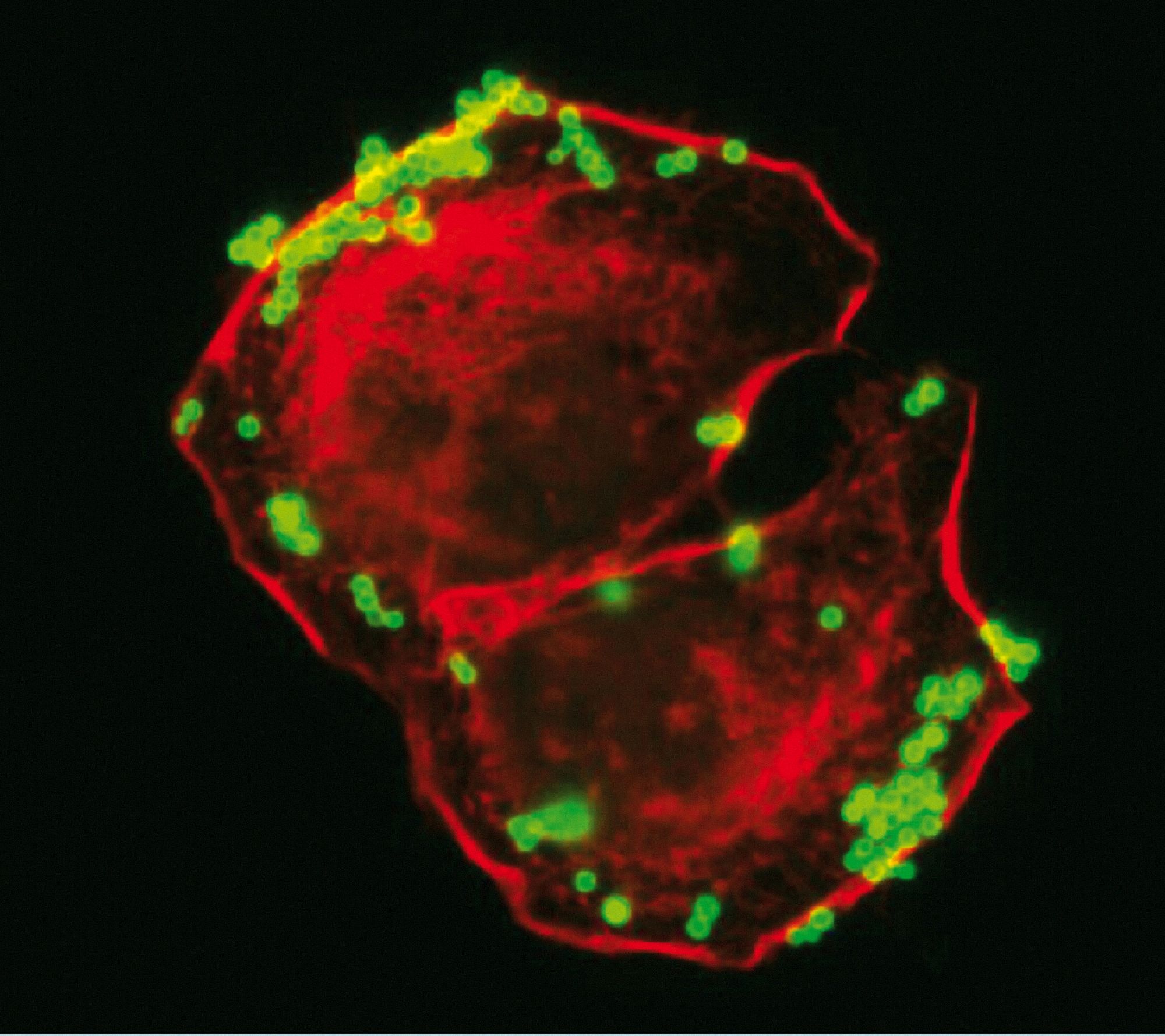
Fluorescent marking of the Tau protein in a human cell hNT; the Tau protein, has a role in Alzheimer’s disease, particularly in its familial forms ©Inserm/U837

Knowledge of the genetic component of Alzheimer’s disease continues to deepen. The aim is not to predict the disease but reveal its pathophysiological mechanisms in order to develop new drugs. At Lille’s Institut Pasteur, an Inserm team led by Jean Charles Lambert within Inserm Unit 1167 “Risk factors and molecular determinants of diseases linked to aging” directed by Philippe Amouyel recently hit a new milestone thanks to the Genomics of Alzheimer’s Project (IGAP), in which the genomes of 94,000 people were analyzed. This research revealed five new genetic variants linked to the disease and has been published in Nature Genetics.

Out of the forty genetic variants now linked to Alzheimer’s disease, five have recently been discovered as part of the Genomics of Alzheimer’s Project (IGAP) co-led by the “Identification of molecular determinants of neurodegenerative diseases” team at Inserm unit 1167 at Institut Pasteur in Lille. This major project conducted in partnership with four international consortia*[1] studied 94,000 genomes – 35,000 of which from people with Alzheimer’s disease and 59,000 from healthy controls. The vast majority of cases concerned late-onset Alzheimer’s disease, with the researchers having excluded the early-onset familial forms.

The patients’ genomes were compared with those of the healthy individuals presenting an equivalent average age. The objective was to look for variants, namely distinct DNA sequences between these two groups statistically linked to the development of the disease. The scientists reviewed 11 million of them, revealing five new variants linked to Alzheimer’s disease either in or in proximity to the genes IQCK, ACE, ADAM10, ADAMTS1 and WWOX. One of the five was a rare variant found in less than 1% of the patients. “The discovery of this rare variant validates the strategy of building increasingly large cohorts to obtain a very high statistical power. By increasing their size yet further, we will be able to look for more rare variants which probably represent a large part of the as yet undiscovered genetic component of this disease”, considers Jean-Charles Lambert, Inserm researcher and co-leader of this research.

Some of these new variants are concentrated in regions implicated in the metabolism of the Tau and amyloid precursor proteins, whose role in Alzheimer’s disease is already known – particularly in its familial forms. “This suggests shared mechanisms in the early or later forms”, explains Lambert. Treatments targeting these mechanisms could therefore be effective against these two forms. But variants are also found in regions implicating immunity, which is very interesting because it could validate a current research avenue. “One hypothesis is that the microglia, made up of immune cells related to the macrophages and playing a role in defending the brain, is implicated in the disease”, clarifies Lambert. For the researchers, it is probable that these variants control shared biological pathways which would lead to multiple impairments and the onset of the disease.

Given the repeated failures of the therapeutic trials in Alzheimer’s disease, better knowledge of the variants linked to the disease and the pathophysiological mechanisms they control is fundamental if new therapeutic strategies are to be developed. A new European project coordinated by Lambert – in which a yet larger number of patients will be enrolled to continue this mission – is already on the drawing board: the European DNA bank for deciphering the missing heritability of Alzheimer’s disease (EADB).

[1] *CHARGE (Heart and Aging Research in Genomic Epidemiology Consortium, USA), EADI (The European Alzheimer’s Disease Initiative), ADGC (Alzheimer Disease Genetics Consortium, USA) and GERAD/PERADES (Cohorts for and Genetic and Environmental Risk in AD/Defining Genetic, Polygenic and Environmental Risk for Alzheimer’s Disease Consortium, France)

Physical activity, prevention and treatment of chronic diseases – A collective expert review by Inserm

© Inserm/F.Koulikoff

Chronic diseases are long-term and sometimes permanent noncommunicable conditions that change over time. According to the World Health Organization (WHO), they are the world’s leading cause of mortality and in Europe “contribute to around 86 % of deaths (…) and represent an increasing burden on healthcare systems, economic development and wellbeing of a large proportion of the population, particularly those aged 50 or above”.

In France, the proportion of those aged 60 or above is expected to increase from one quarter of the total population in 2015 to one third in 2040. Currently, one in four French people has a chronic disease, which increases to three in four beyond the age of 65. With the increase in life expectancy, the number of older adults with chronic diseases is on the up. These are conditions that lead to functional limitations with impacts on quality of life, with the number of dependent individuals expected to rise from 1.2 million in 2012 to 2.3 million in 2060. By improving the prevention and management of chronic diseases, we are therefore taking steps to tackle a major public health emergency.

According to the WHO report of 2010, a large percentage of chronic diseases is responsive to prevention if four primary risk factors are addressed: tobacco use, physical inactivity, alcohol consumption and unhealthy diet. In France, current estimations set the direct (75 %) and indirect (25 %) costs of physical inactivity in the region of €1.3 billion.

Prevention measures can be implemented prior to development of the diseases and at any time during their progression. Given that chronic diseases and their complications contribute very strongly to a state of dependency, preventing their complications and recurrence represents a key challenge for the maintenance of autonomy, notably in older adults.

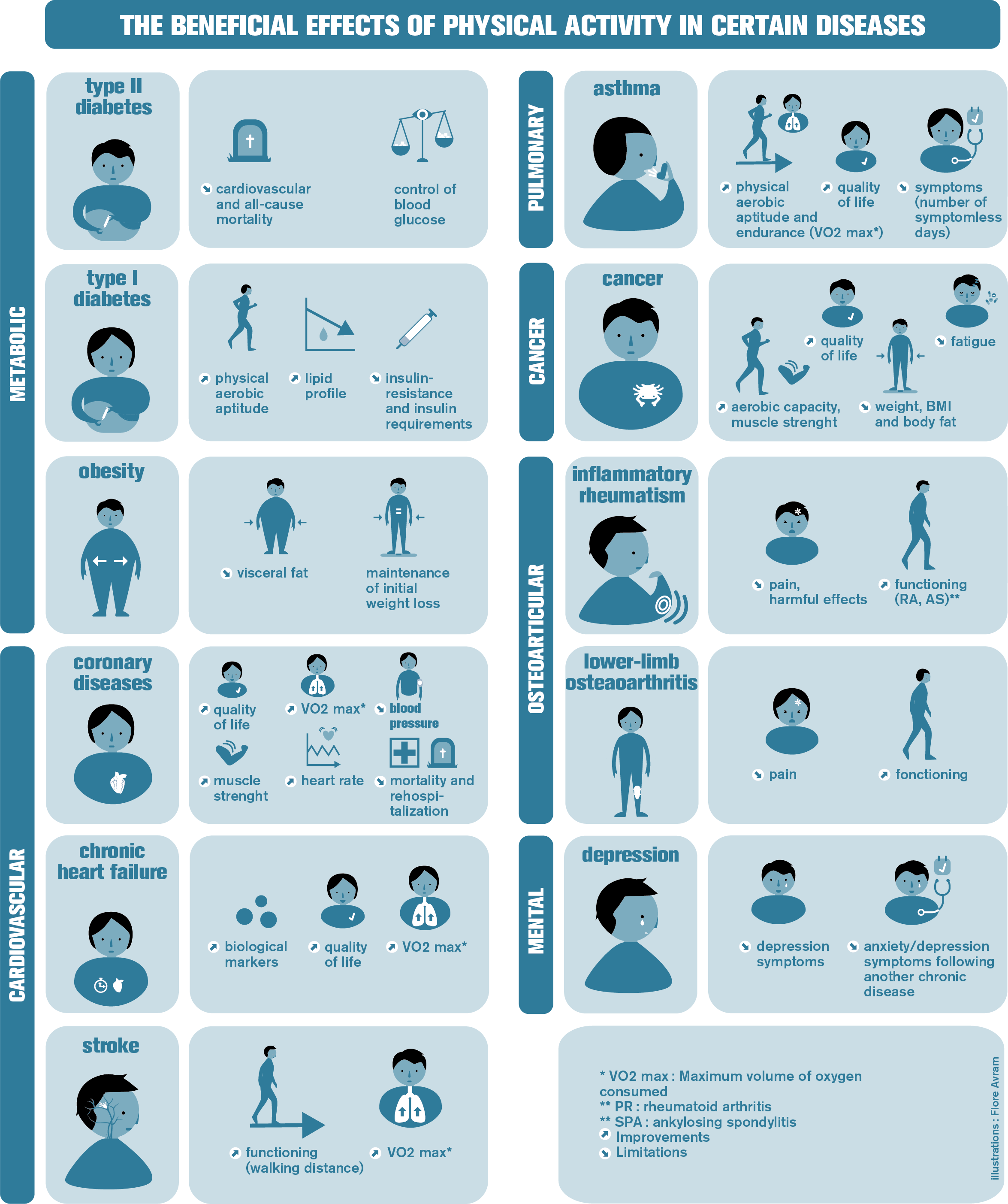
Inserm was tasked by the French Ministry of Sports with producing a collective expert review in order to take stock of scientific knowledge and to analyze, within the scope of chronic diseases, the impact of physical activity[1] and its place in the care pathway. This review is based on a critical analysis of the international scientific literature made by a multidisciplinary group of thirteen researchers with expertise in various fields relating to chronic diseases, from sports medicine to psychosociology.

The main conditions studied were cardiovascular diseases, cancer, diabetes and chronic respiratory diseases. Obesity, a determinant of chronic diseases and morbid phenomenon in itself, was also included, as were certain mental disorders (depression, schizophrenia), musculoskeletal disorders and multimorbidity.

The research presented in this review comes with three major challenges.

The first is not so much about knowing whether we should recommend regular adapted physical activity for chronic disease sufferers – there is no longer any doubt on the need for this – but rather determining the most efficient program characteristics according to patient physical aptitudes and psychosocial resources, in order to obtain maximum benefit with minimum risk: when should the program begin, what kind of physical activity should it include, at what intensity, how often, in what environment and with what kind of intervention?

The second involves identifying what determines the adoption of behavior that is active, maintained over the long-term and compatible with patient lifestyles. After all, what would be the point of a physical activity program whose efficacy was demonstrated by a clinical trial conducted under ideal conditions, but which turns out to be unsuitable for and ignored by patients?

The third challenge is about understanding the mechanisms through which physical activity acts in general, by improving the physical condition, and also specifically according to the diseases concerned. A large part of the review describes for each disease the benefits/risks of physical activity, and its utility in terms of prevention, treatment and additional care.

The expert group uses these scientific elements as a basis on which to establish recommendations for research as well as recommendations for health authorities in terms of measures to take.

Principal recommendations

  1. Prescribe physical activity for all the chronic diseases studied and include it in the care pathway

While rest has long been the rule in many chronic diseases, we are now seeing a genuine paradigm change with scientific studies showing that, when physical activity recommendations and disease-related complications are taken into account, not only does exercise not worsen the condition but that it is also more beneficial the sooner after diagnosis it is introduced.

Consequently, the expert group considers that physical activity forms an integral part of the treatment of chronic diseases. It recommends its systematic prescription, as early as possible in the care pathways of the diseases studied. It also recommends its prescription prior to any drug treatment in mild to moderate depression, type 2 diabetes, obesity and lower limb peripheral arterial disease.

The expert group has also prepared the following recommendations which, although specific to each disease, do agree on the frequency of adapted physical activity – namely a minimum of three sessions per week.

Here are some examples:

  • obesity: place the emphasis on waist size reduction as a follow-up parameter rather than weight loss and suggest endurance activity programs;
  • type 2 diabetes: opt for muscle strengthening combined with endurance activities of moderate to strong intensity;
  • coronary diseases: perform regular endurance activities which can be optimized by adjusting the intensity of the exercise;
  • lower-limb peripheral arterial disease: the first-line treatment is walking;
  • heart failure: irrespective of disease severity, all patients can benefit from an effort retraining program, thanks to regular and gradual training. Ideally, 30 minutes of moderate activity five times per week in the last phase of the program, which must be life-long;
  • stroke: reduce the impact of neuromuscular sequelae on patient quality of life and prevent relapse by improving cardiorespiratory capacity and muscle strength through regular physical activity that incorporates the practice of daily techniques;
  • chronic obstructive pulmonary disease (COPD): improve quality of life and reduce complication-related functional limitations through varied and long-term regular physical activity (endurance, muscle strengthening, swimming, tai chi…);
  • asthma: reduce the intensity and frequency of attacks by improving VO2max, endurance and exercise capacity through endurance activities;
  • osteoarticular diseases: prevent and/or reduce pain and incapacity through varied and adapted physical activity programs, maintained over the long-term;
  • cancer: improve quality of life and reduce disease and treatment-related side effects (muscular deconditioning, fatigue, treatment intolerance…) and recurrence by offering programs combining endurance and muscle strengthening;
  • depression: prevent recurrence and improve symptoms through programs combining endurance and muscle strengthening.

  1. Adapt the prescription to patient individual and medical characteristics

The principal barriers to physical activity are generally related to the disease itself (pain, fatigue, side effects of certain treatments…).

The main challenge therefore is to adapt the physical activity to the patient’s health, treatment, physical capacity, medical risks and psychosocial resources.

The expert group recommends:

  • evaluating patient physical activity level through an interview and/or simple tests (e.g. the 6-minute walk test) to evaluate capacity and tolerance for exercise. More complex tests (e.g. cardiopulmonary exercise testing) are required to adapt the prescription in terms of intensity of activity and make it safe for the most vulnerable individuals;
  • monitoring changes in physical condition and exercise tolerance in order to adapt the prescription;
  • individualizing the prescription of physical activity by taking into account its context and type, its conditions (intensity, duration, frequency), and above all patient preferences and expectations that influence their interest and pleasure in performing this type of activity;
  • proposing personalized programs to individually adjust physical activity according to the disease, the patient and their environment in order to promote adherence and compliance, particularly over the long-term.

  1. Structure the patient pathway to encourage physical activity at all stages of the disease

A physical activity project must take the entire patient pathway into account. From the very beginning of treatment, it is important to devise the preparation and identification of the elements enabling the patient to pursue physical activity in or close to their home. It is about enabling the patient to immediately mobilize their capacities and if they wish, to play an active role in their care pathway.

  1. Incorporate an educational approach to promote patient commitment to a physical activity project over the long-term

The main challenge is for the patient to make physical activity part of their daily life, which from the outset involves encouraging their commitment to and the development of their autonomy in an activity that is meaningful for the patient and which they can pursue over the long-term. The correct incorporation of physical activity in the overall treatment and therapeutic education project means regular communication between the adapted physical activity professional and the healthcare team.

The expert group recommends combining the programs of physical activity with programs of therapeutic education and initiating any intervention with a shared educational assessment which invites the patient to identify their life habits, needs, possibilities, desires, obstacles and incentives, and how they would like to be helped… Then an objective should be set and the resources that they will mobilize to achieve that objective identified. Follow-up assessments will make it possible to adjust the objectives and renew the resources throughout the program.

For patients presenting characteristics known to limit or compromise adherence and long-term maintenance of the activity (older age, low socioeconomic level, social precariousness…) and/or with little or no experience of physical activity, the expert group recommends a professionally-supervised educational cycle of adapted physical activity of several months’ duration. The challenge being to enable these patients to experience physical activities appropriate to their possibilities and needs, to feel and get pleasure from the effects and recognize them as being beneficial to their health.

Once the patient has the resources, the expert group then recommends supporting them in building a physical activity project which has meaning for their care pathway and life.

5. Support patient motivation in implementing their project

Suggesting forms of physical activity that are not just effective but also fun and motivating needs to remain an ongoing concern. The commitment of individuals with chronic diseases to regular physical activity is primarily motivated by the pleasure and utility they find in it and also by their beliefs in terms of perceived benefit for their physical health and psychological wellbeing. Inversely, a lack of knowledge of the positive effects of physical activity or negative beliefs according to which it would be useless in managing their condition, may underlie any failure to initiate or maintain this activity.

Patients can also be motivated by the positive self-image generated by physical activity (or the negative view they would have of themselves in its absence). More particularly, having to take oneself in hand in order to face the disease in question is seen by some as a responsibility or a duty.

While intentions and planning are generally an unavoidable stage in establishing physical activity, routines need to be created for it to be adopted over the long-term. To encourage the long-term maintenance of motivation, the expert group recommends using a combination of strategies, which include communicating information on the effects of physical activity and the opportunities for engaging in it, the definition of objectives, the follow-up and anticipation of barriers and obstacles to its pursuit, the social support and sharing of experiences, cognitive reassessment and motivational interviewing.

These strategies have a greater effect on motivation when several of them are used together. They can be used by various stakeholders throughout the care pathway (nursing staff, doctors, psychologists, adapted physical activity specialists…) during individual or group face-to-face sessions. Some strategies may benefit from technological support (accelerometer, social media, websites, telephone calls, text messages, connected health objects, serious games, videoconferences…).

  1. Train doctors in the prescription of physical activity

Training in the theoretical and practical knowledge of the benefits of physical activity and of the physical activity intervention initiatives is required for all healthcare professionals.

As a consequence, the expert group recommends:

  • the widespread implementation of mandatory modules relating to the prescription of physical activity during the training of medical students;
  • the continuing education of doctors with the same objectives as those of the initial training;
  • the participation of experts in health-promoting physical activity as well as experts in adapted physical activity in these multidisciplinary training modules;
  • the development of dialogue and joint deliberation among the various professions involved in favor of the practice of adapted physical activity.

  1. Train physical activity professionals in knowledge of the disease and in incorporating physical activity in the medical intervention

The expert group recommends training adapted physical activity specialists in how to:

  • control the interactions between the physical activity and the chronic disease when devising programs and sessions for patients;
  • implement and interpret specific physical activity tests (in addition to medical tests) in line with individual limitations;
  • implement a shared educational assessment to engage the patient in a project approach and evaluate with them their motivation and obstacles in terms of physical activity, their life habits and conditions and possibilities for activity;
  • devise and plan a physical activity program that develops individual autonomy and that is appropriate to the medical contraindications and indications, to the capacities and limitations of the individual, to their level of physical activity and their objectives;
  • implement intervention programs by adjusting the physical activity to the progression of the individual and to the changes in their state of health on the basis of relevant evaluations;
  • develop an education for health or therapeutic education approach according to the level of qualification and/or the stage of the care pathway at which the intervention takes place;
  • mobilize techniques to support patient motivation and commitment to their personal project;
  • communicate with the patient and the various players implicated in the personalized pathway in respect of the rules of confidentiality;
  • manage, implement and incorporate the principles of patient-caregiver relationship ethics when working with the patient;
  • manage the practice of physical activity in conditions of safety by individuals living with a chronic disease.

  1. Promote research

  • Into the conditions of the intervention and their effects

Few studies evaluate the conditions of maintaining physical activity over the long-term, in a “real-world” environment. Yet a patient with a chronic disease has to face potential side effects or sequelae of the treatments and manage the progression of their disease as they get older. This can take the form of the development of other diseases (comorbidities), anxiety or depression symptoms or neurocognitive dysfunction. Getting patients with chronic diseases to adopt new behaviors requires the precise definition of what is at stake in the psychological adjustment to this type of disease.

The expert group recommends consolidating research concerning the feasibility, benefit-risk balance, adherence over the long term to physical activity and in particular it recommends studying the conditions necessary to maintain it, especially during the transition phases (from the hospital to the follow-up and rehabilitation care center, from the center to community medicine, from community medicine to home) and to study the intervention initiatives.

  • Into the methods of incorporating physical activity in the care pathway and its purposes

It is about pinpointing the meaning that physical activity can have for the patient during their disease, analyzing the impact on its conduct by interactions with healthcare professionals, peers, family members, and by identifying the conditions enabling the patient to establish new parameters for living.

  • Into motivation and compliance over the long-term
  • Into the technological tools

The expert group recommends evaluating the technological tools and testing their efficacy in order to estimate the benefit of their incorporation in the patient pathways.

The innovations and prevention interventions which do not take social health inequalities into account often help make them worse[2]. Consequently, the expert group recommends conducting studies to analyze the cost-effectiveness of these new technologies according to patient culture, age, sociocultural level and expectations.

  • Into the effects of the public health policies in favor of physical activity by individuals with chronic diseases

The French national “Sport, health and well-being” plan has produced new partnerships in the 22 regional territories, helping to develop a physical activity offering with the purpose of preventing chronic diseases. By developing the prescription by treating physicians of adapted physical activity for patients with chronic diseases, article 144 of the French public health law and the tools accompanying it, are targeting the widespread implementation of this type of prescription. This raises the question of the accessibility to this treatment or prevention provision for all sufferers of chronic diseases, irrespective of their age, geographical area of residence or their socioeconomic and cultural resources.

The expert group recommends studying the construction of the medical prescription of physical activity and its impact on social inequalities in health, examining also how covering its cost would affect patient take-up of the programs and their commitment over the long-term.

  • Into the physiological action mechanisms of physical activity, in general and for each disease
  • Into the synergic effects of strategies combining diet and physical activity


[1] Inserm Collective Expert Review. Social inequalities in health linked to diet and physical activity, 2014

[2] WHO defines physical activity as “any bodily movement produced by skeletal muscles that requires energy expenditure”.

Since its creation in 1993, Inserm’s Collective Expert Review has been entrusted with a mission of expert review and knowledge transfer for many institutional bodies and decision-makers (Ministries, Agencies, etc.) in the area of public health.

This mission, performed by the Collective Expert Review Unit attached to the Thematic Institute for Public Health, provides scientific insight to assist decision-making in matters of public policy on health. The Collective Expert Review Unit ensures the scientific framework, bibliographic support, coordination and promotion of collective expert reviews.

Having accumulated widely-renowned experience and know-how, Inserm’s Collective Expert Review currently occupies a unique position in the field of health-related expert review. The expert review procedure relies on the scientific competences of expert researchers and clinicians representing all disciplines useful to public health, gathered into ad hoc working groups by the Collective Expert Review Unit. In a constant drive for scientific excellence, independence and relevance in relation to scientific, economic and social issues raised by the themes addressed, the reviews contribute to the social application of the sciences. Experts are chosen within the French-speaking scientific community for their scientific competences (as evidenced by their publications) and for their independence.

Collective expert reviews, published in book form, address important issues such as health and environment, occupational health, aging, nutrition, addictive behaviors, disabilities, etc. Many of these reports provide a summary and recommendations, available online as soon as the results of the expert review are published. The complete book is available in bookshops and online in the months following publication.

The expert review “Physical activity. Prevention and treatment of chronic diseases”, has taken over 3 years of work and the critical analysis of approximately 1,800 scientific documents.

[/complement]

Large Numbers of Older Adults Are Thought to Wear Unsuitable Glasses

©AdobeStock

Researchers from Inserm, Université de Bordeaux and Sorbonne Université have published a study showing that, out of a population of older adults, nearly 40 % have a poorly-corrected vision problem (such as nearsightedness, farsightedness and astigmatism) which could be improved by wearing more suitable glasses. These findings have been published in JAMA Ophthalmology.

Vision problems are common in older adults and associated with negative outcomes in terms of health, quality of life and dependency in activities of daily living. Nearsightedness, farsightedness and astigmatism continue to represent major causes of visual impairment even though they can be corrected simply by wearing the right glasses.

Using data from the Alienor cohort, in which more than 700 people aged 78 or over were evaluated, researchers from Inserm, Université de Bordeaux and Sorbonne Université studied the vision problems related to refractive error (such as nearsightedness, farsightedness and astigmatism) and which were uncorrected or poorly corrected by the right glasses or contact lenses.

In the study, the researchers showed that nearly 40 % of those aged 78 or over were not wearing the right glasses.

There are a number of reasons for this, explains Catherine Helmer, Inserm researcher in charge of the study, which may be related to fatalism with the perception that visual decline is normal with aging or to financial reasons which persist despite the help available.”

In addition, nearly 50 % of those examined at home (due to unwillingness or inability to come to the clinic) and 35 % of those with age-related eye disease (age-related macular degeneration, glaucoma…) were estimated to wear unsuitable glasses.

Beyond the large number of poorly-corrected vision problems in the entire population studied, the yet larger proportion of poor correction in those examined at home should incite prevention strategies aimed specifically at them. Furthermore, the discovery of a large number of poorly-corrected vision problems in people with eye disease – for which they are most often monitored – underlines the need to look out for these unsuitable corrections.” concludes Helmer.

fermer