Menu

Covid-19 : identification de cellules immunitaires associées à la survie dans les formes sévères de la maladie

lymphocyte immunité

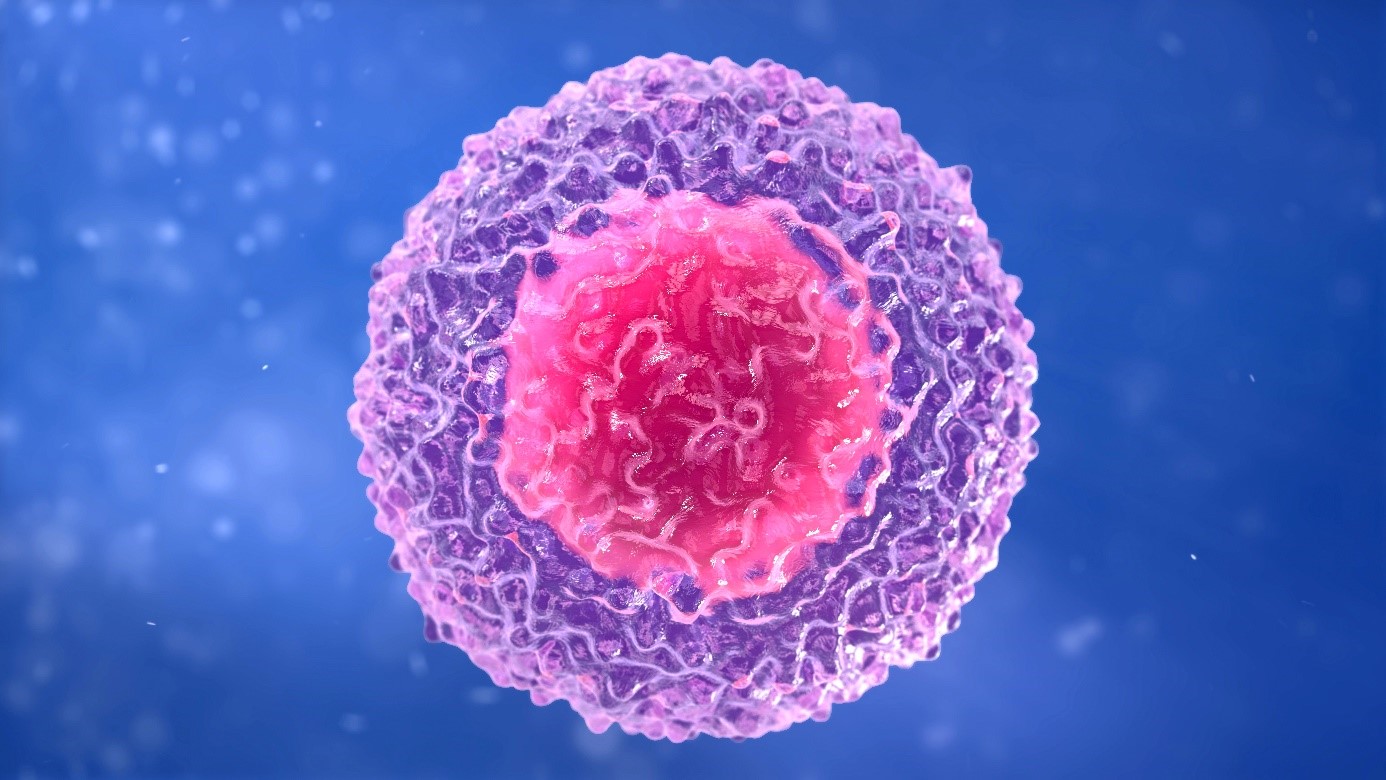
The cellular immune response is based on the T cells recognizing cells that have been infected with the virus. © Adobe stock


A better understanding of the precise mechanisms of immune response to SARS-CoV-2 is essential if we are to improve patient care and continue to develop effective new vaccines. Since the pandemic began, many studies have tried to explain what differentiates the immune response of people with severe forms of COVID-19 resulting in death from that of other patients. In a new study, researchers from Inserm and Sorbonne Université at the Center for Immunology and Infectious Diseases, in collaboration with physician researchers from Paris hospitals group AP-HP, focused on a type of immune response known as the cellular immune response. They show that certain cells involved in this response, CD8+ T cells, are present in smaller quantities in patients who have died from COVID-19. Some of them are considered to constitute predictive markers of survival. This research has been published in JCI Insight.

Since the COVID-19 pandemic began, the immune response triggered following SARS-CoV-2 infection has been the subject of much research. At a time when the Delta variant has spread across the world, understanding the precise mechanisms of the adaptive 1 immune response to the virus appears essential if we are to continue to develop effective vaccines that are less sensitive to the emergence of new variants.

In the majority of cases, infection with SARS-CoV-2 only results in relatively mild symptoms (or even forms that are asymptomatic). However, in some cases, serious forms develop, associated with severe, life-threatening symptoms that sometimes require intensive care.

Numerous publications have already shown that different profiles of immune responses are associated with the severity of symptoms. However, we still do not have enough data to understand the role of the humoral and cellular responses that constitute the adaptive immune response (see box), as well as their involvement in the survival or death of patients with the severest symptoms.

In their study, the scientists from Inserm, Sorbonne Université and Paris hospitals group AP-HP looked at the immune response profiles of 56 patients hospitalized in intensive care, a third of whom died from COVID-19, paying particular attention to the cellular responses, mediated by T cells.

Different types of immune response

There are two broad categories of adaptive immune response: humoral responses, based on the production of antibodies that recognize the virus and can prevent it from infecting its target cells; and cellular responses, based on the T cells recognizing cells that have been infected with the virus. These T cells, through various mechanisms, contribute to the destruction of cells infected with the virus in order to control the viral infection and help eliminate the virus from the body. For this study, the researchers focused on the cellular response.

T cells are a population of heterogeneous cells that can be divided into different subpopulations according to their phenotype (the molecules they express on their surface) and their function (destruction of infected cells, production of molecular messengers, support and activation of other cells…). There are two main types of T cells: CD4+ cells that support the production of antibodies and CD8+ cells, specialized in the destruction of infected cells through the production of cytotoxic molecules.

Numerous publications over the past decades have shown the essential role of cellular responses, in particular that of “cytotoxic effector CD8 cells” (CD8+) in the context of viral infections such as influenza in the elderly or HIV.

Markers of survival

In the study, the team saw significant differences in the amounts of certain T cell subpopulations, between those individuals who survived and those who died from COVID-19.

First, the researchers saw a marked loss of CD8+ T cells capable of recognizing the SARS-CoV-2 nucleocapsid in deceased individuals, compared to individuals who survived the infection. Nucleocapsid is an internal molecule of the virus, highly immunogenic (i.e. capable of inducing an immune response) and well preserved from one SARS-CoV-2 variant to another.

In addition, the individuals who died from COVID-19 had a very low proportion of CD8+ T cells expressing two molecules on their surface (PDL1 and CXCR3), compared to those who survived. Having CD8+ T cells that present PDL1 and CXCR3 could therefore be a molecular signature predictive of survival.

“We have shown that the simple combination of the level of nucleocapsid-specific CD8 T cells and the overall level of CD8+ T cells expressing CXCR3 and PDL1 could predict the survival or death of critical COVID-

19 patients with over 90% accuracy. Both factors are significantly important given the other factors that are potentially important when it comes to severity, such as age and obesity, and more accurately predict the risk of death in patients with severe forms”, emphasizes Inserm researcher Béhazine Combadière, who coordinated the study.

These findings also have important implications for the development of future vaccines. Vaccines capable of targeting nucleocapsid – a highly preserved protein common to the coronaviruses – and of producing a high level of CD8+ T cells specific against this molecule could be useful in preventive vaccination and probably also in therapeutic vaccination in order to promote the survival of patients with severe forms, regardless of which variant they were infected with.

For the team, the next step is to work with people who have already been vaccinated, to see if they produce the immune cells that were predictive of survival in the patients studied in this research.


1 Innate immunity is an immediate response that occurs in any individual in the absence of prior immunization. It is the first barrier of defense against various pathogens and mainly brings into play pre-formed (natural) antibodies and lymphocytes that do not present receptors specific to the antigen. Adaptive immunity is established a few days after contact with the pathogen and is the body’s second line of defense. Unlike innate immunity, adaptive immunity is specific for a given antigen.

Absence d’efficacité du remdesivir chez les patients hospitalisés atteints de Covid-19 et poursuite de l’essai DisCoVeRy pour tester un nouveau médicament antiviral

SARS-CoV-2

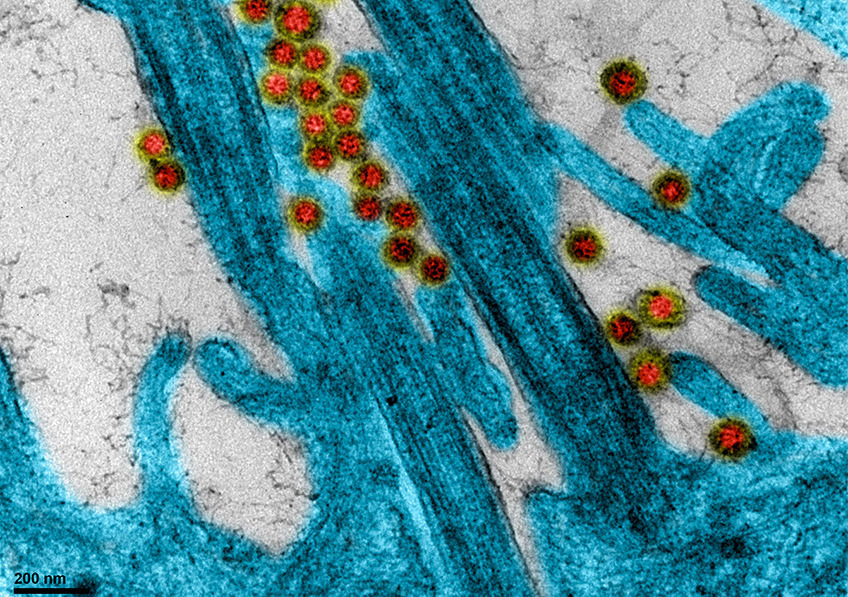
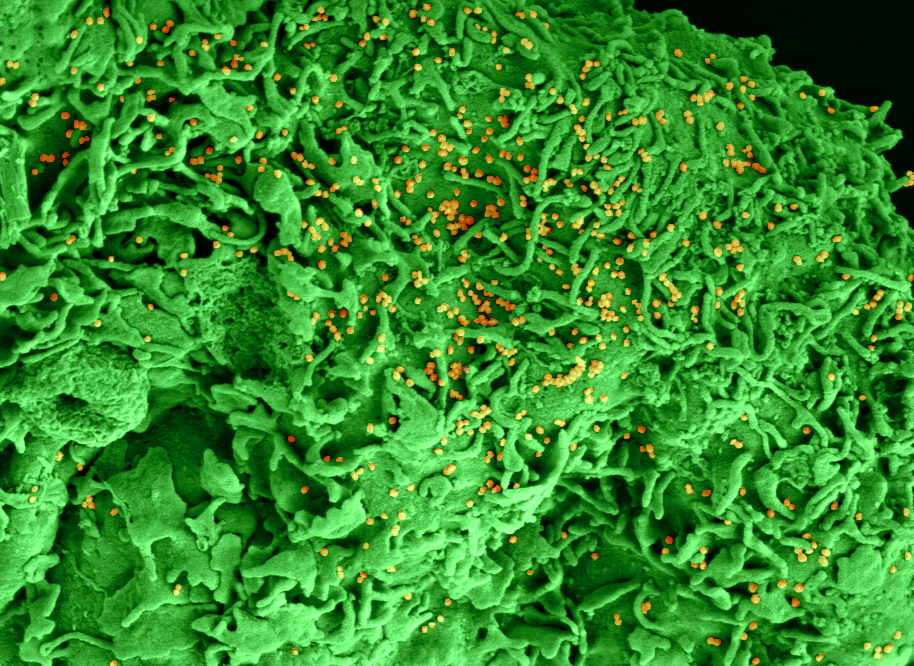
Electron microscopy of a cell infected with SARS-CoV-2 © Philippe Roingeard, Anne Bull-Maurer, Sonia Georgeault, Inserm Unit U1259 MAVIVH & University of Tours, France


The Discovery clinical trial was initially launched in France by Inserm in March 2020, to evaluate several possible treatments for COVID-19. Its European expansion was made possible by the EU-RESPONSE[1] project, funded by the European Commission. Interim analysis of the trial data had led to the recommendation to suspend the recruitment of remdesivir group patients for futility – that is to say due to the very low likelihood of this treatment showing a benefit, even if inclusions were continued. In an article published this week in The Lancet Infectious Diseases, the final scientific analysis shows no improvement in patients hospitalized with COVID-19 presenting respiratory symptoms requiring oxygen and treated with remdesivir.

Data from 832 patients hospitalized between March 2020 and January 2021, recruited in 5 European countries (418 patients receiving standard of care and 414 additionally receiving remdesivir), were analyzed. The analysis has shown no difference between the two groups in patient clinical status 15 and 29 days after receipt of the first remdesivir dose, in time to discharge from hospital, and in death rate on Day 28. There was also no demonstrated difference between the groups in terms of speed of elimination of the virus at nasopharyngeal level. Severe side effects were distributed similarly between the two groups. These data support those of the Solidarity trial conducted by the WHO, in particular by providing results on a larger number of endpoints.

In order to continue to analyze the efficacy of the treatments evaluated on a larger number of patients, the data collected during Discovery are being used to perform meta-analyses. The data used to analyze the efficacy of remdesivir are therefore being shared, within the framework of the EU-RESPONSE project, with those of other major international studies, to clarify the results on a larger scale.

“18 months after the launch of Discovery, it can be concluded that 4 different molecules offer no therapeutic benefit in patients hospitalized for COVID-19. This huge undertaking has made it possible to further knowledge on sound scientific foundations. Although, like everyone else, we would have preferred to prove the efficacy of a treatment, we are continuing our research with an approach that specifically targets the virus,” explains Florence Ader, principal investigator of the trial.

With the epidemic still ongoing, it is essential to pursue research efforts to find a treatment for COVID-19 that is effective against the virus and its new variants. The DisCoVeRy trial is thus continuing in 80 hospitals across 14 European countries to assess the efficacy of a combination of two monoclonal antibodies targeting SARS-CoV-2 and currently effective against its variants.

This treatment, developed by AstraZeneca, has appeared effective in a recent preventive treatment trial in which it reduced by 77% the risk of developing symptomatic COVID, thereby reducing hospitalization and potentially harmful outcomes. In addition, another trial has shown decreased mortality in patients hospitalized with COVID-19 who did not develop natural antibodies and who received treatment with monoclonal antibodies.2

Monoclonal antibody treatments are therefore the first antivirals to show efficacy in the prevention and treatment of COVID-19 in non-immunized patients.

Evaluating the efficacy of these monoclonal antibodies in hospitalized patients is therefore important when it comes to identifying curative treatments that reduce mortality and the number of severe forms of the disease.

In addition, within the framework of EU-RESPONSE – now the European platform for clinical trials in response to emerging infectious diseases – the SolidACT trial has started in three European countries with the objective of evaluating baricitinib in patients hospitalized for severe forms of COVID-19.


[1] https://cordis.europa.eu/project/id/101015736

Funded by Europe (European Union Horizon 2020 programme for research and innovation), DisCoVeRy is now the research axis 1 of the EU-RESPONSE project (European Reasearch and Preparedness Network for Pandemics and Emerging Infectious Diseases), which brings together 21 partners (clinics, hospitals, universities…) from 13 countries of the European Union, Norway, Switzerland and Turkey.

Covid-19 : les confinements ont eu un impact délétère sur la sévérité du cancer colorectal métastatique

COVID-19: Discovery of a Molecular Signature of Pediatric Myocarditis

enfant masqué

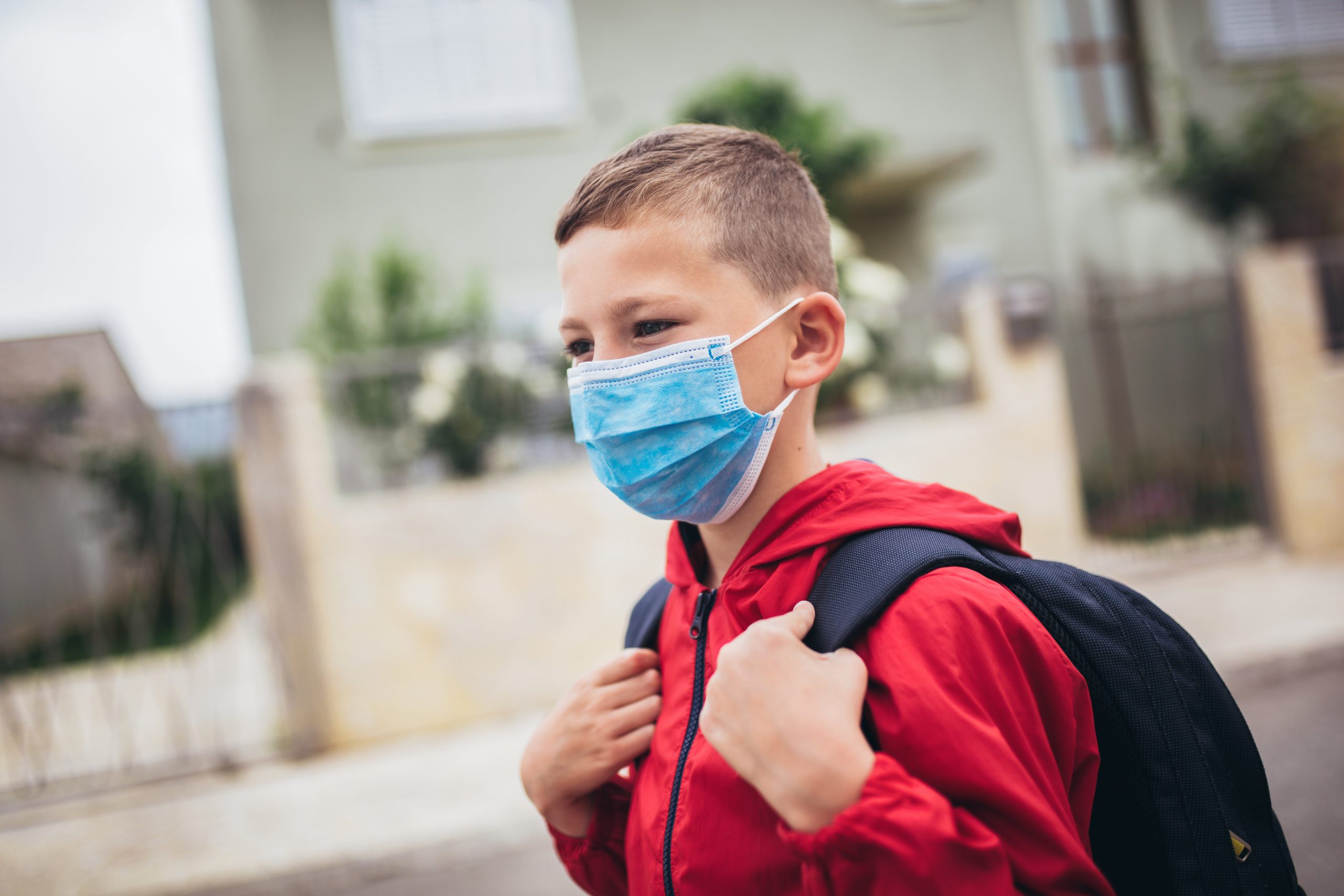
© Adobe Stock


In very rare cases, children having contracted COVID-19 go on to develop severe inflammation 4 to 6 weeks after infection with SARS-CoV-2. In two-thirds of them, this inflammatory syndrome affects the heart, leading to myocarditis. In a study published in the journal MED, researchers, doctors and teacher-researchers from Inserm, the Paris hospitals group AP-HP and Université de Paris at the Imagine Institute, in collaboration with Institut Pasteur, analyzed blood samples from a cohort of 56 pediatric patients admitted to Hôpital Necker Enfants-Malades AP-HP. What they saw was the abnormal expression of several genes associated with the development of severe forms of myocarditis. A molecular signature that could ultimately help identify those children at risk of developing this rare cardiac inflammation.

Certain children with SARS-CoV-2 develop severe inflammation four to six weeks after infection, with varying symptoms: fever, stomach pain, skin rashes, etc. In around 70% of cases, this so-called “multisystem” inflammatory syndrome affects the myocardium, the muscle responsible for heart contractions. These severe cases of myocarditis were first reported in the UK, in March 2020, before being observed in Italy, France, and then all over the world. What is the explanation behind these rare forms?


Cutting-edge analyses

In a study published in MED – a journal from Cell Press –, conducted by Inserm researchers Frédéric Rieux-Laucat and Mickaël Ménager (*) working in two laboratories at the Imagine Institute (Inserm, Université de Paris, Paris hospitals group AP-HP), in collaboration with doctors from Hôpital Necker-Enfants Malades AP-HP and Institut Pasteur, cutting-edge molecular investigations were conducted in order to find out more. The result of these investigations was the identification of several genes linked to the development of severe forms of myocarditis in these children.

As part of the study, the authors analyzed blood samples from 56 children hospitalized between April 6 and May 30, 2020. A total of 30 had developed multisystem inflammatory syndrome following SARS-CoV-2 infection, 21 of whom with a severe form of myocarditis, and 9 without. “To understand the difference between these two patient groups, we did several analyses using state-of-the-art techniques:  an ultra-sensitive assay of cytokines – the immune system hormones that enable an appropriate response in case of infection –, characterization of blood cell composition, and a cell-by-cell analysis of gene expression“, explains Ménager.


Three molecular abnormalities

In both groups, the researchers found reduced numbers of monocytes and dendritic cells (white blood cells), increased inflammatory cytokine levels, and an overactivation of the so-called “NF-kB pathway” within these cells.

“NF-kB is a molecular pathway that enables a set of genes to be activated, resulting in the production of proteins tasked with orchestrating the immune response,” summarizes Rieux-Laucat. However, it is precisely the overactivation of this system that triggers hyperinflammation in these patients.

Following closer comparison of the dendritic cells and monocytes of the two groups, the authors observed three specific anomalies in patients with myocarditis: lack of inhibition in the NF-kB pathway, overproduction of “TNF-α” (cytokine involved in NF-kB pathway activation), and finally a lack of response to type I and II interferons (cytokines involved in regulating inflammation).

All of these abnormalities can be explained by the abnormal expression of certain genes. In order to identify these genes, the authors carried out a cell-by-cell genetic analysis.

“Like this we were able to identify and validate over one hundred genes overexpressed specifically in the monocytes and dendritic cells of patients with severe forms of myocarditis, explains Ménager. A molecular signature that could ultimately enable the development of tests to identify patients at risk of developing this severe cardiac inflammation.


(*) Frédéric Rieux-Laucat heads up the Immunogenetics of Pediatric Autoimmune Diseases laboratory. Mickaël Ménager heads up the Inflammatory Responses and Transcriptomic Networks in Diseases laboratory and the LabTech Single-Cell@Imagine, a platform dedicated to the cell-by-cell study of gene expression.

ComPaRe study: one in twelve patients hesitant to be vaccinated changes their mind after consulting information on the benefits and risks of vaccines


vaccin anti covid

©Adobe Stock


The team from the Clinical Epidemiology Center of Hôtel-Dieu AP-HP Hospital, Inserm and the University of Paris, coordinated by Professor Philippe Ravaud, has developed an online tool for viewing the benefits and the risks of vaccination against Covid-19. Presented to a sample of chronic patients from “ComPaRe”, the Community of Patients for Research created by the AP-HP and the University of Paris, the team measured how many of them, previously undecided about their vaccination, have changed my mind after using the tool. This work was published on July 31, 2021 in BMC Medical Informatics and Decision Making.

Convincing the hesitant population to get vaccinated is a matter of major concern in the fight against the Covid-19 epidemic.

According to a study recently published in the Lancet Public Health 1 , around 30% of adults in France would categorically refuse the COVID-19 vaccination, and 9 to 40% are hesitant. The main reasons for refusing vaccination are concern and demand for further hindsight regarding the safety and efficacy of vaccines.

In January 2021, the team from the Clinical Epidemiology Center of Hôtel-Dieu AP-HP Hospital, Inserm and the University of Paris, developed an online tool measuring the benefit / risk of vaccination. In particular, it makes it possible to visualize the risk of death, hospitalization and long-term COVID with and without vaccination, as well as the serious adverse effects of vaccination, depending on the age and sex of the person.
The data used come from published scientific publications, freely accessible on the internet. The data concerning the efficacy and safety of the vaccines which were used to construct the tool come from the clinical trials which led to their marketing authorization.

3,152 patients from the Community of Patients for Research (ComPaRe) participated in the evaluation of this tool. The research team asked participants to indicate their intention to be vaccinated before and after viewing the tool. By comparing patient responses before and after, she was able to determine the influence that visualizing the benefits and risks of vaccines could have on patient decisions.

Before consulting the tool, 1,952 (62%) patients declared that they wanted to be vaccinated, 961 (30.5%) preferred to wait until they had more information on the efficacy and safety of vaccines before being vaccinated and 239 (7.5%) did not want to be vaccinated.

After consulting the tool, 96 of the 1,200 people initially reluctant to vaccinate had changed their minds. On average, for every 12 people reluctant to get vaccinated, one person changed their mind after consulting the tool.

The tool has been online on the government website since May 2021 . Used by more than 125,000 people, it has been updated with data from the Janssen vaccine and supplemented with data on the risk of thrombosis after the AstraZeneca vaccine.


Created in 2017 by the AP-HP and the University of Paris, ComPaRe, the Community of Patients for Research today brings together nearly 45,000 patient volunteers across France.

On this occasion, ComPaRe renews its call for participation in order to bring together 100,000 patients to contribute online to medical research on its compare.aphp.fr site .

Participants help advance research on their chronic disease (s) by regularly participating in scientific studies and answering researchers’ questions via the secure platform https://compare.aphp.fr .

Patients participate in the general cohort and / or one of the 13 cohorts dedicated to diabetes, Verneuil’s disease, vitiligo, chronic low back pain, kidney disease, vasculitis, arterial hypertension, endometriosis, asthma, COPD, Marfan syndrome, neurofibromatosis and long Covid.

And new cohorts are being formed.

1 – https://www.thelancet.com/journals/lanpub/article/PIIS2468-2667(21)00012-8/fulltext#%20

Vaccination Covid-19 et populations particulières : une grande étude de cohorte pour orienter les recommandations destinées aux plus fragiles


Confirmation of promising results from the CORIMUNO-TOCI-1 trial showing improved survival in patients with moderate to severe COVID-19 pneumonia

SARS-CoV-2

Electronic microscopy of a cell infected with SARS-CoV-2 © Philippe Roingeard, Anne Bull-Maurer, Sonia Georgeault, unité Inserm U1259 MAVIVH & Université de Tours, France


An article published in JAMA Internal Medicine and WHO meta-analysis of 27 controlled trials confirm the promising initial results of the test-CORIMUNO TOCI-1, indicating an improved prognosis of patients with moderate to severe COVID-19 pneumonia. This trial was conducted by the COVID-19 academic research collaboration Assistance Publique-Hôpitaux de Paris / Université Paris-Saclay / Université de Paris / INSERM-REACTing. They reveal the clinical efficacy of tocilizumab, a monoclonal antibody which blocks the receptor for the cytokine interleukin-6 (IL-6) and which is used in particular in the treatment of rheumatoid arthritis.

The 90-day results of the CORIMUNO-TOCI-1 trial published on May 24, 2021 in the journal JAMA Internal Medicine show an improvement in the survival of patients with moderate to severe COVID-19 pneumonia with tocilizumab in highly inflammatory patients .

In some patients with COVID-19 pneumonia, an immune-mediated hyperinflammatory condition contributes to acute respiratory failure and death. The CORIMUNO-19 platform was quickly set up in March 2020 to test the efficacy and safety of various immunomodulatory drugs in adult patients with moderate, severe or critical COVID-19 pneumonia, thanks to a series of ‘multicenter randomized controlled trials, which began on March 27, 2020 and are currently continuing.

Tocilizumab is a monoclonal antibody that blocks the cytokine interleukin-6 (IL-6) receptor.

The CORIMUNO-TOCI-1 randomized trial that compared tocilizumab with the usual treatment, published on October 20, 2020 in the journal JAMA Internal Medicine with a 28-day follow-up , demonstrated that tocilizumab had a 95% chance of reducing the need for ventilation (mechanical or non-invasive) or death at D + 14 (Hazard ratio (HR) = 0.58 (0.33-1.00), but did not decrease mortality at D + 28 (11% and 12%, respectively).

The new update results of this study published on May 24, 2021 in the same journal JAMA Internal Medicine concern longer-term survival (D + 90) and according to the inflammatory state of the patient, in particular according to a threshold of C reactive protein (CRP) (150 mg / L) at the start of treatment.

Mortality at D + 90, a secondary endpoint of the trial, is numerically but not significantly lower in the treated group (11% vs. 18%; HR = 0.64 [0.25-1.65]. A post-hoc analysis shows an interaction between survival and CRP level with, in the group of patients whose CRP is> 150 mg / L, a reduction in mortality with tocilizumab (9% versus 35%; HR = 0.18 [0.04 to 0.89]. the CRP is <or = at 150, the mortality is very low in the 2 treatment groups.

These results obtained on secondary endpoints and in post-hoc analysis had to be confirmed by additional studies and a meta-analysis of all the controlled trials. This is what was done by a group of WHO researchers.

U do the WHO meta-analysis of 27 controlled trials evaluating inhibitors of IL-6 in patients hospitalized for pneumonia Covid-19 confirms a profit of these drugs on survival . It was published in JAMA on July 6, 2021 .

A meta-analysis was carried out by the WHO on all the randomized trials that evaluated inhibitors of IL-6 or its receptor in patients hospitalized with COVID-19 pneumonia requiring oxygen or ventilation. non-invasive or mechanical.

In this prospective meta-analysis of 27 randomized trials (including 4 trials from the CORIMUNO platform) that included 11,112 patients, 2,565 of whom died, 28-day mortality and progression to invasive mechanical ventilation or death were lower in patients who received interleukin-6 antagonists compared to those who received usual care or a placebo (OR = 0.86 [95% CI, 0.79-0.95]; P = 0.03 and OR = 0.77 (95% CI, 0.70-0.85, P <0.001) respectively).

For the 19 trials that evaluated the effect of tocilizumab, the effect on 28-day mortality and progression to invasive mechanical ventilation or death was 0.83 (95% CI, 0.74-0.92; P <0.001 and 0.74, respectively) (95% CI, 0.66-0.82).

In this meta-analysis, tocilizumab did not cause more secondary infections than usual treatment.

In total, these two articles confirm the promising initial results of the CORIMUNO-TOCI-1 and RECOVERY trials.

One of the important questions that remains unanswered is: “Should IL-6 receptor inhibitors replace the standard treatment of these patients which has now become corticosteroid therapy or be added to it?” “.

The CORIMUNO-TOCIDEX protocol which compares dexamethasone alone to the combination of dexamethasone with tocilizumab and which included more than 450 patients is currently attempting to answer this important question.

WHO is due to make recommendations soon on the use of tocilizumab in the different subgroups of patients hospitalized for COVID-19 pneumonia. The FDA announced on June 24, 2021 an emergency authorization for the use of tocilizumab in severe coronavirus lung disease.


Coordinating investigator: Prof. O. Hermine, Hôpital Necker, AP-HP, Imagine Institute, INSERM U1163, University of Paris

Co-coordinating investigator: Prof. X. Mariette, Bicêtre Hospital, AP-HP, INSERM U1184, Université Paris-Saclay

  • Scientific Director: Dr PL Tharaux, Paris Cardiovascular Research Center (PARCC), INSERM U970, European Hospital Georges Pompidou, AP-HP, University of Paris.

Design and coordination of the CORIMUNO trial platform: Pr P. Ravaud, Center for Clinical Epidemiology, Hôpital Hôtel Dieu, AP-HP, CRESS, INSERM U1153, University of Paris

Statistician: Dr R. Porcher, Center for Clinical Epidemiology, Hôpital Hôtel Dieu, AP-HP, CRESS, INSERM U1153, University of Paris

  • Monitoring and data management: Pr M. Resche-Rigon (Clinical Trial Unit, Hôpital Saint Louis, AP-HP), CRESS, INSERM U1153, University of Paris.

Organization of the data collection: Pr M Dougados, Hôpital Cochin, AP-HP, CRESS, INSERM U1153, University of Paris

The CORIMUNO-19 clinical trials platform is promoted and funded by Assistance Publique – Hôpitaux de Paris, and supported by Inserm via its REACTing consortium (integrated into the ANRS Emerging Infectious Diseases since January 2021).

The trial received funding from the Clinical Research Hospital Program of the Ministry of Health, seed funding from Inserm through the REACTing / INSERM consortium via the Fondation pour la Recherche Médicale, Paris, France, and a funding from the AP-HP Foundation for Research, Paris, France. Tocilizumab as well as 4,000 Elecsys interleukin 6 assay kits were unconditionally provided by the Roche laboratory, which was not involved in the assay design, data collection, analysis, interpretation, writing of the manuscript nor in the governance of the essay.

Interchangeability of COVID 19 mRNA vaccines: start of inclusions for the AP-HP – ARNCombi trial

Vaccin contre la Covid-19

Covid-19 vaccine injection © AdobeStock

In order to facilitate the organization of the vaccination campaign, it may be proposed to use one or the other of the two mRNA vaccines for the 2nd dose (Pfizer-BioNTech or Moderna) of vaccination . The aim of the AP-HP – ARNCombi trial is to compare the immunological efficacy of the standard vaccine regimen with two doses of the same mRNA vaccine against Covid-19 with a regimen combining two different mRNA vaccines (one dose of Moderna vaccine after one dose of Pfizer vaccine or a dose of Pfizer vaccine after a dose of Moderna vaccine). It is promoted by Assistance Publique – Hôpitaux de Paris and made possible thanks to the COVIREIVAC platform coordinated by Inserm.

400 participants are expected for this randomized trial. Participants must be over 18 years of age, have already received one of two doses of messenger RNA vaccine with a second scheduled injection within 4-6 weeks of the first injection.

A blood sample to test for the presence of specific antibodies directed against the SARS Cov-2 virus (Covid-19 virus) will be taken before the 2nd dose and then four weeks later.

The first inclusions took place on May 28, 2021. The trial is being carried out in 17 centers in France: three AP-HP hospitals and 14 other centers throughout France. Some of these centers are part of the COVIREIVAC platform.

Launched in October 2020, the COVIREIVAC platform coordinated by Inserm and F CRIN in conjunction with 32 university hospitals and a network of 11 immunology laboratories aims to conduct and promote excellent clinical vaccine research in France. Since October 1, 2020, 50,000 volunteers have registered to participate in research efforts and improve knowledge about these new vaccines. This is an unprecedented initiative in our country. The platform is managed by Inserm, and the clinical operational component is coordinated by the Assistance Publique-Hôpitaux de Paris of the various CHUs. New research projects are regularly launched within the framework of COVIREIVAC.

Even if several vaccines against Covid-19 are available, it is imperative to continue research in order to deepen scientific knowledge, in particular the duration of protection and the quality of the immune response.

The objective of the clinical studies coordinated by COVIREIVAC is to provide answers to these research questions.  

Regional organization in Ile-de-France and ECMO results in the management of extremely serious respiratory damage caused by Covid-19


The teams of the cardiac and thoracic surgery departments (Prof. Pascal Leprince, Dr Guillaume Lebreton), and intensive medicine-intensive care (Prof. Alain Combes) of the Pitié-Salpêtrière hospital AP-HP, Sorbonne University and the Inserm, reported the results of the ECMO in the care of patients with extremely serious respiratory damage caused by Covid-19, and the regional organization set up by the Ile-de- France to deal with the pandemic. This work is the subject of a publication on April 19, 2021, in the Lancet Respiratory .

In extremely serious respiratory disorders (ARDS) escaping conventional resuscitation techniques, ECMO (extracorporeal membrane oxygenation) can be used to ensure oxygenation of the blood while awaiting healing of the lungs.

At the start of the Covid-19 pandemic, it was not certain that ECMO could be used for the care of patients with extremely serious respiratory damage caused by Covid-19. Very quickly, in Ile-de-France, a group of experts met to reflect on the place that ECMO could have in this indication, but also on the organization to be put in place to be able to cope with this indication. crisis. Regional regulation has been put in place by ARS Ile-de-France, in conjunction with all stakeholders, to centralize indications and pool resources. A regional doctrine has been developed and published in this direction.

In this multicenter cohort study, the authors present an analysis of all adult patients with laboratory-confirmed Covid-19 infection and severe ARDS requiring ECMO, who were admitted to 17 care units intensive in Ile-de-France between March 8 and June 3, 2020.

During the first wave, six ECMO mobile teams were formed and 17 resuscitations with ECMO experience were identified. 302 patients were thus able to be assisted by ECMO throughout the region, whether or not they were taken care of in intensive care units equipped with ECMO thanks to the mobile teams (mobile circulatory assistance units). These UMACs ensured the establishment of the ECMO then the transfer (55% of patients) of the patient to a specialized intensive care unit.

The analysis of the results at 90 days shows a survival of 46% for these most serious patients with a predictable survival without ECMO almost zero. The age of the patients, the duration of mechanical ventilation before ECMO, renal impairment and the volume of ECMO of the centers appeared to be prognostic factors. The results of cannulation of the patient by a mobile team and then transfer to ECMO in a specialized intensive care unit were not significantly different from those of patients cannulated in a center with ECMO, which validates the concept of a mobile unit. circulatory assistance (UMAC).

Regional regulation, pooling of resources and centralization of indications made it possible to effectively cope with the first wave of Covid-19 by assisting patients requiring ECMO in the Ile-de-France region, regardless of their hospital of origin. After this experience, this organizational model was extended for the following waves.

Long COVID: 60% of Hospitalized Patients Still Have at Least One Symptom Six Months Later

Coronavirus SARS-CoV-2

SARS-CoV-2 coronavirus attached to human respiratory epithelial cell cilia.  © Manuel Rosa- Calatrava, Inserm; Olivier Terrier, CNRS; Andrés Pizzorno, Signia Therapeutics; Elisabeth Errazuriz-Cerda UCBL1 CIQLE. VirPath (International Research Center for Infectious Diseases U1111 Inserm – JRU 5308 CNRS – ENS Lyon – UCBL1). Colorized by Noa Rosa C.


How long can COVID-19 symptoms persist after hospitalization for SARS-CoV-2 infection? Scientists continue to have many questions about this emerging virus and the long-term impacts of the disease it causes. The teams studying the problem of so-called “long COVID” include the investigators of the French COVID cohort, sponsored by Inserm. In a new study published in the journal CMI, these researchers from Inserm, the Paris hospitals group AP-HP and Université de Paris show that a significant proportion of patients who were hospitalized and followed up as part of French COVID continue to have symptoms three and six months after infection.

Is it possible to have COVID-19 symptoms several months after being infected with SARS-CoV-2? The question of “long COVID” continues to interest the scientific and medical community and is at the center of a number of research projects, notably those conducted by the French COVID investigators.

Launched at the end of January 2020, French COVID is a French cohort study sponsored by Inserm. It is based on the follow-up of a large group of patients having developed a clinical form of the disease that required hospitalization, either in a medical department or in intensive care. As at March 17, 2021, a total of 4,310 patients had been enrolled in this cohort, the largest French cohort to date of patients hospitalized with SARS-CoV-2 infection.

For each participant, clinical, virological, immunological, genetic, serological and transcriptomic data are collected in order to better characterize the disease. The objective is to build up knowledge on COVID-19, especially its most severe forms, in order to improve management in cases where hospitalization is required. The aim is also to better understand the short and long-term outcomes of patients by looking at the potential persistence of symptoms in the months following diagnosis.

Impact of long COVID

In their new study, the team describes the frequency and nature of symptoms persisting in 1,137 patients from the French COVID cohort, assessed at follow-up visits three and six months after they were hospitalized for COVID-19.

This research suggests that 60% of patients are still affected by at least one symptom six months after infection and one quarter by three or more symptoms.

What is more, 2% of the patients had to be re-hospitalized. Major fatigue, respiratory discomfort, and muscle and joint pain were among the most frequently reported persistent clinical manifestations during these follow-up visits.

A correlation between the initial severity of the disease and the persistence of symptoms over the long term also appears to be emerging. Indeed, the persistence of three or more symptoms six months after infection is more common in those whose COVID-19 disease required a stay in ICU compared with those hospitalized in a medical department, and in the most symptomatic patients on the day of hospital admission. The researchers also observe differences according to sex: while men are at greater risk of severe forms, women appear to be at greater risk of persistent symptoms over time.

Finally, the study underlines that these forms of “long COVID” sometimes also have wider economic and social consequences. For example, among patients reporting symptoms at six months who were working when they became infected, one-third did not return to work.

In order to better understand the consequences of the virus on the body and the long-term impact of the disease, and above all to provide better patient care, continuing this follow-up beyond six months on an even larger population could be of great interest.

“The mechanisms that cause symptoms to persist after the body has rid itself of the virus remain unclear. We will continue to follow up the patients included in French COVID up to 18 months after infection, by also proposing tests to evaluate the neurocognitive functions,” emphasizes the cohort’s coordinator, Jade Ghosn, who is an associate professor-hospital practitioner at Université de Paris and a professor in the Department of Infectious and Tropical Diseases at Bichat Claude-Bernard Hospital AP-HP.

COVID-19: discovery of the mechanisms of short- and long-term anosmia

Epithélium olfactif_SARS-CoV-2

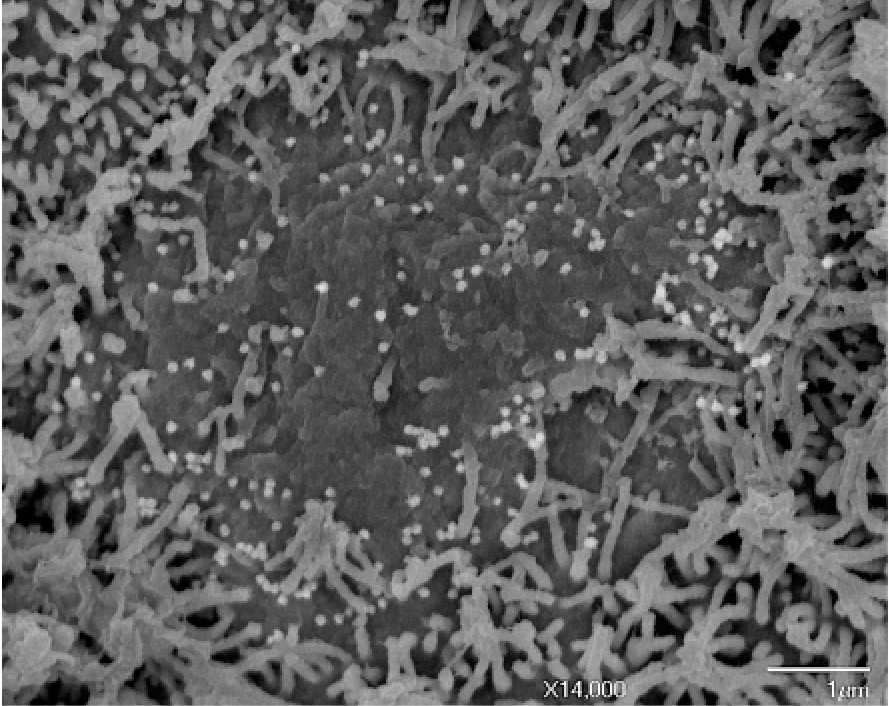
Scanning electron microscopy image showing changes in the olfactory epithelium following SARS-CoV-2 infection. The ciliated cells towards the edges of the photograph are normal. In the center, loss of cilia 2 days post-infection is discernible. Viral particles are budding off the surface of infected cells that have lost their cilia. © Perception and Memory Unit – Institut Pasteur

Loss of smell, or anosmia, is one of the earliest and most commonly reported symptoms of COVID-19. But the mechanisms involved had yet to be clarified. Scientists from the Institut Pasteur, the CNRS, Inserm, Université de Paris and the Paris Public Hospital Network (AP-HP) determined the mechanisms involved in the loss of smell in patients infected with SARS-CoV-2 at different stages of the disease. They discovered that SARS-CoV-2 infects sensory neurons and causes persistent epithelial and olfactory nervous system inflammation. Furthermore, in some patients with persistent clinical signs, anosmia is associated with prolonged epithelial and olfactory nervous system inflammation and lasting presence of the virus in the olfactory epithelium. These findings were published in the journal Science Translational Medicine on May 3, 2021.

Although COVID-19 caused by the SARS-CoV-2 virus is principally a respiratory disease, many patients present with non-respiratory symptoms. These include a sudden loss of smell in individuals infected with SARS-CoV-2, which has been reported throughout the world since the beginning of the pandemic. Until recently, there has been uncertainty as to whether the virus plays a direct role in anosmia. According to one hypothesis generally accepted until now, it was assumed that a transient edema of the olfactory clefts inhibited airflow transporting odor molecules to the olfactory neurons (the familiar sensation of a blocked nose experienced during a common cold).

In a recent study, scientists from the Institut Pasteur, the CNRS, Inserm, Université de Paris, and the Paris Public Hospital Network (AP-HP) shed light on the mechanisms involved in COVID-19-related anosmia. The study was conducted with COVID-19 patients and supplemented with tests on an animal model. This study unexpectedly demonstrates that nasopharyngeal swabs may test negative by standard RT-qPCR even if the virus is still present at the back of the nasal cavities, in the olfactory epithelium. In light of this discovery, SARS-CoV-2 diagnosis by nasal brushing may be envisaged in addition to nasopharyngeal swabbing for the PCR test in patients experiencing loss of smell.

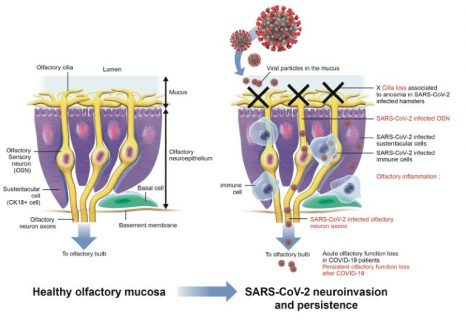
This work also sheds light on the mechanism of COVID-19-related smell loss by revealing a series of chronological steps:

1) Cilia carried by sensory neurons are lost post-viral infection. These cilia enable the sensory neurons to receive odor molecules;
2) Virus present in sensory neurons;
3) Disruption of the olfactory epithelium (sensory organ) integrity linked to apoptosis (i.e. cell death). The epithelium is organized into regular lamellae, which are destructured by coronavirus infection;
4) Virus dissemination to the olfactory bulb, which is the first cerebral relay station in the olfactory system;
5) Inflammation and viral RNA present in several regions of the brain.

Anosmie Covid anglais

Diagram representing the various steps occurring in the sensory system and contributing to COVID-19-related anosmia.

This study demonstrates that loss of smell is also caused by deterioration of the sensory organ at the back of the nasal cavities. “We observed that SARS-CoV-2 infects not only the sensory neurons, but also the olfactory nerve and the olfactory nerve centers in the brain,” comments Pierre-Marie Lledo, CNRS scientist, head of the Perception and Memory Unit (Institut Pasteur/CNRS), and co-author of the study.

“Another key finding from this study emerged from an observation of animal models, which revealed that once the virus enters the olfactory bulb, it spreads to other nerve structures, where it induces a major inflammatory response,” explains Hervé Bourhy, head of the Lyssavirus Epidemiology and Neuropathology Unit at the Institut Pasteur and co-author of the study. Infection of the olfactory neurons may therefore provide a gateway to the brain and explain why some patients develop various psychological clinical signs (anxiety disorders, depression) or those of a neurological nature (cognitive decline, susceptibility to developing a neurodegenerative disease), for which further studies are necessary.

Marc Lecuit, head of the Biology of Infection Unit (Institut Pasteur, Inserm, Université de Paris, AP-HP) and co-author of the study concludes: “According to our results, loss of smell in COVID-19 may persists for several months in some patients and this persistence of clinical signs may be attributed to the persistence of the virus and inflammation in the olfactory mucosa.” These observations should be used to adapt the diagnosis and management of long-term COVID-19 signs.

In summary, this study has led to the following 4 key findings:

  • The virus can be detected by nasal brushing in instances where it is not detected by swabs;
  • SARS-CoV-2 may persist in the olfactory epithelium for several months;
  • SARS-CoV-2 infects sensory neurons and prompts immune cell recruitment in the sensory organ;
  • SARS-CoV-2 may cause persistent inflammation of the olfactory epithelium and the olfactory nervous system.
fermer