
Menu

Le cerveau des parfumeurs se modifie en fonction de leur expérience

A promising clinical trial to reduce the severity of autistic disorders

Yehezkel Ben-Ari, Founder and Honorary Director of INMED (Institut de Neurobiologie de la Méditerranée), INSERM, and Eric Lemonnier, a clinician specialising in autism at the CHRU of Brest, recently published the results of a double-blind clinical trial to evaluate the usefulness of a diuretic in the treatment of autism. Sixty children between 3 and 11 years old with autism or Asperger’s syndrome were treated for 3 months either with a diuretic to reduce their intracellular chloride levels or with a placebo. Although this therapy is not curative, it nevertheless reduced the autistic disorders’ severity in three-quarters of the children. The researchers have filed a request for authorisation to perform a multi-centre European clinical trial in order to determine more precisely the population concerned by this therapy.

Details of this work have been published in the Translational Psychiatry review dated 11 December 2012.

Contribution made by the fundamental research on neuronal chloride

Previous work carried out by the team of researchers led by Yehezkel Ben-Ari in INSERM unit 901, the Institut de Neurobiologie de la Méditerranée (INMED) in Marseille, on intracellular chloride concentrations have demonstrated that they are abnormally high in immature neurons or neurons previously affected by epileptic seizures or other cerebral lesions. Many anxiolytics, analgesics and antiepileptics act by increasing the effects of GABA – the brain’s main chemical mediator – which normally inhibits the neurons. When the cells contain a very high chloride concentration, however, GABA’s effects are reversed. GABA no longer inhibits the neurons; the anxiolytic molecules accentuate these effects instead. These molecules have an excitatory effect, aggravating the disorder rather than alleviating it[1]. This is what has been observed in the case of epilepsy: diazepam, an anxiolytic, actually aggravated the seizures in certain situations. The research team then showed the benefits of a diuretic in mitigating this effect.

From fundamental research to clinical research

Indirect experimental data suggest that the inhibitory transmitter GABA’s action is modified in autism. Eric Lemonnier, a clinician at the CHRU of Brest, pointed out to Yehezkel Ben-Ari that valium is not prescribed to children suffering from autism because their parents say they become more agitated as a result, suggesting that, as in epilepsy and other brain pathologies, their intracellular chloride concentration is increased. This encounter led to the idea of testing a diuretic – in the same way as for epilepsy – to determine whether this could alleviate autistic disorders. A pilot study in 5 children was rapidly set up in 2010 because bumetanide, the diuretic tested, is in common use, particularly in treating high blood pressure. The taking of these molecules can, however, lower the potassium level, meaning that a potassium supplement is required. The researchers then began a randomised double-blind clinical trial in 60 children between 3 and 11 years old with autism or Asperger’s syndrome.

Reduction in the severity of autistic disorders

The children were monitored for 4 months. One group was treated with the diuretic (1 mg of bumetanide) while a placebo was administered to the second group for 3 months. No treatment was administered in the final month. The severity of the children’s autistic disorders was rated at the beginning of the test, the end of the treatment, i.e. after 90 days and one month after the test ended.

After 90 days of treatment, the mean CARS (Childhood Autism Rating Scale) test score of the children treated with bumetanide had significantly improved. The severity of the treated group’s autistic disorders shifted from high (> 36.5) to medium (< 36.5). No significant difference was observed in the score of the group treated with the placebo, however. In total, the clinical diagnosis of 77% of the children who received the treatment improved in the Clinical Global Impressions (CGI) test. When the treatment was terminated, some disorders reappeared. The treatment with bumetanide is therefore reversible.

Various criteria for assessing the severity of disorders: CARS, CGI and ADOS G

The widely-applied Childhood Autism Rating Scale (CARS) behavioural scale was used to rate the severity of the disorders, based on videos of the children’s behaviour during an activity led by a caregiver. The films were analysed with the assistance of their parents. A rating is obtained from the analysis as follows: if the rating is between 30 and 36, the child suffers from a moderate or average disorder; if the rating is higher than 36, the child is severely autistic.

Two other indicators were used to assess the severity of the disorders: the Clinical Global Impressions (CGI) clinical diagnosis, and the Autism Diagnostic Observation Schedule – Generic (ADOS–G) indicator combining assessment criteria such as social interaction and communication.

Dr. Lemonnier explained the case of a 6-year-old boy:

Prior to the treatment, the child presented with low language abilities and little social interaction, was hyperactive and exhibited constantly-combative behaviour. After three months of treatment, his parents, teachers, the hospital nursing staff and his friends at school all said that he was participated more, particularly in the games proposed by the psychologist. His attention and eye contact also improved.”

“Even though it is not curative, the diuretic reduced the severity of most of the children’s autistic disorders. According to the children’s parents, they are more “present””

, added Yehezkel Ben-Ari.

Given the population’s heterogeneity, the researchers assume that the treatment could act differently depending on the severity of the autistic disorders. By forming groups based on severity, the results suggest that the treatment would be more effective in the least seriously-affected children.

As a result, the researchers have filed an authorisation request for a multi-centre European clinical trial in order to determine more precisely the population concerned by this treatment and ultimately obtain a marketing authorisation for this therapy. This test is supervised by a company created by Prof. Ben-Ari and Dr. Lemonnier (Neurochlore). Analyses are also essential in order to assess the long-term effects of taking these molecules and the required dose. Lastly, the researchers stress the need to continue the work on experimental models to determine how chloride is regulated and how it is deregulated in the neural networks of autistic patients.

A patent application has been filed for this work, and a licence has been granted to the Neurochlore start-up. Neurochlore has received funding from the French National Research Agency (ANR) (in the Biomedical Innovation in public-private Research Partnership (BIRP) “Cure Autism” project).


[1] See diagram on p. 3 “Further details”
The radical restructuring of brain networks in comatose patients

Researchers from Inserm, CNRS and the Université Joseph Fourier in Grenoble, in collaboration with Cambridge university, Strasbourg university and clinical practitioners from the Strasbourg University Hospital Centre, have analysed data from 17 comatose patients using functional MRI data. Their research reveals that the brain networks of these patients have been restructured. The results, published in PNAS on 26 November 2012, could help clinical practitioners diagnose comatose patients.

The researchers are focusing on analysing brain networks of brain-damaged comatose (non-traumatised) patients, a state where the individual is considered to be unconscious.

The authors of the study used an original graph theory-based methodology, where images were constructed using functional MRI data at rest and using robust statistical signal-processing methods. Local and overall effectiveness indices of functional brain networks were obtained for 17 brain-damaged patients and 20 healthy volunteers. Correlations in  417 brain regions were extracted to produce brain connection graphs using the statistically significant correlations.

Inserm unit 836 “Grenoble Institut des neurosciences”, CNRS researchers from the “GIPSA lab” and from the Behavioural and Clinical Neuroscience Institute in Cambridge, in collaboration with clinical practitioners from the Strasbourg University Hospital Centre, have been able to highlight restructured brain networks in brain-damaged (non-traumatized) comatose patients.

Through comparisons with the healthy subjects, the results demonstrate that the overall cerebral connectivity is preserved in comatose patients. By analysing the connectivity at a local level, the authors of the study have observed that some brain regions (“hubs”), which are highly connected in healthy volunteers, are less well connected in comatose patients. Conversely, the less densely connected regions in the network in healthy subjects become “hubs” in comatose patients.

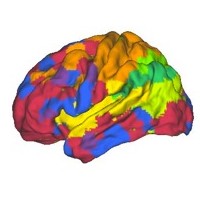
Brain imaging obtained from connectivity graphs

Photos: © Sophie Achard – Petra Vertes

The connectivity graph method is used to summarize in a single image data acquired through MRI scanning. It translates the effectiveness of connections in a single region compared to all the others. By grouping the most interconnected regions, modules are revealed (each represented by a different colour). Patients and healthy volunteers both have different models in their spatial location, representing radical alterations to the brain connections.

According to current hypotheses, consciousness disorders in persistently comatose patients could be linked to disconnection phenomena between specific cortical regions, particularly the precuneus. The results of this study also point in this direction. “From an overall perspective, the topology of brain connections resists well to traumatism by reorganising the most interconnected regions in the network. It therefore seems that comas may be linked to changes in the location of “hubs” among the brain networks” suggests Chantal Delon Martin, an Inserm researcher.

An assessment of brain injury and comas

Patients with brain injury may go through various clinically-defined states: vegetative state that is characterized by the preserved sleep-wake cycle (eyes opening spontaneously, autonomous breathing, etc.); minimally conscious state where patients have partially preserved environmental consciousness (eye movement capacity, reaction to stimulation); locked in syndrome where the patient is paralysed but conscious (communication using eyes); brain death when the coma is irreversible flat line EEG, no blood flow).

Coma (from the Greek κῶμα kôma meaning “deep sleep”) is one of the different states where self awareness and consciousness of the outside world is eradicated further to an accident (cerebral, cardiac, etc.). There are two coma phases: the “acute” coma phase (a few days after the accident) and the “chronic” phase (one month or more). Brain restructuring was observed by researchers during the “acute” phase, when it is not known which coma type the patient will develop.

Assessments of brain injuries in comatose patients are currently conducted through clinical examination, morphological MRI, evoked potentials and by SPECT (Single-photon emission computed tomography) or TEP (Positron emission tomography (PET). “The results of this study could help clinical practitioners in the difficult diagnosis process for comatose patients, since this method makes it possible to characterize each patient individually”, conclude the researchers.

A new factor of genetic susceptibility to Alzheimer’s disease discovered through a study of a rare disease

A large-scale international study involving French researchers from the Inserm-Institut Pasteur Lille-Université Lille Nord de France “Public health and molecular epidemiology of ageing-related diseases” joint research unit led by Philippe Amouyel, has just discovered a gene for susceptibility to a rare disease that causes susceptibility to a common one, Alzheimer’s disease, providing evidence of the heterogeneous aetiology of Alzheimer’s disease. This whole-exome sequencing approach is explained in detail in The New England Journal of Medicine dated 14 November 2012. 

Polycystic lipomembranous osteodysplasia with sclerosing leukoencephalopathy, or Nasu-Hakola disease, is a genetic disorder passed on by means of autosomal recessive transmission. The disease starts at the age of around 30 years with pains in the wrists or shoulders associated with swollen joints. Bone fractures can occur as a result of minor traumas. Bone x-rays show epiphyseal cysts. Slight personality changes then occur followed by frontal neurological signs (euphoria, loss of social inhibitions) evolving into early-onset dementia. The disorder has been associated with mutations of the TREM2 (Triggering Receptor Expressed on Myeloid cells 2) gene on chromosome 6.

British, American and French researchers have now shown that on this same region of chromosome 6, mutations of the TREM2 gene were associated with a five times greater risk of developing late-onset Alzheimer’s disease. A complete sequencing was performed on 281 individuals with Alzheimer’s disease and 504 controls. Analysis of the TREM2 gene showed excessive TREM2 mutations in those with the disease compared with the control subjects. Characterisation of one of these TREM2 mutations in very large sample populations of patients with Alzheimer’s disease has allowed researchers to measure precisely the importance of this association between TREM2 mutations and the disease. Finally, a replication study was performed in another independent series of 1994 cases and 4602 controls, which confirmed this strong association (OR=4.97 CI 95% [2.42-10.21], P<6.10-6).

These results are also confirmed in the same edition of The New England Journal of Medicine by an Icelandic team, which also shows that this gene is a risk factor for Alzheimer’s disease in the Finnish population and other European populations.

A pathological analysis of six individuals presenting variants of the TREM2 gene has revealed evidence of Alzheimer’s-type brain lesions. The study of TREM2 gene expression in normal human brains has shown high levels in the white matter and in the hippocampus and cortex.

In a transgenic mouse model of Alzheimer’s disease, an increase in TREM2 expression was observed in microglial cells surrounding the amyloid plaques and the neurons compared with normal mice. The TREM2 gene encodes a protein that participates in the activation of immune responses in macrophages and dendritic cells.

This discovery has two main consequences. Firstly, this observation provides a better understanding of the immune system’s involvement in Alzheimer’s disease in which the gene of complement receptor 1 (CR1) had already been implicated, in previous work by Inserm-Lille2-IPL UMR744[1]. Furthermore, this approach of whole-exome sequencing has allowed the discovery of a gene for susceptibility to a rare disease that causes susceptibility to a common disease, evidence of the heterogeneous aetiology of Alzheimer’s disease. It is the loss of function of this gene in its homozygous or heterozygous variants that determines the nature of the disorder.

These results, which demonstrate how much progress has been made in understanding Alzheimer’s disease, involved teams from LabEx DISTALZ, and were able to be produced partly through the support of the French Foundation for Scientific Cooperation on Alzheimer’s and similar diseases, launched in February 2008.

Ever-increasing longevity among the human population means the number of patients suffering from Alzheimer’s disease is also on the rise in France and throughout the world. Alzheimer’s is the leading cause of memory and intellectual function disorders among elderly people and represents a major public health issue.

Alzheimer’s disease is one of the main causes of dependency among the elderly. It results from neurodegeneration in different areas of the brain. Its symptoms include increasing impairment of memory and cognitive functions, and behaviour disorders that lead to a progressive loss of independence. In France, Alzheimer’s disease affects more than 850,000 people and represents major social and economic costs.

Alzheimer’s disease is characterized by the development of two types of lesion in the brain: amyloid plaques and neurofibrillary tangles. Amyloid plaques originate from the extracellular accumulation of a peptide, the b amyloid (Ab) peptide, in specific areas of the brain. Neurofibrillary tangles are intraneuronal lesions caused by abnormal filamentary aggregation of a protein known as a tau protein.

Identifying the genes that participate in the incidence of Alzheimer’s disease and its development will make it possible to tackle the physiopathological mechanisms behind this affliction more rapidly, to identify the target proteins and metabolic channels for new treatments, and to provide a means of identifying the individuals that are most at risk when effective preventive treatments become available.


[1] Genome-wide association study identifies variants at CLU and CR1 associated with Alzheimer’s disease.

Lambert JC, Heath S, Even G, Campion D, Sleegers K, Hiltunen M, Combarros O, Zelenika D, Bullido MJ, Tavernier B, Letenneur L, Bettens K, Berr C, Pasquier F, Fiévet N, Barberger-Gateau P, Engelborghs S, De Deyn P, Mateo I, Franck A, Helisalmi S, Porcellini E, Hanon O; the European Alzheimer’s Disease Initiative Investigators, de Pancorbo MM, Lendon C, Dufouil C, Jaillard C, Leveillard T, Alvarez V, Bosco P, Mancuso M, Panza F, Nacmias B, Bossù P, Piccardi P, Annoni G, Seripa D, Galimberti D, Hannequin D, Licastro F, Soininen H, Ritchie K, Blanché H, Dartigues JF, Tzourio C, Gut I, Van Broeckhoven C, Alpérovitch A, Lathrop M, Amouyel P. Nature Genetics 2009. 41: 1094-1099.

A sonar vision system for the congenitally blind

A “sonar vision” system enabling the congenitally blind to perceive the shape of a face, a house, and even letters and words is being developed by a team at Jerusalem’s Hebrew University. Using this device, the researchers have shown that the areas of the cerebral cortex normally devoted for reading become activated under the influence of stimuli in individuals blind from birth.

The results of this study, conducted in collaboration with researchers at the Institute of the Brain and Spinal Cord (Inserm/UPMC/AP-HP) and NeuroSpin (CEA-Inserm) Research Centre, were published on 8th November in the journal Neuron.

It is generally accepted that the visual cortex fails to develop normally in the congenitally blind, to such an extent that it can prove impossible to recover sight at a later point – even in cases where blindness can be corrected. In reality, the blind can indeed access a kind of vision, describe objects, and even identify letters and written words when using a “sensory substitution” device (SSD), which transforms images into sound.

These are the results of the study conducted at theEdmondand Lily Safra Neuroscience Centre (HebrewUniversity,Jerusalem). The study was designed by researchers at theHebrewUniversity, who conducted the experimental part, with the scientific support of French cognitive neuroimaging specialists.

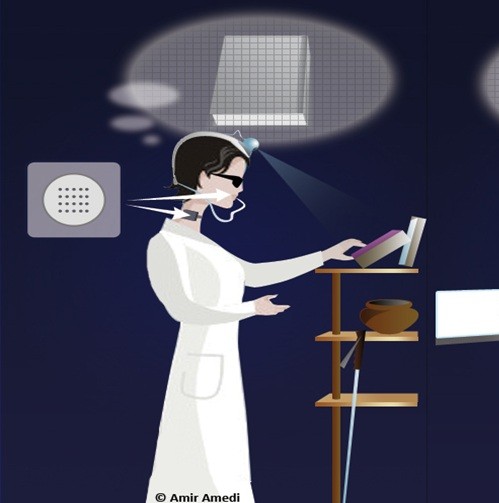
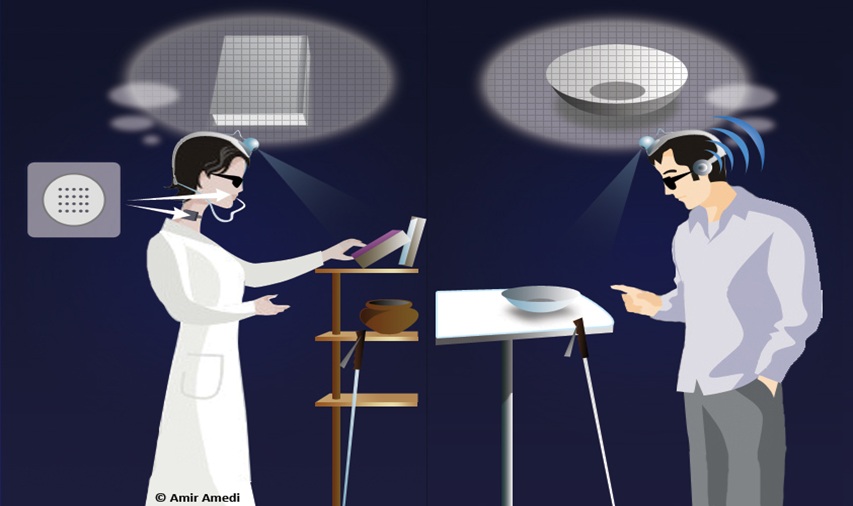
In practical terms, the device includes a small video camera embedded in a pair of spectacles, a laptop (or smartphone) transforming images into sounds, and stereo headphones with which to hear these sounds. For example, an oblique line will be transformed into a higher-pitched (or increasingly lower-pitched) sound. The same principle enables the encoding of much more complex images in auditory form.

©Amir Amedi Lab

With this system, the blind can achieve greater “visual” acuity than the state defined as blindness, according to WHO criteria.

After only 70 hours of specialised training, the blind are able to correctly classify images into different categories (faces, houses, etc.). They can also perceive other important information such as the location of people in the room or certain facial expressions. They can even manage to read letters and words (see videos on https://brain.huji.ac.il/).

[break]

Beyond the performance enabled by this sensory substitution system, theHebrewUniversityresearchers are seeking to understand what happens in the brain when the blind learn to “see” through sound. To this end they have developed a functional MRI study with a specific paradigm.

In particular, they have shown that the regions of cortex normally devoted to visual perception, whose usefulness is uncertain in blind subjects, are strongly activated during the “sonar vision” of faces, houses and words, etc.

The visual cortex not only becomes activated, it also demonstrates a “normal” functional specialisation for different categories of objects. Thus, in sighted subjects, a specific region of the visual cortex of the left hemisphere (known by the acronym VWFA) is known to become more strongly activated during the perception of strings of letters than during the perception of other types of objects. Exactly the same region is activated when blind subjects read letters using the “sonar vision” device.

The fact that this specialisation for reading develops after just a few hours of training shows a remarkable degree of cerebral plasticity,” explains Stanislas Dehaene (NeuroSpin Imaging Centre). These results support the idea that in fact the so-called visual cortex in analysing objects by their shape and can perform this same function based on a visual input (as is usually the case), but also if necessary, on a auditory or tactile input.

“These results suggest that it may be possible, using appropriate technology and rehabilitation, to ‘awaken’ certain regions of the brain and access certain aspects of the visual world, even after years or even a lifetime of blindness,” concludes Laurent Cohen (ICM Research Centre).

A new development in the relief of spasms related to amyotrophic lateral sclerosis.

A team of researchers from Strasbourg, directed by Luc Dupuis (Inserm unit 692 “molecular signalling and neurodegeneration”), have recently discovered the origin of spasms – a disabling symptom of amyotrophic lateral sclerosis. The degeneration of serotonin-releasing neurons is responsible for these sensations. In the longer term, researchers imagine that molecules acting on serotonin receptors present in the brain could eliminate spasticity in patients.

Their results are published in the Brain review.

Amyotrophic lateral sclerosis (ALS) is a neurodegenerative disease with an occurrence rate in France similar to multiple sclerosis (two to three new cases per year for every 100,000 residents). It has a specific affect on neurons responsible for motor control, in particular motor neurones and central motor neurones. The former, located in the spinal cord, are directly linked to muscles and are used for muscle contraction and stretching. The latter, located in the brain, receive movement orders. As the disease develops, the neurons degenerate and the muscles are no longer stimulated and stop working. Movements, walking and speech become increasingly difficult and patients tend to pass away an average of two to five years after diagnosis, generally due to respiratory failure.

Paralysis is accompanied by other symptoms, which can be highly disabling on a daily basis. Spasms (or spasticity) are an exaggerated muscular response to a stimulus; they produce long and involuntary muscle contractions, coupled with pain. Spasticity is frequently observed in ALS. Until now, it was attributed to the loss of central motor neurons.

In this study, Inserm researchers have shown that these spasms are, in fact, linked to the degeneration of another type of serotonin-producing neurons located on the brain.

They have observed – both in patients with ALS and in a transgenic mouse model – that serotonergic neurons waste away as the disease develops and that serotonin levels in the spinal cord sharply decreased before the motor-related symptoms appeared.

Furthermore, some molecules active against serotonin receptors eliminate spasms in transgenic mice suffering from ALS. This research demonstrates that neuron degeneration in ALS is not limited to the motor system in its strictest sense. For Luc Dupuis “molecules acting on serotonin receptors 5-HT2B and C could be antispastic for ALS patients over the long-term”.

This work is protected by a patent filed by Inserm Transfert.

Benzodiazepine use and dementia in the over 65s

Benzodiazepines are prescribed to treat symptoms of anxiety and sleeping disorders. Collaborative research conducted by researchers from three Inserm units in Bordeaux has recently highlighted the link between benzodiazepine use and the development of dementia in the over 65s. The researchers analysed a sample from the PAQUID[1] cohort, consisting of individuals with a mean age of over 78, who were monitored for 15 years. The results from comparative analysis of this population demonstrate the risk of developing dementia increased by 50% for subjects who consumed benzodiazepines during the follow-up period, compared with those who had never used benzodiazepines. Although this study does not confirm a cause and effect relationship, as is the case for all epidemiological research, the researchers recommend increased vigilance when using these molecules, which remain useful in the treatment of insomnia and anxiety in elderly patients.

The results of this research are available online on the British Medical Journal (BMJ) website as of 28 September 2012

In France, approximately 30% of individuals over 65 are prescribed benzodiazepines to treat the symptoms of anxiety and sleep disorders. The prescription of these molecules is widespread, especially in France and other countries such as Canada, Spain and Australia. Consumption of benzodiazepines is often chronic, with many people taking them over a period (often several years) that significantly exceeds recommended good practice guidelines that suggest limiting the duration to two to four weeks. The effects of benzodiazepines on cognition have been the subject of several studies with much-debated results.

On 28 September 2012, researchers from Inserm unit 657 “Pharmacoepidemiology and the assessment of the impact of health products on the population”, 897 “Inserm Research Centre into epidemiology and biostatistics” and 708 “Neuroepidemiology”, in collaboration with the Université de Bordeaux, published on-line the sophisticated results of analyses from a cohort of elderly individuals to improve knowledge of the relationship between the use of benzodiazepines and the development of dementia.

In an attempt to counteract the bias that may have restricted the scope of previous studies, the researchers completed several comparative analyses using data from the PAQUID cohort, covering 3777 individuals from between 1897 and 1989.

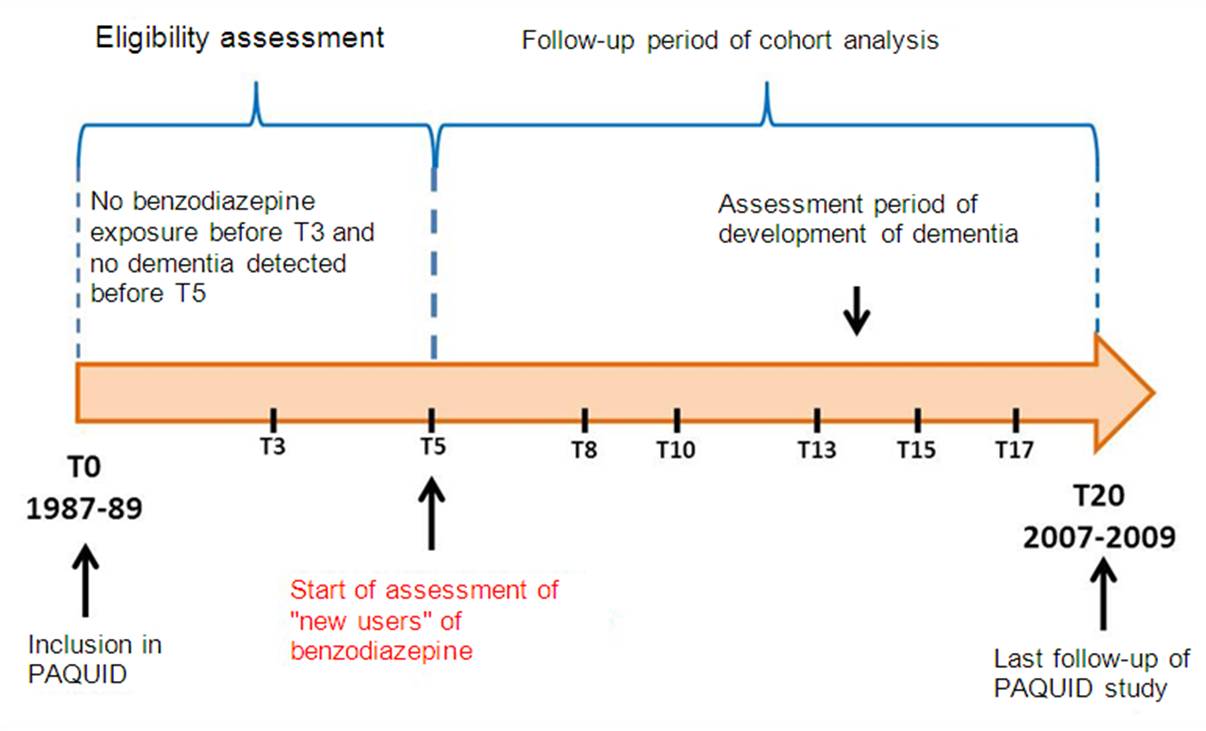
Diagram: Study design for cohort analyses 

© Inserm / J.Hardy

The main study focused on a sample of 1063 individuals from the PAQUID cohort (mean age of 78), who were free from dementia symptoms at the beginning of the follow-up period and who had not consumed any benzodiazepines prior to the fifth year in the follow-up period (see  above diagram). Out of the 1063 individuals, 95 used benzodiazepines from the fifth year onwards, thus defining two populations: those “exposed to benzodiazepines” and those “not exposed to benzodiazepines”. The annual occurrence of dementia observed in the exposed group is 4.8 individuals out of 100, compared with 3.2 individuals out of 100 for the “non-exposed” group.

“The analysis of the cases of dementia in the first population group shows that individuals who began treatment after five years during the follow-up period had an increased risk of developing dementia” states Tobias Kurth, an Inserm research director. “We wanted to check the robustness of this result by completing two additional analyses” he adds.

The second analysis consisted of creating five “small” cohorts using the sample studied previously. The researchers demonstrated that the link between benzodiazepine and dementia is robust, although the date treatment began does vary (benzodiazepine consumed from T5, T8, T10, T13, and T15).

To supplement these results, the researchers completed a case-control study on 1633 individuals with dementia (case) and 1810 without any dementia symptoms (control), all taken from the initial PAQUID population. For each time T studied, each case was compared with one or several individuals from the control group. This last analysis confirmed the trend observed in the main study, regardless of the previous exposure duration (three to five years for recent users to more than 10 years for users who had always taken benzodiazepines during the follow-up period).

“According to our analysis, benzodiazepine exposure for the over-65s is linked to an increased risk of dementia. Although we cannot prove a cause and effect relationship, we observed that during the follow-up period benzodiazepine users had a risk of developing dementia that was 50% higher than those who had never taken benzodiazepine” 

indicates Bernard Bégaud.

Although these molecules are useful to treat insomnia and anxiety, the authors of this study indicate that their consumption may lead to adverse effects, such as falls. Since this new data confirms that from the four previous studies, the researchers recommend “limiting prescriptions to periods of a few weeks and taking care to ensure these molecules are used correctly. We doubt that consumption over a period of a few weeks can have a negative impact on the risk of dementia”, concludes Bernard Bégaud. Furthermore, additional studies would also make it possible to ascertain whether this link is found in persons aged under 65.


[1] PAQUID (Personnes Agées QUID), cohort launched in 1988, of a population of subjects living in their own homes in two départements in South-West France, la Gironde and la Dordogne.

3777 subjects aged 65 and over took part in the study.

MRI scans reveal disrupted brain development in some schizophrenic patients

Using innovative technology to analyse MRI anatomical data, researchers have successfully detected 3D shape variations in the brains of some patients suffering from schizophrenia. Using this data, they have deduced that the shape variations are caused by disruptions during key brain development stages. Arnaud Cachia, part of the team led by Marie-Odile Krebs and Thérèse Jay (Inserm unit 894 / Université Paris Descartes “Centre of psychiatry and neurosciences” at the Sainte-Anne hospital), published the results of this study in Schizophrenia Bulletin on xx July. In time, the researchers hope to develop therapeutic strategies that take account of the individual characteristics specific to different patients.

Schizophrenia is a serious and debilitating illness that affects around 1% of the French population. This complex disorder involves several genetic and environmental factors and its first signs generally appear during adolescence or in young adults. 

Complex diagnosis owing to heterogeneous symptoms

Difficulties in performing correct diagnoses stem from the fact that patients’ symptoms may vary greatly: deliria, hallucinations, self withdrawal or even signs of autism. These symptoms can lead to changes in personality and a loss of grip on reality. The illness may manifest itself in several ways, either suddenly during a hallucination or deliria, or in a more insidious manner, with a progressive deterioration of the patient over several years. It is particularly difficult to identify the causes of schizophrenia since we know that genetic factors interact with one another, as well as with environmental factors (intense stress, cannabis use, etc.). Faced with this heterogeneity, the researchers attempted to sort patients into relevant sub-groups to personalize future treatments.

The shape of the brain: a marker of a schizophrenia sub-type

The study conducted by Arnaud Cachia focuses on 44 patients receiving care at the Service Hospitalo-Universitaire at the Sainte-Anne hospital. The brains of these patients were scanned on the imaging platform at a time when they experienced their first psychotic episode. These patients have therefore received little or no previous treatment. Two sub-groups were then compared: schizophrenic patients with and without neurological soft signs.

The patients with neurological soft signs have slight motor or sensory difficulties that can be measured using a scale previously set up by the researchers. Movement coordination and perception of the body are evaluated through tests, for example walking on a straight line or recognizing a letter from the alphabet traced on the palm of the patient’s hand. These signs are caused by attacks on brain networks that control integrated functions.

The scientists endeavoured to verify whether anatomic similarities in the brain are found in each of the two sub-groups, which are homogeneous in terms of clinical symptoms. MRI anatomic scanning was used to check this hypothesis.

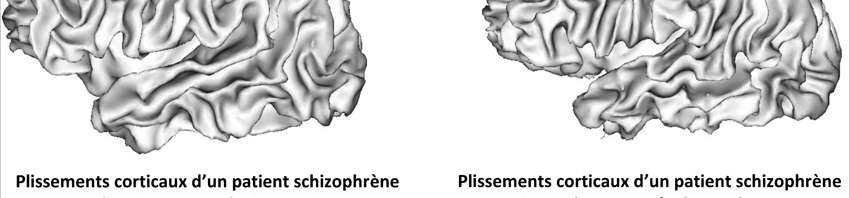
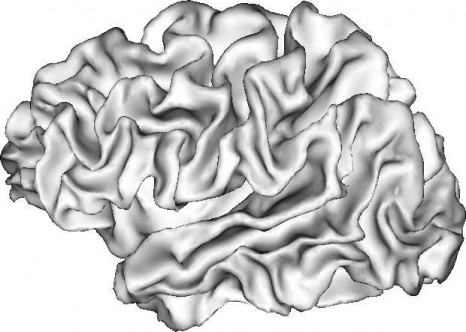
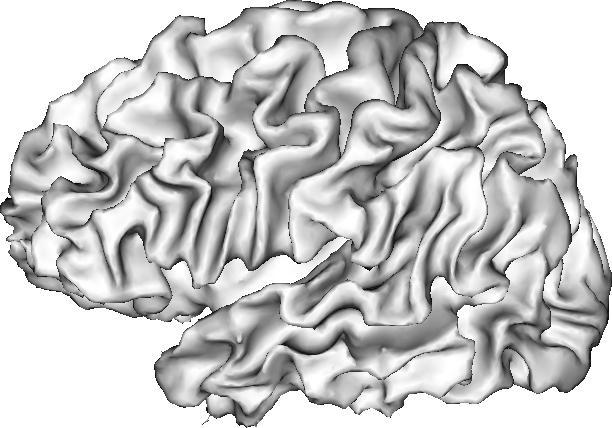
The 3D morphology of cortex folding, taken from the MRI, was analysed using sophisticated software developed by CEA researchers (Neurospin). Calculating the cortex folding rate reveals that on average patients with neurological soft signs have folds (sulcus and cerebral gyri) that are slightly less pronounced than patients without these signs. 

 Key periods in cerebral development occur in utero until the age of a few months, and until adolescence. During the foetal period, the brain assumes its characteristic shape: the cortex folds. The sulcus and cerebral gyri then appear: they are compatible with valleys (sulcus) and mountains (cerebral gyri) in a landscape.

 “We have observed subtle disruptions in the folds of the cortex in patients with neurological soft signs” explains Arnaud Cachia. “We can thus deduce that there were disruptions during key stages of brain development, causing different cognitive and motor development trajectories.”

In this way, this discovery made through fundamental research into these sub-groups will make it possible to better adapt therapeutic strategies by factoring in the individualities of each patient and also to act as early as possible. “One of the next stages shall be to identify the involvement of any neurodevelopment-related genes” conclude the researchers.

Cortex folding of a schizophrenic patient WITH neurological soft signs

Cortex folding of a schizophrenic patient WITHOUT minor neurological soft signs

A novel eye writing device

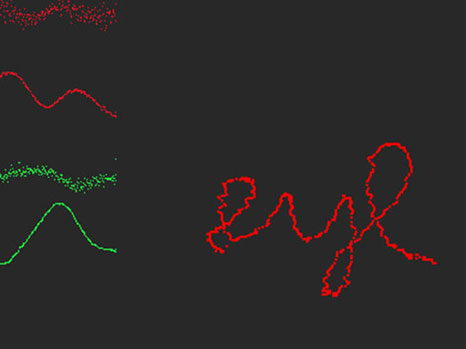
A novel device that makes it possible to draw and write using just eye movements has been developed by a CNRS researcher at the Centre de Recherche de l’Institut du Cerveau et de la Moelle Epinière (CNRS/UPMC/Inserm). Subjects can use it like a pen to write numbers, letters, figures, their signature and even use their eyes to draw using a very simple technique comprising an oculometer[1] and a computer screen. This remarkable feat is based on a visual illusion that enables the eyes to follow smooth and clear trajectories after only several hours of training. This system could improve the living conditions of patients suffering from paralysis of the limbs. This work is published on the 26 July 2012 in the journal Current Biology.

©J Lorenceau, CNRS

Current writing devices using eye movements only allow users to choose from words or letters that are displayed on a screen but do not give them the freedom to draw their own figures. Until now, this was thought to be impossible. In fact, although the eye can follow a moving object very efficiently, it is not capable of performing smooth, regular movements in front of a static background. Any attempt in this sense results in a succession of quite irregular jerks.

To obtain smooth trajectories of the eye, Jean Lorenceau, CNRS researcher at the Centre de Recherche de l’Institut du Cerveau et de la Moelle Epinière (CNRS/UPMC/Inserm) came up with the idea of using a visual illusion called reverse-phi, which has been known since the 1970s but which has not until now found any applications. The illusion occurs when several hundred disks whose luminance[2] varies over time at a frequency of around 10-15 Hertz (Hz) are displayed on a screen. When the user’s eyes move over this flickering background, the subject has the clear impression that the disks move with the displacement of the eyes. Since the human eye is capable of following with precision moving objects, the illusory movement of the disks induced by the movement of the eyes gives them a sort of moving support, allowing them to realize regular and non-jerky trajectories. An oculometer1 records the movements of the user’s eye and very simple software enables these movements to be visualized on a screen. Two to four training sessions lasting around 30 minutes are all that are needed to be able to manage eye movements and draw letters. In tests carried out, subjects firstly learned to perceive the reverse-phi movement then to “cling” onto this movement somewhat like a surfer who “clings” onto a wave. Then, the subjects progressively learned to “surf” on this visual illusion of movement to guide their eye movements at will. Thanks to this system, well-trained individuals can write with their eyes at more or less the same speed as with their hand. Although the concentration required to draw figures can become tiring in the beginning, training enables automatisms to be created that facilitate writing.

©J Lorenceau/CNRS

This device could give persons suffering from limb paralysis the means to personalize their writing, write their own signature and, more generally, to express themselves and communicate in a more creative and free manner.

The next step in this research will consist in proposing to persons suffering from amyotrophic lateral sclerosis to use the invention. However, Lorenceau believes that this system opens the way to other applications: it could be used to train pilots, surgeons, sportsmen, artists[3] and other persons whose activities require precise oculomotor control. It could also make it possible to design security systems based on the recognition of eye movements.


[1] An oculometer enables eye movements to be recorded by analyzing images of the human eye captured by a camera to calculate the direction in which the subject is looking.

[2] Luminance is the intensity of a broad source in a given direction, divided by the apparent area of said source in the same direction. It is a photometric quantity, in other words it depends on the sensitivity of the human eye.

[3] A collaboration is currently underway with the contemporary artist Michel Paysant, who creates eye drawings, the objective of which is to test the new possibilities of this device => https://www.michelpaysant.fr/onlab/

The neurological bases of anxiety disorders

On June 18th, a one-day scientific symposium in Paris entitled “Neurobiological basis of Anxiety disorders”, got together scientists from 6 of the partners of DEVANX (1) , a European project coordinated by Inserm and launched in 2008. It was an opportunity to take stock of what knowledge has been acquired about the neurological basis of anxiety disorders.

Over the last few years, great progress has been made in our knowledge of brain circuits and the key molecules involved in the manifestations of anxiety. The use of animal models has greatly contributed to our understanding. In mice, it was possible to observe behavioral changes that occurred in situations of emotional conflict, for example how the animal chose between exploring new avenues (curiosity) and withdrawal (fear). It allowed us to describe the way in which the animal acts in a situation of learned fear: how the animal learns to associate a neutral environment with potential danger.

Serotonin and GABA are the 2 main molecules that act as “messengers” (or neurotransmitters) between the neurons involved in states of anxiety. And these are the common targets for “anxiolytic” drugs.

However, the exact role played by these molecules and their interactions with the environment are still unknown. Genetics and the new information gained about brain plasticity need to be integrated into our constantly growing understanding of the mechanisms involved. Patricia Gaspar and Laurence Lanfumey, Research directors at Inserm and coordinators of the DEVANX project, have worked with their colleagues to study the neurobiological bases of anxiety from different angles.

1. Pharmacological aspects

The GABAb receptors present in neurons are targeted by new molecules that work in a completely different way from conventional anxiolytics (benzodiazepines), that act on the GABAa receptors. By finding out more about the structure and the function of GABAb receptors and their interactions with the serotoninergic system, we can propose new therapeutic targets.

A particular example is Benny Bettler’s team, a member of the DEVANX consortium in Switzerland. They demonstrated that GABAb receptors are heterodimers (a combination of two different receptor subunits) that possess partner proteins capable of modifying their binding properties. The pharmacological properties of GABAb receptors vary depending on how the partner proteins are organized. From a therapeutic point of view, positive modulation of these receptors represents a possible strategy for developing new anxiolytics. John Cryan, a partner of the DEVANX consortium in Ireland, has shown that inhibiting GABAb receptors can reduce depressive behavior. Working along the same lines, Laurence Lanfumey’s team in Paris studied the connection between GABAb receptors and the serotoninergic system.

© Gassmann et Bettler, 2012

GABAB receptor subunits: GABAB1a, GABAB1b and GABAB2

These subunits are receptors with seven transmembrane domains bound to the G proteins via the GABAB2 .subunit. The difference between the GABAB1a and GABAB1b subunits is that there are two terminal domains (sushi-domains) on the GABAB1a subunit.

2. The part played by serotonin

In people who suffer from depression, panic attacks, anxiety disorders or phobias, administering drugs that increase the serotonin level reduces these pathologies.

However we know very little about the initial cause of this lack of serotonin that causes the disorders. That is the reason why the researchers need different animal models to discover and analyze the different situations of a brain that is “depleted” of serotonin.

Serotonin is involved in numerous physiological functions: sleep/wake rhythms, impulsivity, appetite, pain, sexual behavior and anxiety. Its action is mediated by around fifteen different receptor sub-types.

The serotoninergic system is a multiple system: it is present in the central nervous system (in the Raphe nuclei of the brain) and in the peripheral nervous system (in the enterochromaffin cells of the digestive tract).

The way in which neurons “specialize” into serotonin neurons is controlled by different molecular factors, depending on their location, and does not all happen at the same time in the course of development.

One of the studies carried out by the genetics specialists as part of the DEVANX project aimed at conditionally targeting the production of serotonin at a given time and in a given location. For example, Dusan Bartsch’s team, a DEVANX partner in Mannheim, produced genetically modified mouse models that allowed them to reduce the serotonin at different times during the life of the mice, by creating models known as inductable models (in which the elimination of a gene could be induced by administering a drug). Patricia Gaspar’s team in Paris characterized mutations in which only part of the serotoninergic neurons was affected (mutation of a Pet-1 transcription factor). In these mice, the team noted that spontaneous anxiety was reduced, but that their fear conditioning was increased. Therefore, the lack of serotonin in the central nervous system could mean that the subjects more easily associate neutral situations with a panic reaction.

3. Other circuits involved: Fear circuits

By linking the research into fear with the latest neurobehavioral findings, it was possible to combine the approaches.

It is becoming more and more evident that it is the normal neuron circuits specialized in dealing with fear that are pathologically affected or amplified in anxiety disorders. So it is very important to understand and analyze how these circuits function in “real situations” in animal models. The end purpose is to find a way of “deconditioning” certain brain circuits that have been abnormally or over-activated.

The new approaches to physiology on the knockout animal, combined with pharmacogenetic research, have made for progress in this field. For example, Agnés Gruart’s laboratory in Sevilla, one of the partners of the DEVANX project, has recorded different neurons from the hippocampal circuits in different fear learning situations and observed the effect of modifying the message conveyed by GABAb and serotonin. Cornelius Gross’s team from EMBL in Rome has shown that we can use serotoninergic receptors (5-HT1A) expressed in different areas of the brain in order to temporarily deactivate highly specific neuron circuits. This allowed them to identify the hippocampal and amygdala circuits involved in the generalization of fear.

Research into anxiety disorders, as in numerous fields of neurosciences, is now using integrated approaches that require multiple fields of knowledge. Molecular studies now need to be integrated into the whole animal context that expresses behavior patterns as similar as possible to physiological situations, while still being strictly controlled as experiments. Genetic tools now provide us with unequalled power for researching into a determined molecule function, or a molecular assembly within a given circuit and a precise time slot. This type of approach will continue to develop in the years to come, with the coming of tools that will allow us to activate or deactivate certain selected neuron circuits.

By solving these intertwined elementary processes step by step, we should at last find the explanation to the mechanisms underlying pathological anxiety disorders.

(1) DEVANX: “Serotonin and GABA-B receptors in anxiety: From developmental risk factors to treatment”, a project funded by the European Commission and launched in 2008. Partners involved: Inserm (coordinator), University College Cork, Ireland, European Molecular Biology Laboratory, Italy/Germany, Central Institute of Mental Health, Mannheim, Germany, Universitaet Basel, Switzerland, Universidad Pablo de Olavide, Spain

Preserving sight through enhanced focus on the causes of glaucoma

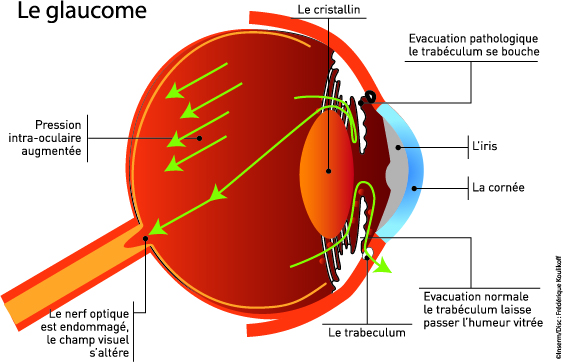
An article to be published in Plos One describes how Inserm researchers have succeeded in preserving the visual function in rats suffering from glaucoma. This disease is associated with an abnormal increase in intraocular pressure and can lead to blindness. The team of researchers directed by Christophe Baudouin at the Institut de la Vision ((Inserm/CNRS/UPMC) focussed on inflammation-specific molecules: chemokines. Blocking one of the chemokines (CXCR3) led to reduced intraocular pressure, by restoring normal aqueous humour flow, thus protecting the retina and the visual function.

Glaucoma is the second leading cause of blindness across the globe, affecting fifty to sixty million people, 6-7 million of whom are blind. In France, approximately 800,000 people receive treatment for glaucoma. The disease is characterized by the progressive destruction of the optic nerve and an irreversible alteration to the visual function, generally associated with an abnormal increase in intraocular pressure.

This high intraocular pressure is caused by an obstruction to the normal aqueous humour flow on a specific ocular structure: the trabecular meshwork. However, there is little understanding of the degeneration of trabecular tissues, which causes this malfunction.

Current treatment for glaucoma does not directly target the original pathology of the trabecular meshwork.This could partly explain why treatment frequently fails, sometimes leading to blindness even with access to the best possible medical care.

The team of researchers directed by Christophe Baudouin at the Institut de la Vision is dedicated to studying physiopathological mechanisms responsible for glaucomatous trabecular pathology, and, more specifically, the role of specific “chemokine“ molecules in inflammation.

Several researchers from the team have recently demonstrated on the tissues of patients suffering from glaucoma, and on a human trabecular cell line, there is a balance between the CXCL12 chemokine and a truncated form of this molecule, SDF-1(5-67). Whereas the first molecule encourages the viability of trabecular meshwork tissues via the CXCR4 receptor, its other form causes the loss of the trabecular meshwork via the CXCR3 receptor. It would appear that the transition from a “healthy” form to a truncated form is driven by a specific environment and the cytokines and metalloproteases involved in glaucoma.

In a second phase, the researchers used an animal model of glaucoma and observed that blocking CXCR3 reduces intraocular pressure and restores the trabecular filter function, thus preserving the visual function by protecting the retina.

This research has improved understanding of glaucoma. As Alexandre Denoyer, the leading author of the publication explains: “The novel strategy targeting trabecular chemokines could result in the development of an innovative treatment to replace or complement current long-term treatment using eye drops”.

fermer