Menu

The surprising ability of blood stem cells to respond to emergencies

A research team of Inserm, CNRS and MDC lead by Michael Sieweke of the Centre d’Immunologie de Marseille Luminy (CNRS, INSERM, Aix Marseille Université) and Max Delbrück Centre for Molecular Medicine, Berlin-Buch, today revealed an unexpected role for hematopoietic stem cells: they do not merely ensure the continuous renewal of our blood cells; in emergencies they are capable of producing white blood cells “on demand” that help the body deal with inflammation or infection. This property could be used to protect against infections in patients undergoing bone marrow transplants, while their immune system reconstitutes itself. The details of the research is published in Nature on april 10th 2013.

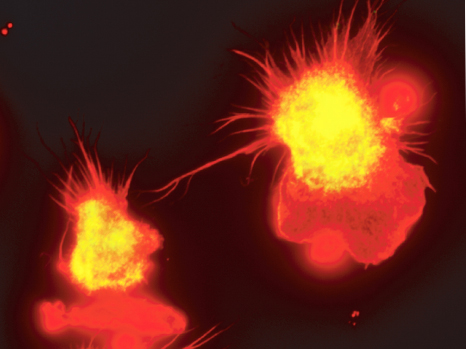
Macrophages

Cells in our blood feed, clean and defend our tissues, but their lifespan is limited. The life expectancy of a red blood cell rarely exceeds three months, our platelets die after ten days and the vast majority of our white blood cells survive only a few days.

The body must produce replacement cells in a timely manner. This is the role of hematopoietic stem cells, more commonly called blood stem cells. Nestled in the core of the bone marrow (the soft tissue in the center of long bones such as the chest, spine, pelvis and shoulder), they dump billions of new cells into the bloodstream every day. To accomplish this strategic mission, they must not only multiply but also differentiate, i.e. to produce specialized white blood cells, red blood cells or platelets.

For many years, researchers have been interested in how this process of specialization is triggered in stem cells. Michael Sieweke and his team previously discovered that the latter do not engage randomly in a particular differentiation pathway but “decide” their fate under the influence of internal factors and signals from the environment.

An important issue remains: how do stem cells manage to respond appropriately to emergencies? For example, are they able to meet the demand by producing white blood cells like macrophages to eat microbes during infection?

Until now, the answer was clear: the stem cells could not decode such messages and were content to differentiate randomly. Michael Sieweke’s team has demonstrated that, far from being insensitive to these signals, stem cell perceive them and in return manufacture the cells that are most appropriate for the danger that is faced.

“We have discovered that a biological molecule produced in large quantities by the body during infection or inflammation directly shows stem cells the path to take,” said Dr. Sandrine Sarrazin, Inserm researcher, co-author of the publication. “As a result of this molecule, called M-CSF (Macrophage Colony-Stimulating Factor), the switch of the myeloid lineage (the PU.1 gene) is activated and the stem cells quickly produce the cells that are best suited to the situation such as macrophages.”

Now that we have identified this signal, it may be possible in the future to accelerate the production of these cells in patients facing the risk of acute infection,” said Dr. Michael Sieweke, CNRS Research Director. “This is the case for 50,000 patients worldwide each year* who are totally defenseless against infections just after bone marrow transplantation. Thanks to M-CSF, it may be possible to stimulate the production of useful cells while avoiding to produce those that can inadvertently attack the body of these patients. They could therefore protect against infections while their immune system is being reconstituted”.

About the discovery

This seemingly simple discovery is quite original, both in its approach and by the technology it required. To reach their conclusions the team had to measure the change of state in each cell. This was a double challenge: the stem cells are not only very rare (there is only one stem cell per 10,000 cells in the bone marrow of a mouse), but they are also completely indistinguishable from their descendants.

“To differentiate the protagonists we used a fluorescent marker to indicate the status (on or off) of the myeloid cell switch: the protein PU.1. First in the animal, then by filming the accelerated cell differenciation under a microscope, we showed that stem cells “light-up” almost immediately in response to M-CSF,” said Noushine Mossadegh-Keller, CNRS assistant engineer, co-author of this publication. “To be absolutely sure, we recovered the cells one by one and confirmed that the myeloid genes were activated in all the cells that had turned green: once they perceived the warning message, they changed identity.”

Un diagnostic prénatal des maladies génétiques sur simple prise de sang

A new gene thought to be at cause in early-onset forms of Alzheimer’s disease

A new gene that causes early-onset of Alzheimer’s disease has been discovered by the research team of Dominique Campion at the Insert unit 1079 ”Genetics of cancer and neuropsychiatric diseases” in Rouen. The research scientists showed that in the families of 5 of 14 patients suffering from the disease, mutations were detected on the gene SORL1. This gene regulates the production of a peptide involved in Alzheimer’s disease. The results of this study have been published in the review Molecular Psychiatry issued April 3rd

Precise genetic mutations have been seen to play a part in early-onset forms of Alzheimer’s disease. However, there is a sub-population of patients in whom there is no mutation of these genes. So how can these patients, in whom there are no pre-established mutations, be suffering from early-onset Alzheimer’s?

To reply to this question, the research team working under the leadership of Dominique Campion and Didier Hannequin (Inserm unit 1079 and Centre national de référence malades Alzheimer jeunes, University hospital Rouen), studied the genes from 130 families suffering from early-onset forms of Alzheimer’s disease. These families were identified by 23 French hospital teams within the framework of the “Alzheimer Plan”. Of these families, 116 presented mutations on the already known genes. But in the 14 remaining families, there was no mutation at all observed on these genes.

A study of the genome of the 14 families using new whole DNA sequencing techniques showed evidence of mutations on a new SORL1 gene. The SORL1 gene is a coding gene for a protein involved in the production of the beta-amyloid peptide. This protein is known to affect the functioning of the brain cells (see insert).

Two of the identified mutations are responsible for an under-expression of SORL1, resulting in an increase in the production of the beta-amyloid peptide. “The mutations observed on SORL1 seem to contribute to the development of early-onset Alzheimer’s disease. However, we still need to identify more clearly the way in which these mutations are transmitted on the SORL1 gene within families” states Dominique Campion.

Alzheimer’s disease is one of the main causes of dependency among the elderly. It results from neuron degradation in different areas of the brain. Its symptoms include increased alterations to memory, cognitive functions and behaviour disorders that lead to a progressive loss of independence.

Alzheimer’s disease is characterized by the development of two types of lesion in the brain: amyloid plaques and neurofibrillary degenerescence. Amyloid plaques are caused by extracellular accumulation of a peptide, beta-amyloid peptide (Aβ) in specific areas of the brain. Neurofibrillary degenerescences are intraneuronal lesions caused by abnormal filamentary aggregation of a protein known as a Tau protein.

(French) Une stratégie de prévention pour éviter la mort subite chez les patients atteints de la maladie de Steinert

Sorry, this press release is only available in French.

The Ravine jumping gene

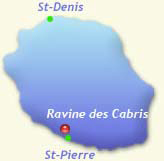
Infantile anorexia with vomiting is a symptom observed in certain remote regions on Réunion, surrounded by ravines. It is from this geographical feature that the related neurological disease gets its name. The team led by Alexandra Henrion Caude, research associate at Inserm’s “Genetics and epigenetics of metabolic, neurosensory and development disorders” unit (Inserm/Université Paris Descartes) studied the genetic causes of what the team has called “Ravine” syndrome. This research has established, for the first time, a link between a human hereditary disease and a one-off mutation of a non-coding “jumping” gene. This type of gene is made up of elements repeated in the genome which were long thought to be useless. The results, published in the journal PNAS, show that a single gene change is responsible for this fatal disease, and that the same type of gene could play a significant role in the development of the brain.

In the south of Réunion, a French island in the Indian Ocean, wide ravines cutting into the mountains have, in the past, isolated some of the island’s population. As a result of its particular geographical location and socio-economic situation, this region has historically been marked by a high degree of inbreeding. As a result, genetic anomalies have been passed down from one generation to another. Alexandra Henrion Caudes and her team looked into the genetic causes of a serious disease, which has been named Ravine syndrome or Ravine encephalopathy owing to the fact that it is observed mainly in populations living in the vicinity of ravines. It occurs in some children on the island before they reach their first birthday. They show symptoms of infantile anorexia with uncontrollable vomiting, as well as a gradual disappearance of the brain’s white matter, which is what makes the disease fatal. “Ever since Darwin, islands have been renowned especially for their fauna and flora. Their isolation, however, also makes them an ideal site for studying genetic diseases,” points out Alexandra Henrion Caude, Inserm research associate and coordinator of this study.

According to the classical definition, genes only represent a minute part of the human genome, half of which is composed of repetitive DNA sequences, including what are known as “jumping” genes. The impact of variations in these genes has been largely unexplored until now. In this study, Alexandra Henrion Caude, François Cartault, a geneticist at La Réunion university hospital and their teams analysed the genetic profile of nine families, some of which had several affected children. In one jumping gene, they identified a one-off mutation that was common to the children with Ravine syndrome. If the child inherits this mutation from both parents, he or she contracts the disease. Based on this single variation, the researchers revealed the existence of a long, mutant non-coding RNA molecule that causes this neurological disease.

© Serge Gelaber

Ravine on the island of Réunion, where geographic isolation may have contributed to a founder effect

They simulated the production of the non-coding RNA observed in the diseased brain and observed the induction of neuronal death. The observed mutation is located in a hairpin RNA structure. Drawing on this RNA structure, the research team has put forward various hypotheses regarding the involvement of this jumping gene in maintaining neuronal balance: RNA editing, small RNA (micro RNA) maturation and/or functioning via specific proteins (PIWI, SRP).

“This is the first time that a human hereditary disease has been associated with a one-off mutation in this type of jumping gene, transcribed as a long non-coding RNA,”

explains Alexandra Henrion Caude.

Her recent work points to intracellular dynamics in this type of non-coding RNA, based on the location of certain small RNA molecules in the mitochondria, and the important role played by these RNA molecules in human development.

“The history of how Réunion was populated partly explains how Ravine syndrome developed on the island. Our study explores the genetic origins of this disease and we suggest that jumping genes modify complex functioning networks of the human brain,” adds the researcher.

Childhood cancer – Factors of genetic susceptibility in Ewing sarcoma discovered

Ewing sarcoma is a rare paediatric bone cancer. However, this condition occurs more frequently in populations of European ancestry. Olivier Delattre (1) and his team, David Cox (2) and Gilles Thomas (3) have sought to understand why. The response may be found in two small regions of the genome: two genetic variants observed most frequently in European populations. Children having one of these two variations have twice the risk of developing a Ewing sarcoma tumour. This discovery was published online in the Nature Genetics issue of 12 February 2012 (4).

Ewing sarcoma is a rare bone tumour occurring in children, teenagers and young adults. For several years now, Dr Olivier Delattre, a specialist in this type of cancer and director of Inserm research, and his team from the Institut Curie, have been researching differences in incidence of this tumour according to geographic origin. To answer this question, they collaborated with Gilles Thomas of the Lyon Cancer Synergie platform and David Cox, both researchers at the Léon Bérard Centre in Lyon.

The majority of Ewing tumours occur in children of European ancestry, with cases very rarely occurring in African or Asian populations. Furthermore, the number of cases in these latter populations remain few even when the populations have immigrated to the United States (0.017 for 105 African-American individuals). “As a result, environmental factors could not be blamed and it was necessary to search for the reasons for this difference in the genome,” explains Olivier Delattre. Such a genetic genetic study, on a rare tumour, was made possible by the development of new tools, the GWAS (Genome-Wide Association Study) in particular, providing for the map representation of individual genetic variations. The analysis was performed using 401 samples of the Ewing tumour, 684 controls from the French population and 3,668 controls from the American population with European ancestry. Of the more than 700,000 genetic variations observed, two of them (rs9430161 and rs224278) are associated with the development of the Ewing tumour. Children with these genetic variants have a twice the risk of developing a Ewing tumour as compared to others,” explains David Cox. This increase in relative risk is important for a better understanding of the disease, but remains insignificant for the carriers of these variants, as the absolute risk remains very slight, with 3 cases per million carriers of the variant. Moreover, these two genetic variants are much more rare in populations of African or Asian ancestry, which partly explains the low incidence of the condition in these populations.

Improving understanding of tumour development

Beyond the identification of the two susceptibility variants, this discovery contributes to the understanding of the cellular mechanism leading to the development of Ewing tumours. The two regions revealed are found near the TARDBP and EGR2 genes. The first has similarities to the gene of which the alteration causes Ewing sarcoma; the second is part of the group of genes regulated by the fusion gene EWS-FLI1, responsible for this tumour. “We can now try to find out how these two genes reinforce the EWS-FLI1 chromosome anomaly responsible for Ewing sarcoma,” adds Olivier Delattre.

The point of view of Olivier Delattre

Olivier Delattre

© Noak/Le Bar Floreal/institut Curie

Olivier Delattre

Genetics of populations to better understand cancer development

“The genetic material contained in the nucleus of each of our cells is a sort of book with 3 trillion characters written with an alphabet of only 4 letters: A, C, G, T. Even if the sequence of these characters is nearly identical from one individual to the next, there is still an average of a 0.1% (several million) difference between two individuals. The diversity of the human population thus lies in the slight variability of our DNA sequence. A frequent variation in a population is called a variant. Certain variants are associated with a condition: they alone do not represent a risk, but they establish a favourable foundation for its development. There are several methods for researching such susceptibilities. In our study on Ewing sarcoma, due to the high variability between one population and the next, the genetics of the populations were the most suitable. The variants have the ability to “modulate” the activity of certain genes contributing to the cancer’s development. Knowledge regarding them thus improves the understanding of tumour mechanisms.”

David Cox’s comments

David Cox

© Photo Centre Léon Bérard

David Cox

Application of genomics in cancer research

“Since the complete sequencing of the human genome in the beginning of the 2000s, our ability to explore our genetic code has exploded. Today, we can research more than 5 million variants, of the ‘polymorphisms’, which differ from one person to the next. These variants are a sort of record of the history of the DNA surrounding them. If a mutation increasing the risk of a disease is present in a population, the variants surrounding it will be transmitted with the mutation for generations. Since we don’t know where these mutations are found, we use the variants to find them, comparing the incidence of the variants of the genome in patients suffering from a disease to individuals of the same population who are healthy.”

Ewing sarcoma tumours

  • With nearly 100 new cases in France each year, the Ewing tumour is the number two primitive malignant bone cancer, in terms of incidence.
  • It occurs in children, teenagers and young adults (up to 30 years old), with the highest incidence at puberty. Also referred to as Ewing sarcoma, it develops mainly in the bones of the pelvis, the ribs, the femur, the fibula and the tibia.
  • Over the past 30 years, the treatment for Ewing sarcoma, relying mainly on radiation therapy, has changed immensely. Today, local forms are mainly treated with an initial combination of chemotherapy and surgery. Post-operation chemotherapy, and sometimes radiation therapy, complete the treatment. The prognosis of Ewing sarcoma has benefited from the contribution of new chemotherapies.
  • It was at the Institut Curie, in the unit of Olivier Delattre, that the chromosome anomaly responsible for this tumourwas discovered in 1984 and characterised in 1992. It consists in a translocation produced, in 90% of cases, between chromosomes 11 and 22, leading to the synthesis of abnormal protein EWS-FLI1, and in 10% of cases between chromosomes 22 and 21, leading to the synthesis of abnormal protein EWS-ERG. There are other alterations, but they are rare. The discovery of these genetic alterations provided for the development of a diagnostic test for the Ewing tumourat the Institut Curie in 1994.

This research was conducted within the framework of a broad European collaboration. They were financed by, in addition to Inserm and the Institut Curie, the French National League against Cancer within the framework of the “2009 Epidemiological Research Project” and by the INC within the framework of the 2008 and 2009 open calls for projects.

Dr Olivier Delattre’s team also receives financial support from the Association of Parents and Friends of Children Treated at the Institut Curie (APAESIC), associations Les Bagouz à Manon, Pas du Géant, Olivier Chape, Les Amis de Claire and Courir pour Mathieu, as well as the Health and Children Federation.

About the same subject

The Institut Curie is a government-recognised public interest foundation bringing together the largest French cancer research centre and two state-of-the-art hospital institutions. A pioneer of several treatments, it is an authority on for breast cancer, paediatric tumours and eye tumours. It provides for the dissemination of medical and scientific innovations on the national and international levels.

Founded in 1909 on a model devised by Marie Curie and still at the cutting edge: “from fundamental research to innovative treatments”, the Institut Curie has 3,000 researchers, physicians, clinicians, technicians and administrative staff. For more information: www.curie.fr

The Léon Bérard Centre is one of the twenty French Centres for the fight against cancer. Based in Lyon and recognised as a reference centre for cancer research in the Rhône-Alpes region, it has three missions: treatment, research and teaching. More than 23,000 patients from all over France are cared for each year in its technical facilities and departments proposing innovative treatments. A total of 1,400 doctors, researchers, caregivers, technicians and administrative staff work at the Léon Bérard Centre. For more information: www.centreleonberard.fr

The Lyon Cancer Research Centre (CRCL)

The Cancer Research Centre of Lyon is a new research establishment, created in January 2011 and approved by Inserm, CNRS, the Université Claude Bernard Lyon 1, the Léon Bérard Centre and working in partnership with the Civil Hospices of Lyon. This body brings together 17 research teams, for 370 members, including 110 researchers and research professors. The work of the CRCL focuses on fundamental cancer research, whiling aiming to support the development of strong translational research to the benefit of the sick.

The French National Institute of Health and Medical Research (Inserm) is a public science and technology institute, jointly supervised by the French Ministry of Health and Ministry of Research. In 2008, Inserm, the only French public research organisation dedicated entirely to human health, became responsible for the strategic, scientific and operational coordination of biomedical research. This central role of coordinator was naturally assigned to the centre due to the scientific quality of its teams and also its capacity to support translational research, also known as bench-to-bed research, describing an approach of applying lessons from the laboratory at the patient’s bedside. For mmore information: https://www.inserm.fr/

Footnotes:

(1) Olivier Delattre, director of the Genetics and Biology of Cancers Unit – Institut Curie/Inserm U830

(2) David Cox, Research Associate at Inserm, researcher in the Breast Cancer Genetics team within the Cancer Research Centre of Lyon UMR Inserm 1052 CNRS 5286 / Léon Bérard Centre / Université Lyon 1

(3) Gilles Thomas, Professor of Universités Lyon 1 – Hospital Practitioner Civil Hospices of Lyon, Director of the Synergie biocomputing platform of Lyon Cancer Léon Bérard Centre / Université Lyon 1 and researcher in the Breast Cancer Genetics team of the Cancer Research Centre of Lyon UMR Inserm 1052 CNRS 5286 / Léon Bérard Centre / Université Lyon 1

(4) “Variants at TARDBP and EGR2/ADO loci associated with Ewing sarcoma susceptibility” Nature Genetics, 12 February 2012, online
Serotonin and bones

Serotonin, a well-known brain neurotransmitter, is produced locally in an unexpected place: the bone tissue. This has just been demonstrated by research scientists from the Combined “Bone and joints” research unit 606 (Inserm/Paris Diderot) working jointly with the biochemistry laboratory from the Lariboisière Hospital and the “Cytokines, hematopoiesis and immune response” laboratory (CNRS/University of Paris Descartes) at the Necker Hospital in Paris. Apparently, this locally produced serotonin breaks down the bone tissue. These results, published in the PNAS, suggest that medications that modulate the effects of serotonin, such as anti-depressants or migraine drugs, could in one way or the other modify the delicate balance between the formation and the destruction of bone in the organism.

© Inserm, J.-P. Roux

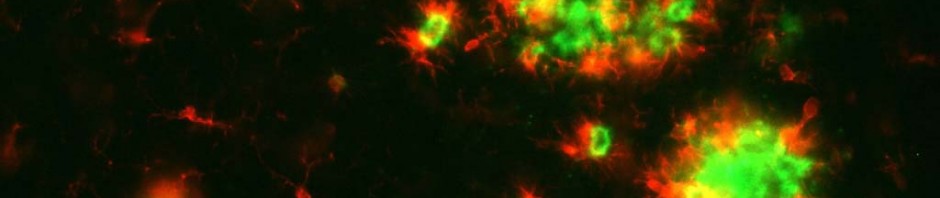
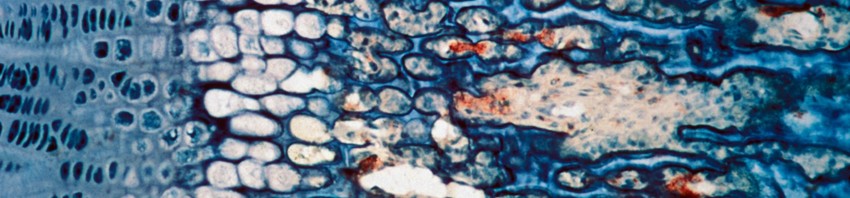
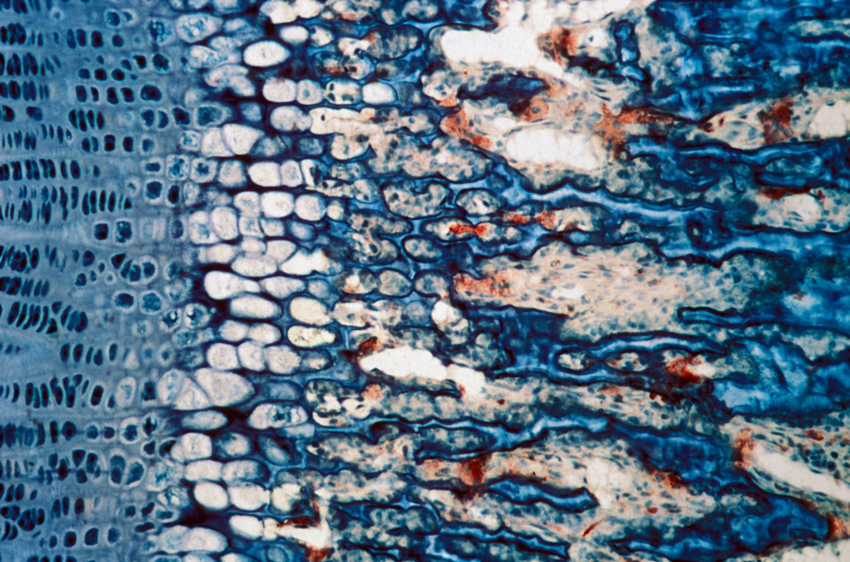
Area showing bone growth and resorption. The osteoclasts, the cells that resorb bone, are shown in red.

Serotonin regulates a wide variety of functions such as mood, behavior, sleep, blood pressure and temperature regulation. It also ensures important functions in several peripheral tissues and regulates vascular and heart functions and gastro-intestinal motility. However only minute levels of serotonin circulate in the body. It is mainly stored in the platelets and is only available for the peripheral organs if it is degorged when the platelets are activated.

Certain researchers decided to look into the effect of serotonin on bone tissue that had been the subject of a recent debate. While some researchers described the negative action of the serotonin circulating in the bone tissue (it apparently prevents bone regeneration by acting on the osteoclasts and reducing their proliferation), others failed to observe any modification to the bones in serotonin-deficient mice.

Osteoclasts or osteoblasts?

Bone remodeling is a highly integrated process. It depends on a fine balance between the growth of bone controlled by osteoblasts and the destruction of bone controlled by osteoclasts. The permanent renewal of bone tissue ensures harmonious growth and maintains and repair bones throughout life.

If this balance is disturbed, excessive activity of the osteoclasts might lead to a marked increase in bone density. On the other hand, increased bone resorption is associated with bone loss and triggers off disorders such as osteoporosis, arthritis and metastatic bone lesions.

So, correct molecular communication between osteoblasts and osteoclasts is necessary in order to regulate the engagement, the proliferation and the differentiation of precursor bone cells.

In view of these contradictory results, Marie Christine De Vernejoul and her colleagues decided to look deeper into this. Thanks to their work with mice, they discovered that this effect on bone tissue was not caused by the circulating serotonin, but to a new serotonin production. “Our work shows that serotonin is produced locally in an unexpected place: bone tissue. It is synthesized by the osteoclasts, the bone cells that resorb bone,” explained the Inserm researcher Marie-Christine De Vernejoul.

Once synthesized, serotonin acts directly on the osteoclasts, the cells that produce it, by increasing their differentiation. This local serotonin production is part of a normal process that also helps to maintain the balance between bone destruction and formation.

“This local serotonin produced by the osteoclasts is much more important for the bone tissue that the circulating serotonin, which seems to explain the different conclusions observed up until now by scientists who had studied to restrictive models” add the writers.

From a functional point of view, the research scientists have discovered that osteoclasts express the serotonin transporter and certain serotonin receptors at their surface. Therefore it seems that drugs that affect the serotonin transporter, such as antidepressants, and serotonin receptors such as migraine drugs, could modify the breakdown of bone tissue and affect this precious balance between bone destruction and bone formation.

At this stage in the research, many perspectives are open to the researchers workers. They are now going to study whether the production of serotonin by the osteoclasts is increased by a lack of estrogen. If this is the case, this could indicate that serotonin plays a part in osteoporosis in post-menopausal women.

Erasing the signs of aging in cells is now a reality

Inserm’s AVENIR “Genomic plasticity and aging” team, directed by Jean-Marc Lemaitre, Inserm researcher at the Functional Genomics Institute (Inserm/CNRS/Université de Montpellier 1 and 2), has recently succeeded in rejuvenating cells from elderly donors (aged over 100). These old cells were reprogrammed in vitro to induced pluripotent stem cells (iPSC) and to rejuvenated and human embryonic stem cells (hESC): cells of all types can again be differentiated after this genuine “rejuvenation” therapy. The results represent significant progress for research into iPSC cells and a further step forwards for regenerative medicine.The results are published in the Genes & Development Journal dated 1 November 2011.

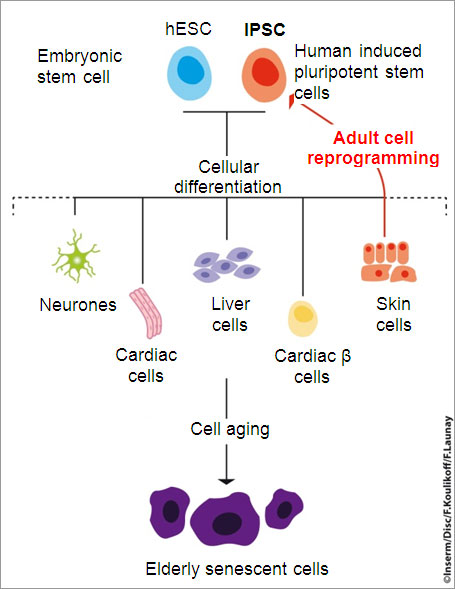
Human embryonic stem cells (hESC) are undifferentiated multiple-function cells. They can divide and form all types of differentiated adult cells in the body (neurones, cardiac cells, skin cells, liver cells, etc., see Figure 1).

schema1_lemaitre

Figure 1: Cellular differentiation / © Inserm/Disc/F.Koulikoff/F.Launay

Since 2007, a handful of research teams across the world have been capable of reprogramming human adult cells into induced pluripotent cells (iPSC), which have similar characteristics and potential to human embryonic stem cells (hESC). This kind of reprogramming (see Figure 1, opposite, in red) makes it possible to reform all human cell types without the ethical restrictions related to using embryonic stem cells.

Until now, research results demonstrated that senescence (the final stage of cellular aging) was an obstacle blocking the use of this technique for therapeutic applications in elderly patients. Today, Inserm researcher Jean-Marc Lemaitre and his team have overcome this obstacle. The researchers have successfully rejuvenated cells from elderly donors, some over 100 years old, thus demonstrating the reversibility of the cellular aging process.

To achieve this, they used an adapted strategy that consisted of reprogramming cells using a specific “cocktail” of six genetic factors, while erasing signs of aging. The researchers proved that the iPSC cells thus obtained then had the capacity to reform all types of human cells. They have the physiological characteristics of “young” cells, both from the perspective of their proliferative capacity and their cellular metabolisms.

A cocktail of six genetic factors…

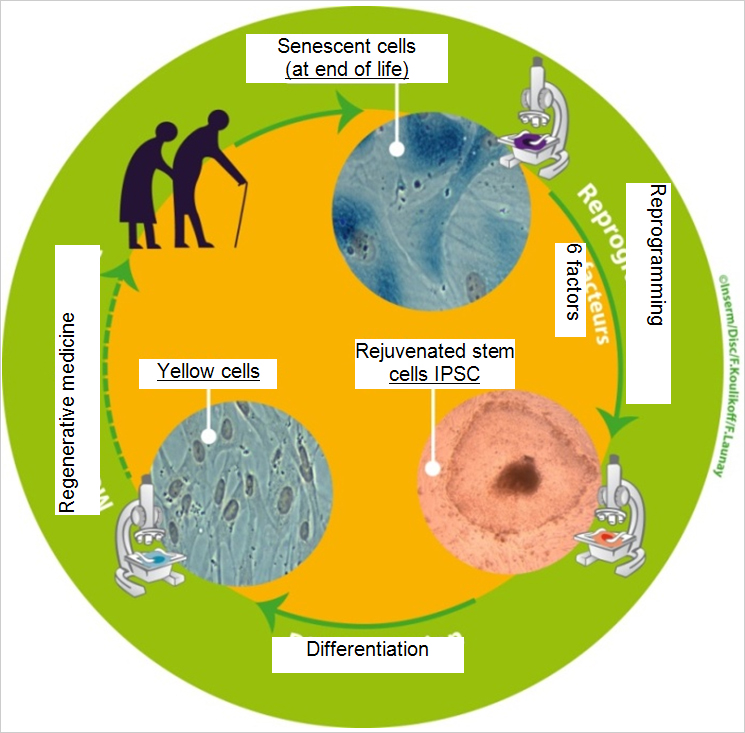
Researchers first multiplied skin cells (fibroblasts) from a 74 year-old donor to obtain the senescence characterized by the end of cellular proliferation. They then completed the in vitro reprogramming of the cells. In this study, Jean-Marc Lemaitre and his team firstly confirmed that this was not possible using the batch of four genetic factors (OCT4, SOX2, C MYC and KLF4) traditionally used. They then added two additional factors (NANOG and LIN28) that made it possible to overcome this barrier (see Figure 2).

Using this new “cocktail” of six factors, the senescent cells, programmed into functional iPSC cells, re-acquired the characteristics of embryonic pluripotent stem cells.

In particular, they recovered their capacity for self-renewal and their former differentiation potential, and do not preserve any traces of previous aging.

To check the “rejuvenated” characteristics of these cells, the researchers tested the reverse process. The rejuvenated iPSC cells were again differentiated to adult cells (see Figure 1) and compared to the original old cells, as well as to those obtained using human embryonic pluripotetent stem cells (hESC).

“Signs of aging were erased and the iPSCs obtained can produce functional cells, of any type, with an increased proliferation capacity and longevity,” explains Jean-Marc Lemaitre who directs the Inserm AVENIR team.

schema2

Reprogramming elderly senescent cells © Inserm

…tested on cells taken from donors over the age of 100

The results obtained led the research team to test the cocktail on even older cells taken from donors of 92, 94 and 96, and even up to 101 years old. “Our strategy worked on cells taken from donors in their 100s. The age of cells is definitely not a reprogramming barrier.” He concluded. “This research paves the way for the therapeutic use of iPS, insofar as an ideal source of adult cells is provided, which are tolerated by the immune system and can repair organs or tissues in elderly patients.” adds the researcher.


© Inserm – Cure de jouvence pour cellules par Jean Marc Lemaitre

Inserm Transfert filed a patent request for this research.

Le film de la transcription en 3 dimensions

cp_transcription TFIID_3d_2

fermer