Menu

ENS@T-HT, launch of a large scale Europe H2020 project coordinated by Inserm for improved diagnosis and treatment of arterial hypertension through an omics-based approach

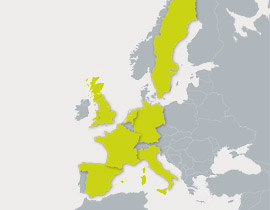
An international group of scientists from 6 countries bring together their expertise to improve diagnosis and therapeutic care for primary and secondary forms of arterial hypertension. ENS@T-HT, which is coordinated by Maria-Christina Zennaro, Research Director at Inserm (Paris Cardiovascular Research Center), was officially launched this month in Paris and will last 5 years.

Hypertension affects up to 45% of the general population and is responsible for 9.4 million deaths per year worldwide. Even small rises in blood pressure are associated with increased risk of stroke and heart disease. However, despite a large array of available treatments, blood pressure is still not properly controlled in many patients.

Approximately 10% of current hypertension cases could be treated and cured if properly diagnosed. These include disorders of the adrenal gland that increase the production of hormones affecting blood pressure. Correct identification of these disorders is crucial to proper management of the underlying disease and prevention of cardiovascular complications. However, due to the complexity of diagnosis, proper treatment of these conditions can be delayed by several years, exposing patients to increased cardiovascular and metabolic risk and diminished quality of life.

ENS@T-HT is a five-year-long European H2020 research project created to tackle these issues. It received funding of €7.6m and involves 13 academic institutions from France, Germany, Italy, the United Kingdom, the Netherlands and Australia.

The main objective is to develop a programme to improve diagnosis of various adrenal forms of hypertension, enabling curative treatments and preventing complications.

This will be achieved using various cutting-edge ‘omics’ techniques to identify biomarkers in patients’ blood that provide a distinctive signature for their condition. Useful biomarkers will also permit the stratification of patients, so that those most likely to benefit from particular treatments are identified in order to maximise the effectiveness and cost efficiency of treatment.

Maria-Christina Zennaro, coordinator of ENS@T-HT (Inserm Unit 970, Paris Cardiovascular research center) says: « The ambition of this project is twofold: first we want to establish omics-derived biomarkers and validate their accuracy in the diagnosis of patients with adrenal forms of hypertension. Second, and most importantly for patients, we want to use these biomarkers to accelerate and optimize the diagnosis and management of these conditions. We can then stratify those patients who could most benefit from specific targeted treatment ».

More detail about ENS@T-HT, a multiple-step-project with access to unique cohorts of patients in Europe

— In an initial exploratory phase partners will establish omics-derived signatures of patients with PA, PPGL and CS through bioinformatics modelling of large datasets derived from multiple platforms.

— The signatures will be validated as stratification biomarkers by establishing reference values and variability in healthy controls.

— They will subsequently be used in a prospective clinical study to identify endocrine forms of hypertension and to stratify patients with arterial hypertension. The usefulness and cost-effectiveness of this approach will be evaluated in comparison to current standard of care outcomes and costs.

ENS@T-HT is based on the exploitation of unique cohorts of patients with PA, PPGL and CS recruited by reference centers for adrenal disorders organized within the European Network for the Study of Adrenal Tumors ENS@T (www.ensat.org). ENSAT-HT will take advantage of the prospective collaboration of six European Society of Hypertension ESH Centres of Excellence (https://www.eshonline.org/), providing a unique capability for the recruitment and workup of a large cohort of hypertensive patients.

Website : https://www.ensat-ht.eu/
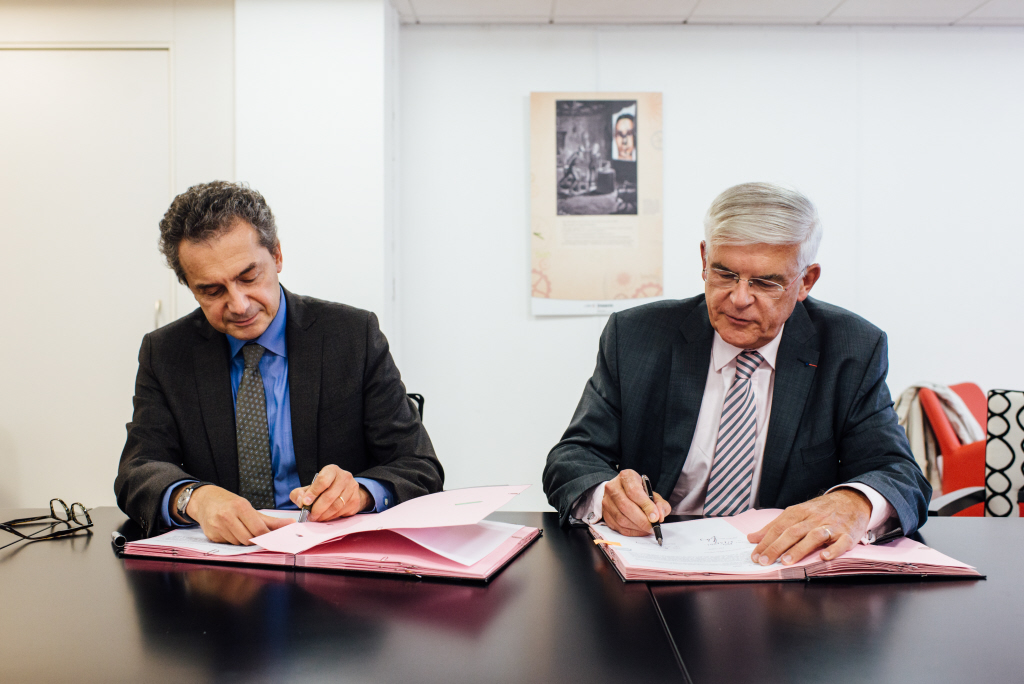
Inserm and CentraleSupélec sign a framework agreement

The twin objective of this new collaboration between the French National Institute of Health and Medical Research (Inserm) and CentraleSupélec is to train engineers that are better integrated into research laboratories, and biologists that are more involved in technological innovation. The two establishments hope to enhance their communal actions through innovation and entrepreneurial spirit; the creation of new businesses will be another aspect of the programme being established.

From 2015, scientific collaborations will be established between Inserm and CentraleSupélec, based on scientific priorities identified jointly by the two establishments. To initiate this partnership, Inserm and CentraleSupélec hope to become involved in the following themes:

– modelling, mathematics, databases and imaging

– microscopy and nanotechnology for biologySignature Inserm/CentraleSupélec

Signature of the framework agreement between Professor Yves Lévy, Chairman and CEO of Inserm, and Hervé Biausser, Director of École CentraleSupélec, at Inserm headquarters in Paris on 21 September 2015. ©Inserm/Heidinger, Jean-Marie

Projects based on these priority themes will be identified by the researchers in both establishments, in order to deploy their complementary assets and advance knowledge in areas of major challenge such as cancer or neuroscience. These projects will give rise to exploratory subjects offered to students during the course of their studies. Thus engineering students will be closer to innovation in a core area of human progress, alongside researchers internationally recognised for their expertise in health-related technologies. The educational component will be complemented by a dual programme in which student trainees will be hosted in Inserm laboratories, and Inserm staff will be offered training modules by CentraleSupélec, particularly in the area of entrepreneurship and business creation via the Centrale Entrepreneur stream.

For Yves Lévy, Chairman and CEO of Inserm, this signing is a reflection of a dynamic and multidisciplinary research landscape in France.

“I am convinced that engineers must be attracted to and trained in biology and medicine, just as biologists and physicians must become more involved in technological innovation. Today, life sciences research could not be imagined without the contributions that come from areas such as physics, mathematics and technology. I am therefore proud of this collaboration with CentraleSupélec, which promises a bright future for French life sciences research.”

Conferences for Novice Researchers, on the theme of “addiction,” in 5 French cities

Throughout the school year, 38 junior and senior secondary school students have been hosted each month in 9 neuroscience laboratories specialising in addiction studies. The aim: to change the views of the young “Novice Researchers” on the hidden face of drugs (alcohol, tobacco, cannabis, etc.) and addiction, and to educate them about research methods and research careers. From 1 June next, the Novice Researchers will present their research at 5 conferences organised in Marseille (1 June), Amiens (2 June), Paris (3 June), Bordeaux (4 June) and Poitiers (9 June).

The MAAD (Mechanisms of Addiction to Alcohol and Drugs) programme, launched by Inserm with the support of MILDECA (French Government Interministerial Mission for Combating Drugs and Addictive Behaviours), is based on a “scientific education” style approach, intended to increase the knowledge of young people on these substances by introducing them to the scientific method.

Nine research laboratories[1] specialising in addiction physiopathology hosted, on one Wednesday each month, two “binomes,” pairs comprising one final year junior secondary school student and one second year senior secondary school student. Mentored by a senior researcher, the adolescents conducted a research project, performed experiments and interpreted data.
The conferences organised in the different research centres involved will enable these young Novice Researchers to share their results. The audience will be made up of their classmates, parents, teachers, etc.

Programme:

♦         In Paris, the conference will be held on Wednesday, 3 June 2015 at 6:00 pm, at the Ministry of Agriculture, Gambetta Room (78 rue de Varennes, Paris 5th Arrondissement)
Registration required, via acmaad.tumblr.com or by contacting moc.liamg@ossa.rspa

Danièle Jourdain-Menninger, President of MILDECA, will open the event

The Novice Researchers’ presentations will be followed by a talk and discussion entitled “Nicotine et Prise de Décision” (Nicotine and Decision-Making), led by Philippe Faure, a CNRS researcher at UMR 7102.

♦      Marseille, Monday 1 June, 6:30 pm

♦      Amiens, Tuesday 2 June, 6:00 pm

♦      Bordeaux, Thursday 4 June, 6:30 pm

♦      Poitiers, Tuesday, 9 June, 6:00 pm

These conferences are open to all and admission is free.

The use of psychoactive substances (alcohol, tobacco, cannabis etc.) by young people is a constant preoccupation for the health authorities, since it is well known that early use, while the brain is still developing, is a risk factor for developing dependence during adulthood. This scheme for raising awareness about the toxicity of drugs is an attempt at innovation against a background of more traditional preventive actions (radio spots, video clips, television, newspapers and mini-conferences in schools).

[1] The 9 participating laboratories are as follows: Amiens: Inserm ERI 24, Prof. Mickaël Naassila; Bordeaux: Inserm U862 Neurosciences Magendie, Véronique Deroche; CNRS UMR 5287, Martine Cador / Stéphanie Caillé-Garnier; Marseille: Mediterranean Institute of Neurobiology (INMED), Olivier Manzoni; UMR 7289 CNRS Cognitive Neurobiology Laboratory, Christelle Baunez; Paris: Inserm UMR 894, Laurence Lanfumey, Nicolas Ramoz; Inserm UMR-S 839 Institut du Fer à Moulin, Denis Hervé, Marika Nosten-Bertrand, Manuel Mameli; CNRS UMR 7102, Philippe Faure; Poitiers: Inserm U1084 Experimental and Clinical Neurosciences Laboratory, Marcello Solinas.

Final of FameLab competition: 10 young scientists are taking up the challenge!

Following regional heats and a Masterclass at CERN, the European Organisation for Nuclear Research, the ten finalists in the FameLab competition will display their oratory skills at Cité des Sciences et de l’Industrie on Friday 22 May, at 6:30 pm.

Each candidate will have three minutes on stage to explain a scientific concept. Using the aids of their choice, they must convince the jury of their ability to communicate their research work while remaining accessible to non-specialists.

Florence Porcel, presenter, actress and author, will compere the event, with the support of professionals working in science, communication and the media:

Claudie Haigneré, Advisor to the Director General of the European Space Agency (ESA), and former Chairperson of Universcience,

Cécile Lestienne, Managing Editor of Pour la Science magazine,

Roland Lehoucq, Astrophysicist, French Alternative Energies and Atomic Energy Commission (CEA).

The public may vote for its favourite candidate. The winner, chosen by the jury, will have the opportunity to participate in the International Grand Final, held on 4 June in Cheltenham, United Kingdom.

The FameLab France finalists

They are PhD students, research assistants, assistant engineers and students, and come from all over France to share their passion for science.

Their subjects of study relate to a variety of areas in scientific research: physics, chemistry, biology and even history. At the final, the candidates will speak to you about saving animal species, the hydrophobia of water lilies, psychiatric disorders, and even mediaeval money.

They participate in FameLab to:

  • Take on the challenge of the 3 Cs: content, clarity, charisma
  • Make their research work known.

Quentin Vincent, epidemiologist and member of the Laboratory of Human Genetics of Infectious Diseases at the Imagine Institute, Paris, will represent Inserm during this final.

According to this young physician specialising in public health, sharing advances in science with non-specialists is both essential and entertaining.

To find out more

This year, under the impetus of the British Council, the second French edition of FameLab brings together many partners from institutions, academia and associations: Amcsti (French association of museums and centres for the development of scientific, technical and industrial culture), Inserm (French National Institute of Health and Medical Research), CNES (French National Centre for Space Studies), CEA, CERN and Ifremer (French Research Institute for Exploitation of the Sea).

Created in 2005 by the Cheltenham Festival in partnership with the British innovation agency NESTA, FameLab supports young scientists and engineers in the scientific communication process.

An event accessible by registration only

More information on the competition on the British Council website

FameLab on the social networks: @FameLabFrance   #FameLabFr

The Bettencourt Schueller Foundation reveals the varied and far-reaching list of the winners of its scientific prizes.

The Bettencourt Schueller Foundation reveals the varied and far-reaching list of the winners of its scientific prizes, which, with a total value of €1.9 million, are awarded for high-level biomedical research.

The projects of the top prizewinners are characterised by original themes, enthusiasm, and risk-taking applied to human health and a wide variety of disciplines in biomedical research.

“In research, one needs passion, creativity, work, time… and a little luck,” says Professor Hugues de Thé, the new Chairman of the Foundation’s Scientific Board. As evidenced by the personalities and work of this year’s six top prizewinners, who are involved in the following disciplines:

  • Neurosciences:
    • shedding light on the workings of memory, right down to neuron level, in order to find out what makes the behaviour of every individual unique;
    • exploring the functioning of the brain in vivo, by selective activation of neurons using light;
    • exploring the mechanisms of Huntington’s disease in the depths of neurons.
  • Immunology and Microbiology
    • characterising giant viruses in order to revisit the foundations of virology;
    • drawing the genealogical tree of the cells of the immune system.
  • Cell biology:
    • determining the destination of stem cells by modulating their environment.

The 20 prizewinners on this list were honoured at two separate ceremonies.

On 7 April 2015 at the Institut de France, Françoise Bettencourt Meyers, President of the Foundation, awarded the Coups d’Élan Prizes for French Research, in the presence of the Foundation’s two partners, namely Inserm (French National Institute of Health and Medical Research) and CNRS (French National Centre for Scientific Research), along with eminent representatives from the French scientific community. They were awarded to four prominent public research laboratories, and are aimed at optimising infrastructures and working conditions for researchers, i.e. remodelling, renovation, acquisition of equipment, etc. They also enable laboratories to acquire operational support.

laureats

© Christophe Petit Tesson / CAPA Pictures


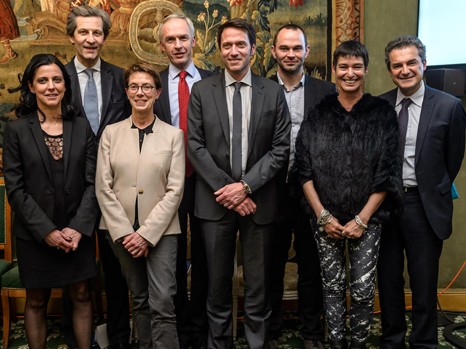
Front row, left to right: Valentina Emiliani, Neurophotonic Laboratory, Centre Universitaire des Saints Pères, CNRS / Paris Descartes University, prizewinner; Catherine Jessus, Director, Institute of Biological Sciences (INSB), CNRS; Frédéric Saudou, Grenoble Institute of Neuroscience (GIN), Inserm / Université Joseph Fourier / Grenoble University Hospital, prizewinner;Chantal Abergel, Structural and Genomic Information Laboratory (IGS), Mediterranean Institute of Microbiology (IMM), CNRS / Aix-Marseille University; Yves Lévy, Chairman and Chief Executive Officer of Inserm.

Back row, left to right: Olivier Brault, Chief Executive Officer of the Foundation; Hugues de Thé, Chairman of the Scientific Board of the Foundation; Manuel Théry, University Institute of Haematology (IUH), Saint Louis Hospital, Inserm / CEA, prizewinner.

To date, 50 French laboratories and over 500 researchers have already been awarded the Coups d’Élan Prize for French Research, with an individual value of €250,000.

On 8 April 2015, the Foundation’s other prizes were awarded at a ceremony at the home of Liliane Bettencourt, Honorary President of the Foundation:

Scott Waddell, Professor of Neurobiology at the University of Oxford, received the Liliane Bettencourt Prize for Life Sciences. The ATIP-Avenir Programme grant was awarded to Leïla Perié (Physical Chemistry Curie Unit, CNRS / UPMC / Institut Curie) who, having returned to France, will establish her research team at Institut Curie, Paris. The Prizes for Young Researchers were awarded to 14 young researchers in science and/or medicine to enable them to carry out post-doctoral research in the best laboratories abroad.laureats-2

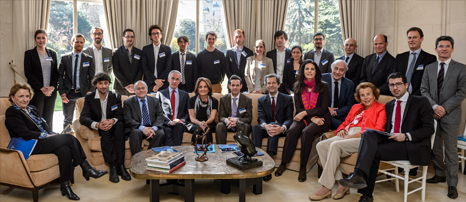
Front row, left to right: Prof. Nicole Le Douarin, member of the Foundation’s Scientific Board, Fred Etoc, prizewinner, Prof. Alain Pompidou, member of the Scientific Board, Prof. Hugues de Thé, Chairman of the Scientific Board, Prof. Emiliana Borrelli, member of the Scientific Board, Scott Waddell, winner of the Liliane Bettencourt Prize for Life Sciences, Olivier Brault, Chief Executive Officer of the Foundation, Françoise Bettencourt Meyers, President of the Foundation, Jean-Pierre Meyers, Vice-President of the Foundation, Liliane Bettencourt, Honorary President of the Foundation, Nicolas Meyers, member of the Board of Directors of the Foundation.

Back row, left to right: Mandy Muller, Grégory Franck, Hervé Turlier, Paul Monnier, Edouard Hannezo, Denis Jallet, Jean-Rémi King, Paul Blanche, Fanny Langlet, Maël Lebreton, Séverine Martini, Sébastien Paque, winners of the Prize for Young Researchers; Dr Marcel Méchali, Prof. Alain-Jacques Valleron, Prof. Cédric Blanpain, member of the Foundation’s Scientific Board; Armand de Boissière, Secretary General of the Foundation.

Bettencourt Schueller Foundation / Supporting deployment of talent to contribute to the common good

The Bettencourt Schueller Foundation is fulfilling the mission it was given twenty-five years ago by its founders, André and Liliane Bettencourt and their daughter Françoise Bettencourt Meyers, to “give talent wings” to contribute to the success and influence of France.

This mission is expressed in three areas of involvement: life sciences, culture and solidarity. It is driven by the convictions that define a spirit and ways of working, for the greater good, without gain, and with a purpose of social responsibility.

In the last five years, the Foundation has distributed nearly €113 million, including €36 million in 2014. Since 1990, 332 scientific prizes have been awarded to over 5,000 researchers. In total, the Bettencourt Schueller Foundation has awarded, since 1990, a cumulative total of €257 million in donations to support the life sciences.

Further information: www.fondationbs.org

Médecine/sciences (m/s) journal is 30 years old

To celebrate this occasion, a colloquium, “30 Ans Déjà” (30 Years Already) has been organised by Inserm and the publisher EDK/EDP/Sciences on the theme “How do we read, why do we write, how do we handle and how will we handle biomedical advances conceived in French in médecine/sciences?”


30ans_ms

médecine/sciences (m/s) journal is the monthly French-language publication for excellence in biological, medical and health sciences research. As a journal that reviews and educates, it offers its readers a wide variety of writing on advances in national and international biological and medical research.

médecine/sciences (m/s) journal today

Inserm, which owns the title, is continuing the mission entrusted to médecine/sciences at its inception, and clearly summarised in its title: a continuous flow between “sciences” as knowledge production, and “medicine,” as a source of knowledge in itself; m/s is an academic journal for the communication of academic knowledge and learning, unlike any other and probably with no equivalent in Europe. In its political and international francophone dimension, it occupies a position at the heart of modern science and medicine, with an increasingly marked social awareness.

The journal, in hard copy and electronic versions, has always been produced in France.[1]
médecine/sciences is open access 1 year after publication. For the first year of publication, access to articles is restricted to subscribers, mainly scientists via their research organisations (Inserm, CNRS [French National Centre for Scientific Research], EFS [French National Blood Service], etc.) or their universities (Laval, Sherbrooke, Liège, etc.).
A database of the m/s archives, produced by Inserm on the iPubli website, offers open access to the journal’s archives, other than the current year, for which issues can be accessed on the publisher’s website.

Steady growth has been observed in the number of visits to the website and the number of article downloads during the last three years. In 2014, visits to the website were as follows: 11,700 unique users per month (45% of visits from France, followed by the United States and China); and 120,000 article downloads in PDF format per year. Analysis of connection sources suggests that half of visits are from France and half from the rest of the world.

A brief history of a resounding success

In the very early 1980s, programmes of action launched by the French and Quebec governments led to the creation of médecine/sciences (m/s), an international French-language journal reviewing biomedical research.
Professor Jean Hamburger, a pioneer and dedicated supporter of the project, surrounded by a team of young researchers and clinician researchers (Xavier Bertagna, Laurent Degos, Serge Erlinger, Jean-Pierre Grünfeld, Axel Kahn, Claude Matuchansky), would specify its content.
Four sections: an editorial, review articles making up the body of the journal, science news, and original research notes.
Research and higher education institutions would also join the effort for the “Promotion of French, a language of science, and dissemination of scientific and technical culture,” one of the 7 motivational programmes of the Framework Act for Technological Research and Development in France.
An international memorandum of understanding between the French and Quebec governments was signed in May 1984.
In March 1985, m/s was launched in France by Hubert Curien, French Minister of Research and Technology, and in Quebec by Bernard Landry, Quebec Minister of International Relations.
The memorandum would be regularly renewed until February 2006. At this time, the m/s title became the property of Inserm.

Content

  • A Magazine section, reflecting current science news (a dozen articles);
  • Reviews (6-8 per issue), feature articles that provide an overview of a scientific issue, written by authors specialising in the field;
  • A Forum that covers diverse articles on the history of science, reflection on issues affecting society, social sciences and public health, facts and figures, or reactions to published articles, all written with considerable freedom of expression;
  • Critical analyses and reviews of published works.

In addition, m/s publishes at least one Special Issue per year, and one or more Thematic Series consisting of articles spanning several issues, comprehensive states of the art, each covering a single rapidly expanding medical subject.

The médecine/sciences readership 

Researchers, hospital academics, physicians, educators, and especially students, doctoral students and post-doctoral fellows.

The French and Quebec founding members of médecine/sciences

For France: Ministry of Foreign Affairs, Ministry of Research and Technology; National Ministry of Education (DBMIST); Inserm; CNRS; and Haut Comité de la Langue Française (High Commission for the French Language), subsequently the Délégation à la Langue Française (Delegation for the French language).

For Quebec: Ministry of International Relations; Conseil de la Langue Française (French Language Council); Quebec Health Research Fund (FRSQ); and Ministry of Higher Education, Science and Technology.

[1] Under a public service delegation contract (DSP) between Inserm and a private publisher, successively Flammarion Médecine, John Libbey, Masson, EDK since 2002 and EDK/EDP Sciences since 2012.

European Patent Office rankings for 2014: Inserm 6th in France for patent applications, 1st in Europe for patent applications in biomedical research

Inserm, with the help of its subsidiary Inserm Transfert, continues to rise in the 2014 rankings of French patent applicants issued by the European Patent Office (EPO). Inserm is placed 6th in France (among applicants in all organisations and sectors combined), 4th in Europe for the “Biotechnology” sector and 5th in Europe for the “Pharmaceuticals” sector[1].

Again, according to the 2014 rankings of the European Patent Office, 227 patent applications were filed in Inserm’s name, strengthening its position compared with previous years as the leading academic organisation for biomedical research in Europe. On the French scale, Inserm has moved up five places compared with the EPO 2012 rankings (11th place in 2012, 6th this year).

“This ranking reflects a strategy of innovative research, the protection of which is one of the key elements favouring its transfer to industry for the benefit of patients and society,” claims Yves Lévy, CEO of Inserm.

At present, Inserm has a patent portfolio of 1,279 patent families (+102% since 2006). Inserm Transfert, which is in charge of Inserm’s intellectual property strategy, and of the management and commercialisation of the portfolio, wrote and submitted over 50% of patent applications in 2014, and licensed 26.5% of the portfolio to industrial partners in France and around the world (large health industry groups, intermediate, small and medium enterprises and start-up companies).

“Inserm’s highly diversified portfolio, which covers the major disease categories, with applications in diagnostics and therapeutic development, constitutes a pool of opportunities for industrial partners at the early stages of innovation. This substantially explains Inserm’s current position in the EPO rankings,” comments Pascale Augé, CEO of Inserm Transfert.

About Inserm – www.english.inserm.fr

Inserm, the French National Institute of Health and Medical Research, has been, since 1964, the only public body in France dedicated to biological and medical research and human health, with nearly 13,000 researchers, engineers and technicians, and some 300 research laboratories. The Institute is to be found throughout the pathway from research laboratory to the patient’s bedside, and carries out research in a variety of areas, making it possible to study all diseases, from the commonest to the most rare. Inserm is a founding member of Aviesan, the French National Alliance for Life Sciences and Health, created in 2009.
* Other founding members of Aviesan: CEA, CNRS, CHRU, CPU, INRA, INRIA, Institut Pasteur, IRD

About Inserm Transfert – www.inserm-transfert.fr/en/

A private subsidiary of Inserm founded in 2000, Inserm Transfert SA manages all commercialisation and transfer of knowledge from Inserm laboratories to Industry, from invention disclosure to industrial partnership. Inserm Transfert also offers services related to setting up and managing European and international projects, and large-scale projects in epidemiology and public health. It manages a budget of €2 million for proof of concept. Finally, Inserm Transfert also supports entrepreneurs in the biotechnology sector, in partnership with Inserm Transfert Initiative, a venture capital company with a capital of €39.7 million to support the life sciences.

[1] Sources: www.epo.org; Press conference: click here; Annual report: click here 

Choc Santé (Health Shock): Inserm is releasing a collection of books for the general public.

In partnership with Muscadier publishing house, Inserm (French National Health and Medical Research Institute) is creating a series of books to inform the public about health matters. These books shall provide an overview of the Institutes’s latest research results in 128 pages. They are intended for both patients and their families who act as caregivers.

The Collection

Everybody wants to be healthy. Diet, physical activity and general lifestyle have become important concerns for most of us. In terms of treatment and prevention, scientific advances in recent decades have opened up unprecedented opportunities. However, we do not always know where to find the most relevant information. As such, we often hear or read everything and anything regarding this specific area.

Who should we believe? How do we find out?

The Choc Santé collection aims give a much wider audience access to knowledge gathered by Inserm, who has carried out public research in the health sector for over 50 years. As well as the latest medical advances, the reader will find practical advice that will enable them to improve their health and the health of those close to them.

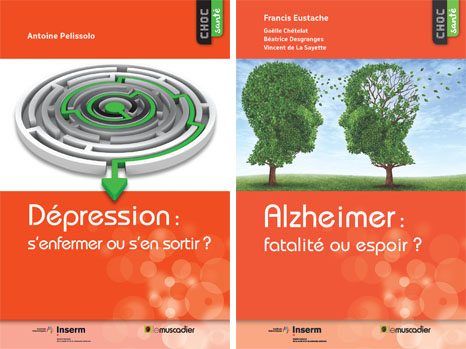
The first two Choc titles: Alzheimer’s Disease and Depression

Medical research is making great strides and substantial progress in many fields, which often gives cause for hope. An overview of the latest information concerning Alzheimer’s disease and depression, both works will allow everyone to better understand the disease and improve the lives of patients and relatives.PhotoCP web

Alzheimer : fatalité ou espoir ? (Alzheimer’s Disease: Inevitable or Hopeful?)

The Book

Almost everyone knows somebody who has been affected by Alzheimer’s disease. Yet, most of us know little about this condition, which often has a dramatic impact on both the patient and those around them. What are the causes? What are the symptoms? How to detect and monitor it? When is diagnosis possible and desirable? What treatments are available? How does it progress? Is it inevitable or can we influence its onset and progression in some way?

Authors

Francis Eustache is the Director of Studies at the École pratique des hautes études (EPHE) and Director of Inserm Research Unit 1077, “Cognitive Neuropsychology and Functional Neuroanatomy of Human Memory” (Inserm-EPHE-University of Caen Lower Normandy) He is one of the foremost international specialists on memory-related issues. Gaëlle Chételat, Béatrice Desgranges and Vincent de La Sayette are also members of Research Unit 1077.

Dépression : s’enfermer ou s’en sortir ? (Depression: Shackled or Surmountable?)

The Book

“To have depression”, “to be depressed”, etc., everyone has used these terms to describe a malaise or a passing mood. However, depression is a real illness that affects millions of people in France. This condition raises many questions as it affects different people in different ways. What are the symptoms? What are the causes? Can it be treated? Are current treatments effective? Are they dangerous? What support can we give to a person with depression?

Author

Antoine Pelissolo is a psychiatrist and Department Head at CHU Henri Mondor Créteil, Professor of Medicine at Paris-East University, and President of the French Association of Anxiety Disorders and Depression (AFTAD). He conducts clinical and therapeutic research on these diseases in the Inserm unit at the Mondor Institute of Biomedical Research and in the FondaMental foundation.

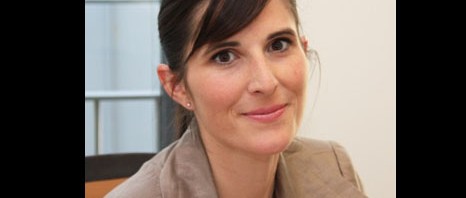
Valérie Mazeau-Woynar appointed Director of the Department of Partnerships and External Relations (DPRE) at Inserm

Valérie Mazeau-Woynar succeeds Claire Giry at the head of Inserm’s Department of Partnerships and External Relations (DPRE). In this role, she will contribute to the implementation of Inserm’s institutional partnerships at regional, national, European and international level, at the behest of Directorate General, and in coordination with the Thematic Institutes.

PhotoCP web

With her multidisciplinary background in medicine, biomedical research and public health policy, acquired in France and the United States, Valérie Mazeau-Woynar was previously Director of Recommendations and Quality of Expertise at the French National Cancer Institute (INCa). She coordinated the preparation of the 2014-2019 Cancer Control Plan, which defines France’s national strategy for action on cancer. Valérie Mazeau-Woynar has also authored or supervised over 60 reports published by that Institute between 2008 and 2014: national recommendations for specialist teams, guides for general practitioners, patient guides and scientific reports.

With extensive experience in institutional relations with central government and the health and research agencies, learned societies, patient associations and foundations, Valérie Mazeau-Woynar will now put her ability to analyse medical, scientific and strategic situations at the service of Inserm’s Department of Partnerships and External Relations.

“Given my strong commitment to helping improve population health, I am pleased and honoured to be joining Inserm, and using my skills in research that will make it possible to better prevent illnesses and improve the care of tomorrow’s patients.”
Valérie Mazeau-Woynar

In the course of her duties, she will contribute to promoting a site policy, developing institutional cooperation at regional, national, European and international level, and defining Inserm’s strategy with the Directorate General.

Anne Dejean-Assémat, is awarded the Inserm Grand Prix for 2014

The annual Inserm awards ceremony for medical research will take place on 3 December 2014 at the Collège de France, in the presence of Marisol Touraine, Minister for Social Affairs and Health, Geneviève Fioraso, Secretary of State for Higher Education and Research, and Yves Lévy, Chairman and Chief Executive Officer of Inserm. Eight prizes will be awarded to eminent scientists who contribute through their work to advances in research and to the excellence of the Institute. The ceremony will conclude an exceptional year, marked by over a hundred events celebrating the 50th anniversary of Inserm.

The event will be streamed live on the Inserm website.

The Inserm Grand Prix is awarded to Anne Dejean-Assémat, director of Inserm/Institut Pasteur Joint Unit 993 “Nuclear Organization and Oncogenesis,” for her entire body of research on the molecular and cellular mechanisms involved in the development of human cancers. PhotoCP webAnne Dejean-Assémat ©Inserm

This researcher established the mutagenic role of hepatitis B virus in liver cancer. She identified one of the main receptors for retinoic acid (RAR), the active form of vitamin A, and subsequently demonstrated its role in some human cancers.

By discovering the systematic alteration of the receptor for this acid in patients with acute promyelocytic leukaemias, and the associated cellular alteration, Anne Dejean-Assémat and her colleagues clarified the molecular and cellular basis for leukaemogenesis, and made it possible to shed light on the mechanisms involved in the effective treatment of this type of leukaemia. These observations are a most illustrative example of targeted cancer therapy.


Since 2004, an Honorary Prize and an International Prize have been awarded, as a tribute to the careers of particularly eminent scientists. The 2014 Honorary Prize will be awarded to William Vainchenker (Inserm/ Institut Gustave-Roussy/University Paris-Sud Unit 1009), and the International Prize will be awarded to Sir Leszek Borysiewicz (University of Cambridge, UK).

Research Awards distinguish researchers, lecturer-researchers and clinician-researchers whose work has marked the area of basic research, clinical and therapeutic research, and public health research. The 2014 laureates are Nadine Cerf-Bensussan (Inserm/ Paris-Descartes University Unit 1163) and Hélène Dollfus (Inserm/University of Strasbourg Unit 1112).

Innovation prizes reward engineers, technicians or administrators for original achievements in the service of supporting research. The 2014 laureates are Frédéric De Bock (Inserm/CNRS/Montpellier Universities 1 and 2 Unit 661) and Mathieu Ducros (Inserm/Paris-Descartes University Unit 1128).

Since 2013, an Opecst-Inserm Award has been jointly awarded by the French Parliamentary Office for the Evaluation of Scientific and Technological Choices and Inserm. It is aimed at rewarding a researcher for his/her involvement in developing the results of research. The 2014 laureate is Mickaël Tanter (Inserm/CNRS/ESPCI de Paris Unit 979).

Further information:

The detailed biography of Anne Dejean-Assémat can be consulted on the French Académie des Sciences website

Photos of the laureates can be downloaded from Serimedis, the Inserm image gallery

Films devoted to the work of the laureates will be available from 4 December on Serimedis


Ebola virus: update on research in France

The Ebola epidemic is continuing to spread, particularly in West Africa. According to the latest report by the World Health Organisation (WHO) dated 17 October, 9,216 cases of Ebola have been recorded and 4,555 people have died of the virus.

Laboratoire P4 Jean Mérieux/Inserm.

F.Guenet/Inserm

With the current situation of the Ebola epidemic, it quickly became necessary for French research to be mobilised rapidly.

In August 2014, the French Minister of Health and Secretary of State for Higher Education and Research made Aviesan responsible for preparing and organising the response of French research to infectious emergencies.

With extensive past experience and recognised for coordinating research during the H1N1 epidemic in 2009 and more recently in response to the emergence of the Chikungunya virus in the Caribbean in 2013, the Aviesan Institute of Microbiology and Infectious Disease benefitted from the expertise of the REACTing[1] network to launch the Ebola research programme.

This network relies on existing teams, research centres and platforms in France and southern countries.

The implementation of these projects is coordinated mainly by teams from Inserm, CEA, the Pasteur Institute, IRD, Universities, not forgetting a close partnership with teams in Guinea, Ivory Coast and Senegal. The network of ANRS sites and researchers in West Africa have also been mobilised.

fermer