Menu

Acquittal of Colmar GMO reapers

© Inra/ Olivier Lemaire


“An injustice to one is a threat to all,” to quote Montesquieu. Today, on behalf of the scientific community, we can only express our complete support for the French National Institute for Agricultural Research, the INRA, and our strong concern over the consequences of a court ruling made against it on 14 May last.

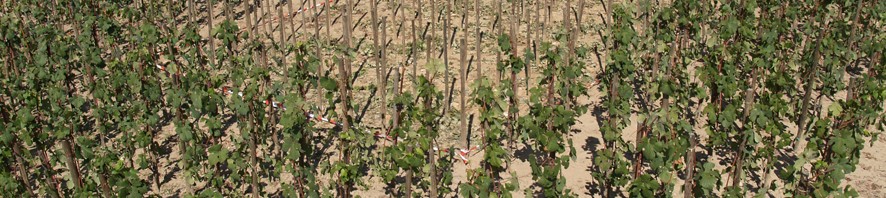
The Colmar Court of Appeal has indeed just acquitted 54 individuals, “the reapers,” who in 2010 destroyed a scientific field trial employing genetically modified grapevine root stocks, the objective of which had been to study the mechanisms of resistance to a viral disease that is widespread among our vineyards, and to study the potential impacts of this genetic modification on the environment. This research trial, which had been created in partnership with the greater public in an exemplary fashion, and had been the subject over 200 public meetings, was not intended for commercial purposes. Furthermore, it involved studies that are subject to tightly regulated authorisation procedures and experimental methods, which had been scrupulously followed by INRA.

Apart from the public controversy regarding genetically modified organisms (GMOs) and the reactions it has aroused, this court ruling is singular in that it was the first to be made in relation to the destruction of a trial conducted by the public research service since the law introduced more severe penalties for the defacement of plots of land intended for the generation of scientific knowledge, distinguishing them from plots intended for commercial cultivation of GMOs.

Since this ruling by the Colmar Court of Appeal, and even more so if the ruling is upheld in the event, as we hope, it is appealed to a higher court, the legal protection of research facilities for conducting experiments under controlled conditions is therefore no longer guaranteed. However, trials such as that carried out by INRA in Colmar are the only way of obtaining documented and reliable evidence on the reality of the effects GMOs may have on humans, animals and the environment. Their destruction by individuals who fail to respect democratic standards effectively prevents researchers from carrying out their role in serving the common good. Faced with this threat, must researchers henceforth collectively abandon experimentation in socially contentious areas because they are controversial?

As heads of public research bodies and universities, we earnestly wish to draw the attention of our fellow-citizens to the implications of such as situation. We are responsible researchers with strong awareness of the legitimate public debates stimulated by some technologies on account of their use or usefulness, and we know that it is not for us to resolve them. We also know that our fellow citizens have higher expectations than ever from the contribution science can make to meet important challenges, especially in the prevention of major environmental and public health risks. In this context, must we abandon all hope of carrying out controlled experiments on technological innovations that may provide some of the solutions required, where these are essential to assess their impact on the associated risks, in order to enable us to collectively make informed choices that go beyond the fears that they may generate? Whatever the subsequent decisions, this is also the necessary condition for maintaining independent public expertise, capable of assessing problems, providing objective opinions on request from public authorities, and enlightening public debate. Must we henceforth resign ourselves to being unable to place our knowledge at the service of collective decision-making?

Abandoning experimentation thus means refusing to act to improve our common future. Yet this is what may happen if we do not leave this attitude of fear and withdrawal induced by this ruling, where the determination of a few individuals jeopardises the ability of all to confront these complex challenges democratically and rationally. We are calling for a clarification of the interpretation of the legal and regulatory framework surrounding experimentation to enable us to continue to fulfil our public research role for the common good in a legally secure environment.

List of signatories:

  • Monsieur Bernard Bigot, General Administrator, French Atomic Energy and Alternative Energies Commission (CEA)
  • Monsieur Jean-Marc Bournigal, President and Director General, French National Research Institute for Science and Technology for Environment and Agriculture (IRSTEA)
  • Madame Pascale Briand, Director General, French National Research Agency (ANR)
  • Monsieur Michel Cosnard, Chairman and Chief Executive Officer, French National Institute for Research in Computer Science and Control (INRIA)
  • Monsieur Michel Eddi, President Managing Director, French Agricultural Research Centre for International Development (CIRAD)
  • Monsieur Alain Fuchs, President, French National Centre for Scientific Research (CNRS)
  • Madame Claudie Haigneré, President and Director General, Universcience
  • Monsieur François Jacq, President-Managing Director, French Research Institute for Exploitation of the Sea (IFREMER)
  • Monsieur Vincent Laflèche, Chairman and Chief Executive Officer, French Geological Survey (BRGM)
  • Monsieur Michel Laurent, Chairman, French Institute for Development Research (IRD)
  • Monsieur Jean-Loup Salzmann, President, French Conference of University Presidents
  • Monsieur André Syrota, Chairman and Chief Executive officer, French National Institute of Health and Medical Research (Inserm)


Heavy mobile telephone use and brain tumours

Findings from the study of mobile telephone use and the development of brain tumours have been published in the journal Occupational & Environmental Medicine

The effect of electromagnetic radio frequencies on humans remains controversial. Researchers from Inserm Unit 897, “Epidemiology and Biostatistics” (ISPED) in Bordeaux, have analysed the association between exposure to mobile telephone radio frequencies and glioma and meningioma type brain tumours in adults.

The researchers present the results of the case-control multicentre study CERENAT, published in the journal Occupational & Environmental Medicine, conducted in 4 areas in France (Gironde, Calvados and Manche, and Hérault) and initiated in 2004. In all, data for mobile telephone exposure and medical data on 1339 people with a mean age of 59 years were studied: 253 had a glioma type brain tumour, 194 had a meningioma type tumour (diagnosed between 2004 and 2006) and 892 had no tumours. With respect to mobile telephones, the researchers asked the subjects about their use over their lifetimes. The mean length of time spent on the telephone for all individuals was 2.7 hours per month. In the sample, only 12% of the individuals studied had used their telephone for a period of ten years or more.

We show that heavy mobile telephone use, 896 or more hours of calls over a lifetime, may be associated with the development of brain tumours. In these people, the risk of a positive association between telephone use and the development of brain tumours was increased for those who used the telephone for more than 15 hours per month,” explains Isabelle Baldi, a co-author of this study.

“However, it is important to emphasise that it constitutes an association, and not a cause and effect relationship. This does not therefore mean that a person with heavy mobile telephone use will develop a brain tumour”

, adds the researcher.

Note to Editors:

The authors of these studies also point out that an exposure of 896 hours or more in a lifetime is not equivalent to 15 hours per month or 30 minutes per day. This figure is an extrapolation, which leads to confusion. When we talk of 30 minutes per day, everyone feels concerned, because this happens to everyone one day, but not every day.
They also emphasise that the number of calls is not associated with tumours.

Mobile phone use and brain tumours in the CERENAT case-control study, Occupational & Environmental Medicine, 9 May 2014

Read the booklet to help understand case-control epidemiological studies

Atmospheric pollution : what are the impacts on health?

For the last few days, several French cities have had to face episodes of air pollution by particulates, frequently exceeding alert threshold levels.

Further information

– On the Impact of air pollution on our health:
Press release,Large European study finds exposure to even low levels of air pollution during pregnancy increases risk of lower birthweight babies”

– On different types of pollution and their impacts on our health:
Review in Science & Santé magazine, “Notre environnement: une menace pour notre santé?” (“Our environment, a threat to our health?”)

Lack of efficacy of nicotine replacement patches in pregnant smokers

A national trial coordinated by Dr Ivan Berlin at La Pitié-Salpêtrière Hospital (AP-HP) and researchers from Inserm shows that nicotine replacement patches are not effective in helping pregnant women to stop smoking during their pregnancy. This work has been published in the British Medical Journal

See the press release for further information (French version)

HIV vaccine trial recruits 100 volunteers

Today the Vaccine Research Institute (VRI) in Créteil near Paris started to recruit 100 volunteers to evaluate a preventive HIV candidate vaccine. An innovative vaccine trial was launched by the VRI and the French National Agency for Research on AIDS and Hepatitis (ANRS). It will be based in four centres. It will be the first to test the immunological effectiveness of three already proven “candidate vaccines” by combining them in pairs. This trial method using four different combinations of vaccines targets a more effective vaccine.


For further information, visit the Vaccine Research Institute (VRI) site

French heart day will take place on 14 february

In France, the Journée du Cœur (Heart Day) will take place on 14 February.

Cardiovascular disease caused 33% of all deaths in 2011, and is still the main cause of death in the 33 OECD countries. One person in three is affected.

With 180,000 deaths a year, cardiovascular diseases are the leading long-term illness, affecting 2.8 million people.Cardiovascular diseases are the second cause of mortality in France.
By 2030, almost 23.3 million people worldwide will die of a cardiovascular disease (mainly heart conditions or strokes).

Strasburg, Paris and Bordeaux are preparing to host the national Journée du Cœur (Heart Day) and the whole Heart Community will be involved. The aim of Heart Day is to show the large number of local projects, and all the healthcare professionals, patient support groups, politicians, etc. engaged in combating cardiovascular disease. The social media will be able to access the panel sessions in each city. The aim is to gather together information, feedback and proposals that will help in creating a White Paper. This will be important for drawing up a national Heart Plan.


Download the program of the day

Other press releases on cardiovascular diseases:

“A new treatment for heart attack will soon be available for emergency teams and the emergency ambulance service (SAMU)”
Philippe-Gabriel Steg
Inserm Unit 698 “Hémostase, bio-ingénierie, immunopathologie et remodelage cardiovasculaires”
Cardiologie, Département Hospitalo-Universitaire FIRE, Hôpital Bichat, France,
rf.phpa.hcb@gets.leirbag
+33 1 40 25 86 69

“FIBRO-TARGETS – Europe banks on cardiac fibrosis as a therapeutic target in heart failure”
Faiez Zannad
Coordinator of the project FIBRO-TARGETS
Inserm U1116, Centre d’Investigation Clinique P. Drouin Inserm 9501, CHU de Nancy, et de l’Université de Lorraine,
03 83 65 66 25
rf.ycnan-uhc@dannaz.f

“Rich or poor in intestinal bacteria : we are not all equal when it comes to obesity-related conditions”
Karine Clément
Coordinator of the European project METACARDIS
Inserm Unit 1166 : Research Institute of cardiovascular, metabolism and nutrition diseases (Ican)
UPMC Nutriomique U872
Assistance Publique Hôpitaux de Paris – Hôpital Pitié-Salpêtrière
rf.phpa.lsp@tnemelc.enirak

“Food contaminants worsen metabolic problems in obese mice”
Brigitte Le Magueresse Battistoni
Director of research Inserm
Cardio-metabolism, diabetes and nutrition research laboratory (Carmen)
Inserm U1060/Inra 1235/Université Lyon1
04 26 23 59 19
rf.mresni@essereugamel.ettigirb

Flu, gastroenteritis, chicken pox, the Sentinelles network is on the lookout

The Sentinelles network is a research and vigilance platform in general medicine at the Unité Mixte de Recherche en Santé 707 (Mixed Health Research Unit 707) (UMR S 707, Inserm-UPMC). At present it is composed of 1288 general practitioners, and 333 of them help in the continual surveillance of epidemics.

Please see the Sentiweb site.

Telethon 2013 : Cure through innovation

“Cure through innovation” is the slogan of the Telethon 2013 fundraising campaign which will begin on 6 and 7 December.

Between 5,000 and 7,000 rare diseases have been listed affecting 3 million people in France.

For a very long time, these disorders, which are mainly genetic and invalidating, were poorly understood.
The Telethon, a major fundraising movement organised by and for the French Muscular Dystrophy Association (AFM), broadcast live on France Télévisions, puts genetic disorders in the limelight. The aim of these two days is to raise maximum funding to improve patient care, provide suitable help for patients and actively support research.

Professor Jérôme Bertherat, head of the Endocrine and Metabolism Disorders Department at Cochin Hospital in Paris, and his team have shown that a rare disease, Cushing’s syndrome caused by macronodular adrenal hyperplasia, has a genetic origin. The work, which was recently published in the New England Journal of Medicine, is an excellent illustration of the usefulness of genetics to gain a more sophisticated understanding of a rare disorder, and the physiopathology of other disorders.

Click to read the interview with Jérôme Bertherat (French version)


For press releases on the work of Inserm teams working on rare disorders, see:

Clinical trial launched to treat Sanfilippo B syndrome using gene therapy November 2013

Infanticides : underestimated figures

crédit photo : ©Fotolia

“The number of infanticides in official statistics is underestimated” says Anne Tursz, Inserm research director, specialist in the mistreatment of children and author of an investigation on suspicious infant deaths.

For five years, in all the départements of three French regions, she recorded all deaths that had been referred to the State Prosecutor and all babies under one year who had been admitted to hospital for investigations. Comparing the figures with the official mortality statistics, the paediatrician emphasised the considerable difference between them. “In the period considered, if we extrapolate to the whole of France, the official statistics recorded a yearly average of 17 homicides of babies under one. The figures I found personally showed 255.

Many cases are not reported, many cases are not sufficiently investigated scientifically. There are diagnostic errors, they are classified as accidental deaths, or sudden infant death syndrome.”

For further information, please contact Anne Tursz, paediatrician and Inserm research director.

12 november: world pneunomia day

Inserm

Each year, pneumonia kills more than AIDS, malaria and measles combined (according to the UN, 1.2 million children under 5 die of pneumonia each year). Rapid noting of symptoms and quick treatment would avoid many infant deaths. For this World Day, the UN calls upon people to unite against pneumonia, the “leading child killer”.

Pneumonia, lung disease and lung abscesses are the main currently known infectious lung diseases that affect both the lungs and respiratory tracts.

In the vast majority of cases, these infections are due to viruses, microbes or bacteria that infiltrate into the lungs and cause respiratory problems, if resistance is low.
The patient will have different medical conditions depending on the part of the lung affected. Usual symptoms of pneumonia are a cough, breathlessness, respiratory failure, etc.

Lung infections sometimes have very serious outcomes. They lead to great difficulty breathing, and can also damage the respiratory system. Old people are particularly vulnerable.

For more information, please contact Camille Locht, Director of the Inserm unit “Lille Infection and Immunity Centre”.

11 October: Huntington’s Disease Day in France

© Inserm / Yasmina Saoudi

Huntington’s is a hereditary disease causing neurodegenerescence in adults who have the particular genetic defect. People with Huntingdon’s gradually develop psychiatric symptoms (depression, aggressiveness, agitation, etc.), cognitive disorders (loss of memory, confusion, etc.) and problems with movement such as balance, speech, swallowing etc.

In France, it is estimated that 6,000 people have Huntington’s disease (and that 12,000 people carry the genetic defect).

The first Huntingdon’s Disease Day in France has been organised under the aegis of the Scientific Council of the Huntingdon Association France and the Reference Centre for Huntington’s Disease, and with the Institut Curie. It aims to bring together researchers, patient management structures, government bodies and families to provide information on the progress of research and medicine and increase the use of participatory approaches.

During the Day, 15 experts will give a progress report on the understanding and management of this much-studied disease, with conceptual progress and approaches that may help in improving disease-control initiatives for neurodegenerative diseases.  

For further information on Huntingdon’s disease, please contact Christian NERI, who was originally behind this day, and is head of the Inserm team “Biology and Pathology of the Neuron”.

Latest news on Huntingdon’s disease:

Where does the energy come from that is needed for transport in neurons?– Jan 2013

fermer